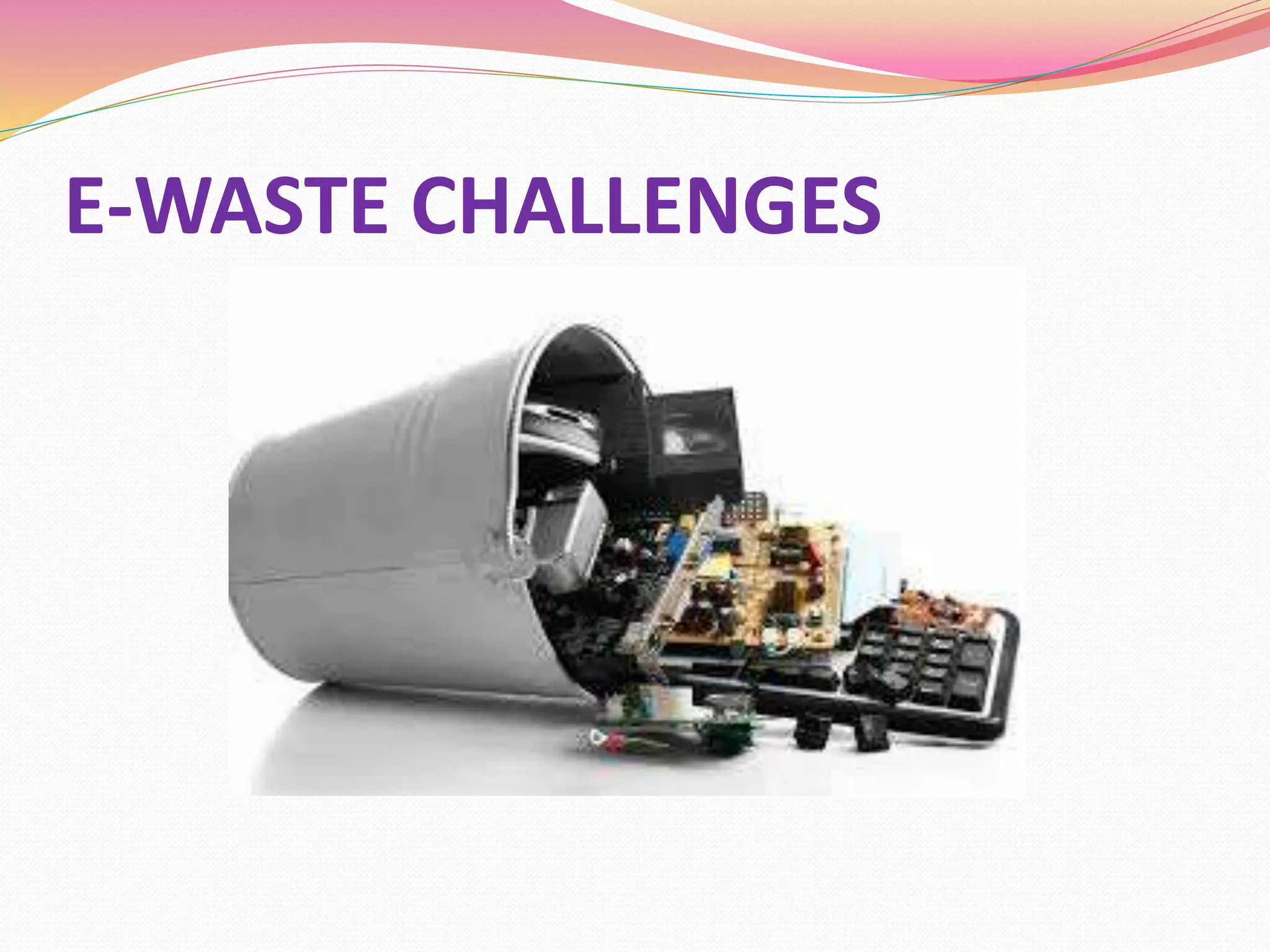
E-WASTE CHALLENGES
INTRODUCTION
 Electrical waste or e-waste is any broken or unwanted
electrical or electronic appliances
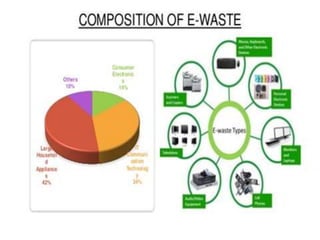
 E-waste includes computers , entertainment
electronics ,mobile phones and other items that have
been discarded by their original users
CAUSES
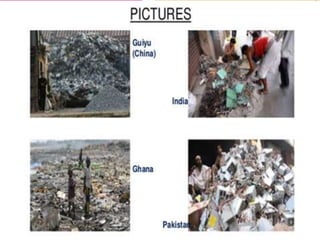
 E-WASTE is the most rapidly growing waste problem
in the world
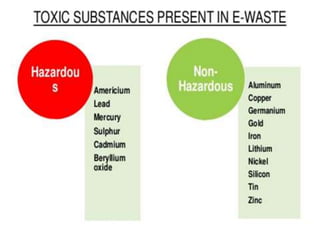
 It is crisis of not quantity alone but also a crisis born
from toxics ingredients ,posing a threat to the
occupational health as well as the environment
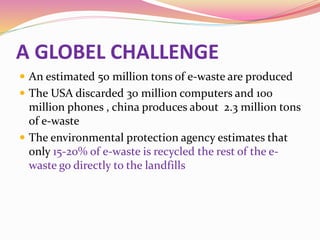
A GLOBEL CHALLENGE
 An estimated 50 million tons of e-waste are produced
 The USA discarded 30 million computers and 100
million phones , china produces about 2.3 million tons
of e-waste
 The environmental protection agency estimates that
only 15-20% of e-waste is recycled the rest of the e-
waste go directly to the landfills
ENVIRONMENTAL IMPACTS OF
ELECTRONIC WASTE
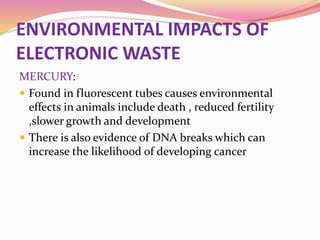
MERCURY:
 Found in fluorescent tubes causes environmental
effects in animals include death , reduced fertility
,slower growth and development
 There is also evidence of DNA breaks which can
increase the likelihood of developing cancer
ENVIRONMENTAL IMPACTS OF
ELECTRONIC WASTE
LEAD:
 Found of solder , CRT monitor glass ,lead-acid
batteries ,some formulations of PVC .
 Adverse effects of lead exposure include impaired
cognitive function , behavioral disturbance ,attention
deficits , hyperactivity and lower IQ
E-WASTE MANAGEMENTS
Waste minimization techniques inn industries involves
adopting:
 Inventory management
 Production-process modification
 Volume reduction
 Recovery and reuse
INVENTORY MANAGEMENT
Proper control over the materials used in the
manufacturing process is important way to reduce waste
generation
This can be done in two ways:
 Establishing material-purchase review and control
procedures
 Inventory tracking system
RESPONSIBILITY AND ROLE OF
INDUSTRIES
 Use label materials to assist in recycling
 Standardize components for easy disassembly
 Create computer components and peripherals of bio-
degradable materials
 Encourage
 Promote
 Require green procurement for corporate buyers
SUSTAINABLE PRODUCT DESING
 Minimization of hazardous wastes should be at
product design stage itself keeping in mind the
following factors
 Rethink the product design
 Use of renewable materials and energy
EG:
use of bio-based plastics
REFERENCES
 Centre for ecological
sciences(http://wobis.ces.iisc.ernet)
 United nation environmental
programme(http://www.unep.org)
 (http://www.greenpeace.org/)
E waste challenges

E waste challenges

  • 1.
  • 2.
    INTRODUCTION  Electrical wasteor e-waste is any broken or unwanted electrical or electronic appliances  E-waste includes computers , entertainment electronics ,mobile phones and other items that have been discarded by their original users
  • 3.
    CAUSES  E-WASTE isthe most rapidly growing waste problem in the world  It is crisis of not quantity alone but also a crisis born from toxics ingredients ,posing a threat to the occupational health as well as the environment
  • 4.
    A GLOBEL CHALLENGE An estimated 50 million tons of e-waste are produced  The USA discarded 30 million computers and 100 million phones , china produces about 2.3 million tons of e-waste  The environmental protection agency estimates that only 15-20% of e-waste is recycled the rest of the e- waste go directly to the landfills
  • 7.
    ENVIRONMENTAL IMPACTS OF ELECTRONICWASTE MERCURY:  Found in fluorescent tubes causes environmental effects in animals include death , reduced fertility ,slower growth and development  There is also evidence of DNA breaks which can increase the likelihood of developing cancer
  • 8.
    ENVIRONMENTAL IMPACTS OF ELECTRONICWASTE LEAD:  Found of solder , CRT monitor glass ,lead-acid batteries ,some formulations of PVC .  Adverse effects of lead exposure include impaired cognitive function , behavioral disturbance ,attention deficits , hyperactivity and lower IQ
  • 11.
    E-WASTE MANAGEMENTS Waste minimizationtechniques inn industries involves adopting:  Inventory management  Production-process modification  Volume reduction  Recovery and reuse
  • 12.
    INVENTORY MANAGEMENT Proper controlover the materials used in the manufacturing process is important way to reduce waste generation This can be done in two ways:  Establishing material-purchase review and control procedures  Inventory tracking system
  • 13.
    RESPONSIBILITY AND ROLEOF INDUSTRIES  Use label materials to assist in recycling  Standardize components for easy disassembly  Create computer components and peripherals of bio- degradable materials  Encourage  Promote  Require green procurement for corporate buyers
  • 14.
    SUSTAINABLE PRODUCT DESING Minimization of hazardous wastes should be at product design stage itself keeping in mind the following factors  Rethink the product design  Use of renewable materials and energy EG: use of bio-based plastics
  • 16.
    REFERENCES  Centre forecological sciences(http://wobis.ces.iisc.ernet)  United nation environmental programme(http://www.unep.org)  (http://www.greenpeace.org/)