E WASTE 
BY-AMIT SHEORAN 
ROLLNO-CE14BTECH11002 
SOURCE-WIKIPEDIA
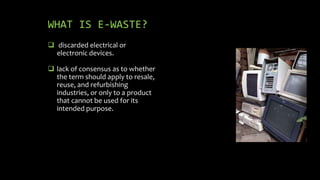
WHAT IS E-WASTE? 
 discarded electrical or 
electronic devices. 
 lack of consensus as to whether 
the term should apply to resale, 
reuse, and refurbishing 
industries, or only to a product 
that cannot be used for its 
intended purpose.
DIFERENT COMPONENTS 
• Cathode ray tubes 
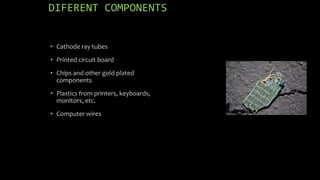
• Printed circuit board 
• Chips and other gold plated 
components 
• Plastics from printers, keyboards, 
monitors, etc. 
• Computer wires
Amount of Electronic waste world-wide 
• 50 million tons of E-waste are produced each year 
• USA discards 30 million computers each year 
• 100 million phones are disposed of in Europe each year 
• According to a report by UNEP titled, "Recycling - from E-Waste to Resources," 
the amount of e-waste being produced could rise by as much as 500 percent over 
the next decade in some countries, such as India.
Environmental Impact of 
Electronic Waste 
• dismantling and disposing of electronic waste in the third 
world lead to a number of environmental impacts 
• Liquid and atmospheric releases end up in bodies of water, 
groundwater, soil, and air 
• The informal sector's recycling practices magnify health 
risks. 
• Airborne dioxins – one type found at 100 times levels 
previously measured 
• Levels of carcinogens in duck ponds and rice paddies exceeded 
international standards for agricultural areas and cadmium, 
copper, nickel, and lead levels in rice paddies were above 
international standards 
• Heavy metals found in road dust – lead over 300 times that of 
a control village’s road dust and copper over 100 times
The environmental impact of the processing of different electronic waste component 
E-Waste Component Process Used Potential Environmental Hazard 
Cathode ray tubes (used in TVs, 
computer monitors, ATM, video 
cameras, and more 
Breaking and removal of yoke, then 
dumping 
Lead, barium and other heavy metals 
leaching into the ground water and 
release of toxic phosphor 
Printed circuit board (image behind 
table - a thin plate on which chips and 
other electronic components are 
placed) 
De-soldering and removal of 
computer chips; open burning and 
acid baths to remove final metals 
after chips are removed. 
Air emissions as well as discharge into 
rivers of glass dust, tin, lead, 
brominated dioxin, beryllium cadmium, 
and mercury 
Chips and other gold plated 
components 
Chemical stripping using nitric and 
hydrochloric acid and burning of 
chips 
Hydrocarbons, heavy metals, 
brominated substances discharged 
directly into rivers acidifying fish and 
flora. Tin and lead contamination of 
surface and groundwater. Air emissions 
of brominated dioxins, heavy metals 
and hydrocarbons 
Plastics from printers, keyboards, 
monitors, etc. 
Shredding and low temp melting to 
be reused 
Emissions of brominated dioxins, heavy 
metals and hydrocarbons 
Computer wires Open burning and stripping to 
remove copper 
Hydrocarbon ashes released into air, 
water and soil.
HEALTH EFFECT 
• fetal loss, prematurity, low 
birthweight, and congenital 
malformations 
• Abnormal thyroid function and 
thyroid development 
• neurobehavioural 
disturbances and genotoxicity.
E-waste 
management(RE 
CYCLE) 
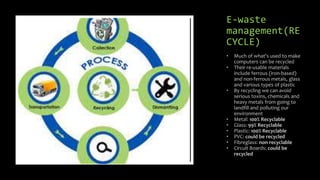
• Much of what's used to make 
computers can be recycled 
• Their re-usable materials 
include ferrous (iron-based) 
and non-ferrous metals, glass 
and various types of plastic 
• By recycling we can avoid 
serious toxins, chemicals and 
heavy metals from going to 
landfill and polluting our 
environment 
• Metal: 100% Recyclable 
• Glass: 99% Recyclable 
• Plastic: 100% Recyclable 
• PVC: could be recycled 
• Fibreglass: non recyclable 
• Circuit Boards: could be 
recycled
THANK YOU

E waste

  • 1.
    E WASTE BY-AMITSHEORAN ROLLNO-CE14BTECH11002 SOURCE-WIKIPEDIA
  • 2.
    WHAT IS E-WASTE?  discarded electrical or electronic devices.  lack of consensus as to whether the term should apply to resale, reuse, and refurbishing industries, or only to a product that cannot be used for its intended purpose.
  • 3.
    DIFERENT COMPONENTS •Cathode ray tubes • Printed circuit board • Chips and other gold plated components • Plastics from printers, keyboards, monitors, etc. • Computer wires
  • 4.
    Amount of Electronicwaste world-wide • 50 million tons of E-waste are produced each year • USA discards 30 million computers each year • 100 million phones are disposed of in Europe each year • According to a report by UNEP titled, "Recycling - from E-Waste to Resources," the amount of e-waste being produced could rise by as much as 500 percent over the next decade in some countries, such as India.
  • 5.
    Environmental Impact of Electronic Waste • dismantling and disposing of electronic waste in the third world lead to a number of environmental impacts • Liquid and atmospheric releases end up in bodies of water, groundwater, soil, and air • The informal sector's recycling practices magnify health risks. • Airborne dioxins – one type found at 100 times levels previously measured • Levels of carcinogens in duck ponds and rice paddies exceeded international standards for agricultural areas and cadmium, copper, nickel, and lead levels in rice paddies were above international standards • Heavy metals found in road dust – lead over 300 times that of a control village’s road dust and copper over 100 times
  • 6.
    The environmental impactof the processing of different electronic waste component E-Waste Component Process Used Potential Environmental Hazard Cathode ray tubes (used in TVs, computer monitors, ATM, video cameras, and more Breaking and removal of yoke, then dumping Lead, barium and other heavy metals leaching into the ground water and release of toxic phosphor Printed circuit board (image behind table - a thin plate on which chips and other electronic components are placed) De-soldering and removal of computer chips; open burning and acid baths to remove final metals after chips are removed. Air emissions as well as discharge into rivers of glass dust, tin, lead, brominated dioxin, beryllium cadmium, and mercury Chips and other gold plated components Chemical stripping using nitric and hydrochloric acid and burning of chips Hydrocarbons, heavy metals, brominated substances discharged directly into rivers acidifying fish and flora. Tin and lead contamination of surface and groundwater. Air emissions of brominated dioxins, heavy metals and hydrocarbons Plastics from printers, keyboards, monitors, etc. Shredding and low temp melting to be reused Emissions of brominated dioxins, heavy metals and hydrocarbons Computer wires Open burning and stripping to remove copper Hydrocarbon ashes released into air, water and soil.
  • 7.
    HEALTH EFFECT •fetal loss, prematurity, low birthweight, and congenital malformations • Abnormal thyroid function and thyroid development • neurobehavioural disturbances and genotoxicity.
  • 8.
    E-waste management(RE CYCLE) • Much of what's used to make computers can be recycled • Their re-usable materials include ferrous (iron-based) and non-ferrous metals, glass and various types of plastic • By recycling we can avoid serious toxins, chemicals and heavy metals from going to landfill and polluting our environment • Metal: 100% Recyclable • Glass: 99% Recyclable • Plastic: 100% Recyclable • PVC: could be recycled • Fibreglass: non recyclable • Circuit Boards: could be recycled
  • 9.