IntroductIon to E-commErcE
             Lecture #3

      Mrs.Vasanthi Muniasamy M.Sc.,
                  M.Phil
     Department Of Information Systems
           King Khalid University
   Introduction to Commerce and E –
    Commerce
   Components of E - Commerce
   E-Business & E-Commerce
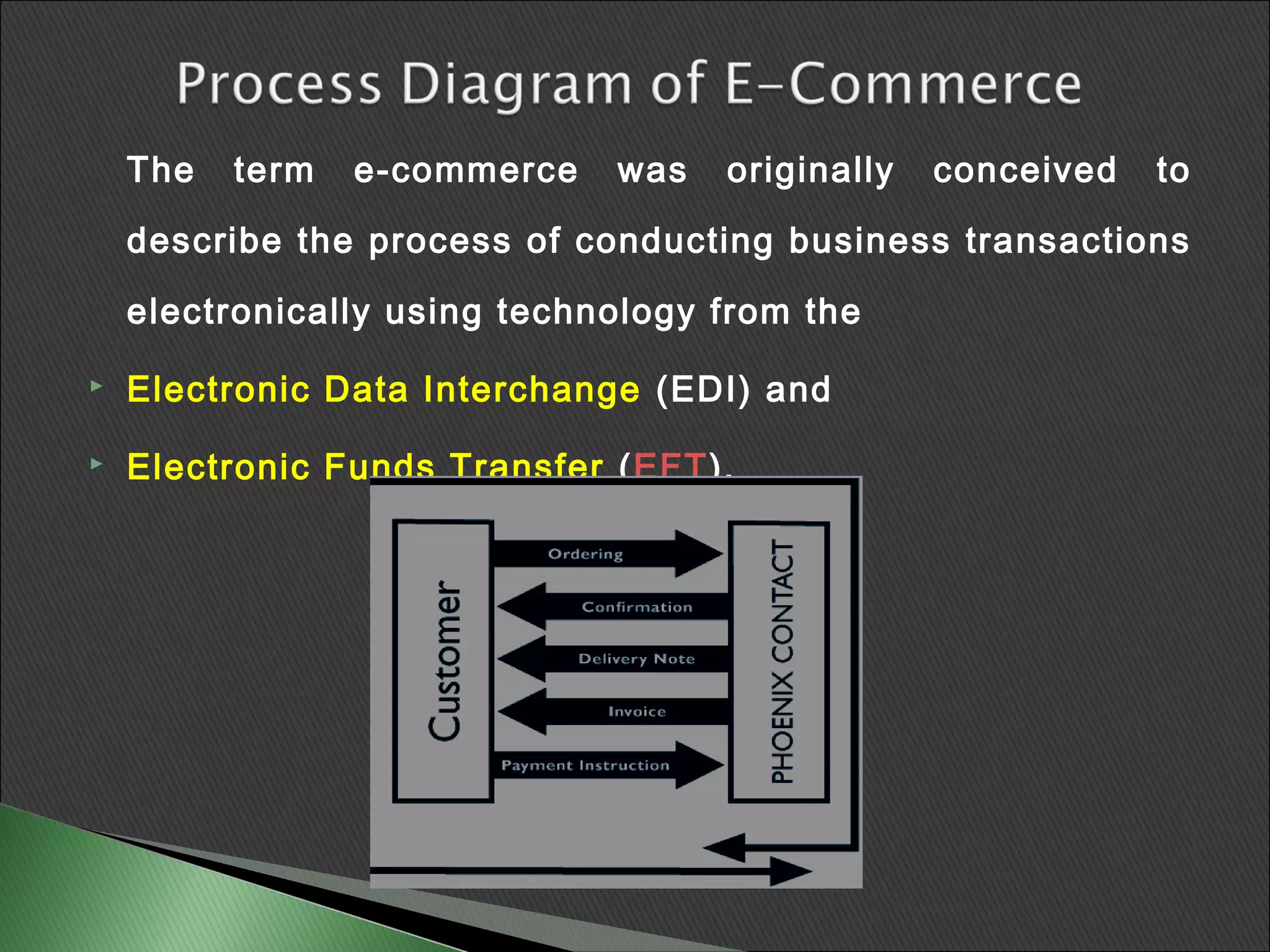
   Process Diagram of E - Commerce
   Types of E - Commerce
The   exchange     of     commodities,     buying     and

selling,   of   products    and   services    requiring

transportation,    from    location   to   location    is

known as commerce.
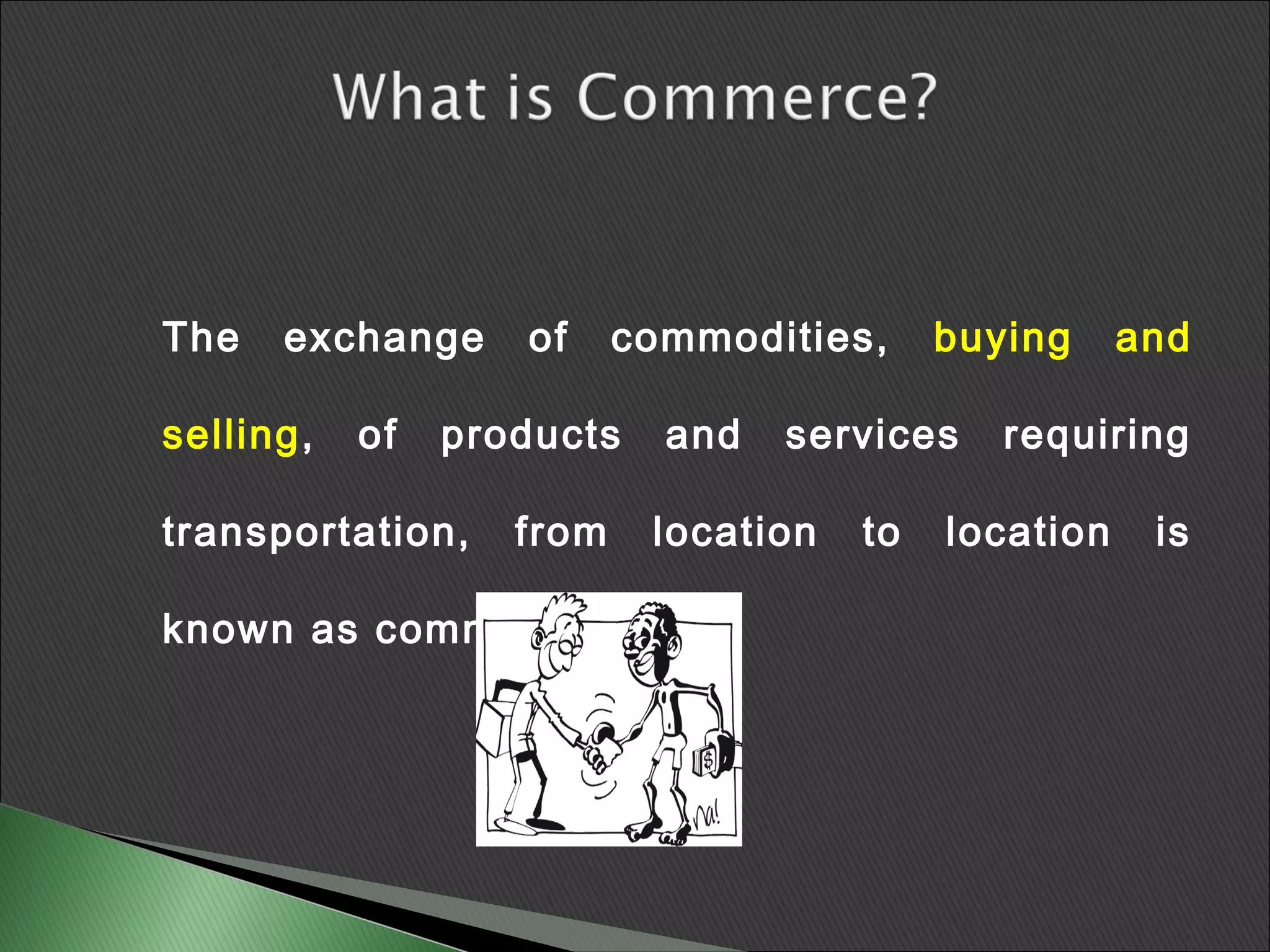
E-commerce provides the capability of buying

and selling products and information on the

internet and other online services.
Components of E- Commerce
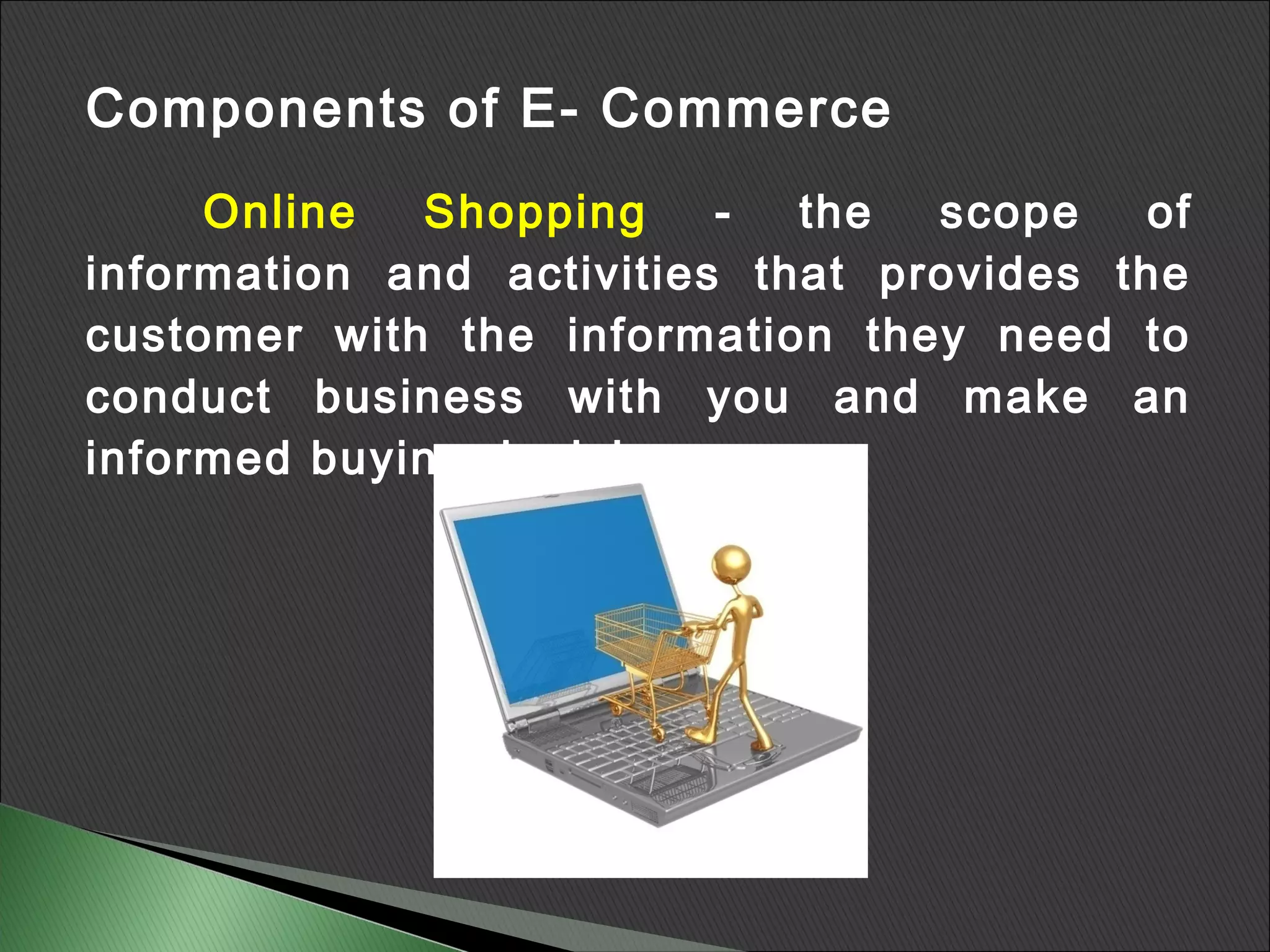
     Online  Shopping     -  the  scope   of
information and activities that provides the
customer with the information they need to
conduct business with you and make an
informed buying decision.
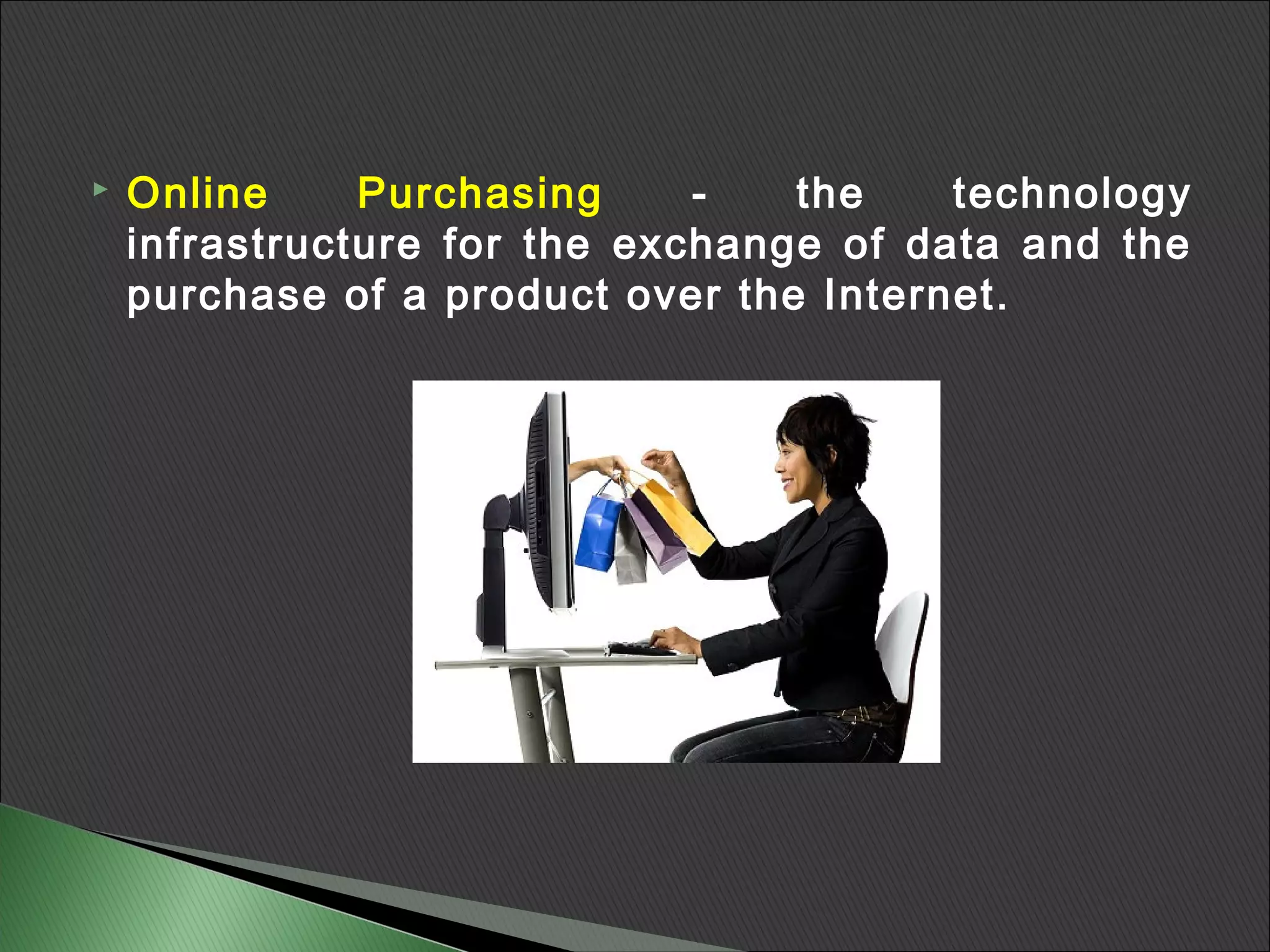
   Online     Purchasing     -   the    technology
    infrastructure for the exchange of data and the
    purchase of a product over the Internet.
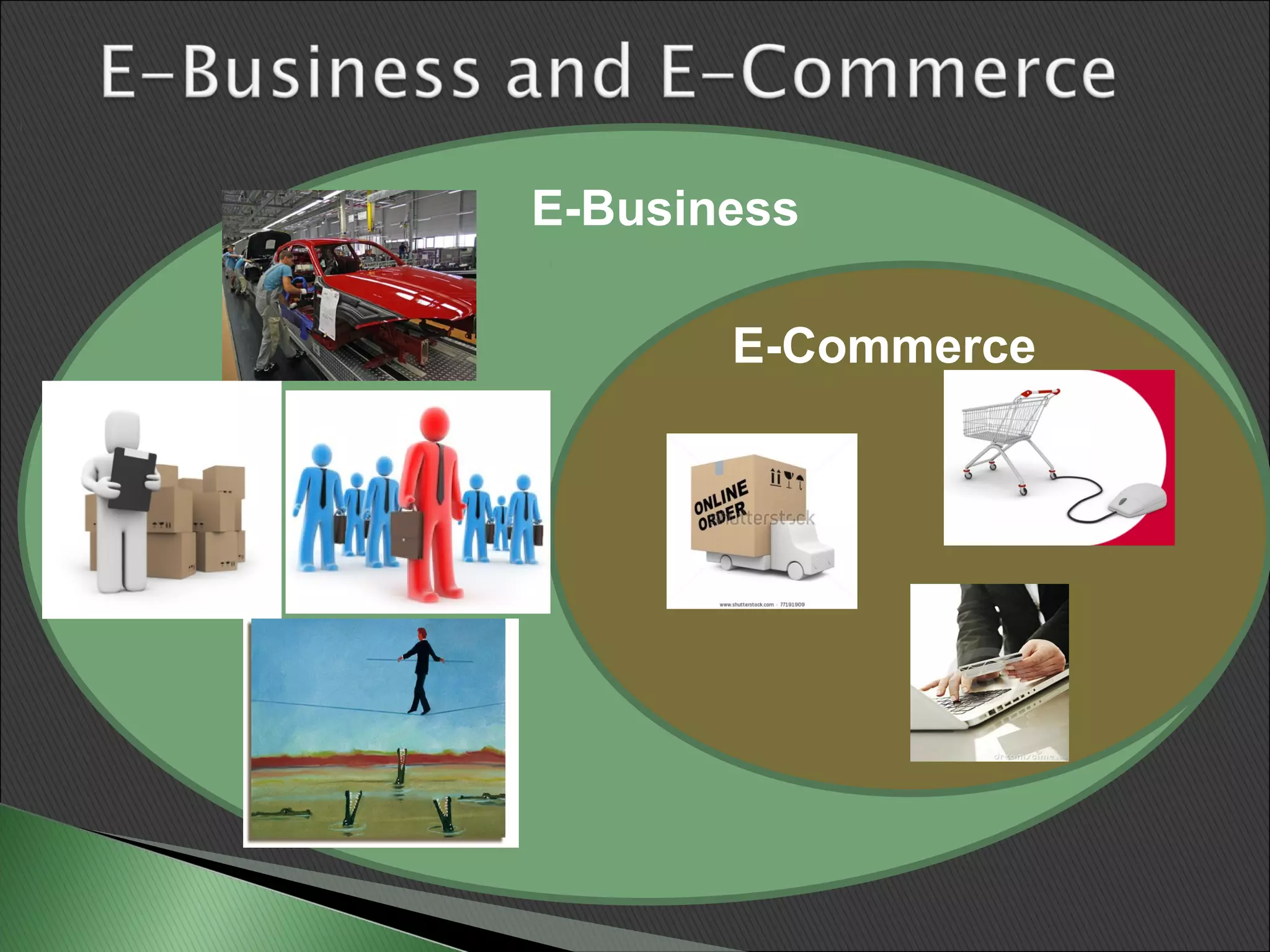
   E-Business is a Super-set of E-Commerce.
     E-business includes E-commerce but also covers
     internal processes such as
           Production
           Inventory management
           Product development
           Risk management
           Finance
           Human resources.
E-Business

       E-Commerce
The   term   e-commerce   was   originally   conceived   to

    describe the process of conducting business transactions

    electronically using technology from the

   Electronic Data Interchange (EDI) and

   Electronic Funds Transfer (EFT).
 
   B2B ( Business to Business E-commerce)
   B2C ( Business to Consumer E-commerce)
   C2B ( Consumer to Business E-commerce)
   C2C ( Consumer to Consumer E-

    commerce)
   M-Commerce (Mobile E-commerce)
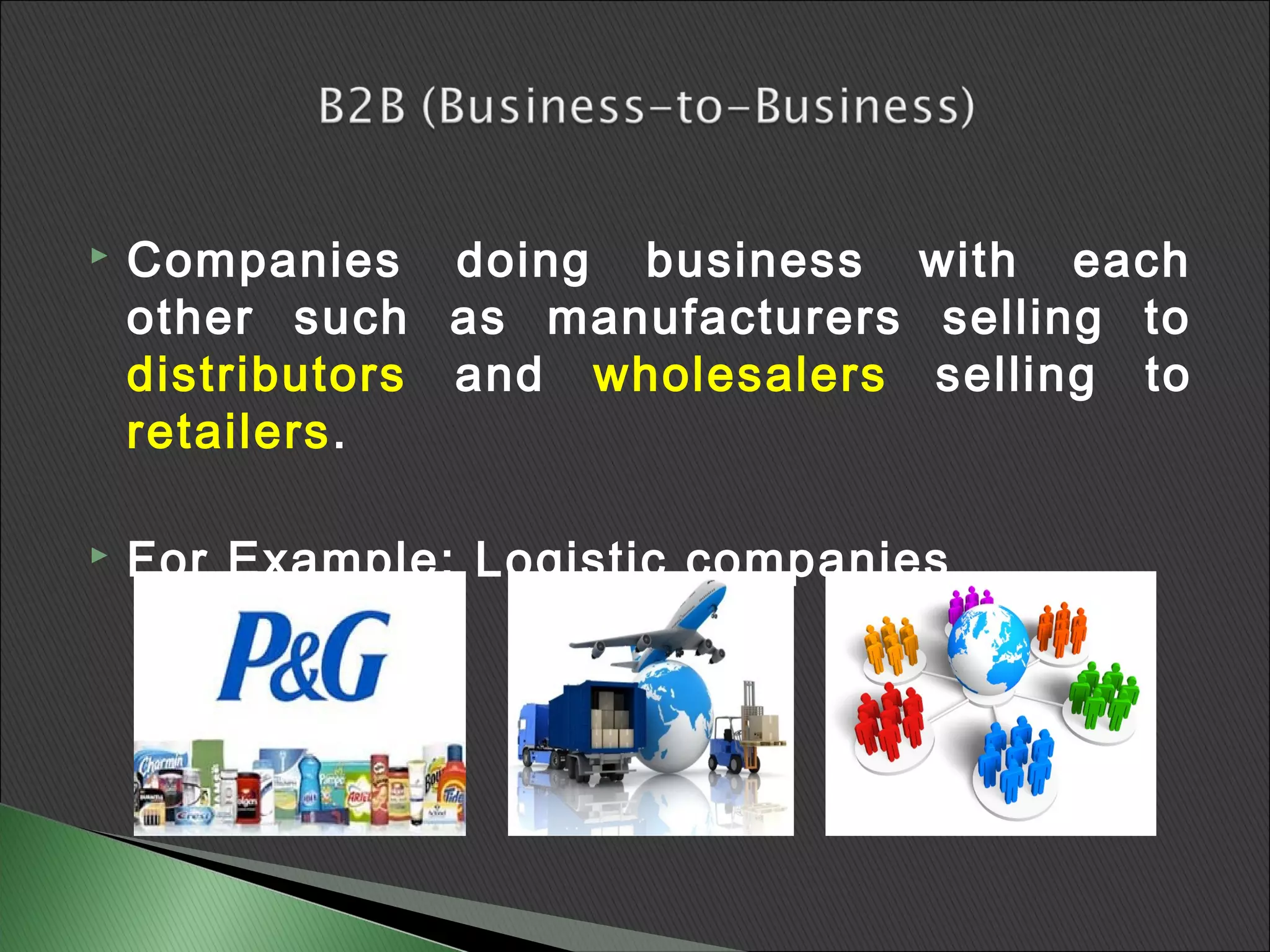
   Companies doing business with each
    other such as manufacturers selling to
    distributors and wholesalers selling to
    retailers.

   For Example: Logistic companies
   In B2C seller is a business organization buyer is consumer.
   In this case costumer directly interacts with company,

    i.e. books and cd’s buy online and internet used as a medium
    for transaction.
   Newspapers reading and weather forecasting

    Examples are ebay.com, and amazon.com.
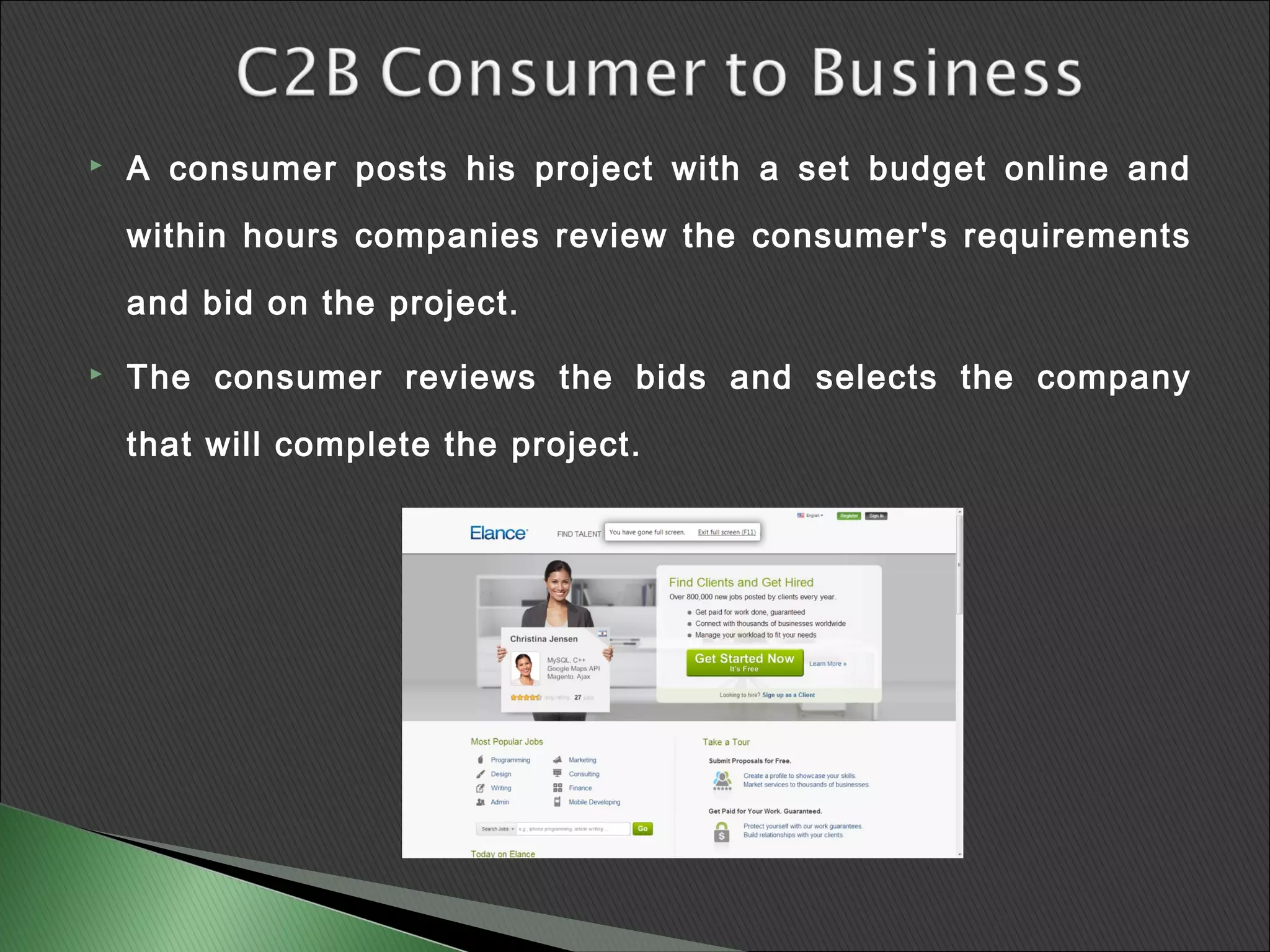
   A consumer posts his project with a set budget online and

    within hours companies review the consumer's requirements

    and bid on the project.

   The consumer reviews the bids and selects the company

    that will complete the project.
   In this type both seller and buyers are consumers.

   There are many sites offering free classifieds, auctions and

    forums where individuals can buy and sell.

   PayPal where people can send and receive money online

    with ease.

   Olx.com auction service is a great example of where person-

    to-person transactions take place everyday.
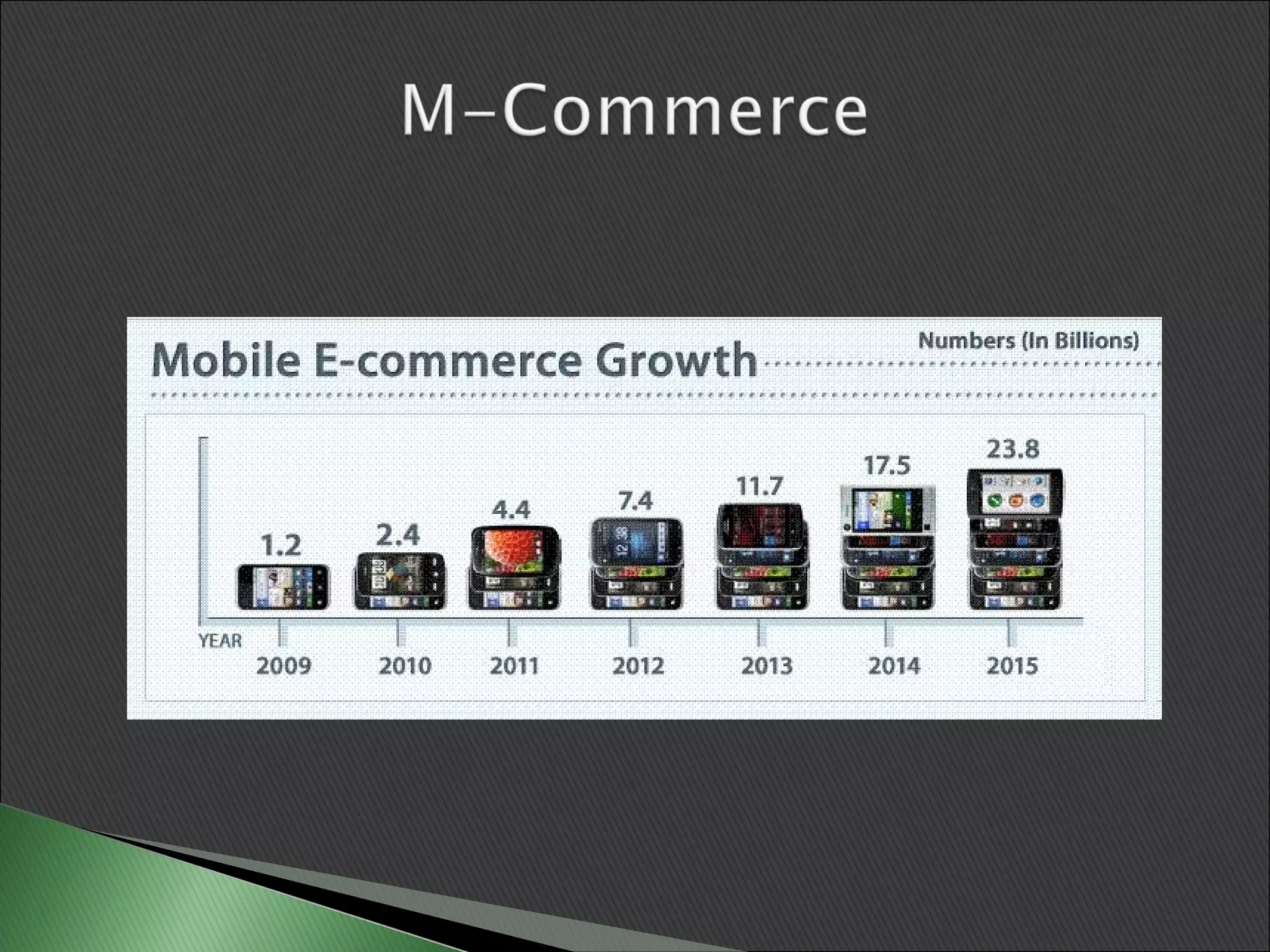
   Mobile commerce is the buying and selling of goods and

    services   through   wireless   technology   –   i.e.,   cellular

    telephones and Personal Digital Assistants (PDAs).
THANK YOU

E - Commerce Lecture #3

  • 1.
    IntroductIon to E-commErcE Lecture #3 Mrs.Vasanthi Muniasamy M.Sc., M.Phil Department Of Information Systems King Khalid University
  • 2.
    Introduction to Commerce and E – Commerce  Components of E - Commerce  E-Business & E-Commerce  Process Diagram of E - Commerce  Types of E - Commerce
  • 3.
    The exchange of commodities, buying and selling, of products and services requiring transportation, from location to location is known as commerce.
  • 4.
    E-commerce provides thecapability of buying and selling products and information on the internet and other online services.
  • 5.
    Components of E-Commerce Online Shopping - the scope of information and activities that provides the customer with the information they need to conduct business with you and make an informed buying decision.
  • 6.
    Online Purchasing - the technology infrastructure for the exchange of data and the purchase of a product over the Internet.
  • 7.
    E-Business is a Super-set of E-Commerce. E-business includes E-commerce but also covers internal processes such as  Production  Inventory management  Product development  Risk management  Finance  Human resources.
  • 8.
    E-Business E-Commerce
  • 9.
    The term e-commerce was originally conceived to describe the process of conducting business transactions electronically using technology from the  Electronic Data Interchange (EDI) and  Electronic Funds Transfer (EFT).  
  • 10.
    B2B ( Business to Business E-commerce)  B2C ( Business to Consumer E-commerce)  C2B ( Consumer to Business E-commerce)  C2C ( Consumer to Consumer E- commerce)  M-Commerce (Mobile E-commerce)
  • 11.
    Companies doing business with each other such as manufacturers selling to distributors and wholesalers selling to retailers.  For Example: Logistic companies
  • 12.
    In B2C seller is a business organization buyer is consumer.  In this case costumer directly interacts with company, i.e. books and cd’s buy online and internet used as a medium for transaction.  Newspapers reading and weather forecasting Examples are ebay.com, and amazon.com.
  • 13.
    A consumer posts his project with a set budget online and within hours companies review the consumer's requirements and bid on the project.  The consumer reviews the bids and selects the company that will complete the project.
  • 14.
    In this type both seller and buyers are consumers.  There are many sites offering free classifieds, auctions and forums where individuals can buy and sell.  PayPal where people can send and receive money online with ease.  Olx.com auction service is a great example of where person- to-person transactions take place everyday.
  • 15.
    Mobile commerce is the buying and selling of goods and services through wireless technology – i.e., cellular telephones and Personal Digital Assistants (PDAs).
  • 17.