2,3 & N TIER
ARCHITECTURE
Table of contents
 Introduction
 Client & server
 2tier architecture
 3tier architecture
 Applications of 2 & 3 tier architecture
 Conclusion
Introduction

 What is client??


 What is server??
What is client??


 Client (computing), software that accesses a remote
 service on another computer known as a server, by
 way of a network
What is server??

 A server is a computer, or series of computers, that
 link other computers or electronic devices together

 For example, when you enter a query in a search
 engine, the query is sent from your computer over the
 internet to the servers that store all the relevant web
 pages. The results are sent back by the server to your
 computer.
Peer to peer architecture
 Peer-to-peer (P2P) computing or networking is a
 distributed application architecture that partitions
 tasks or work loads between peers.

 Peers are equally privileged, equipotent participants
 in the application.
Coming back to client – server architecture
   • A client makes a request to connect to a server for
     providing some service.

   • The services running on the server run on known
     ports and the client needs to know the address of the
     server machine and this port in order to connect to
     the server.

   • The first packet which the client sends as a request to
     the server contains this information and this is then
     further used by the server to send any information.
What is a Two-Tier Architecture?
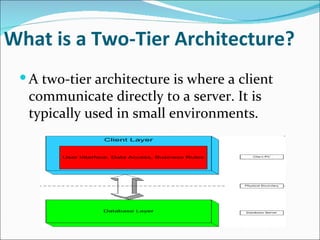
  A two-tier architecture is where a client
  communicate directly to a server. It is
  typically used in small environments.
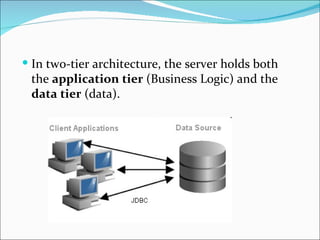
 In two-tier architecture, the server holds both
 the application tier (Business Logic) and the
 data tier (data).
Advantage & Disadvantage
Advantages                     Disadvantages
 Simple structure              Poor performance
                                Dependability
 Easy to setup and maintain    Non-Scalable
                                Not portable to other
 Good for small user groups     database server.
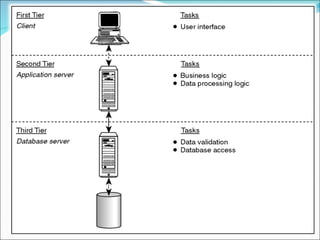
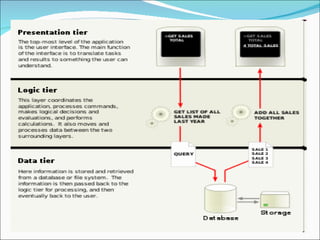
 What is a 3-Tier Architecture

 In 3-tier architecture, there is an intermediary level, meaning
  the architecture is generally split up between:
 A client, i.e. the computer which requests the resources,
  equipped with a user interface (usually a web browser for
  presentation purposes
 The Application server (also called middleware), whose task is
  to provide the requested resources, but by calling on another
  server
 The data server, which provides the application server with the
  data it requires
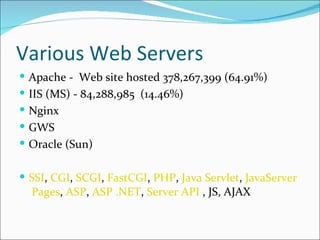
Various Web Servers
 Apache - Web site hosted 378,267,399 (64.91%)
 IIS (MS) - 84,288,985 (14.46%)
 Nginx
 GWS
 Oracle (Sun)


 SSI, CGI, SCGI, FastCGI, PHP, Java Servlet, JavaServer
  Pages, ASP, ASP .NET, Server API , JS, AJAX
Various Application Servers
 IBM Webshpere
 Jboss
 Oracle App. Server
 Tomcat
 WEbLogic
 Silver Stream
Various Database Servers
 Oracle
 DB2
 SQL Server
 Informix
 Ingress
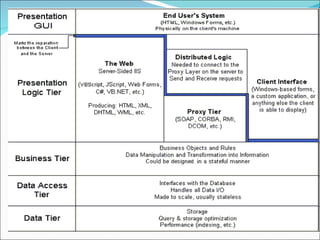
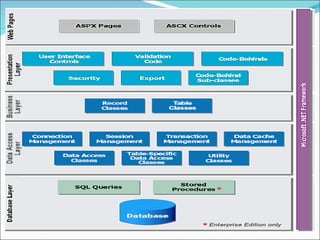
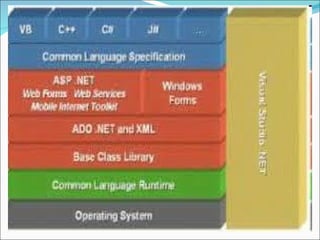
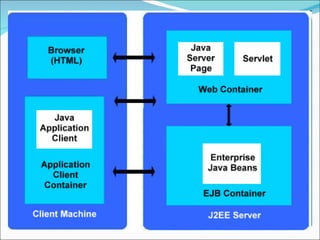
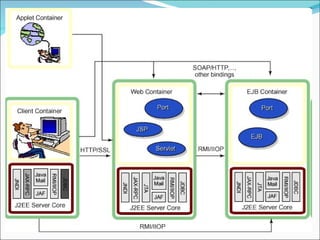
N – Tier Architecture
E business n_tier_arch

E business n_tier_arch

  • 1.
    2,3 & NTIER ARCHITECTURE
  • 2.
    Table of contents Introduction  Client & server  2tier architecture  3tier architecture  Applications of 2 & 3 tier architecture  Conclusion
  • 3.
    Introduction  What isclient??  What is server??
  • 4.
    What is client?? Client (computing), software that accesses a remote service on another computer known as a server, by way of a network
  • 5.
    What is server?? A server is a computer, or series of computers, that link other computers or electronic devices together  For example, when you enter a query in a search engine, the query is sent from your computer over the internet to the servers that store all the relevant web pages. The results are sent back by the server to your computer.
  • 6.
    Peer to peerarchitecture  Peer-to-peer (P2P) computing or networking is a distributed application architecture that partitions tasks or work loads between peers.  Peers are equally privileged, equipotent participants in the application.
  • 7.
    Coming back toclient – server architecture • A client makes a request to connect to a server for providing some service. • The services running on the server run on known ports and the client needs to know the address of the server machine and this port in order to connect to the server. • The first packet which the client sends as a request to the server contains this information and this is then further used by the server to send any information.
  • 9.
    What is aTwo-Tier Architecture?  A two-tier architecture is where a client communicate directly to a server. It is typically used in small environments.
  • 10.
     In two-tierarchitecture, the server holds both the application tier (Business Logic) and the data tier (data).
  • 11.
    Advantage & Disadvantage Advantages Disadvantages  Simple structure  Poor performance  Dependability  Easy to setup and maintain  Non-Scalable  Not portable to other  Good for small user groups database server.
  • 13.
     What isa 3-Tier Architecture  In 3-tier architecture, there is an intermediary level, meaning the architecture is generally split up between:  A client, i.e. the computer which requests the resources, equipped with a user interface (usually a web browser for presentation purposes  The Application server (also called middleware), whose task is to provide the requested resources, but by calling on another server  The data server, which provides the application server with the data it requires
  • 16.
    Various Web Servers Apache - Web site hosted 378,267,399 (64.91%)  IIS (MS) - 84,288,985 (14.46%)  Nginx  GWS  Oracle (Sun)  SSI, CGI, SCGI, FastCGI, PHP, Java Servlet, JavaServer Pages, ASP, ASP .NET, Server API , JS, AJAX
  • 17.
    Various Application Servers IBM Webshpere  Jboss  Oracle App. Server  Tomcat  WEbLogic  Silver Stream
  • 18.
    Various Database Servers Oracle  DB2  SQL Server  Informix  Ingress
  • 19.
    N – TierArchitecture