Tele-Continuing Nurse Education
conducted by GeriCare
Topic: Approach to Shortness of Breath (Dyspnea)
Date: 13 Jan 2020
Speaker: SSN Henry Kong
C41 Geriatric Clinic
Palliative Medicine
Khoo Teck Puat Hospital
Administrative
• Send your nursing home attendance and any feedback to:
– ktph.gericare@ktph.com.sg
– Attendance with SNB No. Within 1 week ( with staff designation and SNB no.)
• Next Tele-CNE Presentation will be:
– Topic: Medication Safety (Administering medication through enteral feeding/NGT)
– 13 Apr (Mon) 2020 @ 2.00 – 3.00 pm
– By: Ms Sarah Low (Senior Clinical Pharmacist, Yishun Health)
DYSPNEA
By SSN Henry Kong
C41 Geriatric Clinic
Palliative Medicine
Khoo Teck Puat Hospital
WHAT IS
IT?
 A subjective feeling of
breathlessness
 Can cause significant distress
and anxiety in patients
 Secondary physiological and
behavioural responses
 “Hunger for air”
 Constantly dying again and
again
(Wu, 2014)
 Cancer- related (E.g. Lung cancer, malignant pleural effusion)
 Non cancer-related (E.g. COPD, Heart failure, Pneumonia, anemia)
 Prostatism (and cannot pee) and constipation
 Psychosocial (“feeling breathless thinking about breathlessness”)
 Spiritual
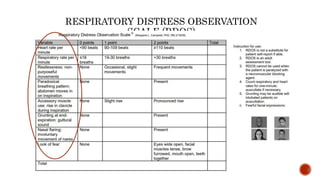
RESPIRATORY DISTRESS OBSERVATION
SCALE (RDOS)
NURSING
MANAGEM
ENT
 Oxygen therapy
 Blowing fan at face
 Energy conservation
 Chest PT
 Suctioning
C
O
M
F
O
R
T
Call for help. Calming voice and approach among patient and
caregivers.
Observe closely and assess dyspnea for ways to respond
Medications to be tried
Fan to face may decrease SOB
Oxygen therapy as previously found useful
Reassure and use relaxation techniques
Timing interventions to reduce dyspnea. Work together- reassess-repeat
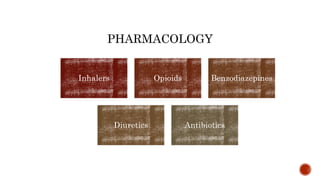
PHARMACOLOGY
Inhalers Opioids Benzodiazepines
Diuretics Antibiotics
Giving opioids will hasten death.
OPIOI
D
TOXIC
ITY
Pinpoint
pupils
Respiratory
rate < 12
breaths per
minute
Myoclonic
jerks
Drowsiness
Dyspnea
Dyspnea

Dyspnea

  • 1.
    Tele-Continuing Nurse Education conductedby GeriCare Topic: Approach to Shortness of Breath (Dyspnea) Date: 13 Jan 2020 Speaker: SSN Henry Kong C41 Geriatric Clinic Palliative Medicine Khoo Teck Puat Hospital
  • 2.
    Administrative • Send yournursing home attendance and any feedback to: – ktph.gericare@ktph.com.sg – Attendance with SNB No. Within 1 week ( with staff designation and SNB no.) • Next Tele-CNE Presentation will be: – Topic: Medication Safety (Administering medication through enteral feeding/NGT) – 13 Apr (Mon) 2020 @ 2.00 – 3.00 pm – By: Ms Sarah Low (Senior Clinical Pharmacist, Yishun Health)
  • 3.
    DYSPNEA By SSN HenryKong C41 Geriatric Clinic Palliative Medicine Khoo Teck Puat Hospital
  • 5.
    WHAT IS IT?  Asubjective feeling of breathlessness  Can cause significant distress and anxiety in patients  Secondary physiological and behavioural responses  “Hunger for air”  Constantly dying again and again (Wu, 2014)
  • 6.
     Cancer- related(E.g. Lung cancer, malignant pleural effusion)  Non cancer-related (E.g. COPD, Heart failure, Pneumonia, anemia)  Prostatism (and cannot pee) and constipation  Psychosocial (“feeling breathless thinking about breathlessness”)  Spiritual
  • 8.
  • 9.
    NURSING MANAGEM ENT  Oxygen therapy Blowing fan at face  Energy conservation  Chest PT  Suctioning
  • 11.
    C O M F O R T Call for help.Calming voice and approach among patient and caregivers. Observe closely and assess dyspnea for ways to respond Medications to be tried Fan to face may decrease SOB Oxygen therapy as previously found useful Reassure and use relaxation techniques Timing interventions to reduce dyspnea. Work together- reassess-repeat
  • 12.
  • 13.
    Giving opioids willhasten death.
  • 14.

Editor's Notes

  • #6 Ask audience to hold their breath. Ask audience to take as many breath as they can in 20 seconds