PHYSIOTHERAPY IN PALLIATIVE CARE
Melissa Ng Senior Physiotherapist Yishun Community Hospital
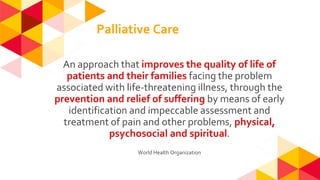
Palliative Care
An approach that improves the quality of life of
patients and their families facing the problem
associated with life-threatening illness, through the
prevention and relief of suffering by means of early
identification and impeccable assessment and
treatment of pain and other problems, physical,
psychosocial and spiritual.
World Health Organization
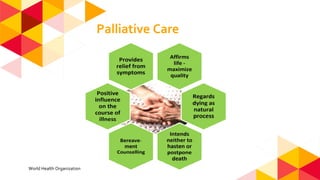
Palliative Care
World Health Organization
Common Physical Symptoms
Association of Chartered Physiotherapists in Oncology and Palliative Care
◂Loss of appetite and weight loss
◂Dehydration
◂Nausea and vomiting
◂Constipation
◂Functional Decline
◂Dyspnea
◂Pain
◂Fatigue
Fatigue
Disease
Pain
Shortness
of breath
Depression
Difficult
emotions
Stress &
Anxiety
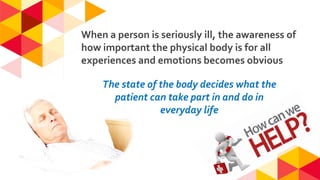
When a person is seriously ill, the awareness of
how important the physical body is for all
experiences and emotions becomes obvious
The state of the body decides what the
patient can take part in and do in
everyday life
Role of PT in Palliative Care
◂Promoting / optimizing physical activity
◂Symptoms management
◂Education and training of MDT as well as patients and
carergivers
◂Dissemination of information to MDT with key role in
discharge planning
◂Communication and collaboration between primary and
secondary care
Association of Chartered Physiotherapists in Oncology and Palliative Care
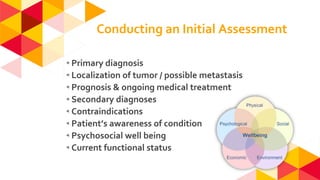
Conducting an Initial Assessment
◂Primary diagnosis
◂Localization of tumor / possible metastasis
◂Prognosis & ongoing medical treatment
◂Secondary diagnoses
◂Contraindications
◂Patient’s awareness of condition
◂Psychosocial well being
◂Current functional status
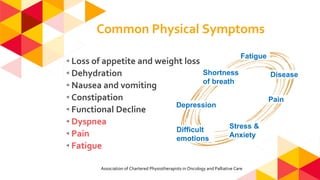
Common Physical Symptoms
Association of Chartered Physiotherapists in Oncology and Palliative Care
◂Loss of appetite and weight loss
◂Dehydration
◂Nausea and vomiting
◂Constipation
◂Functional Decline
◂Dyspnea
◂Pain
◂Fatigue
Fatigue
Disease
Pain
Shortness
of breath
Depression
Difficult
emotions
Stress &
Anxiety
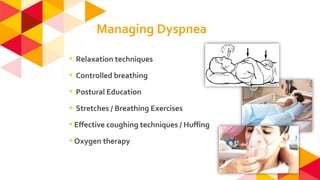
◂ Relaxation techniques
◂ Controlled breathing
◂ Postural Education
◂ Stretches / Breathing Exercises
◂Effective coughing techniques / Huffing
◂Oxygen therapy
Managing Dyspnea
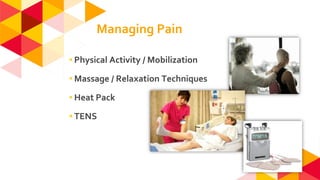
◂Physical Activity / Mobilization
◂Massage / Relaxation Techniques
◂Heat Pack
◂TENS
Managing Pain
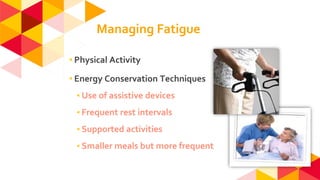
◂Physical Activity
◂Energy Conservation Techniques
◂Use of assistive devices
◂Frequent rest intervals
◂Supported activities
◂Smaller meals but more frequent
Managing Fatigue
◂Natural reaction to threat and severe stress and can
show as fear, worry, anger and panic
◂Is it possible to divert? Is the patient taking medication
for anxiety?
◂Soft tissue massage, music therapy, relaxation
techniques
Managing Anxiety
◂Bed mobility and transfer techniques
◂Providing ambulatory assistance
◂Use of assistive devices
◂Breathing / Relaxation techniques
◂Energy conservation techniques
◂Fall precautions
◂Chest PT techniques
Caregiver Training
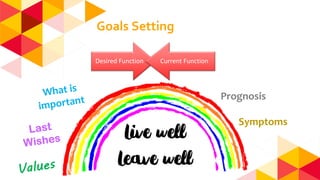
Goals Setting
Desired Function Current Function
Prognosis
Symptoms
Creating moments
Adding life to days
Physiotherapy in palliative care

Physiotherapy in palliative care

  • 1.
    PHYSIOTHERAPY IN PALLIATIVECARE Melissa Ng Senior Physiotherapist Yishun Community Hospital
  • 2.
    Palliative Care An approachthat improves the quality of life of patients and their families facing the problem associated with life-threatening illness, through the prevention and relief of suffering by means of early identification and impeccable assessment and treatment of pain and other problems, physical, psychosocial and spiritual. World Health Organization
  • 3.
  • 4.
    Common Physical Symptoms Associationof Chartered Physiotherapists in Oncology and Palliative Care ◂Loss of appetite and weight loss ◂Dehydration ◂Nausea and vomiting ◂Constipation ◂Functional Decline ◂Dyspnea ◂Pain ◂Fatigue Fatigue Disease Pain Shortness of breath Depression Difficult emotions Stress & Anxiety
  • 5.
    When a personis seriously ill, the awareness of how important the physical body is for all experiences and emotions becomes obvious The state of the body decides what the patient can take part in and do in everyday life
  • 6.
    Role of PTin Palliative Care ◂Promoting / optimizing physical activity ◂Symptoms management ◂Education and training of MDT as well as patients and carergivers ◂Dissemination of information to MDT with key role in discharge planning ◂Communication and collaboration between primary and secondary care Association of Chartered Physiotherapists in Oncology and Palliative Care
  • 7.
    Conducting an InitialAssessment ◂Primary diagnosis ◂Localization of tumor / possible metastasis ◂Prognosis & ongoing medical treatment ◂Secondary diagnoses ◂Contraindications ◂Patient’s awareness of condition ◂Psychosocial well being ◂Current functional status
  • 8.
    Common Physical Symptoms Associationof Chartered Physiotherapists in Oncology and Palliative Care ◂Loss of appetite and weight loss ◂Dehydration ◂Nausea and vomiting ◂Constipation ◂Functional Decline ◂Dyspnea ◂Pain ◂Fatigue Fatigue Disease Pain Shortness of breath Depression Difficult emotions Stress & Anxiety
  • 9.
    ◂ Relaxation techniques ◂Controlled breathing ◂ Postural Education ◂ Stretches / Breathing Exercises ◂Effective coughing techniques / Huffing ◂Oxygen therapy Managing Dyspnea
  • 10.
    ◂Physical Activity /Mobilization ◂Massage / Relaxation Techniques ◂Heat Pack ◂TENS Managing Pain
  • 11.
    ◂Physical Activity ◂Energy ConservationTechniques ◂Use of assistive devices ◂Frequent rest intervals ◂Supported activities ◂Smaller meals but more frequent Managing Fatigue
  • 12.
    ◂Natural reaction tothreat and severe stress and can show as fear, worry, anger and panic ◂Is it possible to divert? Is the patient taking medication for anxiety? ◂Soft tissue massage, music therapy, relaxation techniques Managing Anxiety
  • 13.
    ◂Bed mobility andtransfer techniques ◂Providing ambulatory assistance ◂Use of assistive devices ◂Breathing / Relaxation techniques ◂Energy conservation techniques ◂Fall precautions ◂Chest PT techniques Caregiver Training
  • 14.
    Goals Setting Desired FunctionCurrent Function Prognosis Symptoms
  • 15.