K.V.DASTHAGIRI
B.TECH 3RD YEAR
LBRCE
CIVIL DEPARTMENT
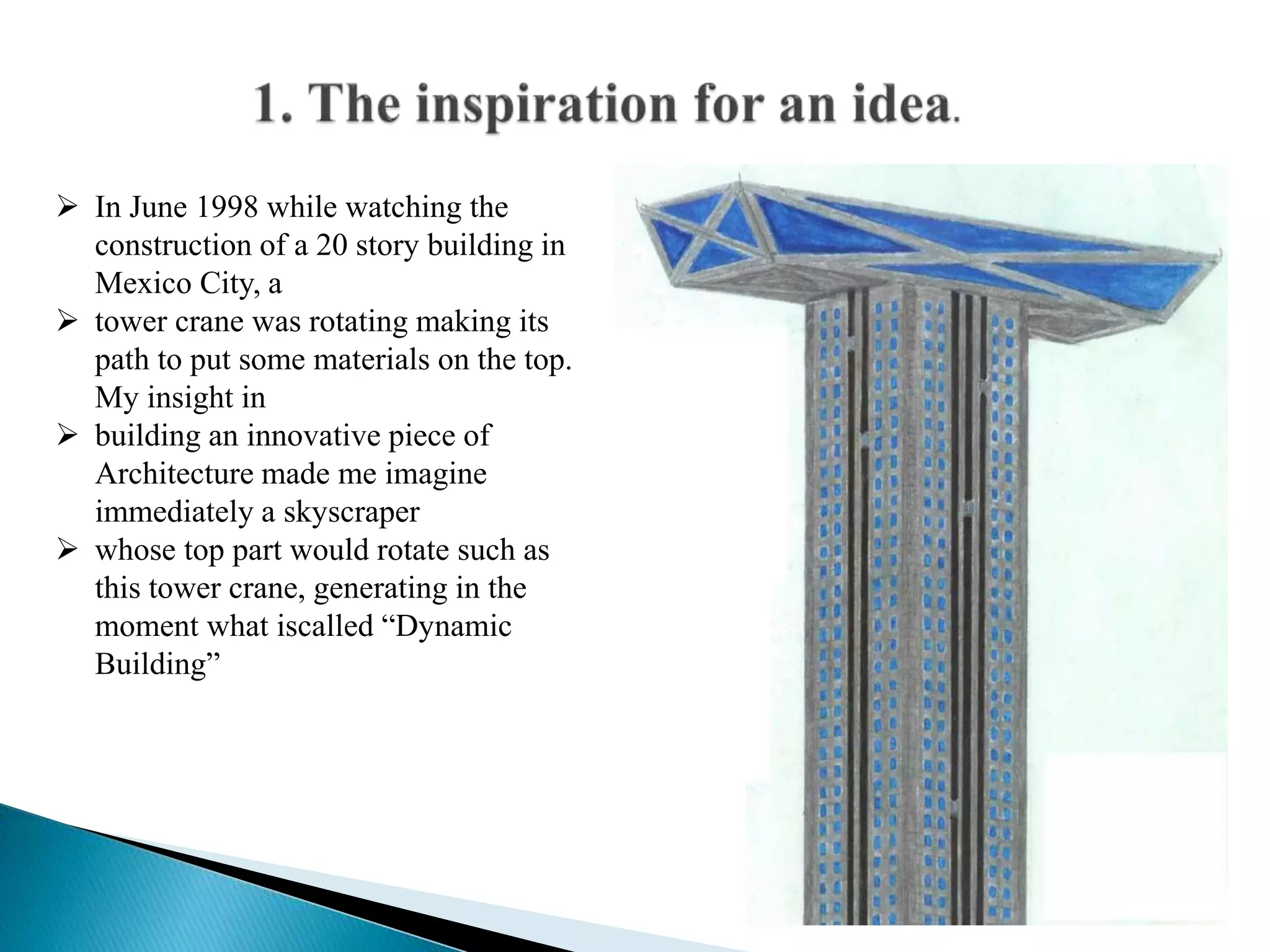
 In June 1998 while watching the
construction of a 20 story building in
Mexico City, a
 tower crane was rotating making its
path to put some materials on the top.
My insight in
 building an innovative piece of
Architecture made me imagine
immediately a skyscraper
 whose top part would rotate such as
this tower crane, generating in the
moment what iscalled “Dynamic
Building”
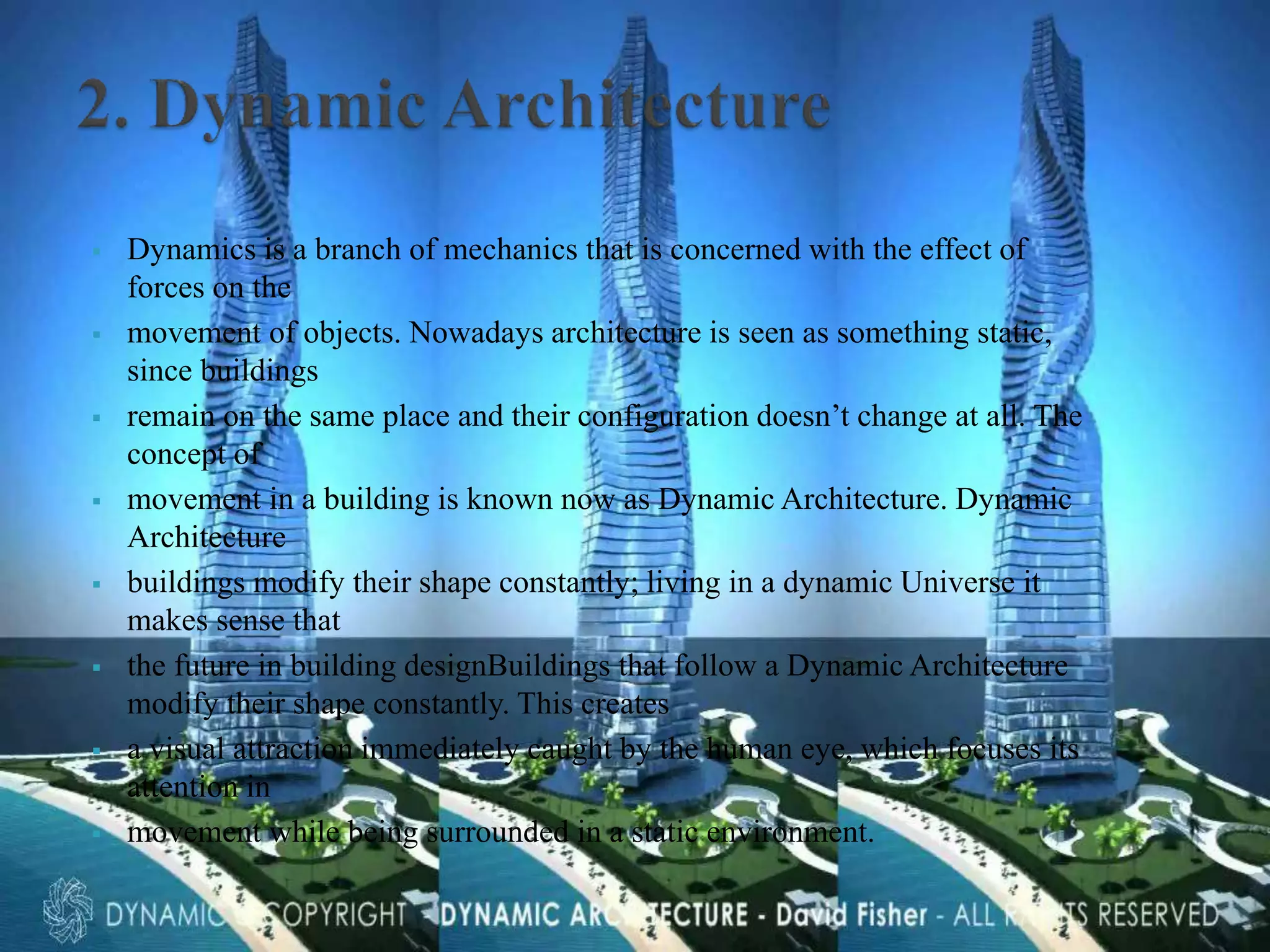
 Dynamics is a branch of mechanics that is concerned with the effect of
forces on the
 movement of objects. Nowadays architecture is seen as something static,
since buildings
 remain on the same place and their configuration doesn’t change at all. The
concept of
 movement in a building is known now as Dynamic Architecture. Dynamic
Architecture
 buildings modify their shape constantly; living in a dynamic Universe it
makes sense that
 the future in building designBuildings that follow a Dynamic Architecture
modify their shape constantly. This creates
 a visual attraction immediately caught by the human eye, which focuses its
attention in
 movement while being surrounded in a static environment.
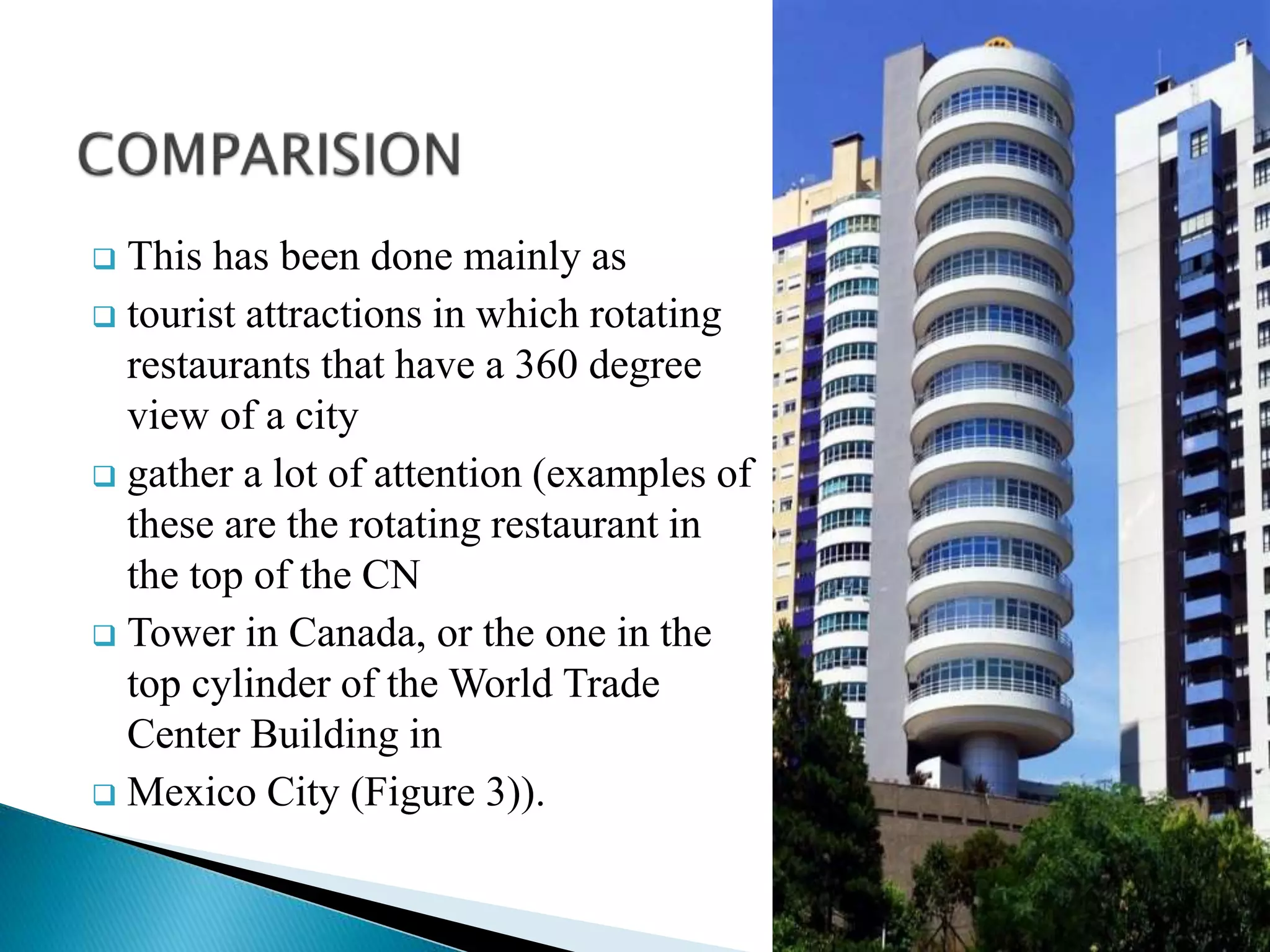
 This has been done mainly as
 tourist attractions in which rotating
restaurants that have a 360 degree
view of a city
 gather a lot of attention (examples of
these are the rotating restaurant in
the top of the CN
 Tower in Canada, or the one in the
top cylinder of the World Trade
Center Building in
 Mexico City (Figure 3)).
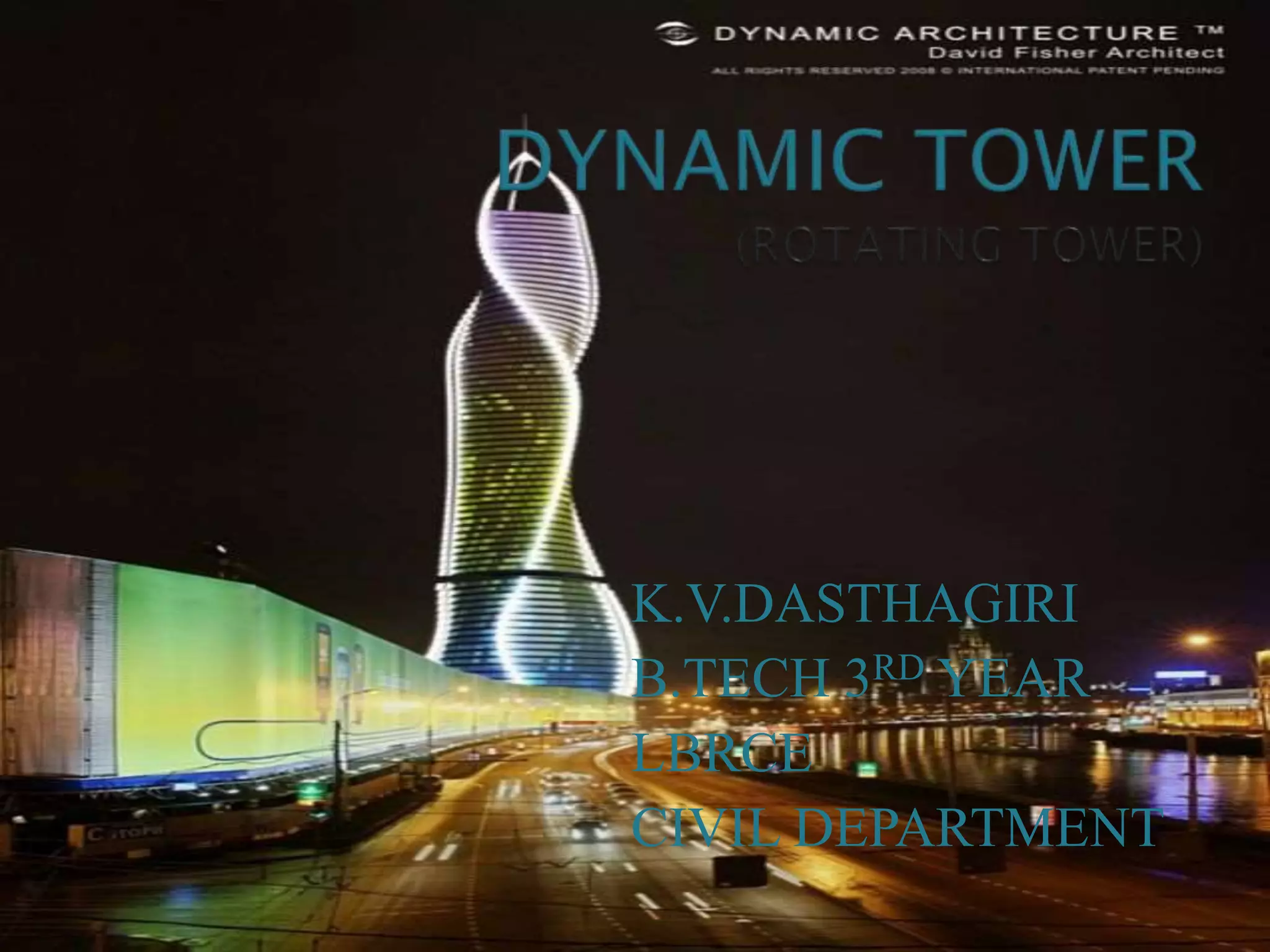
 The most recent work made in the field of
“Dynamic Architecture” appeared in the news
 in March 2007. It is the work of the Italian
Architect David Fisher that proposes an
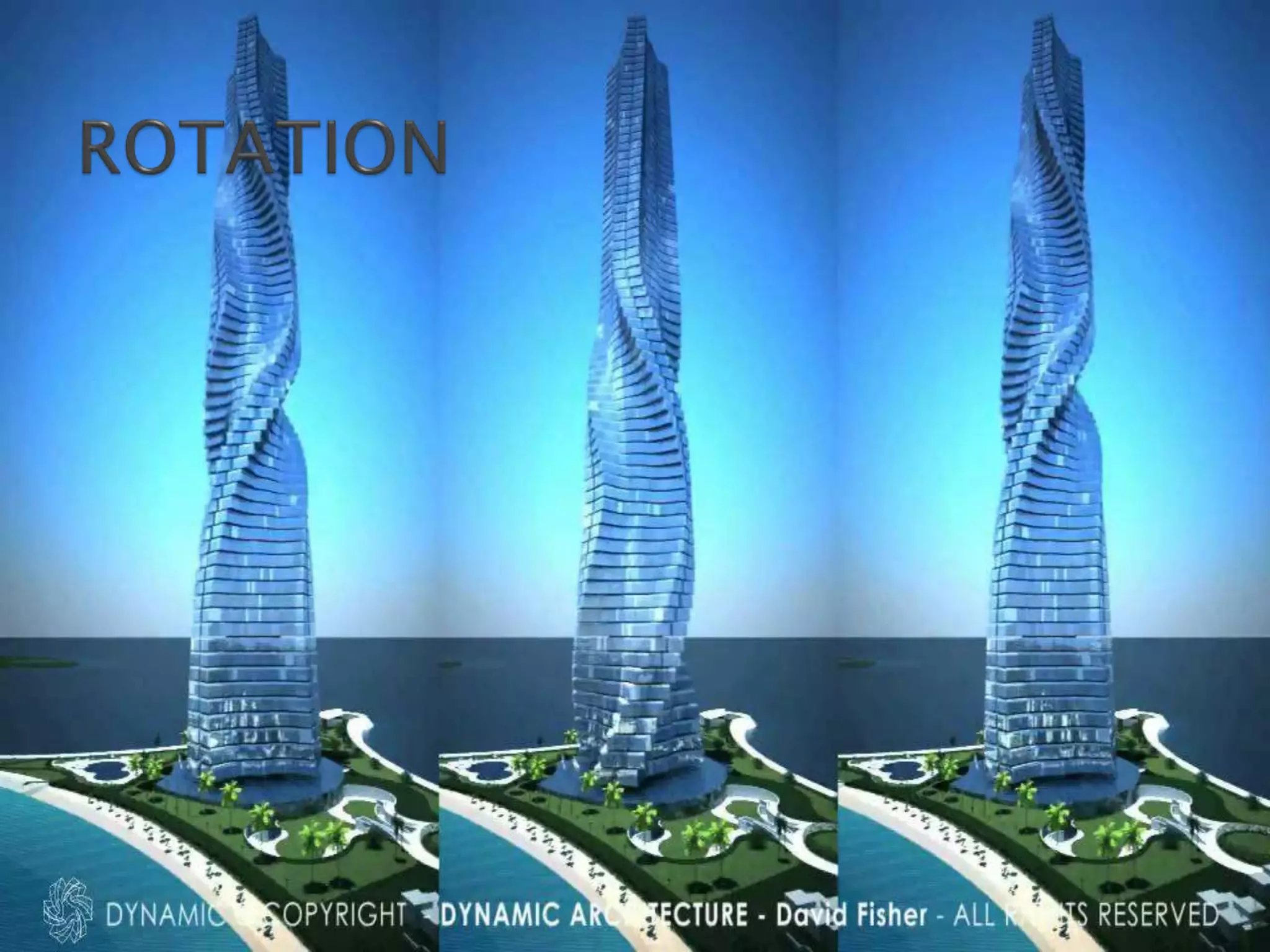
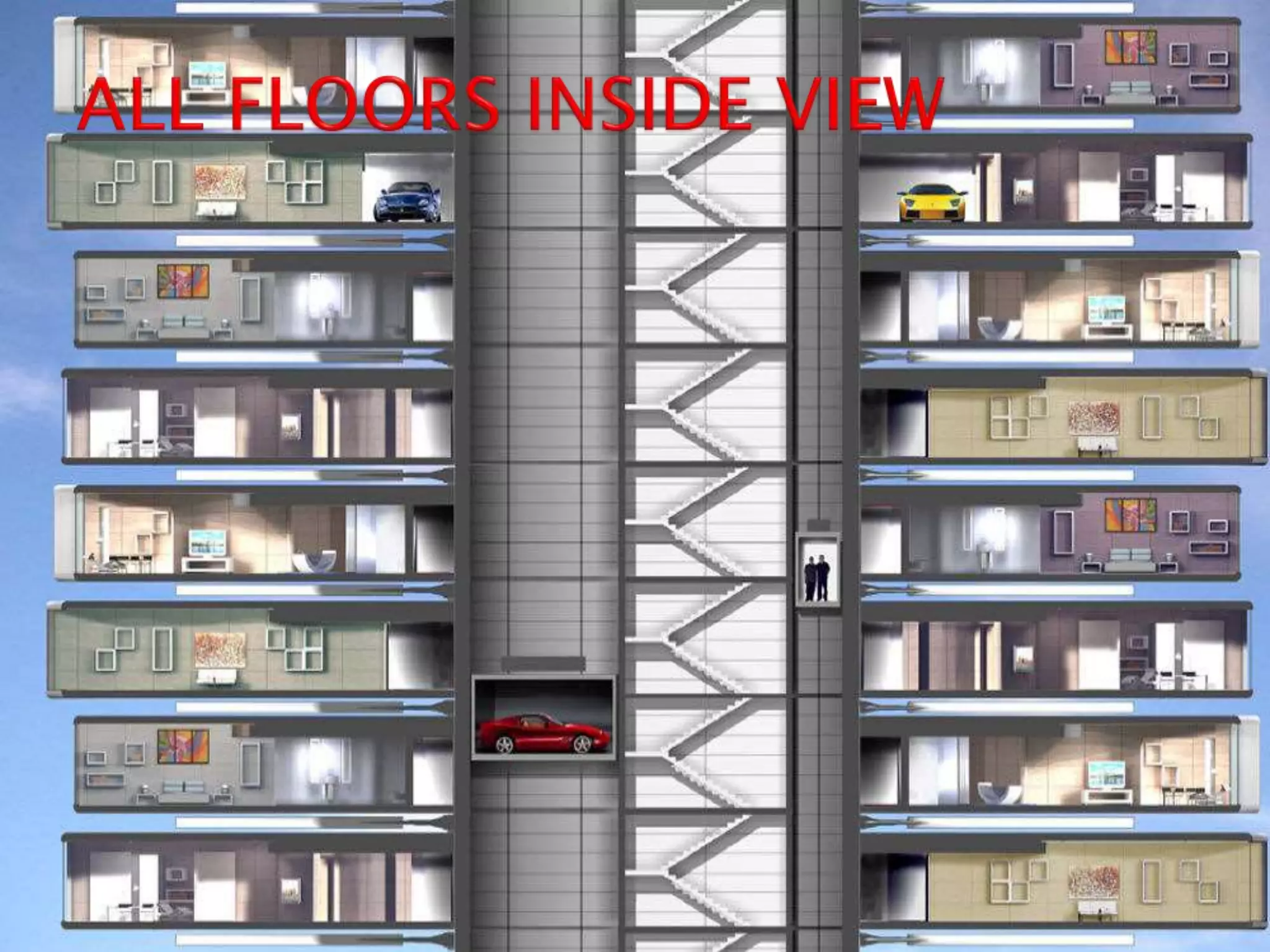
 apartment building in Dubai in which every floor
rotates from a central core (Figure 5).
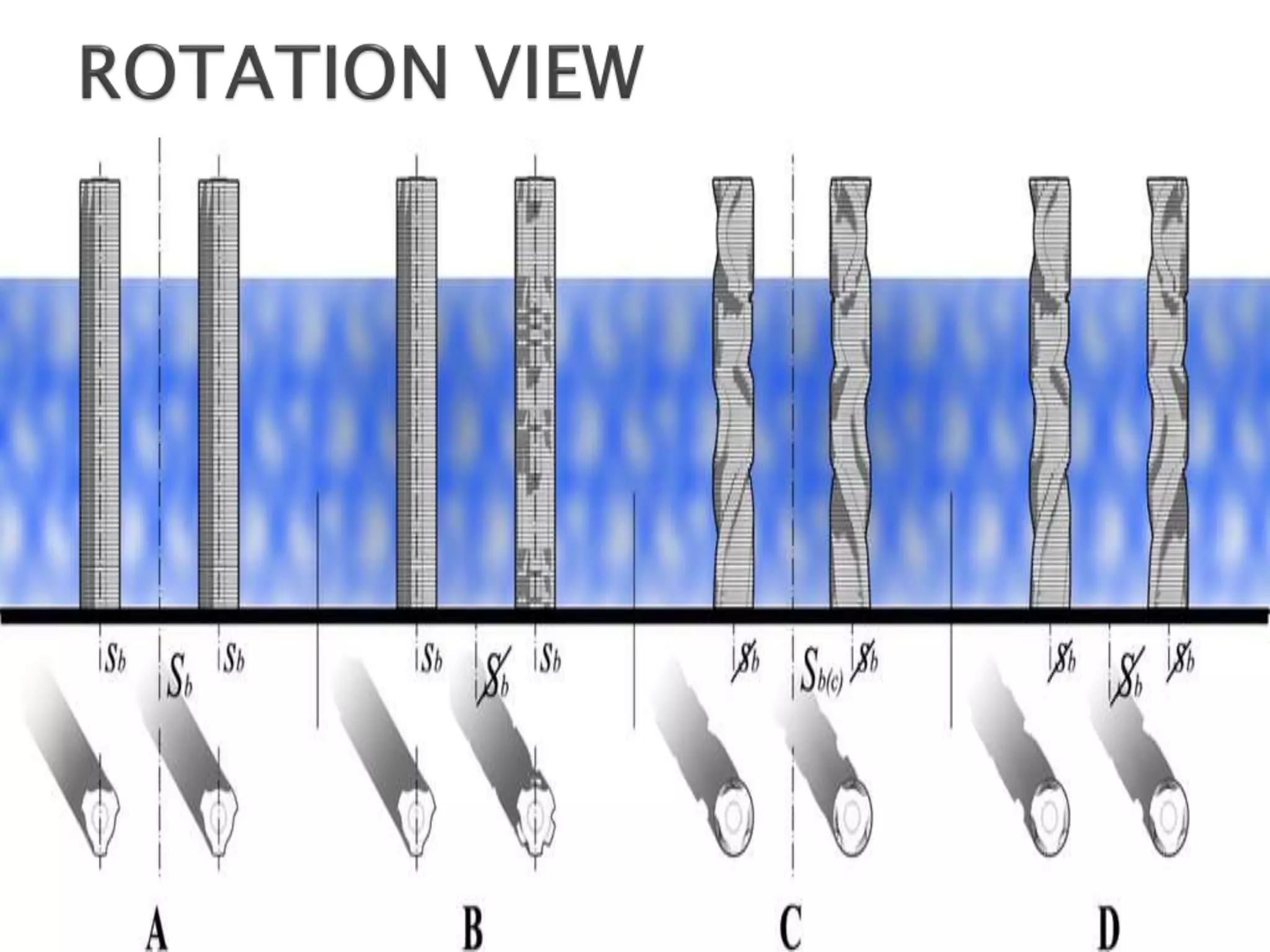
 Each floor consists of a separate module that the
owner can rotate at will or follow a
 particular configuration in synchronization with
the whole building.
 He was just awarded a patent publication for
rotatable building structures [12] (see
 Appendix 1). Although the mechanisms he uses for
rotation are a common standard in the
 machinery industry and simply adapted to the
bigger scale of buildings; clearly there is
 no innovation in his patent and he cannot claim
this “invention” as “unique”.
 The design concept is simple, a 200 m tall
skyscraper that follows the shape of the letter
 “T”, the top is cantilevered to each side of the
building (similar concept to tower crane
 (Figure 6)) while sitting on a roller bearing
 that will allow it to rotate at
 a maximum speed of one complete turn per hour.
 The German company Liebherr [6] produces
some of them with
 high standards in quality
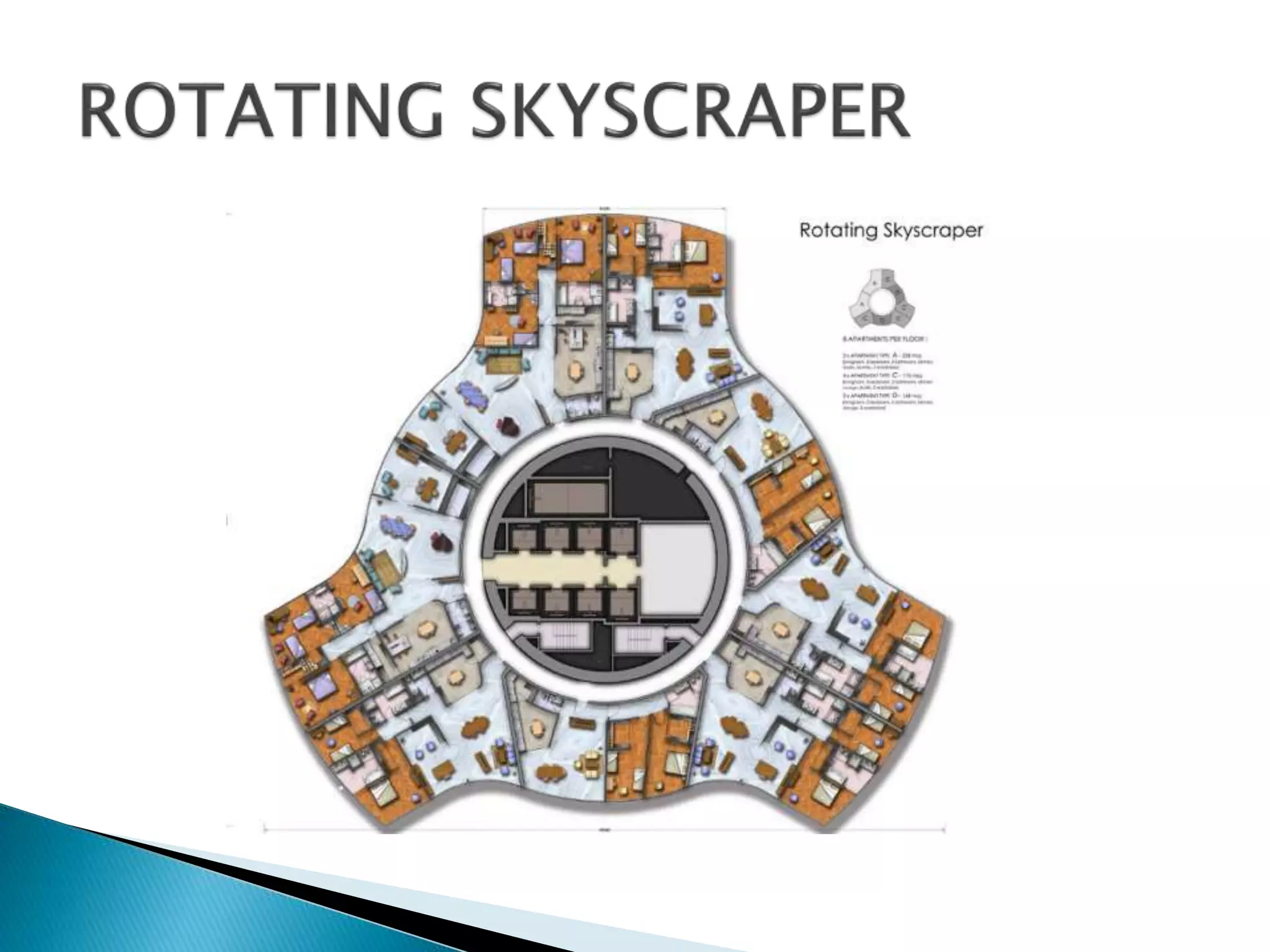
 Floor plan of the building, showing the
concrete elevator and services core, as well as
the
 beams that form the structure floor.
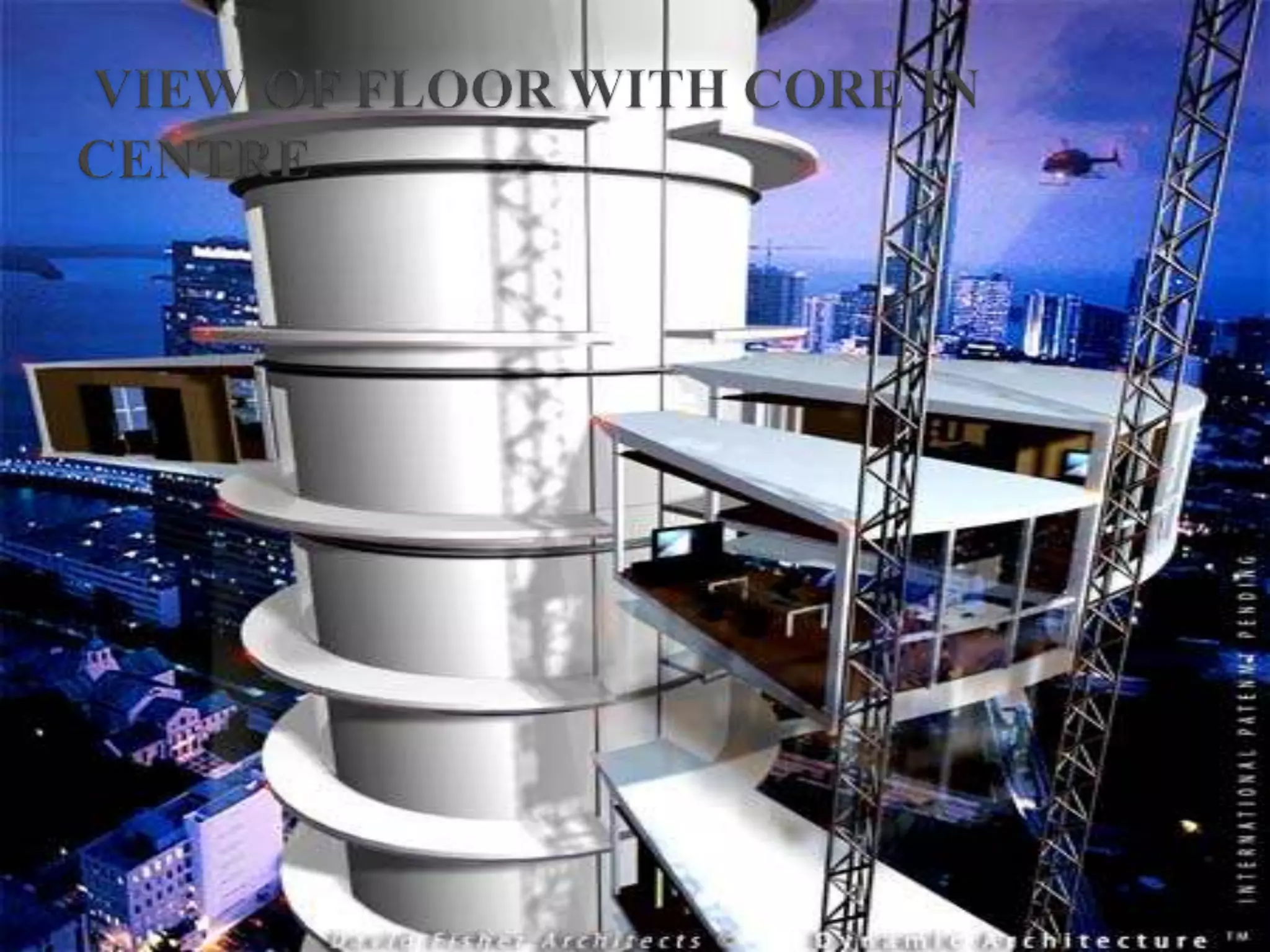
• The core is composed of 16 elevators that will give service to different floors
according
• to demand, two emergency stairs, and two restrooms (one for men and one for
women,
• each one of them with six toilets). Electricity and telephone cables could make
their way
• through one of the elevator cores or use some space in the stairs. The last
rotational three floors can be given any use, from restaurants, clubs,
auditoriums
• with a 360 degree view of the city or offices for executives. The core is
clearly reduced
• for these last floors, only four elevators, the emergency stairs and restrooms
will make
• their way through the roller bearing.
• Figure 14.
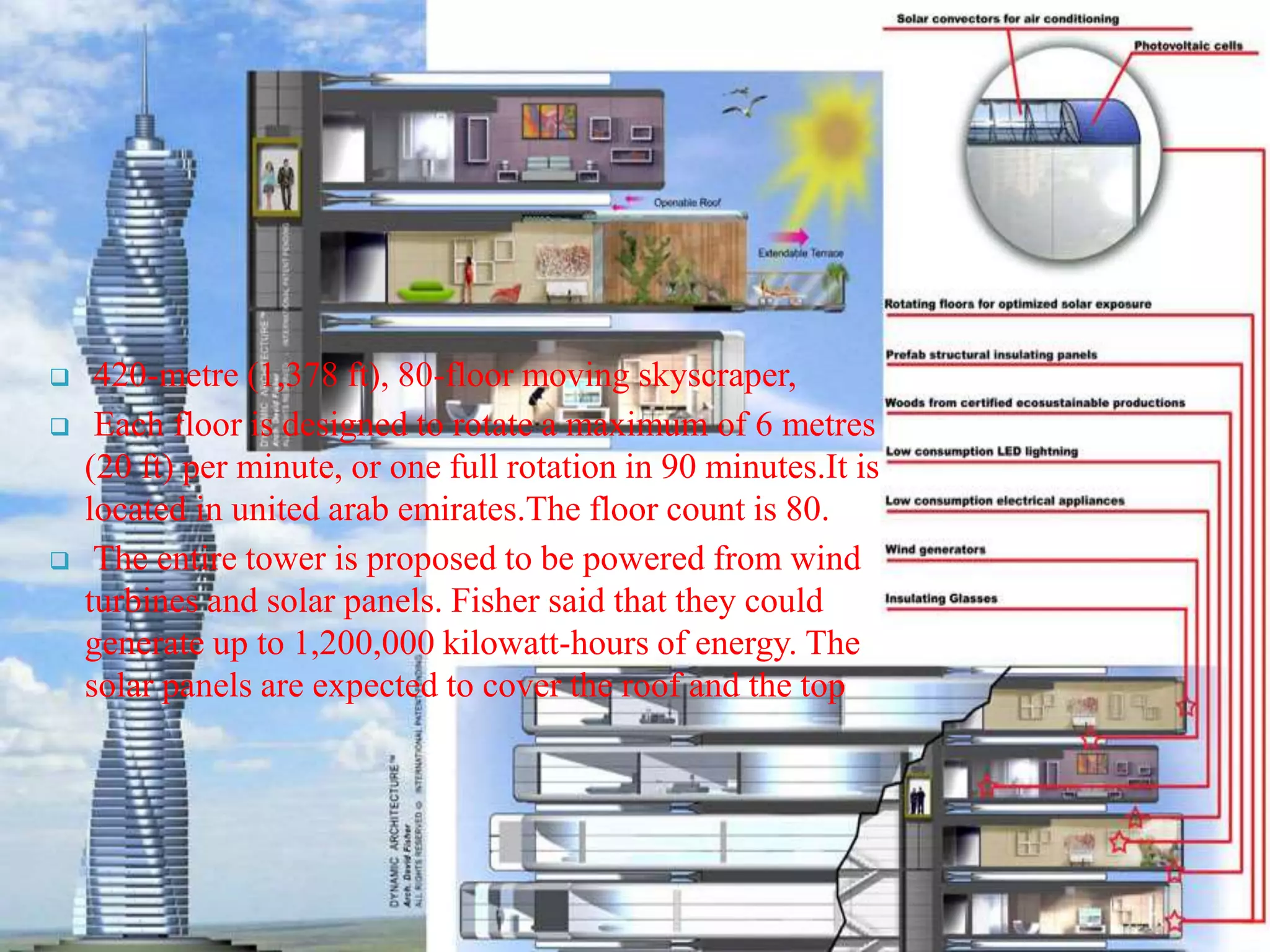
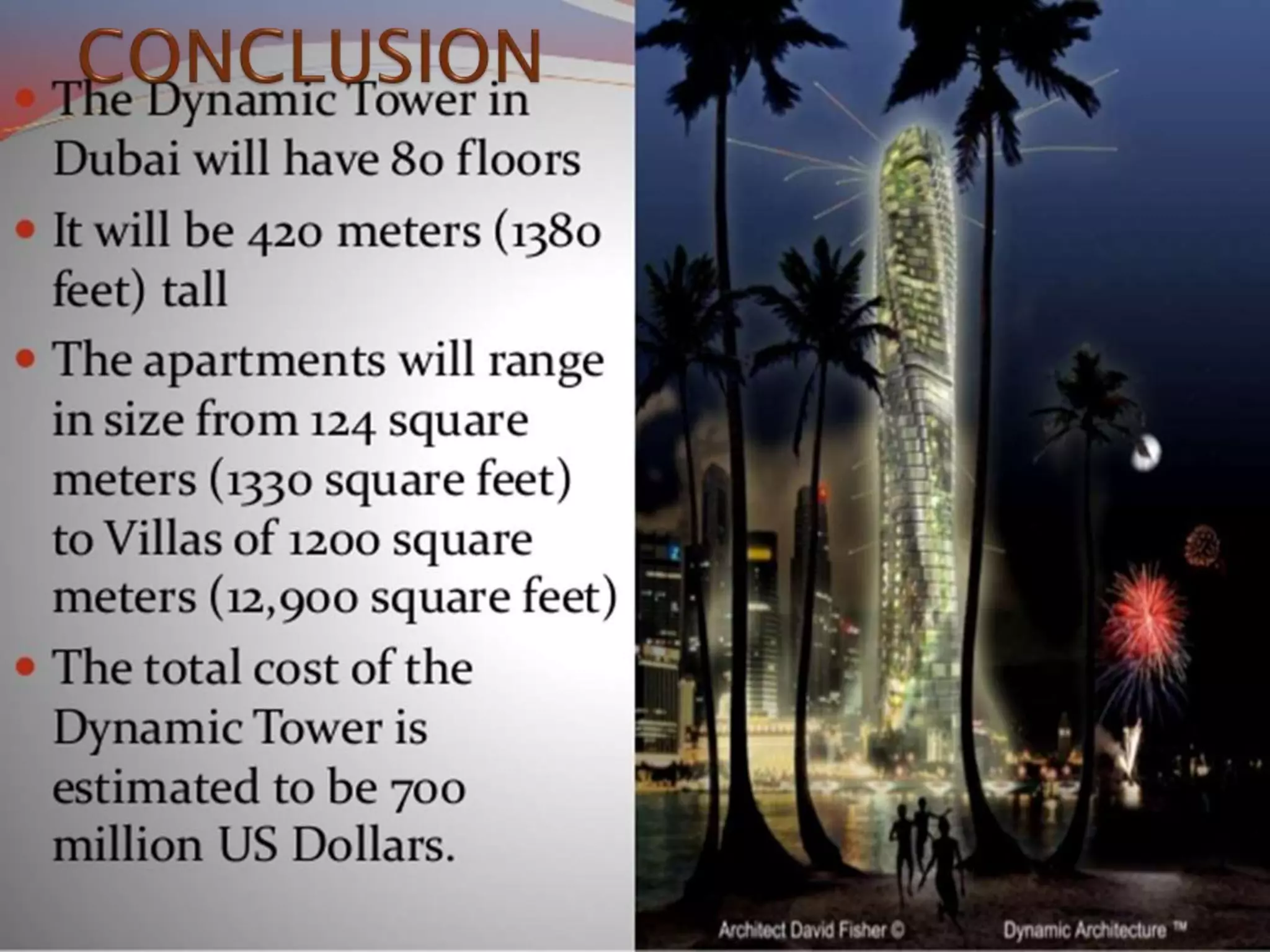
 420-metre (1,378 ft), 80-floor moving skyscraper,
 Each floor is designed to rotate a maximum of 6 metres
(20 ft) per minute, or one full rotation in 90 minutes.It is
located in united arab emirates.The floor count is 80.
 The entire tower is proposed to be powered from wind
turbines and solar panels. Fisher said that they could
generate up to 1,200,000 kilowatt-hours of energy. The
solar panels are expected to cover the roof and the top
FROM BOOK OF DYNAMIC
ARCHITECTURE

Dynamic tower

  • 1.
  • 2.
     In June1998 while watching the construction of a 20 story building in Mexico City, a  tower crane was rotating making its path to put some materials on the top. My insight in  building an innovative piece of Architecture made me imagine immediately a skyscraper  whose top part would rotate such as this tower crane, generating in the moment what iscalled “Dynamic Building”
  • 3.
     Dynamics isa branch of mechanics that is concerned with the effect of forces on the  movement of objects. Nowadays architecture is seen as something static, since buildings  remain on the same place and their configuration doesn’t change at all. The concept of  movement in a building is known now as Dynamic Architecture. Dynamic Architecture  buildings modify their shape constantly; living in a dynamic Universe it makes sense that  the future in building designBuildings that follow a Dynamic Architecture modify their shape constantly. This creates  a visual attraction immediately caught by the human eye, which focuses its attention in  movement while being surrounded in a static environment.
  • 4.
     This hasbeen done mainly as  tourist attractions in which rotating restaurants that have a 360 degree view of a city  gather a lot of attention (examples of these are the rotating restaurant in the top of the CN  Tower in Canada, or the one in the top cylinder of the World Trade Center Building in  Mexico City (Figure 3)).
  • 5.
     The mostrecent work made in the field of “Dynamic Architecture” appeared in the news  in March 2007. It is the work of the Italian Architect David Fisher that proposes an  apartment building in Dubai in which every floor rotates from a central core (Figure 5).  Each floor consists of a separate module that the owner can rotate at will or follow a  particular configuration in synchronization with the whole building.  He was just awarded a patent publication for rotatable building structures [12] (see  Appendix 1). Although the mechanisms he uses for rotation are a common standard in the  machinery industry and simply adapted to the bigger scale of buildings; clearly there is  no innovation in his patent and he cannot claim this “invention” as “unique”.
  • 6.
     The designconcept is simple, a 200 m tall skyscraper that follows the shape of the letter  “T”, the top is cantilevered to each side of the building (similar concept to tower crane  (Figure 6)) while sitting on a roller bearing  that will allow it to rotate at  a maximum speed of one complete turn per hour.  The German company Liebherr [6] produces some of them with  high standards in quality  Floor plan of the building, showing the concrete elevator and services core, as well as the  beams that form the structure floor.
  • 7.
    • The coreis composed of 16 elevators that will give service to different floors according • to demand, two emergency stairs, and two restrooms (one for men and one for women, • each one of them with six toilets). Electricity and telephone cables could make their way • through one of the elevator cores or use some space in the stairs. The last rotational three floors can be given any use, from restaurants, clubs, auditoriums • with a 360 degree view of the city or offices for executives. The core is clearly reduced • for these last floors, only four elevators, the emergency stairs and restrooms will make • their way through the roller bearing. • Figure 14.
  • 10.
     420-metre (1,378ft), 80-floor moving skyscraper,  Each floor is designed to rotate a maximum of 6 metres (20 ft) per minute, or one full rotation in 90 minutes.It is located in united arab emirates.The floor count is 80.  The entire tower is proposed to be powered from wind turbines and solar panels. Fisher said that they could generate up to 1,200,000 kilowatt-hours of energy. The solar panels are expected to cover the roof and the top
  • 17.
    FROM BOOK OFDYNAMIC ARCHITECTURE