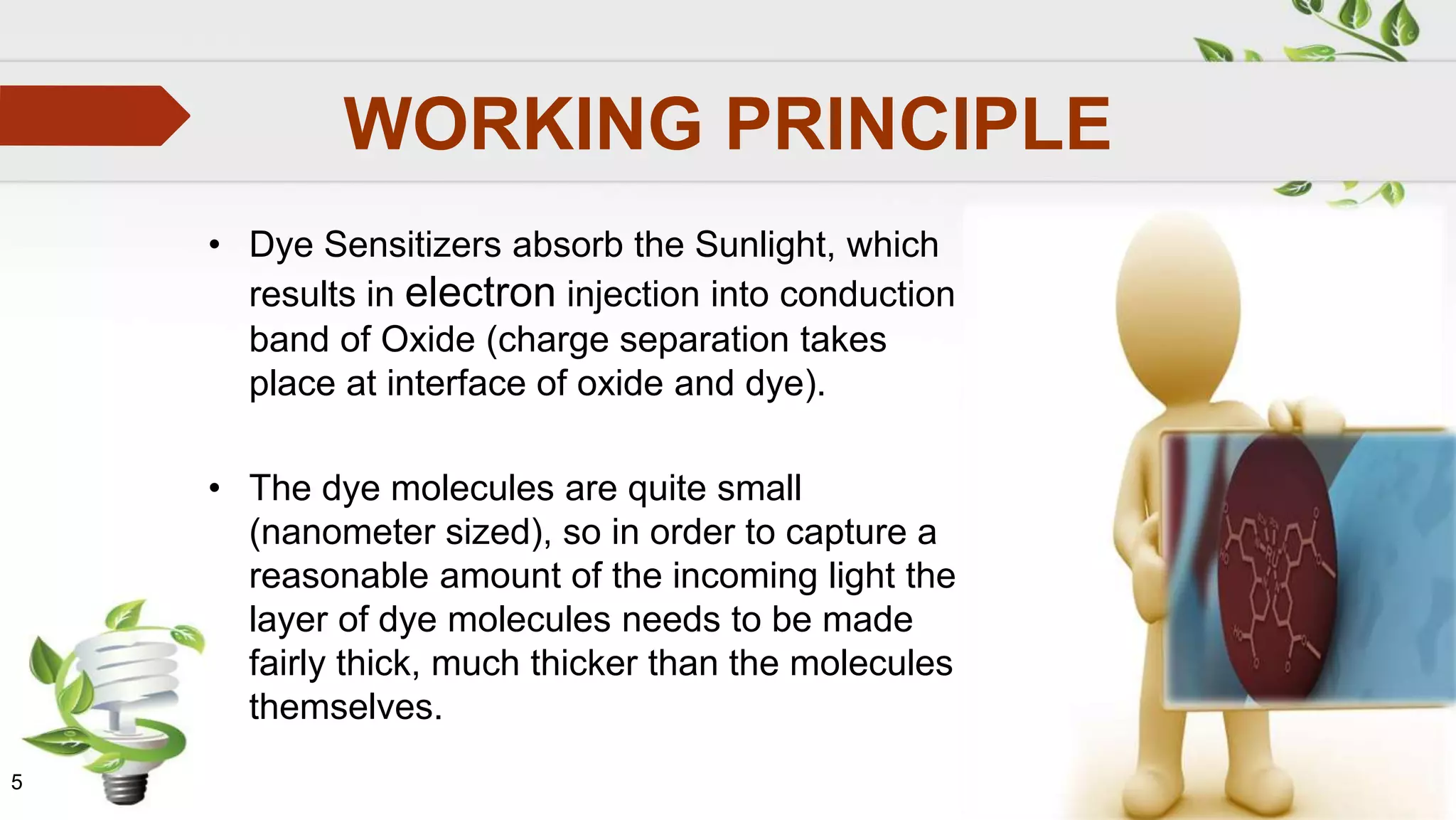
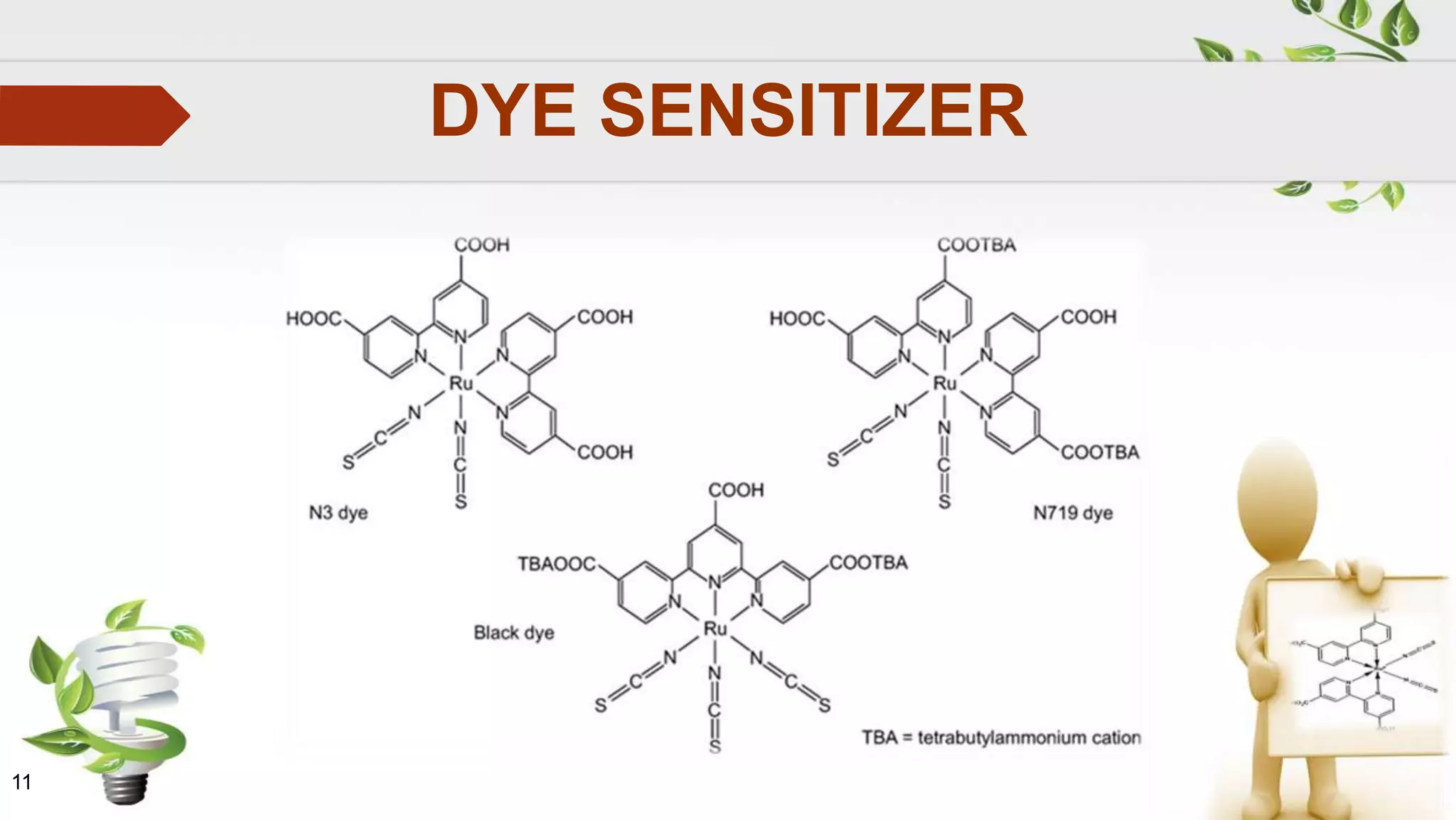
This document presents information on dye-sensitized solar cells (DSSCs). It discusses that DSSCs are a type of thin-film solar cell composed of a semiconductor, dye, electrolyte, and counter electrode. DSSCs work by using a dye to absorb sunlight and inject electrons into a semiconductor, like titanium dioxide. The electrons then flow through an external circuit to the counter electrode, while the dye is regenerated by the electrolyte. Though DSSCs have lower efficiency than other thin film cells, they have a better price to performance ratio and do not require pure silicon. The maximum reported conversion efficiency of DSSCs is around 11-15%.





![Thin_Film_Technology_introduction[1]](https://cdn.slidesharecdn.com/ss_thumbnails/1b4496c8-2102-411b-8465-a3dd3f398327-150205034538-conversion-gate02-thumbnail.jpg?width=640&height=640&fit=bounds)


