Photovoltaic Solar energy
Introduction
 Adverse effect on the climate change of the globe
 the average increment of temperature of the globe
below 2°C
 As suggested by many studies improving the energy
efficiency of the machinery used and avoiding rampant
use of devices causing emission of green house gases
 fossil fuels which is taking the major toll on the earth’s
climate, by virtue of emission of gases like CO2, N2O and
Methane
Introduction
 Use of non-conventional sources of energy like solar
energy, wind energy and biomass has become the
need of the hour for the mankind. At this juncture, such
measures are imperative and indispensible for two
important reasons
 It is required to explore for renewable sources of energy
as the fossil fuels are continuously depleting.
 Minimizing the use of fossil fuels is highly essential to cut
down the carbonemissions in the interest of the climate
of the planet earth.
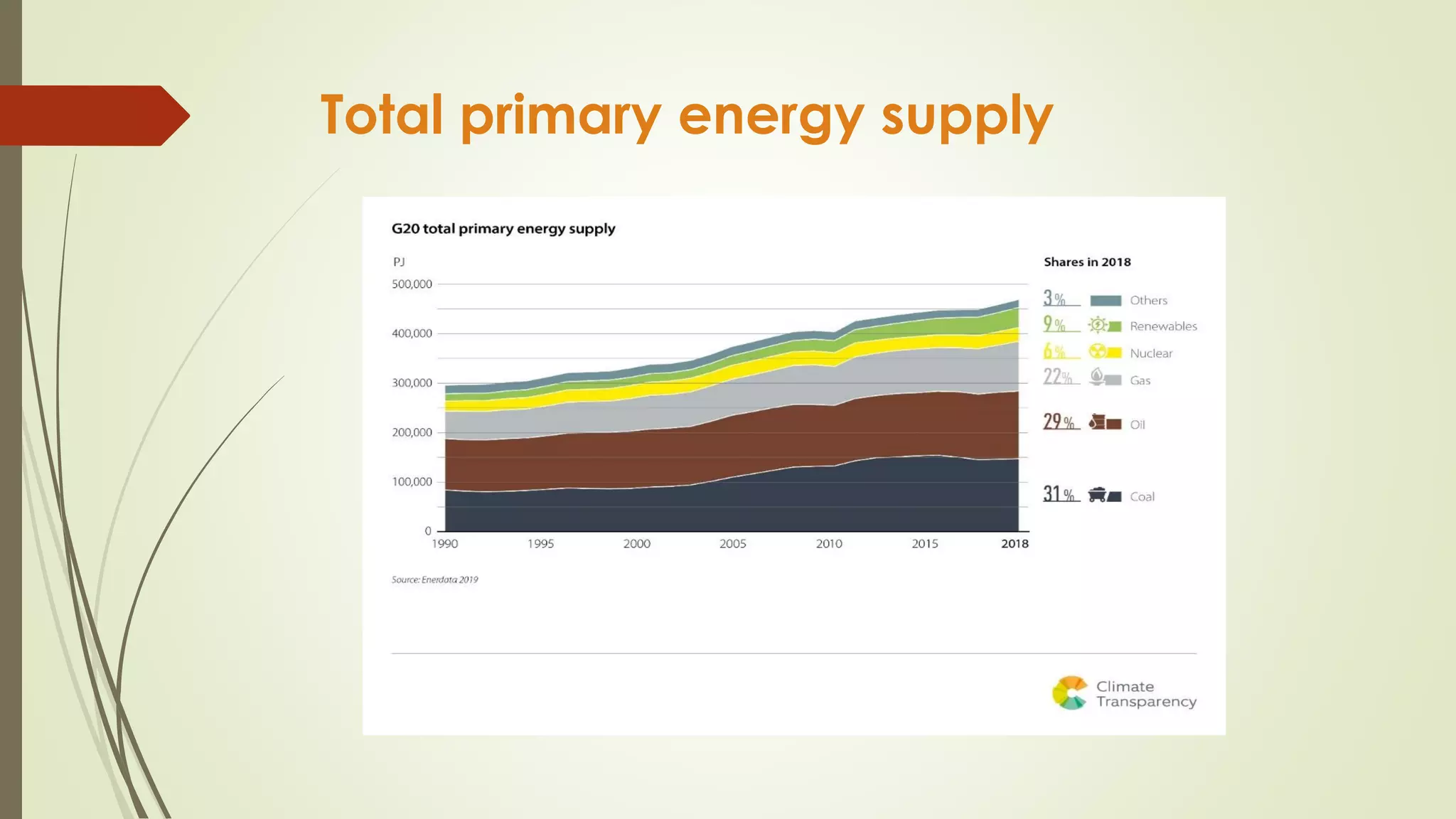
Total primary energy supply
The carbon emissions-world region
Sources of Renewable Energy and
importance of solar energy
The recent expert analysis states that the global
Green House Gas (GHG) emissions may be reduced
by 35%, if renewable energy generation targets are
met by 2030 [*]
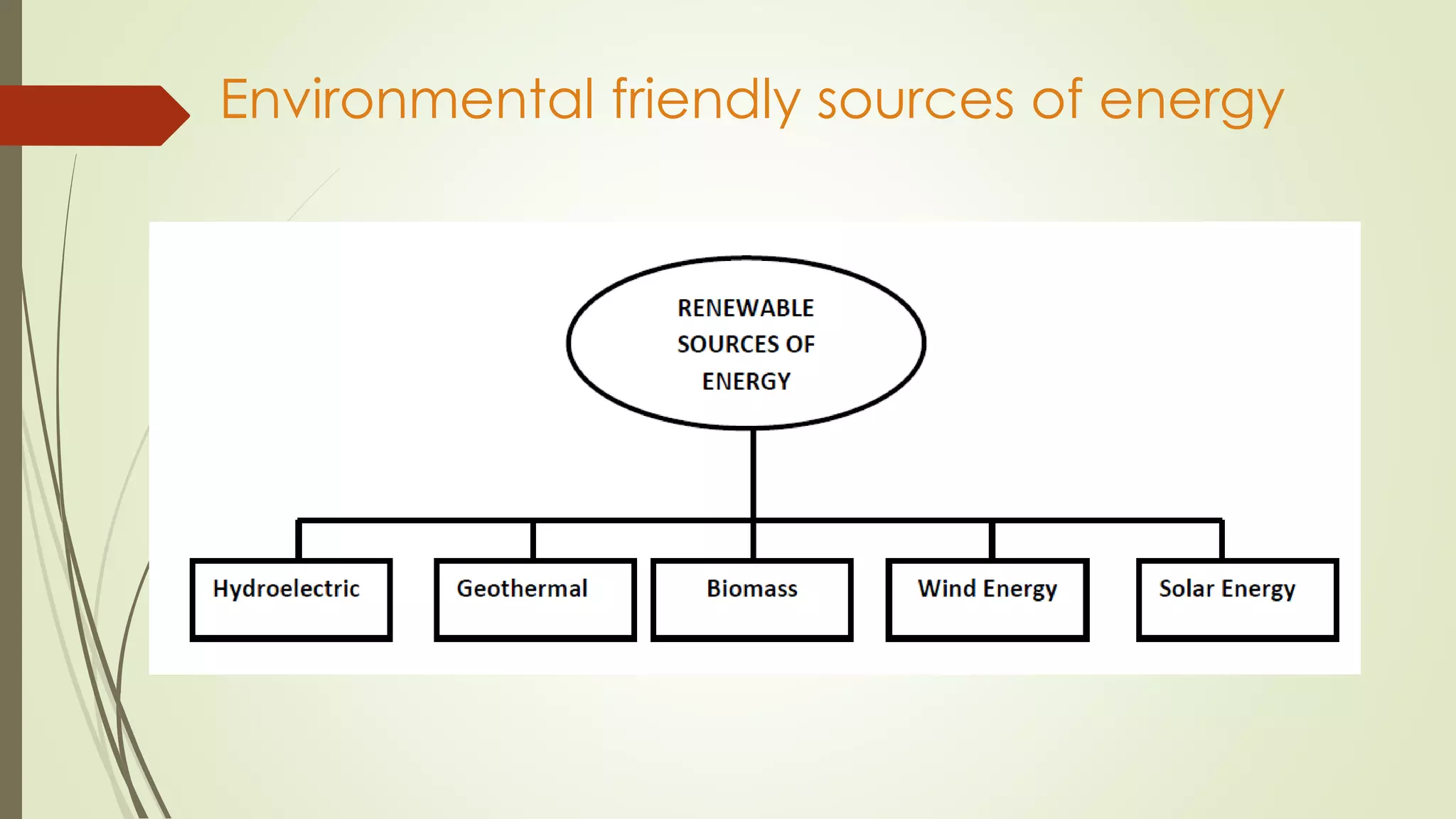
There are different types of renewable sources of
energy or non-conventional sources of energy which
do not have any direct contribution in the increment
of green house emissions
 * Energy and Climate Change: World Energy Outlook Special Report, 2015.
Environmental friendly sources of energy
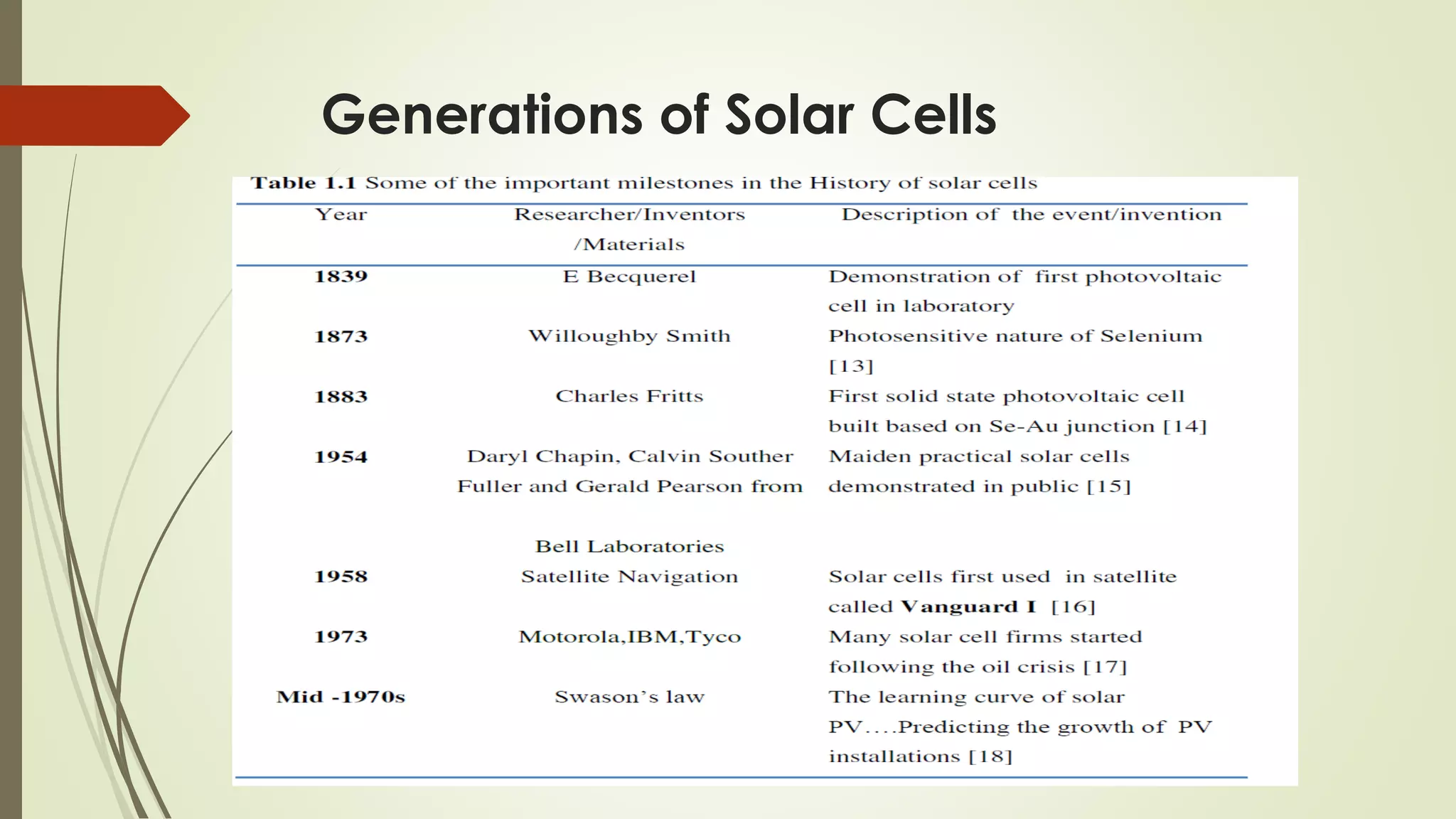
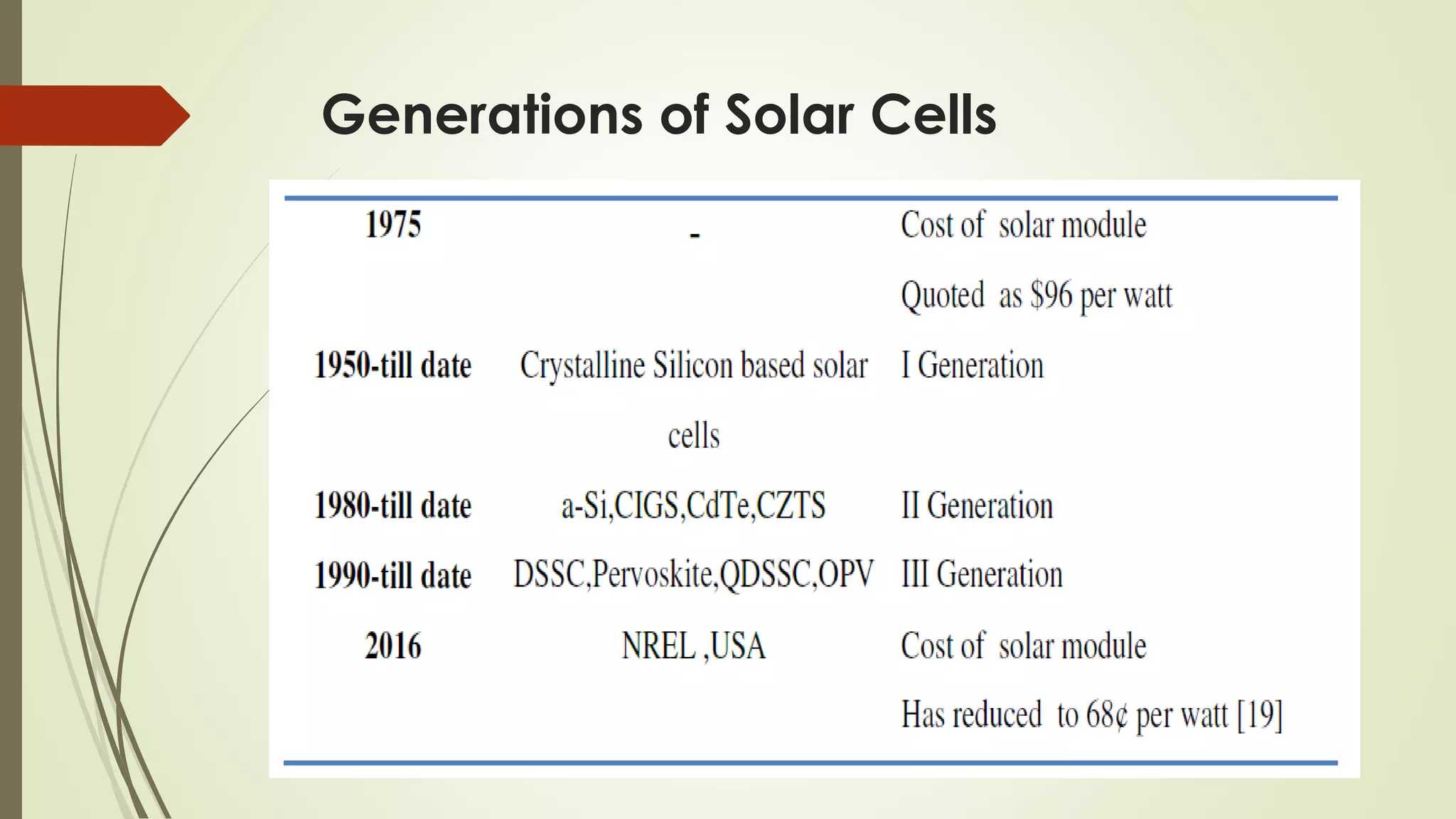
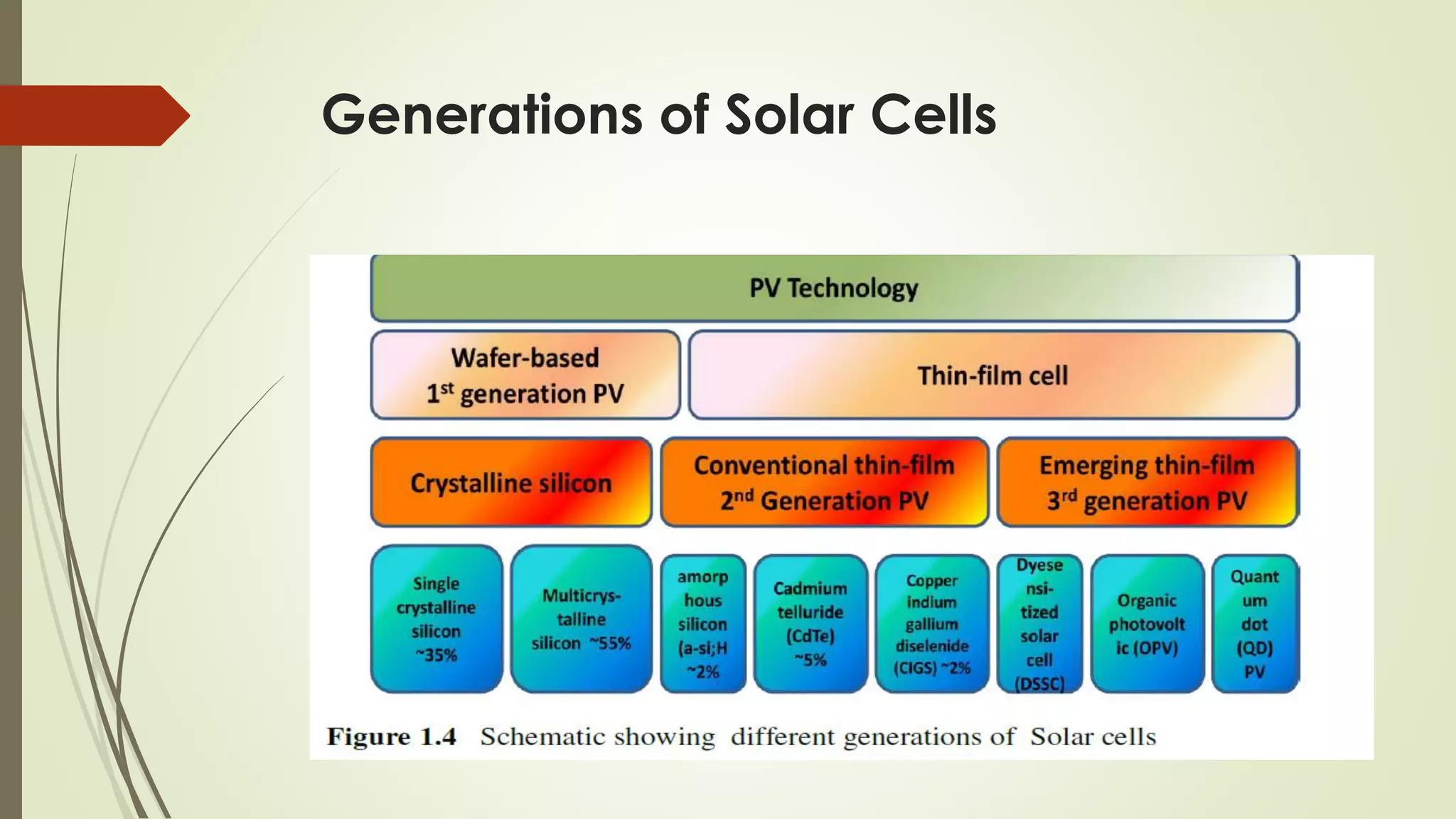
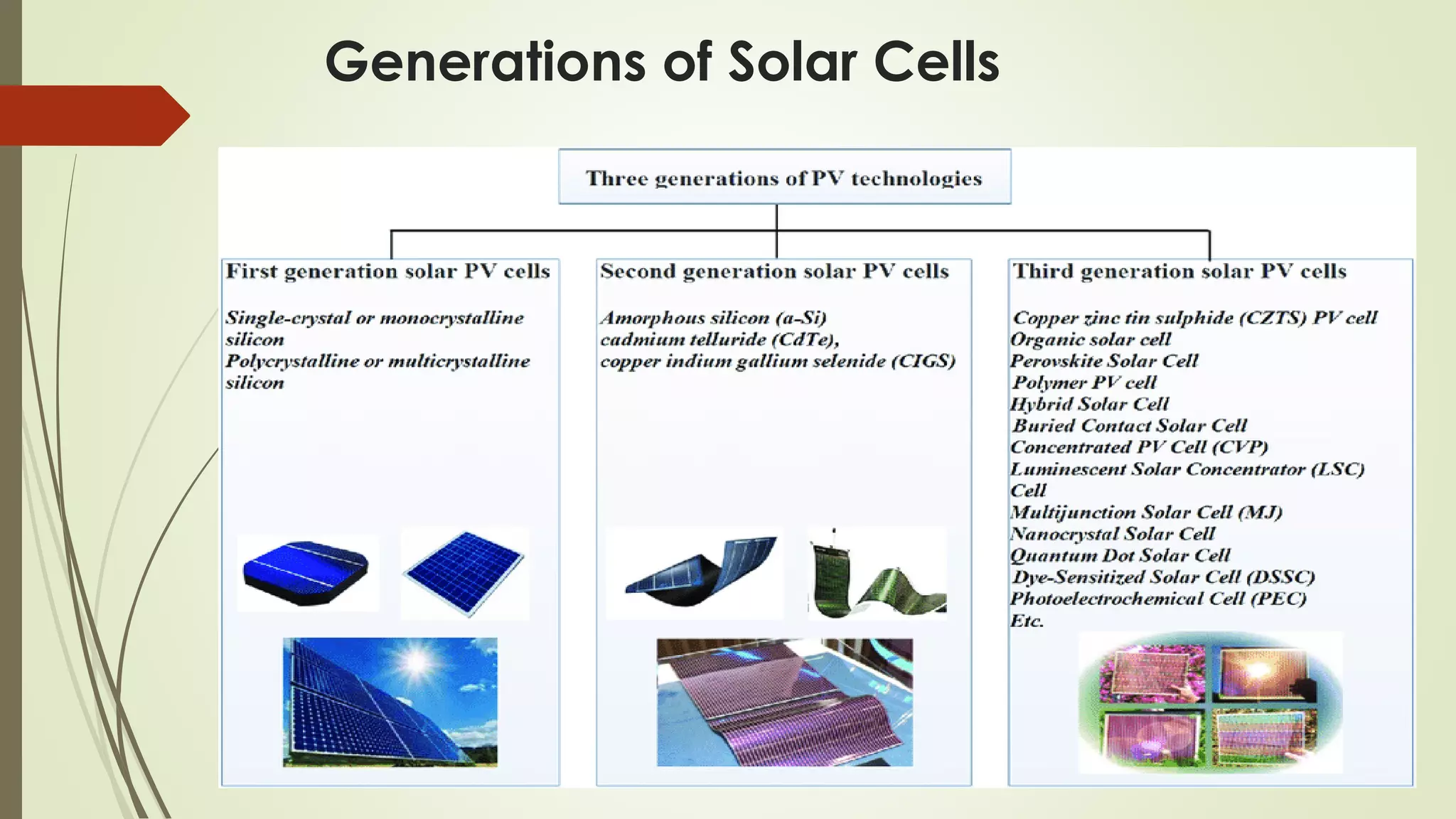
Generations of Solar Cells
First Generation Solar Cells:
The solar cells based on monocrystalline and
polycrystalline Silicon constitute the first generation solar
cells
Advantages: raw material availability, highefficiency
and long term stability, very well developed Silicon
processing technology
the physics of these solar cells is well understood
efficiency of ~24%
First Generation Solar Cells:
 Disadvantages:cost effectiveness
 Silicon being an indirect band gap material has a low light absorption
coefficient.
 Such a property of silicon requires larger thickness of material for
better optical absorption.
 Thicker material films when used in the device, demand longer charge
diffusion lengths which put a constraint on the quality of the material.
That means, the material films used in solar cell application are ought
to be defect free to attain better efficiency.
 The fluctuations in the availability of solar grade silicon have impeded
the pace of
 expansion of the solar cell installations.
First Generation Solar Cells:
 Challenges
 Silicon in its monocrystalline and polycrystalline forms is
inevitable
 reduce the cost or explore for new materials
 This naturally gave birth to a new generation namely the
second generation of solar cells
Second Generation of Solar Cells:
 Amorphous Silicon apparently seemed to emerge as a solution to the cost
factor from its crystalline counter parts
 Amorphous silicon solar cells suffer from staebler wronskieffect
 Due to this deleterious effect the solar cell performance temporally
degrades under illumination
 In this effect, the incident photons create electron-hole pairs due to the
breakage of si-si bonding in a-Si resulting in dangling bonds
 These appear as sub-band gap states leading to recombination of
electrons and so decreased performance of the
 cellmodule efficiency of around 8.5%
 Cu2S/CdS based solar cells
 Advantages:
 These cells contain active polycrystalline CIGS layers with Mo coated
glass
 sheets or steel substrates using energy economic methods.
 Flexible substrates may be used to make solar cells using these materials.
 These are relatively environmentally friendly solar cells as they employ
very
 little cadmium in the form of CdS
 Disadvantages:
 These are not as efficient as crystalline silicon based solar cells
 Manufacturing complexities still exist due to these being ternary and
quartenary
 compounds
 The prices are not competitive as compared to CdTe
 Also use rare elements like Indium giving rise to more practical difficulties.
 Cadmium Telluride solar cells have the following advantages and
disadvantages:
 Advantages:
 These cells in combination with CdS, match better with the solar
spectrum
 Cadmium is an abundant metal.
 Disadvantages:
 It has lower device efficiency as compared to crystalline silicon
 Tellurium is a very rare element raising doubts over the CdTe PV
expansion.
 Cadmium is highly cytotoxic and CdTe is also a toxic compound if
ingested.
 In all, it may be concluded that, second generation solar cells have not
really been
 successful in finding alternative technologies to silcon solar cells.

Generations of solar cells

  • 1.
  • 2.
    Introduction  Adverse effecton the climate change of the globe  the average increment of temperature of the globe below 2°C  As suggested by many studies improving the energy efficiency of the machinery used and avoiding rampant use of devices causing emission of green house gases  fossil fuels which is taking the major toll on the earth’s climate, by virtue of emission of gases like CO2, N2O and Methane
  • 3.
    Introduction  Use ofnon-conventional sources of energy like solar energy, wind energy and biomass has become the need of the hour for the mankind. At this juncture, such measures are imperative and indispensible for two important reasons  It is required to explore for renewable sources of energy as the fossil fuels are continuously depleting.  Minimizing the use of fossil fuels is highly essential to cut down the carbonemissions in the interest of the climate of the planet earth.
  • 4.
  • 5.
  • 6.
    Sources of RenewableEnergy and importance of solar energy The recent expert analysis states that the global Green House Gas (GHG) emissions may be reduced by 35%, if renewable energy generation targets are met by 2030 [*] There are different types of renewable sources of energy or non-conventional sources of energy which do not have any direct contribution in the increment of green house emissions  * Energy and Climate Change: World Energy Outlook Special Report, 2015.
  • 7.
  • 8.
  • 9.
  • 10.
  • 11.
  • 12.
    First Generation SolarCells: The solar cells based on monocrystalline and polycrystalline Silicon constitute the first generation solar cells Advantages: raw material availability, highefficiency and long term stability, very well developed Silicon processing technology the physics of these solar cells is well understood efficiency of ~24%
  • 13.
    First Generation SolarCells:  Disadvantages:cost effectiveness  Silicon being an indirect band gap material has a low light absorption coefficient.  Such a property of silicon requires larger thickness of material for better optical absorption.  Thicker material films when used in the device, demand longer charge diffusion lengths which put a constraint on the quality of the material. That means, the material films used in solar cell application are ought to be defect free to attain better efficiency.  The fluctuations in the availability of solar grade silicon have impeded the pace of  expansion of the solar cell installations.
  • 14.
    First Generation SolarCells:  Challenges  Silicon in its monocrystalline and polycrystalline forms is inevitable  reduce the cost or explore for new materials  This naturally gave birth to a new generation namely the second generation of solar cells
  • 15.
    Second Generation ofSolar Cells:  Amorphous Silicon apparently seemed to emerge as a solution to the cost factor from its crystalline counter parts  Amorphous silicon solar cells suffer from staebler wronskieffect  Due to this deleterious effect the solar cell performance temporally degrades under illumination  In this effect, the incident photons create electron-hole pairs due to the breakage of si-si bonding in a-Si resulting in dangling bonds  These appear as sub-band gap states leading to recombination of electrons and so decreased performance of the  cellmodule efficiency of around 8.5%
  • 16.
     Cu2S/CdS basedsolar cells  Advantages:  These cells contain active polycrystalline CIGS layers with Mo coated glass  sheets or steel substrates using energy economic methods.  Flexible substrates may be used to make solar cells using these materials.  These are relatively environmentally friendly solar cells as they employ very  little cadmium in the form of CdS
  • 17.
     Disadvantages:  Theseare not as efficient as crystalline silicon based solar cells  Manufacturing complexities still exist due to these being ternary and quartenary  compounds  The prices are not competitive as compared to CdTe  Also use rare elements like Indium giving rise to more practical difficulties.
  • 18.
     Cadmium Telluridesolar cells have the following advantages and disadvantages:  Advantages:  These cells in combination with CdS, match better with the solar spectrum  Cadmium is an abundant metal.
  • 19.
     Disadvantages:  Ithas lower device efficiency as compared to crystalline silicon  Tellurium is a very rare element raising doubts over the CdTe PV expansion.  Cadmium is highly cytotoxic and CdTe is also a toxic compound if ingested.  In all, it may be concluded that, second generation solar cells have not really been  successful in finding alternative technologies to silcon solar cells.