Downloaded 20 times
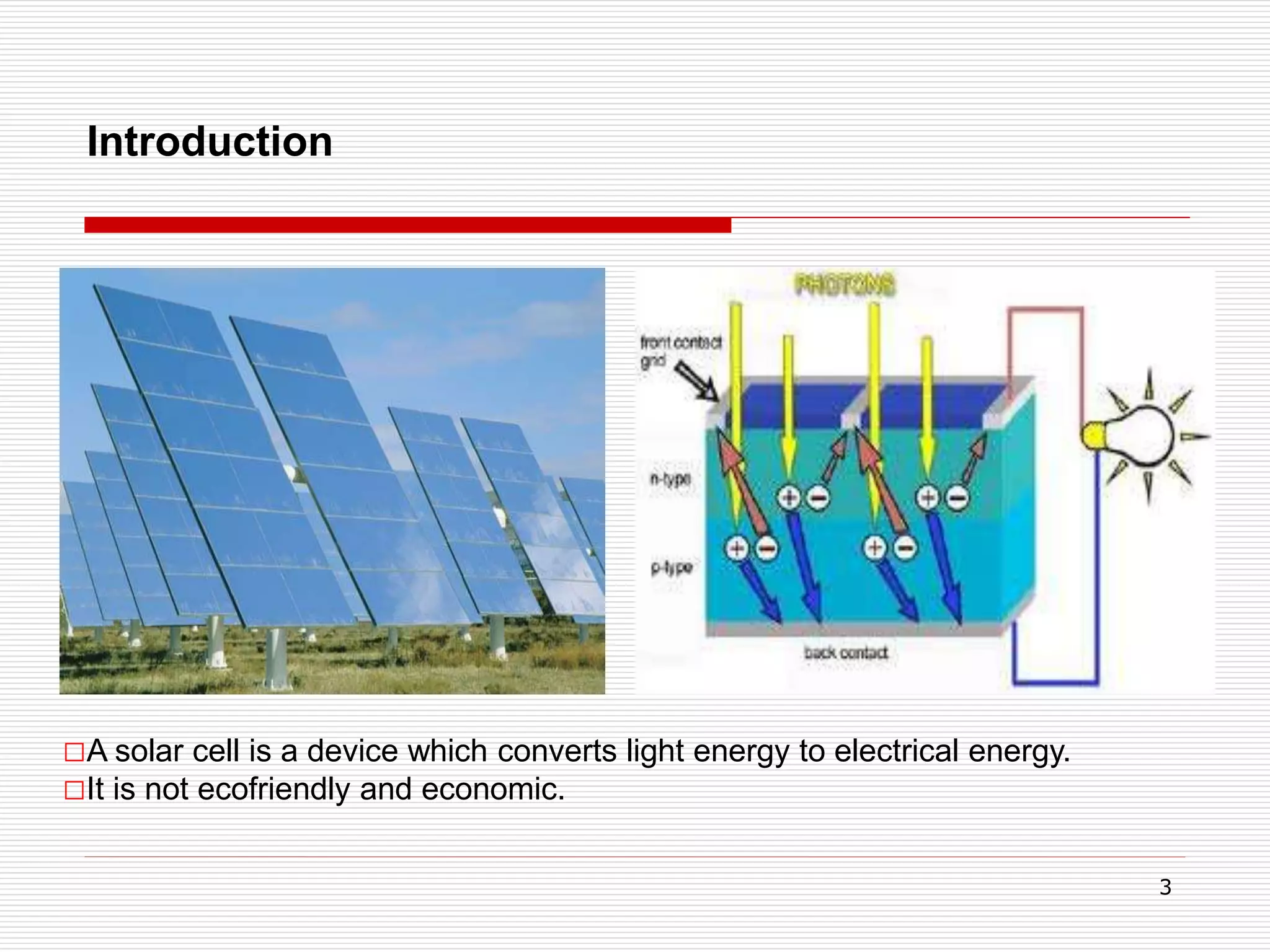

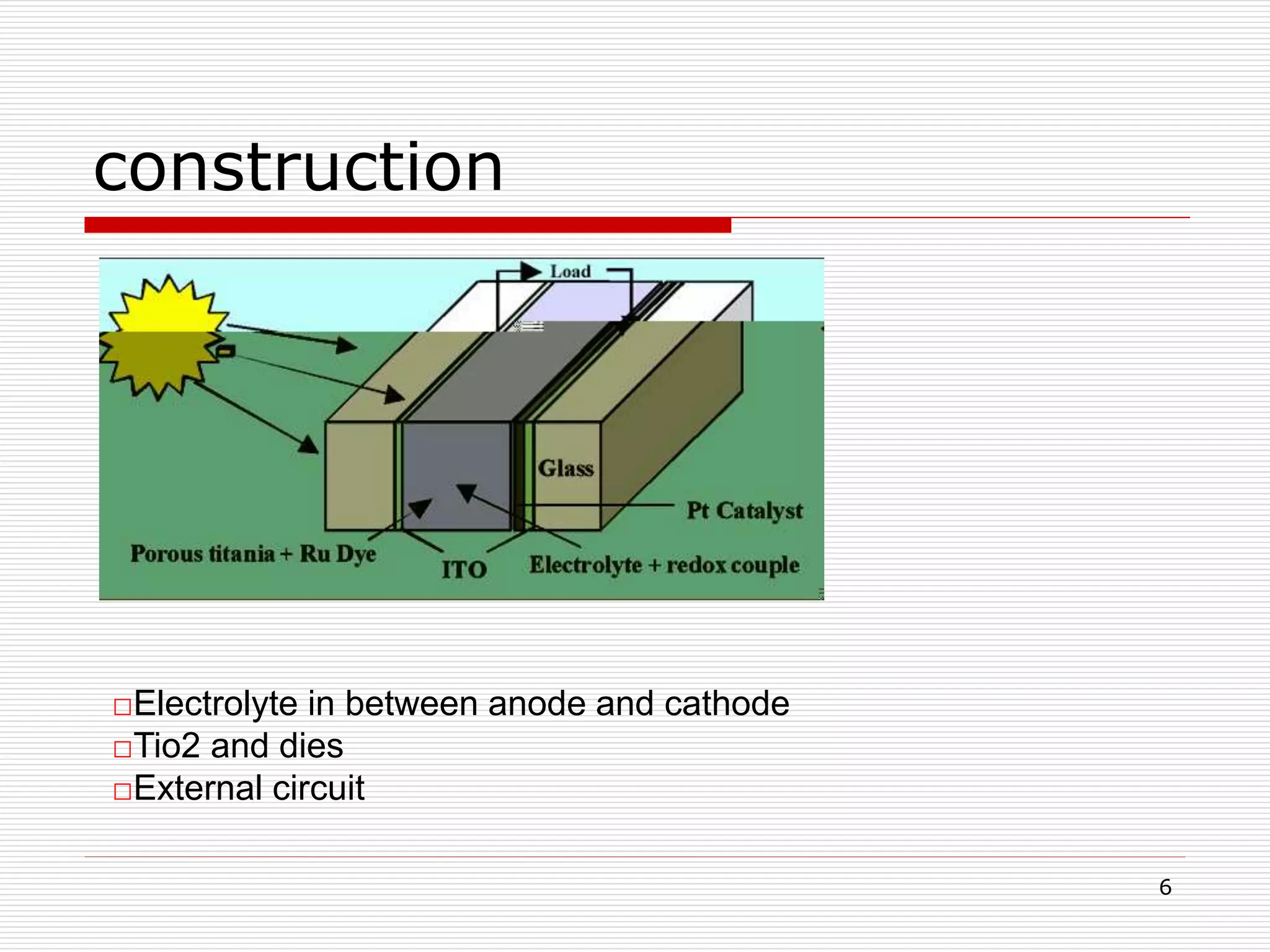
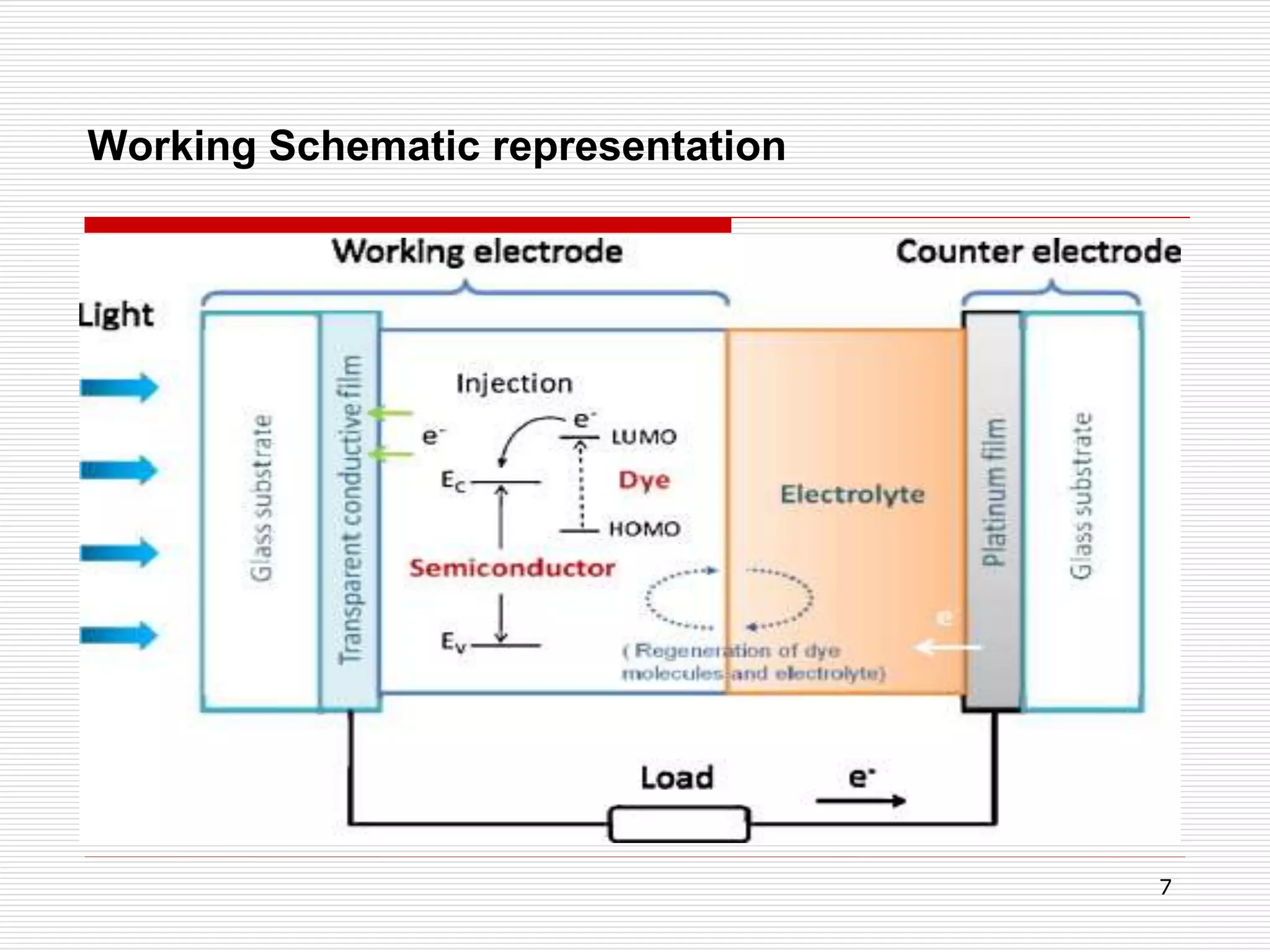


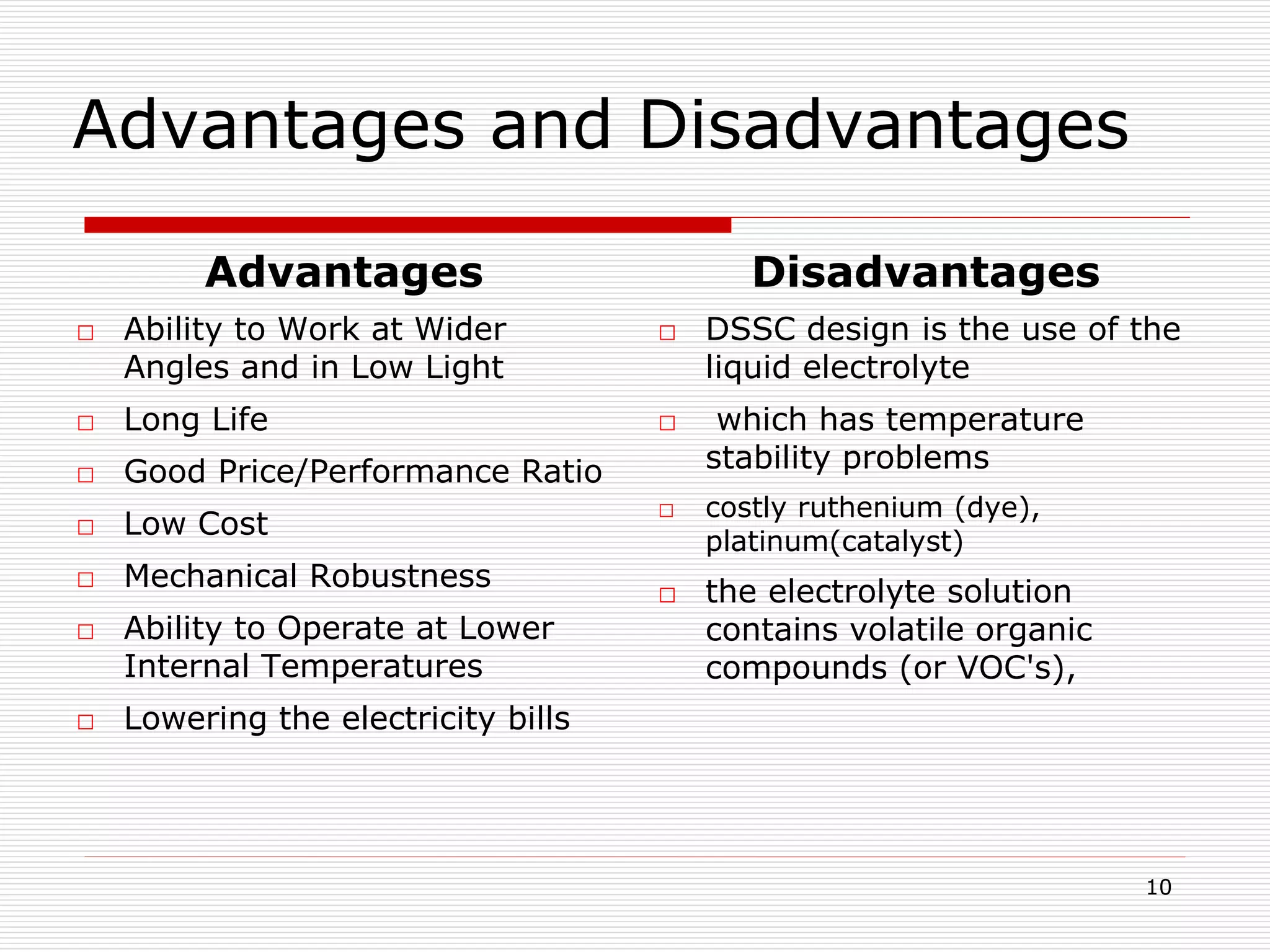
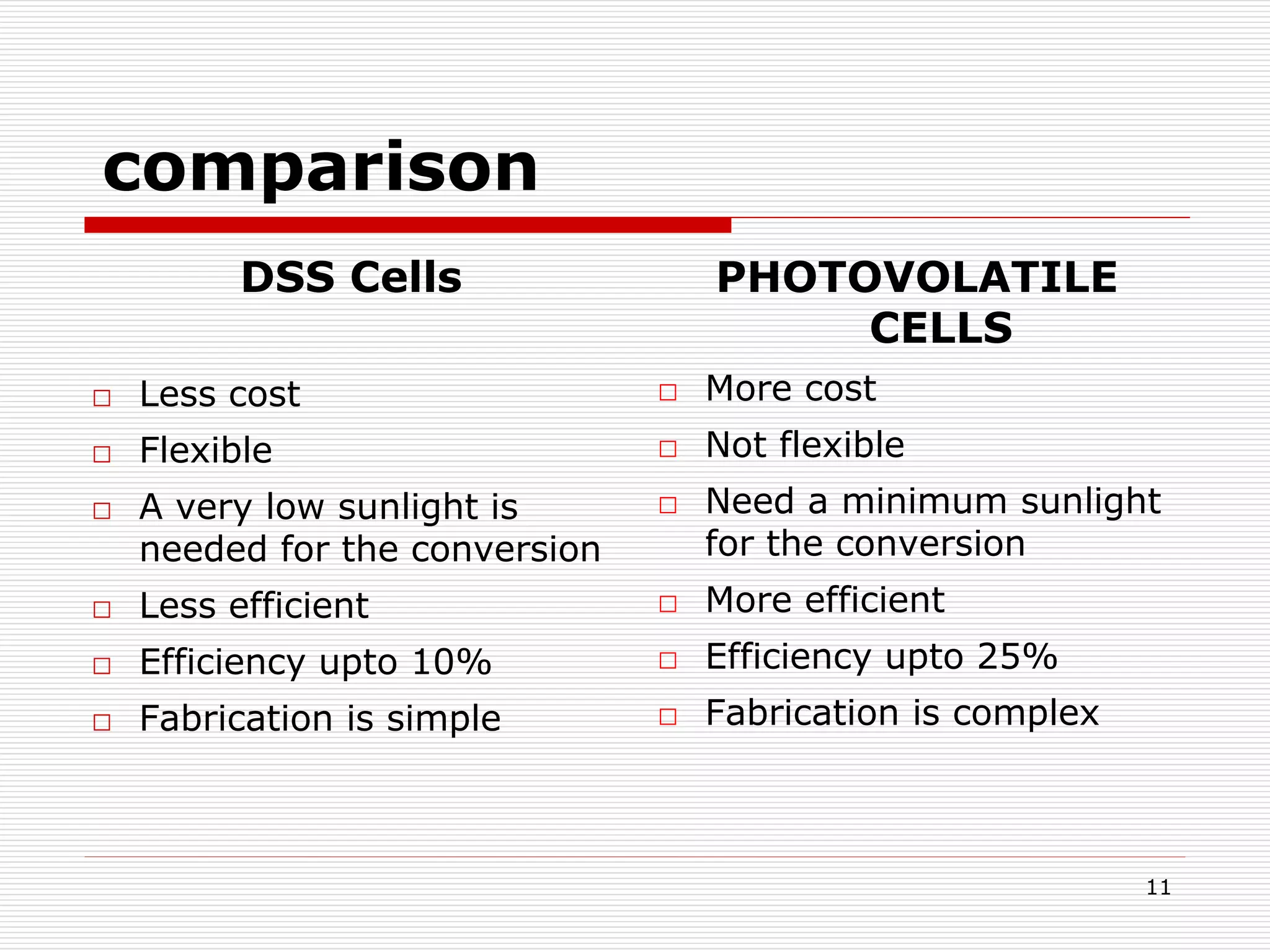


The document discusses dye-sensitized solar cells (DSSCs), which convert light energy to electrical energy using organic dyes and offer ecological and economic benefits. Invented in 1988, their efficiency has improved from 9% to 11%, and they have advantages such as low cost and performance in low light, but also face challenges like the instability of liquid electrolytes. The conclusion emphasizes the necessity of developing this technology to address energy crises and suggests government involvement to promote widespread adoption.


