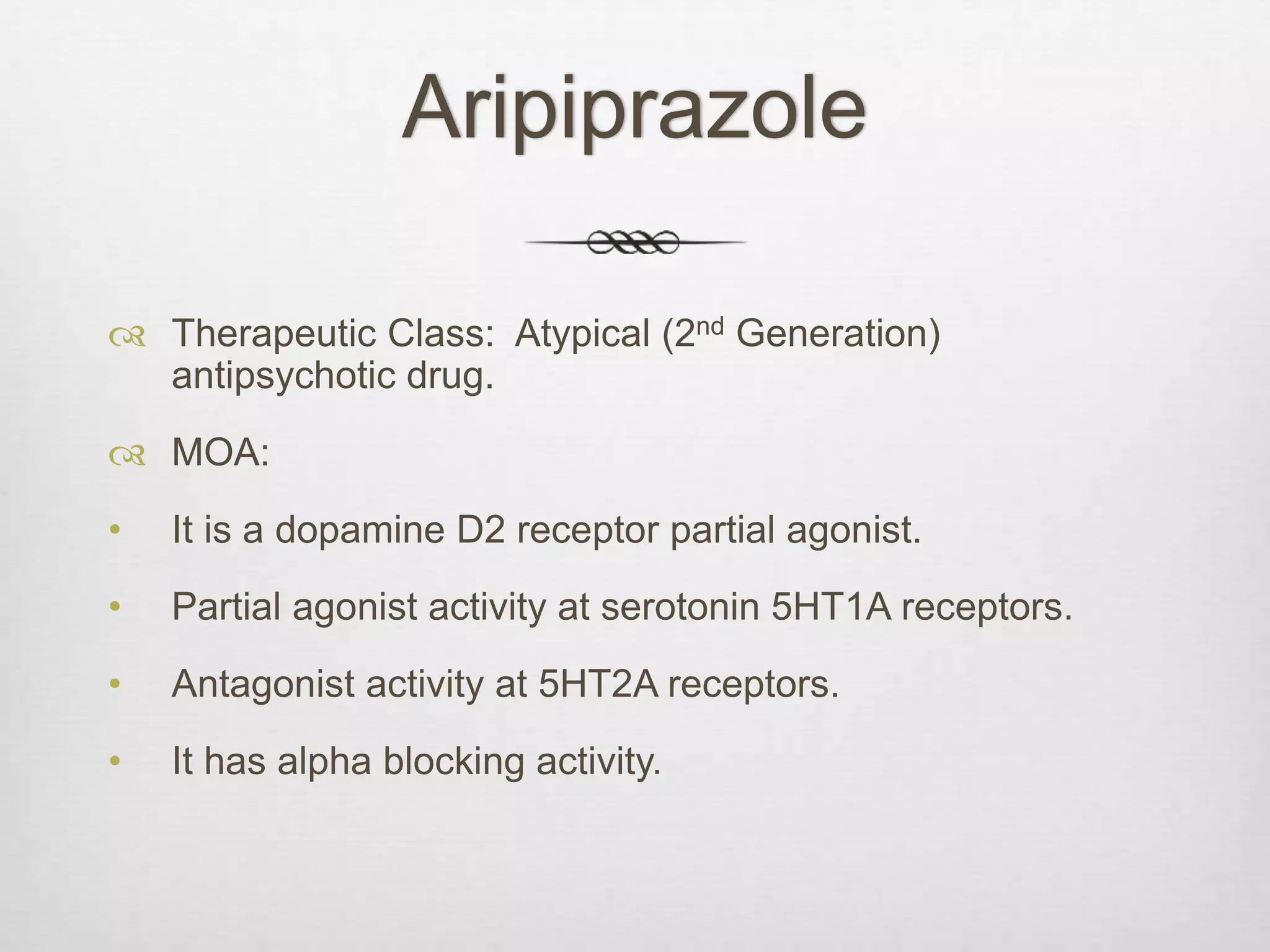
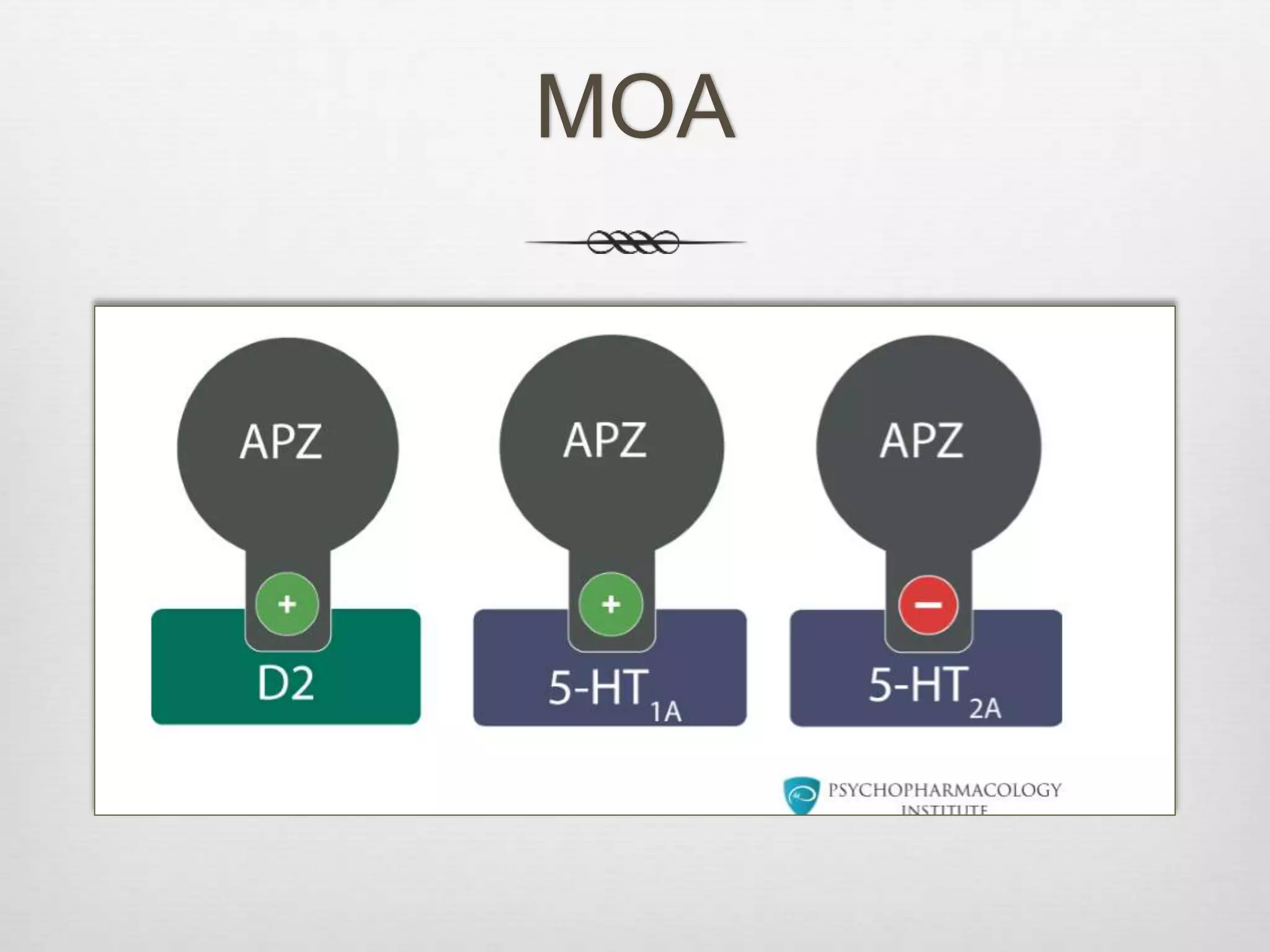
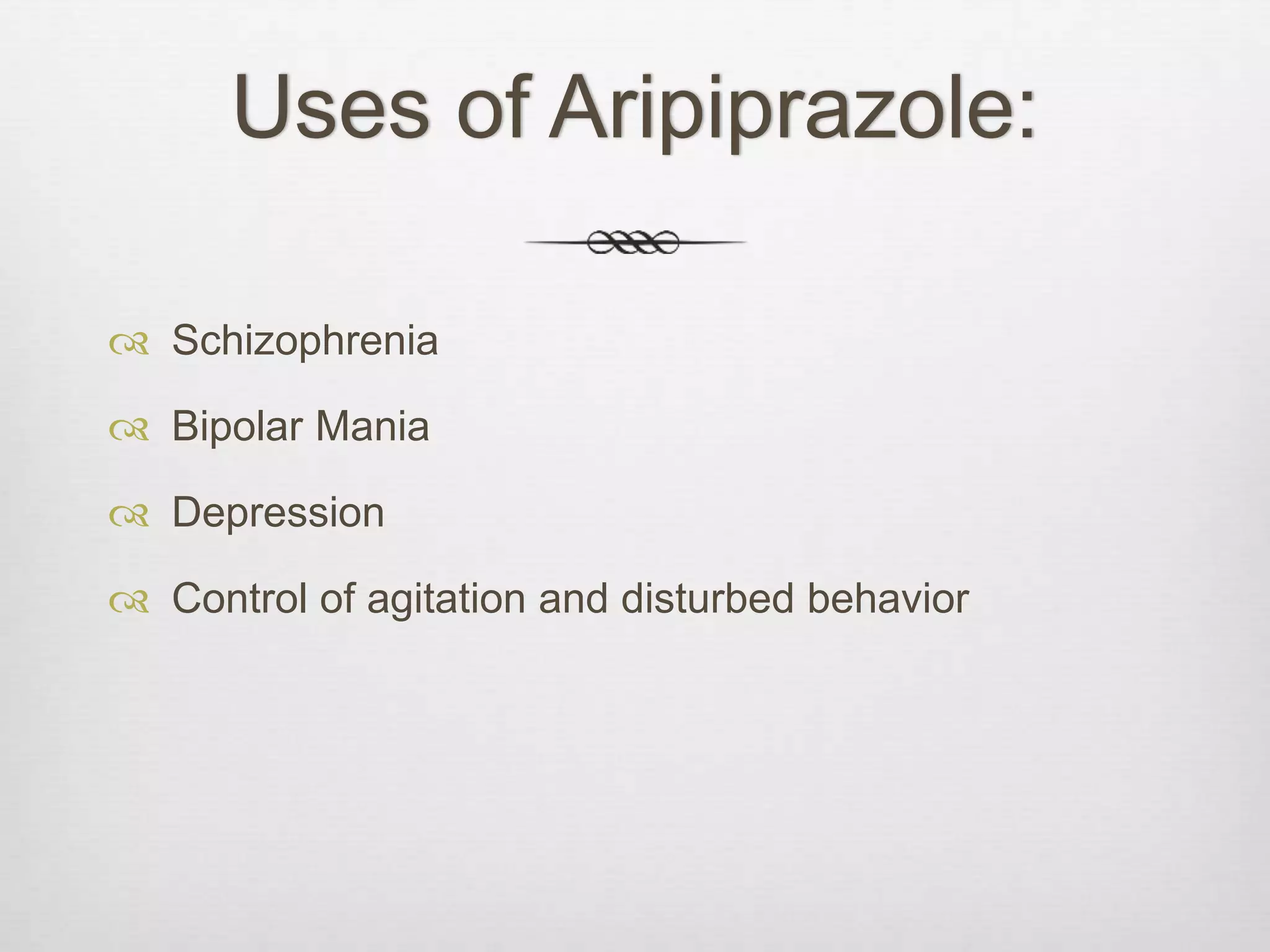
This document discusses schizophrenia and the atypical antipsychotic drug aripiprazole. It defines schizophrenia as a mental disorder where patients have difficulties determining what is real, thinking clearly, having normal emotions, and acting normally socially. It then describes the positive and negative symptoms of schizophrenia. The document outlines aripiprazole's uses in treating schizophrenia, bipolar mania, depression and agitation, as well as its mechanism of action, pharmacokinetics, side effects, drug interactions and comparisons to chlorpromazine. It concludes that aripiprazole is a second-generation antipsychotic that is better than chlorpromazine due to its partial agonist activity at dopamine D2 receptors resulting in milder extra