QUETIAPINE
 Since it’s release in 1998, quetiapine has become a
first line SGA medication.
 It is a dibenzothiazepine antipsychotic with more
5HT2 than D2 receptor blocking properties.
 Quetiapine was developed by Zeneca laboratories.
 approved by FDA in 1998
 It’s molecular formula Is
C42H50N6O4S2.C4H4O4
 Pharmacokinetics-
 Absorption & distribution –
 The time to maximum concentration after oral intake is 1.5
hours with an estimated half-life of 6 hour.
 No difference was found between twice & three times daily
dosing, inspite of a steady-state half life of 6.9 hours.
 Steady-state levels are reduced in 48 hour.
 Metabolized by liver.
 It has many metabolites, although only a
small % of these are active.
 The primary metabolic pathway is though
CYP34A
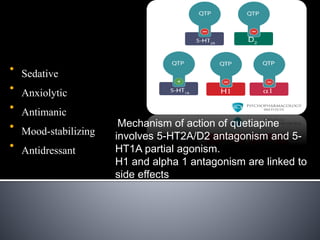
 Quetiapine is a multi transmitter
antipsychotic agent.
 It has high affinity for 5-HT2, histamine H1,
ALFA 1 & ALFA 2 receptors, a moderate
affinity for 5-HT1A receptors & D2
receptors and low affinity for D1 receptors.
 Quetiapine has a very low affinity for
cholinergic M1 & D2 receptors.
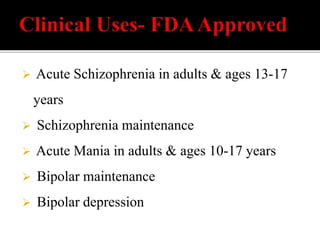
• Sedative
• Anxiolytic
• Antimanic
• Mood-stabilizing
• Antidressant
Mechanism of action of quetiapine
involves 5-HT2A/D2 antagonism and 5-
HT1A partial agonism.
H1 and alpha 1 antagonism are linked to
side effects
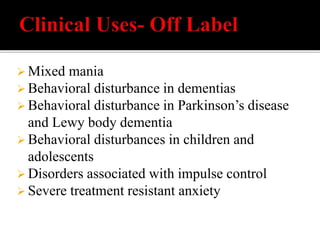
 Acute Schizophrenia in adults & ages 13-17
years
 Schizophrenia maintenance
 Acute Mania in adults & ages 10-17 years
 Bipolar maintenance
 Bipolar depression
 Mixed mania
 Behavioral disturbance in dementias
 Behavioral disturbance in Parkinson’s disease
and Lewy body dementia
 Behavioral disturbances in children and
adolescents
 Disorders associated with impulse control
 Severe treatment resistant anxiety
Dosage guideline:
Initial dose of 25mg bid, with increase in increments of
25-50 mg on second and third day as tolerated, to a target
dose of 300-400 mg by fourth day
depending on clinical response and tolerability dose may
be adjusted within range of 300-800 mg/day
Initial gradual upward titration is helpful to reduce
side effects
 ELDER POPULATION-
 In this population orthostatic hypotension or
syncope can increase the risk of falls.
 The titration schedule in the elderly should be
showed & the target dose lower
 Initial doses should be 12.5 mg to 25 mg per day
& increments of no more than 25 mg should
occur every 1-3 days, depending on tolerability.
 Patient with hepatic impairment should be
initiated at doses no higher than 25mg per
day .
 The dose can be increased daily by 25-50 mg
to an effective dose.
 Quetiapine is metabolized by the
cytochrome P450 system.
 Quetiapine is neither an inhibitor nor an
inducer of any CYP enzyme system.
 Valporic acid increased quetiapine plasma
levels by clinically insignificant amount.
 CVS: postural hypotension, likely due to
quetiapine high affinity for adrenergic Alfa 1
receptors, is the most common
cardiovascular effects.
 RESPIRATORY & ENT SYSTEM: Dyspnea,
cough , pharyngitis, rhinitis & nasal
congestion
 GI system- dry mouth, constipation,
dyspepsia are commonly reported side
effects of quetiapine.
 HEMATOLOGICAL & LYMPHATIC System-
leukopenia & neutropenia in conjunction with
quetiapine therapy have been observed, vary
rare case of agranulocytosis, including fatal
causes have also been observed.
 CNS- Sedation, somnolence, dizziness are
frequently reported affects with lethargy
slightly less no.
 METABOLIC & NUTRITIONAL system :
peripheral edema has been described with
quetiapine & other antipsychotics.
Hyperlipidemia,hypertriglycerdemia &
hyperglycemia are common effects of
quetiapine.
 Signs and symptoms of overdose :
 Lethargy, tachycardia
 QT prolongation
 Respiratory distress
 Depression, hypotension
 Sedation
 Slurring of speech
 Overdose is not common
 No specific antidote
 Only symptomatic treatment needed
Quetiapine

Quetiapine

  • 1.
  • 2.
     Since it’srelease in 1998, quetiapine has become a first line SGA medication.  It is a dibenzothiazepine antipsychotic with more 5HT2 than D2 receptor blocking properties.  Quetiapine was developed by Zeneca laboratories.  approved by FDA in 1998  It’s molecular formula Is C42H50N6O4S2.C4H4O4
  • 3.
     Pharmacokinetics-  Absorption& distribution –  The time to maximum concentration after oral intake is 1.5 hours with an estimated half-life of 6 hour.  No difference was found between twice & three times daily dosing, inspite of a steady-state half life of 6.9 hours.  Steady-state levels are reduced in 48 hour.
  • 4.
     Metabolized byliver.  It has many metabolites, although only a small % of these are active.  The primary metabolic pathway is though CYP34A
  • 5.
     Quetiapine isa multi transmitter antipsychotic agent.  It has high affinity for 5-HT2, histamine H1, ALFA 1 & ALFA 2 receptors, a moderate affinity for 5-HT1A receptors & D2 receptors and low affinity for D1 receptors.  Quetiapine has a very low affinity for cholinergic M1 & D2 receptors.
  • 6.
    • Sedative • Anxiolytic •Antimanic • Mood-stabilizing • Antidressant Mechanism of action of quetiapine involves 5-HT2A/D2 antagonism and 5- HT1A partial agonism. H1 and alpha 1 antagonism are linked to side effects
  • 7.
     Acute Schizophreniain adults & ages 13-17 years  Schizophrenia maintenance  Acute Mania in adults & ages 10-17 years  Bipolar maintenance  Bipolar depression
  • 8.
     Mixed mania Behavioral disturbance in dementias  Behavioral disturbance in Parkinson’s disease and Lewy body dementia  Behavioral disturbances in children and adolescents  Disorders associated with impulse control  Severe treatment resistant anxiety
  • 9.
    Dosage guideline: Initial doseof 25mg bid, with increase in increments of 25-50 mg on second and third day as tolerated, to a target dose of 300-400 mg by fourth day depending on clinical response and tolerability dose may be adjusted within range of 300-800 mg/day Initial gradual upward titration is helpful to reduce side effects
  • 10.
     ELDER POPULATION- In this population orthostatic hypotension or syncope can increase the risk of falls.  The titration schedule in the elderly should be showed & the target dose lower  Initial doses should be 12.5 mg to 25 mg per day & increments of no more than 25 mg should occur every 1-3 days, depending on tolerability.
  • 11.
     Patient withhepatic impairment should be initiated at doses no higher than 25mg per day .  The dose can be increased daily by 25-50 mg to an effective dose.
  • 12.
     Quetiapine ismetabolized by the cytochrome P450 system.  Quetiapine is neither an inhibitor nor an inducer of any CYP enzyme system.  Valporic acid increased quetiapine plasma levels by clinically insignificant amount.
  • 13.
     CVS: posturalhypotension, likely due to quetiapine high affinity for adrenergic Alfa 1 receptors, is the most common cardiovascular effects.  RESPIRATORY & ENT SYSTEM: Dyspnea, cough , pharyngitis, rhinitis & nasal congestion
  • 14.
     GI system-dry mouth, constipation, dyspepsia are commonly reported side effects of quetiapine.  HEMATOLOGICAL & LYMPHATIC System- leukopenia & neutropenia in conjunction with quetiapine therapy have been observed, vary rare case of agranulocytosis, including fatal causes have also been observed.
  • 15.
     CNS- Sedation,somnolence, dizziness are frequently reported affects with lethargy slightly less no.  METABOLIC & NUTRITIONAL system : peripheral edema has been described with quetiapine & other antipsychotics. Hyperlipidemia,hypertriglycerdemia & hyperglycemia are common effects of quetiapine.
  • 16.
     Signs andsymptoms of overdose :  Lethargy, tachycardia  QT prolongation  Respiratory distress  Depression, hypotension  Sedation  Slurring of speech  Overdose is not common  No specific antidote  Only symptomatic treatment needed