By
Dr Mohd Kaleem Khan
Assistant Professor
Department of Forensic
Medicine
JNMCH AMU Aligarh
 Died from natural disease before falling into the water
 Died from natural disease while already in the water
 Died from injury before being thrown into the water
 Died from injury while in the water
 Died from effects of immersion other than drowning
 Died from drowning.
Breath Holding
◦ Lasts for a variable length of
◦ Carbon dioxide accumulation
◦ Stimulation of the respiratory centre in brain
◦ Inevitable inhalation of large volumes of water.
 • Swallowing Of Water
 Coughing, vomiting progressive loss of consciousness
 Escape of air remaining
 In the lungs and replaced by water
 Profound unconsciousness and convulsions
 Gasping
 Respiratory standstill
 Failure of heart
 Irreversible changes in the brain
 Death
◦ Maceration of the skin in warm water
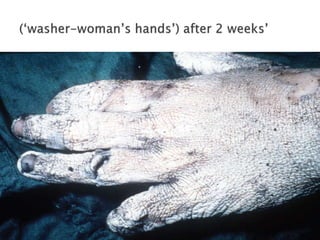
◦ ‘Washer-woman’s skin
◦ Keratin of hands and feet peels off in ‘glove and stocking’
fashion
◦ Nails and hair loosened
◦ Cutis anserina – or ‘goose-flesh’ –cold water.
◦ Float with buttocks uppermost, head and limbs down
 Wrinkled fingers, palms and feet, half a day to 3 days
 Decomposition,
◦ Often first in the dependent head and neck, abdomen and thighs:
4–10 days
◦ Bloating of face and abdomen with marbling of veins and
peeling of epidermis on hands and feet, and slippage of scalp:
2–4 weeks
◦ Gross skin shedding, muscle loss with skeletal exposure, partial
liquefaction: 1–2 months.
 Myocardial infarct
 Occasionally, accidental or suicidal injuries may be
inflicted
 Trauma in the water is common
 Sudden entry of cold water into the pharynx and larynx, and
perhaps nasal passages can produce powerful stimulation of
nerve endings in the mucosa.
 A bolus of water entering the trachea can also cause reflex
cardiac arrest.
 Drowning is a form of asphyxial death due to aspiration
of fluid into the air passages by submersion of the body
in water or fluid medium.
 Complete submersion not necessary, submersion of
nose and mouth is enough.
Classification
 Typical
 Atypical
Typical drowning
 Obstruction of air passages and lungs by inhalation
of fluid and is known as “Wet drowning”.
 Typical signs are found at autopsy.
Atypical drowning
 Conditions in which there is very little or no
inhalation of water or fluid in the air passages.
 Dry drowning.
 Immersion syndrome(vagal inhibition).
 Submersion of the unconscious.
 Secondary drowning syndrome/near-drowning.
Typical drowning
 Fresh water drowning.
 Salt water drowning.
Fresh water drowning
◦ Water cross the alveolar membrane into the circulation.
◦ Produces marked hypervolaemia.
◦ Red cells swell or burst-hemolysis-liberation of
potassium.
◦ Circulation will suffer 50% dilution within 2-3 min.
◦ The heart is submitted to the insult of anoxia, hypervolaemia,
potassium excess and sodium deficit.
◦ Ventricular fibrillation due to anoxia and potassium excess within
4-5 min.
Salt water drowning
◦ Marked hyper tonicity of the inhaled water cause loss of fluid from
circulation into the lungs-fulminating pulmonary edema and
progressive hypovolaemia.
◦ Circulatory shock and cardiac arrest.
Atypical drowning
Dry drowning
◦ Intense laryngeal spasm due to entry of water into nasopharynx
and larynx.
◦ Very little water enters into lungs.
◦ Best case for resuscitation.
Immersion syndrome
 Due to sudden impact with very cold water and causes
death from cardiac arrest.
 Victims are young people with excess of alcohol.
◦ It also result from falling or diving with feet or duck diving by the
inexperienced swimmers.
◦ Loss of consciousness instantaneous and death occurs in few
minutes.
◦ Autopsy disclose non of the usual signs of drowning.
Submersion of the unconscious
◦ Commonly seen if the victim is suffering from disease like
epilepsy,heart diseases and is drunk or head injury during fall.
◦ Ballooning of the lungs may be absent.
◦ Formation of the foam my be negligible.
◦ Complete picture of death by drowning is not found.
Secondary drowning/near-drowning
◦ Its mainly due to infection from inhalation of contaminated water.
◦ Lung complications, oxygen lack, tired heart muscle and cerebral
edema.
◦ A victim look alert and breathing, may respond to initial
resuscitation.
◦ Late stage-respiratory distress, hypotension and cardiac
arrhythmia may cause death.
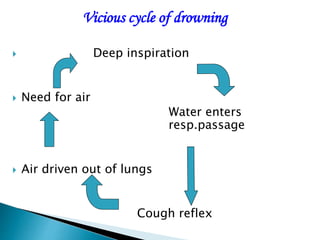
Vicious cycle of drowning
 Deep inspiration
 Need for air
Water enters
resp.passage
 Air driven out of lungs
Cough reflex
Medico legal aspects
◦ Whether the death was due to drowning or other cause?
◦ Length of time the body was in water.
◦ Whether it was accidental/suicidal/homicide?
◦ “Brides of the bath case”
Postmortem findings
External findings
 Fine froth at the nose
 Consists of a proteinaceous exudates and surfactant mixed with
the water of the drowning medium. It is usually white, but may be
pink or red-tinged, because of slight admixture with blood from
intrapulmonary bleeding.
 Rarely the presence of weeds, mud etc.
Cutis Anserina (goose Skin)
◦ Due to spasm of the erector pilae muscles and due to exposure to
cold water at the time of death.
◦ Rarely seen in India.
◦ Skin appears granular and puckered,with hair standing on the end.
◦ Extremities are mainly affected.
◦ The skin of the finger,palms and later the soles of the feet may
be wrinkled,bleached and sodden.
◦ Due to osmotic action of water,on thickened epidermis.
◦ This immersion changes known as Hands and Feet of a
Washer-Woman.
Internal findings
 Lungs & respiratory tract:-
◦ Airways filled with froth, sand, weeds etc found in the water.
◦ Lungs are voluminous, edematous,doughy to feel with rib
markings.
◦ Paltauf’ hemorrhages seen.
◦ C/s:- Oozing out of blood stained frothy fluid and ballooning of the
lungs is known as “Emphysema Aquosum”.
◦ Wt up to 2 kgs.
◦ Watery fluid transudates into pleural cavities during putrefaction.
◦ Hydrostatic lung:- 2meters depth-20min.
◦ Hemorrhages in the middle ear & mastoid air cells.
◦ The stomach may contain watery fluid or even foreign material
from the water, such as silt, weed or sand,
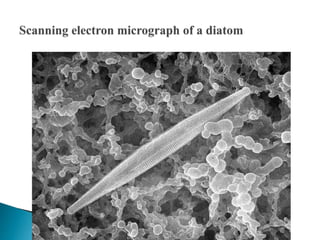
Diatoms
 Microscopic unicellular algae present in water.
 Silicaceous cell wall which resists acid digestion, heat and
putrefaction.
 Size 10-80 microns.
 Only a live body with a circulation can transport diatoms
from lungs to the brain or bone marrow.
 Isolation- acid digestion of tissue commonly bone marrow,
lung, blood and kidney-centrifugation and washing. residue
is examined under phase contrast microscopy.
Cause of death
◦ Asphyxia
◦ Ventricular fibrillation
◦ Laryngeal spasm.
◦ Vagal inhibition.
◦ Exhaustion.
◦ Injuries.
◦ Fatal period 4-8min.
Diagnosis of drowning
 Froth
 Weeds & gravel/soil in hand.
 Voluminous lungs.
 Diatoms in tissues.
thanks

Drowning

  • 1.
    By Dr Mohd KaleemKhan Assistant Professor Department of Forensic Medicine JNMCH AMU Aligarh
  • 2.
     Died fromnatural disease before falling into the water  Died from natural disease while already in the water  Died from injury before being thrown into the water  Died from injury while in the water  Died from effects of immersion other than drowning  Died from drowning.
  • 3.
    Breath Holding ◦ Lastsfor a variable length of ◦ Carbon dioxide accumulation ◦ Stimulation of the respiratory centre in brain ◦ Inevitable inhalation of large volumes of water.
  • 4.
     • SwallowingOf Water  Coughing, vomiting progressive loss of consciousness  Escape of air remaining  In the lungs and replaced by water
  • 5.
     Profound unconsciousnessand convulsions  Gasping  Respiratory standstill  Failure of heart  Irreversible changes in the brain  Death
  • 6.
    ◦ Maceration ofthe skin in warm water ◦ ‘Washer-woman’s skin ◦ Keratin of hands and feet peels off in ‘glove and stocking’ fashion ◦ Nails and hair loosened ◦ Cutis anserina – or ‘goose-flesh’ –cold water. ◦ Float with buttocks uppermost, head and limbs down
  • 8.
     Wrinkled fingers,palms and feet, half a day to 3 days  Decomposition, ◦ Often first in the dependent head and neck, abdomen and thighs: 4–10 days ◦ Bloating of face and abdomen with marbling of veins and peeling of epidermis on hands and feet, and slippage of scalp: 2–4 weeks ◦ Gross skin shedding, muscle loss with skeletal exposure, partial liquefaction: 1–2 months.
  • 9.
     Myocardial infarct Occasionally, accidental or suicidal injuries may be inflicted  Trauma in the water is common  Sudden entry of cold water into the pharynx and larynx, and perhaps nasal passages can produce powerful stimulation of nerve endings in the mucosa.  A bolus of water entering the trachea can also cause reflex cardiac arrest.
  • 10.
     Drowning isa form of asphyxial death due to aspiration of fluid into the air passages by submersion of the body in water or fluid medium.  Complete submersion not necessary, submersion of nose and mouth is enough.
  • 11.
    Classification  Typical  Atypical Typicaldrowning  Obstruction of air passages and lungs by inhalation of fluid and is known as “Wet drowning”.  Typical signs are found at autopsy.
  • 12.
    Atypical drowning  Conditionsin which there is very little or no inhalation of water or fluid in the air passages.  Dry drowning.  Immersion syndrome(vagal inhibition).  Submersion of the unconscious.  Secondary drowning syndrome/near-drowning.
  • 13.
    Typical drowning  Freshwater drowning.  Salt water drowning. Fresh water drowning ◦ Water cross the alveolar membrane into the circulation. ◦ Produces marked hypervolaemia. ◦ Red cells swell or burst-hemolysis-liberation of potassium. ◦ Circulation will suffer 50% dilution within 2-3 min.
  • 14.
    ◦ The heartis submitted to the insult of anoxia, hypervolaemia, potassium excess and sodium deficit. ◦ Ventricular fibrillation due to anoxia and potassium excess within 4-5 min. Salt water drowning ◦ Marked hyper tonicity of the inhaled water cause loss of fluid from circulation into the lungs-fulminating pulmonary edema and progressive hypovolaemia. ◦ Circulatory shock and cardiac arrest.
  • 15.
    Atypical drowning Dry drowning ◦Intense laryngeal spasm due to entry of water into nasopharynx and larynx. ◦ Very little water enters into lungs. ◦ Best case for resuscitation. Immersion syndrome  Due to sudden impact with very cold water and causes death from cardiac arrest.  Victims are young people with excess of alcohol.
  • 16.
    ◦ It alsoresult from falling or diving with feet or duck diving by the inexperienced swimmers. ◦ Loss of consciousness instantaneous and death occurs in few minutes. ◦ Autopsy disclose non of the usual signs of drowning. Submersion of the unconscious ◦ Commonly seen if the victim is suffering from disease like epilepsy,heart diseases and is drunk or head injury during fall.
  • 17.
    ◦ Ballooning ofthe lungs may be absent. ◦ Formation of the foam my be negligible. ◦ Complete picture of death by drowning is not found. Secondary drowning/near-drowning ◦ Its mainly due to infection from inhalation of contaminated water. ◦ Lung complications, oxygen lack, tired heart muscle and cerebral edema.
  • 18.
    ◦ A victimlook alert and breathing, may respond to initial resuscitation. ◦ Late stage-respiratory distress, hypotension and cardiac arrhythmia may cause death.
  • 19.
    Vicious cycle ofdrowning  Deep inspiration  Need for air Water enters resp.passage  Air driven out of lungs Cough reflex
  • 20.
    Medico legal aspects ◦Whether the death was due to drowning or other cause? ◦ Length of time the body was in water. ◦ Whether it was accidental/suicidal/homicide? ◦ “Brides of the bath case”
  • 21.
    Postmortem findings External findings Fine froth at the nose  Consists of a proteinaceous exudates and surfactant mixed with the water of the drowning medium. It is usually white, but may be pink or red-tinged, because of slight admixture with blood from intrapulmonary bleeding.  Rarely the presence of weeds, mud etc.
  • 23.
    Cutis Anserina (gooseSkin) ◦ Due to spasm of the erector pilae muscles and due to exposure to cold water at the time of death. ◦ Rarely seen in India. ◦ Skin appears granular and puckered,with hair standing on the end. ◦ Extremities are mainly affected.
  • 24.
    ◦ The skinof the finger,palms and later the soles of the feet may be wrinkled,bleached and sodden. ◦ Due to osmotic action of water,on thickened epidermis. ◦ This immersion changes known as Hands and Feet of a Washer-Woman.
  • 25.
    Internal findings  Lungs& respiratory tract:- ◦ Airways filled with froth, sand, weeds etc found in the water. ◦ Lungs are voluminous, edematous,doughy to feel with rib markings. ◦ Paltauf’ hemorrhages seen. ◦ C/s:- Oozing out of blood stained frothy fluid and ballooning of the lungs is known as “Emphysema Aquosum”. ◦ Wt up to 2 kgs.
  • 27.
    ◦ Watery fluidtransudates into pleural cavities during putrefaction. ◦ Hydrostatic lung:- 2meters depth-20min. ◦ Hemorrhages in the middle ear & mastoid air cells. ◦ The stomach may contain watery fluid or even foreign material from the water, such as silt, weed or sand,
  • 29.
    Diatoms  Microscopic unicellularalgae present in water.  Silicaceous cell wall which resists acid digestion, heat and putrefaction.  Size 10-80 microns.  Only a live body with a circulation can transport diatoms from lungs to the brain or bone marrow.  Isolation- acid digestion of tissue commonly bone marrow, lung, blood and kidney-centrifugation and washing. residue is examined under phase contrast microscopy.
  • 33.
    Cause of death ◦Asphyxia ◦ Ventricular fibrillation ◦ Laryngeal spasm. ◦ Vagal inhibition. ◦ Exhaustion. ◦ Injuries. ◦ Fatal period 4-8min.
  • 34.
    Diagnosis of drowning Froth  Weeds & gravel/soil in hand.  Voluminous lungs.  Diatoms in tissues.
  • 35.