STRANGULATI
ON
By- Sneha A
(MBBS UG)
Objectives
 Terms and terminologies
 Definition
 Types
 Signs of asphyxia
 Ligature strangulation
 Manual strangulation
 Hyoid bone fracture
 others
 Medico-legal importance
Terms and concepts
1. Mechanical Asphyxia- external pressure
applied to neck, chest or other parts of the
body positioned in such a way that respiration
becomes difficult or impossible.
2. Anoxia- The term anoxia means a total
depletion in the level of oxygen, an extreme
form of hypoxia or low oxygen.
3. Bloodless dissection of neck- abdomen and
thorax opened, then brain removed, head
moved to drain out blood………… then neck
opened
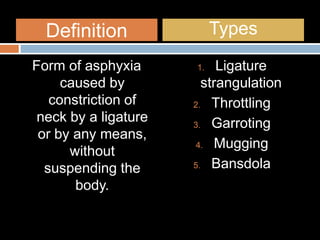
Form of asphyxia
caused by
constriction of
neck by a ligature
or by any means,
without
suspending the
body.
1. Ligature
strangulation
2. Throttling
3. Garroting
4. Mugging
5. Bansdola
Definition Types
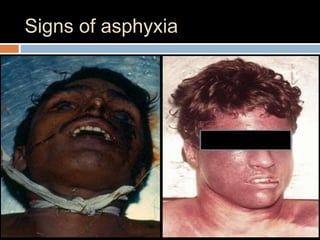
Signs of asphyxia
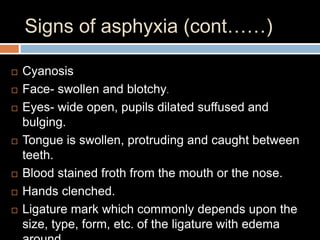
Signs of asphyxia (cont……)
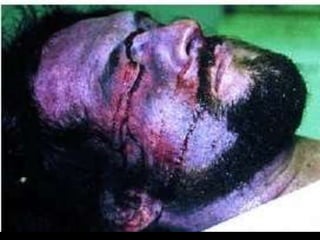
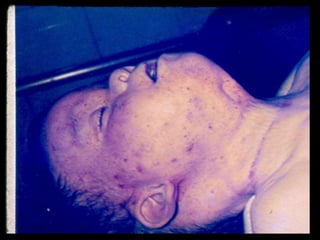
 Cyanosis
 Face- swollen and blotchy.
 Eyes- wide open, pupils dilated suffused and
bulging.
 Tongue is swollen, protruding and caught between
teeth.
 Blood stained froth from the mouth or the nose.
 Hands clenched.
 Ligature mark which commonly depends upon the
size, type, form, etc. of the ligature with edema
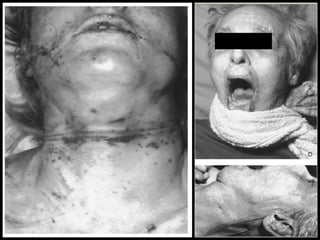
Ligature strangulation
 Form of asphyxia caused by constriction of neck
by a ligature without suspending the body.
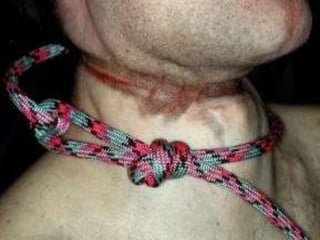
 Materials used for ligature strangulation can be
anything from flexible rubber tubing to cloth, or
stick, wooden planks, belts, wire, rope etc.
 Causes of death-
 Asphyxia
 Combined asphyxia and venous congestion
 Cerebral anoxia or congestion
 Vagal inhibition
 Vertebral fractures (rare)
Ligature strangulation (cont.)
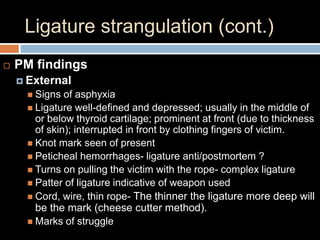
 PM findings
 External
 Signs of asphyxia
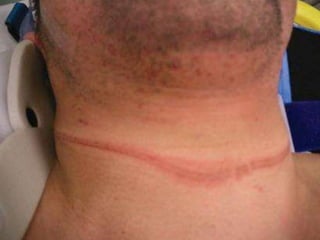
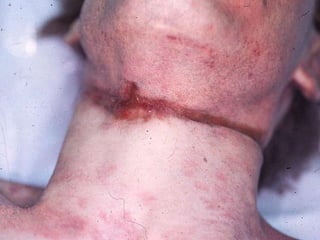
 Ligature well-defined and depressed; usually in the middle of
or below thyroid cartilage; prominent at front (due to thickness
of skin); interrupted in front by clothing fingers of victim.
 Knot mark seen of present
 Peticheal hemorrhages- ligature anti/postmortem ?
 Turns on pulling the victim with the rope- complex ligature
 Patter of ligature indicative of weapon used
 Cord, wire, thin rope- The thinner the ligature more deep will
be the mark (cheese cutter method).
 Marks of struggle
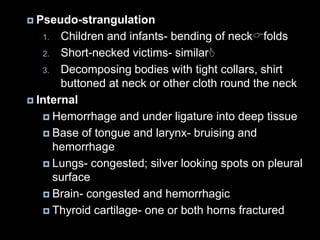
 Pseudo-strangulation
1. Children and infants- bending of neckfolds
2. Short-necked victims- similar
3. Decomposing bodies with tight collars, shirt
buttoned at neck or other cloth round the neck
 Internal
 Hemorrhage and under ligature into deep tissue
 Base of tongue and larynx- bruising and
hemorrhage
 Lungs- congested; silver looking spots on pleural
surface
 Brain- congested and hemorrhagic
 Thyroid cartilage- one or both horns fractured
Manual strangulation/Throttling
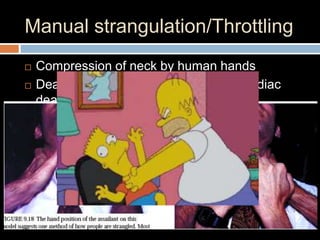
 Compression of neck by human hands
 Death- vagal stimulation  sudden cardiac
death
Manual strangulation/Throttling
(cont...)
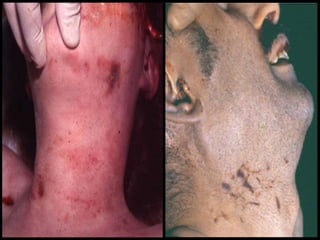
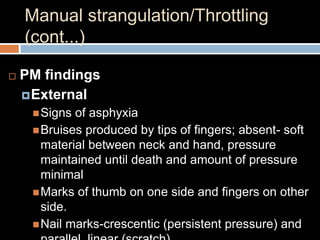
 PM findings
External
Signs of asphyxia
Bruises produced by tips of fingers; absent- soft
material between neck and hand, pressure
maintained until death and amount of pressure
minimal
Marks of thumb on one side and fingers on other
side.
Nail marks-crescentic (persistent pressure) and
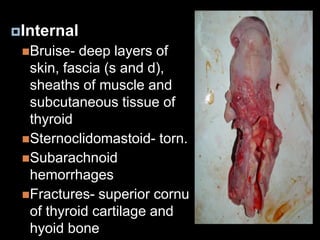
Internal
Bruise- deep layers of
skin, fascia (s and d),
sheaths of muscle and
subcutaneous tissue of
thyroid
Sternoclidomastoid- torn.
Subarachnoid
hemorrhages
Fractures- superior cornu
of thyroid cartilage and
hyoid bone
Hyoid bone fractures
 Inward fracture-
 Seen in throttling-
main force is an
inward
compression on
the hyoid bone.
 Fingers squeeze
the greater horns
towards each
other, due to
which the bone
may be fractured
and post
fragments
displaced
inwards.
 Anterio-posterior
compression
fracture
 Hanging, ligature
strangulation, run
over accidents.
 the hyoid bone
forced backwards
divergence of
greater horns
increased fracture
with outward
displacement of
the posterior small
fragments.
 Avulsion fracture
 Hanging and
throttling
 Very rare and is
due to over
activity of neck
muscles without
direct action or
injury to hyoid
bone.
Others
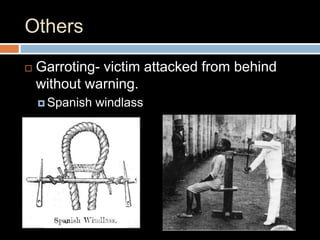
 Garroting- victim attacked from behind
without warning.
 Spanish windlass
Others (cont……)
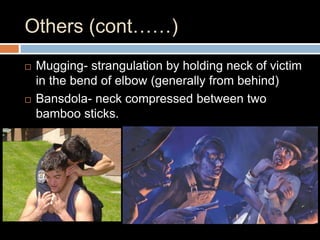
 Mugging- strangulation by holding neck of victim
in the bend of elbow (generally from behind)
 Bansdola- neck compressed between two
bamboo sticks.
Medico-legal aspects
 Suicidal- rare
 Homicidal- common;
signs of struggle;
position of offender.
 Accidental- in kids,
infants, alcoholics/
epileptic/imbeciles,
fetus, slipping of
suspended strings
 Suicidal- rare
 Homicidal- common;
finger nail abrasion.
 Accidental-
demonstration of
affection, joke,
physiological
experiment
Ligature strangulation
Manual
strangulation/throttling
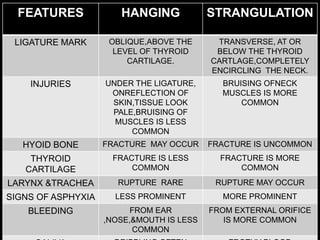
FEATURES HANGING STRANGULATION
LIGATURE MARK OBLIQUE,ABOVE THE
LEVEL OF THYROID
CARTILAGE.
TRANSVERSE, AT OR
BELOW THE THYROID
CARTLAGE,COMPLETELY
ENCIRCLING THE NECK.
INJURIES UNDER THE LIGATURE,
ONREFLECTION OF
SKIN,TISSUE LOOK
PALE,BRUISING OF
MUSCLES IS LESS
COMMON
BRUISING OFNECK
MUSCLES IS MORE
COMMON
HYOID BONE FRACTURE MAY OCCUR FRACTURE IS UNCOMMON
THYROID
CARTILAGE
FRACTURE IS LESS
COMMON
FRACTURE IS MORE
COMMON
LARYNX &TRACHEA RUPTURE RARE RUPTURE MAY OCCUR
SIGNS OF ASPHYXIA LESS PROMINENT MORE PROMINENT
BLEEDING FROM EAR
,NOSE,&MOUTH IS LESS
COMMON
FROM EXTERNAL ORIFICE
IS MORE COMMON
Strangulation

Strangulation

  • 1.
  • 2.
    Objectives  Terms andterminologies  Definition  Types  Signs of asphyxia  Ligature strangulation  Manual strangulation  Hyoid bone fracture  others  Medico-legal importance
  • 3.
    Terms and concepts 1.Mechanical Asphyxia- external pressure applied to neck, chest or other parts of the body positioned in such a way that respiration becomes difficult or impossible. 2. Anoxia- The term anoxia means a total depletion in the level of oxygen, an extreme form of hypoxia or low oxygen. 3. Bloodless dissection of neck- abdomen and thorax opened, then brain removed, head moved to drain out blood………… then neck opened
  • 4.
    Form of asphyxia causedby constriction of neck by a ligature or by any means, without suspending the body. 1. Ligature strangulation 2. Throttling 3. Garroting 4. Mugging 5. Bansdola Definition Types
  • 5.
  • 7.
    Signs of asphyxia(cont……)  Cyanosis  Face- swollen and blotchy.  Eyes- wide open, pupils dilated suffused and bulging.  Tongue is swollen, protruding and caught between teeth.  Blood stained froth from the mouth or the nose.  Hands clenched.  Ligature mark which commonly depends upon the size, type, form, etc. of the ligature with edema
  • 8.
    Ligature strangulation  Formof asphyxia caused by constriction of neck by a ligature without suspending the body.  Materials used for ligature strangulation can be anything from flexible rubber tubing to cloth, or stick, wooden planks, belts, wire, rope etc.  Causes of death-  Asphyxia  Combined asphyxia and venous congestion  Cerebral anoxia or congestion  Vagal inhibition  Vertebral fractures (rare)
  • 14.
    Ligature strangulation (cont.) PM findings  External  Signs of asphyxia  Ligature well-defined and depressed; usually in the middle of or below thyroid cartilage; prominent at front (due to thickness of skin); interrupted in front by clothing fingers of victim.  Knot mark seen of present  Peticheal hemorrhages- ligature anti/postmortem ?  Turns on pulling the victim with the rope- complex ligature  Patter of ligature indicative of weapon used  Cord, wire, thin rope- The thinner the ligature more deep will be the mark (cheese cutter method).  Marks of struggle
  • 15.
     Pseudo-strangulation 1. Childrenand infants- bending of neckfolds 2. Short-necked victims- similar 3. Decomposing bodies with tight collars, shirt buttoned at neck or other cloth round the neck  Internal  Hemorrhage and under ligature into deep tissue  Base of tongue and larynx- bruising and hemorrhage  Lungs- congested; silver looking spots on pleural surface  Brain- congested and hemorrhagic  Thyroid cartilage- one or both horns fractured
  • 16.
    Manual strangulation/Throttling  Compressionof neck by human hands  Death- vagal stimulation  sudden cardiac death
  • 18.
    Manual strangulation/Throttling (cont...)  PMfindings External Signs of asphyxia Bruises produced by tips of fingers; absent- soft material between neck and hand, pressure maintained until death and amount of pressure minimal Marks of thumb on one side and fingers on other side. Nail marks-crescentic (persistent pressure) and
  • 19.
    Internal Bruise- deep layersof skin, fascia (s and d), sheaths of muscle and subcutaneous tissue of thyroid Sternoclidomastoid- torn. Subarachnoid hemorrhages Fractures- superior cornu of thyroid cartilage and hyoid bone
  • 20.
    Hyoid bone fractures Inward fracture-  Seen in throttling- main force is an inward compression on the hyoid bone.  Fingers squeeze the greater horns towards each other, due to which the bone may be fractured and post fragments displaced inwards.  Anterio-posterior compression fracture  Hanging, ligature strangulation, run over accidents.  the hyoid bone forced backwards divergence of greater horns increased fracture with outward displacement of the posterior small fragments.  Avulsion fracture  Hanging and throttling  Very rare and is due to over activity of neck muscles without direct action or injury to hyoid bone.
  • 21.
    Others  Garroting- victimattacked from behind without warning.  Spanish windlass
  • 22.
    Others (cont……)  Mugging-strangulation by holding neck of victim in the bend of elbow (generally from behind)  Bansdola- neck compressed between two bamboo sticks.
  • 23.
    Medico-legal aspects  Suicidal-rare  Homicidal- common; signs of struggle; position of offender.  Accidental- in kids, infants, alcoholics/ epileptic/imbeciles, fetus, slipping of suspended strings  Suicidal- rare  Homicidal- common; finger nail abrasion.  Accidental- demonstration of affection, joke, physiological experiment Ligature strangulation Manual strangulation/throttling
  • 24.
    FEATURES HANGING STRANGULATION LIGATUREMARK OBLIQUE,ABOVE THE LEVEL OF THYROID CARTILAGE. TRANSVERSE, AT OR BELOW THE THYROID CARTLAGE,COMPLETELY ENCIRCLING THE NECK. INJURIES UNDER THE LIGATURE, ONREFLECTION OF SKIN,TISSUE LOOK PALE,BRUISING OF MUSCLES IS LESS COMMON BRUISING OFNECK MUSCLES IS MORE COMMON HYOID BONE FRACTURE MAY OCCUR FRACTURE IS UNCOMMON THYROID CARTILAGE FRACTURE IS LESS COMMON FRACTURE IS MORE COMMON LARYNX &TRACHEA RUPTURE RARE RUPTURE MAY OCCUR SIGNS OF ASPHYXIA LESS PROMINENT MORE PROMINENT BLEEDING FROM EAR ,NOSE,&MOUTH IS LESS COMMON FROM EXTERNAL ORIFICE IS MORE COMMON