What is Driver Alert System?
 Driver alert system/Driver drowsiness detection is
a car safety technology which helps prevent accidents
caused by the driver getting drowsy.
Present existed systems in Market
 Volvo
 Mercedes-Benz
 Ford Motor Company
 BMW of North America
 SLEEP WATCHER XR
 IR BASED EYE BLINK SENSOR
 Nap Zapper Anti-Sleep Alarm
 Sleep Detection and Warning
System Using a Low-Cost EEG Headset
 Infrared Pulse Sensor
Volvo
 Volvo was the first to market with a system.
 Volvo uses a camera mounted behind the rear-view
mirror.
 That looks at
 road markings
 steering movements
 accelerator and brake pedals
-If any found drowsiness drivers will hear an audible chime.
Mercedes-Benz
 The system uses a steering sensor, along with software.
 The software tracks 70 inputs, including such details
as
 where the vehicle is in the lane
 how often the driver adjusts the radio controls and moves the
steering wheel
 and how long they've been driving.
 The algorithm constantly compares how the driver
performs to the baseline to decide when to set off the
alert.
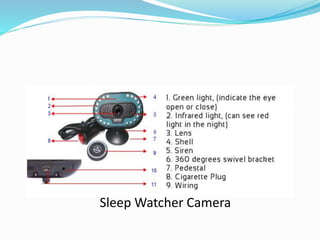
SLEEP WATCHER XR
 Uses infrared cameras that monitors human eyelid and
retina status.
 It watches and assesses the drivers retina and eyelids
for signs of fatigue
 Within 2 seconds of the driver beginning to fall asleep,
the system will recognize these signs and alert the
driver with loud audio tones and warnings.
Sleep Watcher Camera
IR BASED EYE BLINK SENSOR
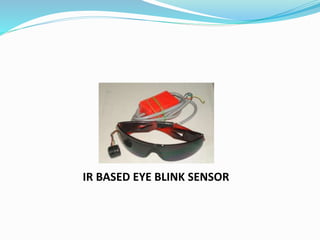
 This Eye Blink sensor is IR based.
 The Variation Across the eye will vary as per eye blink.
 If the eye is closed means the output is high otherwise
output is low.
 This to know the eye is closing or opening position.
 This output is give to logic circuit to indicate the
alarm.
IR BASED EYE BLINK SENSOR
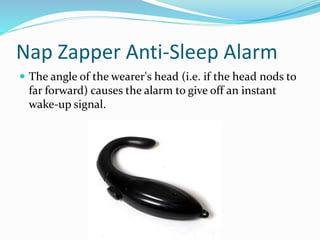
Nap Zapper Anti-Sleep Alarm
 The angle of the wearer's head (i.e. if the head nods to
far forward) causes the alarm to give off an instant
wake-up signal.
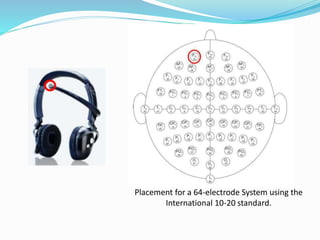
Sleep Detection and Warning
System Using a Low-Cost EEG Headset
 The goal of this thesis is to design and test a real-time
sleep detection and warning system using a low-cost
single dry-sensor EEG headset.
 The device designed in this study records a single EEG
signal and filters it into low Alpha (7.5 - 9.25 Hz), high
Alpha (10 - 11.75 Hz), low Beta (13 - 16.75 Hz), and high
Beta (18 - 29.75 Hz) frequency bands.
 When the EEG transitions to match that of sleep for a
short period of time, the device produces an audible
alarm.
Placement for a 64-electrode System using the
International 10-20 standard.
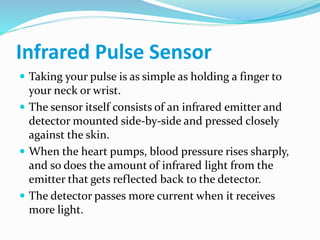
Infrared Pulse Sensor
 Taking your pulse is as simple as holding a finger to
your neck or wrist.
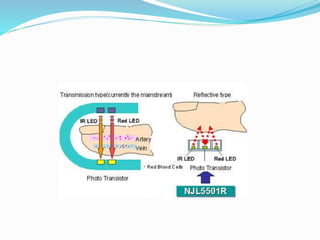
 The sensor itself consists of an infrared emitter and
detector mounted side-by-side and pressed closely
against the skin.
 When the heart pumps, blood pressure rises sharply,
and so does the amount of infrared light from the
emitter that gets reflected back to the detector.
 The detector passes more current when it receives
more light.
Present existed Driver alert system

Present existed Driver alert system

  • 2.
    What is DriverAlert System?  Driver alert system/Driver drowsiness detection is a car safety technology which helps prevent accidents caused by the driver getting drowsy.
  • 3.
    Present existed systemsin Market  Volvo  Mercedes-Benz  Ford Motor Company  BMW of North America  SLEEP WATCHER XR  IR BASED EYE BLINK SENSOR  Nap Zapper Anti-Sleep Alarm  Sleep Detection and Warning System Using a Low-Cost EEG Headset  Infrared Pulse Sensor
  • 4.
    Volvo  Volvo wasthe first to market with a system.  Volvo uses a camera mounted behind the rear-view mirror.  That looks at  road markings  steering movements  accelerator and brake pedals -If any found drowsiness drivers will hear an audible chime.
  • 5.
    Mercedes-Benz  The systemuses a steering sensor, along with software.  The software tracks 70 inputs, including such details as  where the vehicle is in the lane  how often the driver adjusts the radio controls and moves the steering wheel  and how long they've been driving.  The algorithm constantly compares how the driver performs to the baseline to decide when to set off the alert.
  • 6.
    SLEEP WATCHER XR Uses infrared cameras that monitors human eyelid and retina status.  It watches and assesses the drivers retina and eyelids for signs of fatigue  Within 2 seconds of the driver beginning to fall asleep, the system will recognize these signs and alert the driver with loud audio tones and warnings.
  • 7.
  • 8.
    IR BASED EYEBLINK SENSOR  This Eye Blink sensor is IR based.  The Variation Across the eye will vary as per eye blink.  If the eye is closed means the output is high otherwise output is low.  This to know the eye is closing or opening position.  This output is give to logic circuit to indicate the alarm.
  • 9.
    IR BASED EYEBLINK SENSOR
  • 10.
    Nap Zapper Anti-SleepAlarm  The angle of the wearer's head (i.e. if the head nods to far forward) causes the alarm to give off an instant wake-up signal.
  • 11.
    Sleep Detection andWarning System Using a Low-Cost EEG Headset  The goal of this thesis is to design and test a real-time sleep detection and warning system using a low-cost single dry-sensor EEG headset.  The device designed in this study records a single EEG signal and filters it into low Alpha (7.5 - 9.25 Hz), high Alpha (10 - 11.75 Hz), low Beta (13 - 16.75 Hz), and high Beta (18 - 29.75 Hz) frequency bands.  When the EEG transitions to match that of sleep for a short period of time, the device produces an audible alarm.
  • 12.
    Placement for a64-electrode System using the International 10-20 standard.
  • 13.
    Infrared Pulse Sensor Taking your pulse is as simple as holding a finger to your neck or wrist.  The sensor itself consists of an infrared emitter and detector mounted side-by-side and pressed closely against the skin.  When the heart pumps, blood pressure rises sharply, and so does the amount of infrared light from the emitter that gets reflected back to the detector.  The detector passes more current when it receives more light.