
















SOIL, AGRICULTURE, LIVESTOCK AND 
HUMAN HEALTH 
CURRENT ISSUES AND CHALLENGES 
NATURAL PATHWAYS TOWARDS REMEDIATION AND 
FEEDING NINE BILLION PEOPLE BY 2050 
Arun K. Bahl, DVM, MPH, PHD, DACPV 
Bahl Farms/Consulting Inc. 
17519 Jetton Road 
Cornelius, North Carolina 28031 
Email: abahl1@hotmail.com Phone: cell: 704-904-8373
KEY ISSUES FARMERS ARE 
FACING WORLDWIDE 
 INCREASING GLOBAL DEMAND FOR FOOD 
AND FUEL 
 SOIL MANAGEMENT AND SUSTAINABILITY 
 WATER CONSERVATION 
 LAND AVAILABILITY AND COST 
 GOVERNMENT REGULATIONS (OR LACK OF) 
 TRANSPORTATION AND LABOR COSTS
INCREASING DEMAND FOR 
SUSTAINABLE FOODS* 
 SLOW BUT DRAMATIC INCREASE FOR NATUAL ORGANIC OR SUSTAINABLE PLANT AND 
ANIMAL PROTEINS 
 A DRAMATIC SHIFT AWAY FROM CONVENTIONAL CHEMICAL BASED FARMING METHODS 
 ARE INDUSTRIAL PRODUCTIONS METHODS TO BE BLAMED? 
 OR IS THERE A BIG FLAW IN PROCESS CONTROLL? 
* USA “ORGANIC FOODS” SALES ARE INCREASING AT 15% EVERY YEAR. 
LAST 10 YEAR $ GROWTH HAS ALMOST 1000%
INCREASING YIELDS: PAST PRESENT AND FUTURE 
 DURING THE 1930’S US FARMER HARVESTED 1.6 TONS OF CORN 
PER HECTOR 
 1960’S THIS INCREASED TO 4 TONS/HECTOR 
 TODAY THE FARMER AVERAGES ALMOST 10 TONS/HECTOR 
 BETTER FERTILIZER MANAGEMENT 
 MORE EFFICIENT FARMING MACHINERY 
 BREEDING OF HYBRID SEEDS WITH BETTTER STRESS 
TOLERANCE 
 OTHER FACTORS DESERVE CREDITS
LIVESTOCK FARMING, INCREASED YIELDS 
 FROM BREED SUBSTITUTION 
 CROSS BREEDING 
 WITHIN BREED SELECTION 
 ADVANCED NUTRITION 
 IMPROVED MANAGEMENT, ENVIRONMENTAL CONTROL OF 
TEMPERATURE, HUMIDITY, AIR SPEED, VENTILATION RATES ETC.
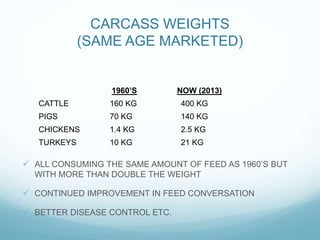
CARCASS WEIGHTS 
(SAME AGE MARKETED) 
1960’S NOW (2013) 
CATTLE 160 KG 400 KG 
PIGS 70 KG 140 KG 
CHICKENS 1.4 KG 2.5 KG 
TURKEYS 10 KG 21 KG 
 ALL CONSUMING THE SAME AMOUNT OF FEED AS 1960’S BUT 
WITH MORE THAN DOUBLE THE WEIGHT 
 CONTINUED IMPROVEMENT IN FEED CONVERSATION 
 BETTER DISEASE CONTROL ETC.
NEWER TECHNOLOGY 
AGRICULTURAL CROPS AND SOIL 
MANAGEMENT 
 PRECISION TECHNOLOGIES TO MONITOR FEEDING 
 GPS TRACKING TO ANALYSE EQUIPMENT USE AND PLANTING 
 USE OF HYBRIDS AND GENETIC BIOTECHNOLOGY TRAITS: 
CORN HYBRIDS WITH RESISTANCE TO CORN BORERS AND ROOTWORM 
 APPLICATION OF BIOLOGICAL GROWTH PROMOTERS: 
AUXINS 
HUMIC AID/FULVIC ACID 
OTHERS 
 BETTER AGRONOMICS 
PLANTING DENSITY, FERTILIZER USE EFFICIENCY, BETTER SOIL MANAGEMENT
MODERN CHEMICAL AND INDUSTRIAL AGRICULTURE 
CONTRIBUTE TO RELATIVELY LARGE YIELDS, BUT CORE 
PRODUCTIVITY STILL DEPENDS ON MANY BASIC FACTORS 
INCLUDING 
 SOIL HEALTH 
 SOIL TEXTURE 
 AGGREGATE SIZE 
 CATION EXCHANGE CAPACITY 
 SOIL MICROBIOLOGY 
 WATER AVAILABILITY, SOIL WATER HOLDING 
CAPACITY 
 ENVIRONMENTAL ISSUES AS NITROGEN AND 
PHOSPHOROUS RUNOFF
SOME CHEMICAL AND INDUSTRIAL AGRICULTURAL 
PRACTICES ARE NOW COMING UNDER SCRUTINY 
AS BEING UNSUSTAINABLE AND UNSUITABLE 
IT IS NOW REPORTED THAT THE CARBON CONTENT 
OF SOME MID-WESTERN STATES OF USA, SOILS 
HAVE REDUCED CARBON CONTENT, FROM 20% TO 
AROUND 1% IN THE PAST 40 YEARS
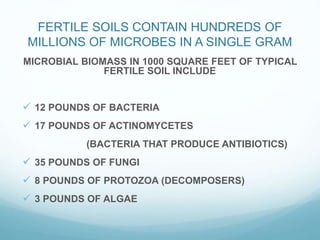
FERTILE SOILS CONTAIN HUNDREDS OF 
MILLIONS OF MICROBES IN A SINGLE GRAM 
MICROBIAL BIOMASS IN 1000 SQUARE FEET OF TYPICAL 
FERTILE SOIL INCLUDE 
 12 POUNDS OF BACTERIA 
 17 POUNDS OF ACTINOMYCETES 
(BACTERIA THAT PRODUCE ANTIBIOTICS) 
 35 POUNDS OF FUNGI 
 8 POUNDS OF PROTOZOA (DECOMPOSERS) 
 3 POUNDS OF ALGAE
UNDER FAVORABLE 
CONDITIONS 
 OF MOISTURE 
 AERATION 
 PH 
 TEMPERATURE 
 AVAILABLE CARBON 
 INORGANIC NUTRIENTS (eg NITROGEN) 
SOIL HAS ENORMOUS POTENTIAL FOR MICROBIAL ACTIVITY* 
*ADDITION OF HUMIC ACID TO MICROBIAL CULTURES AT CONCENTRATION OF 30 MG PER LITER 
RESULTED IN PROLIFERATION OF SOIL MICROBES UPTO 2000 FOLD. VISSER S. A. 1985
CURRENT ISSUES AND 
CHALLANGES
The Health Risks of 
Genetically Modified Foods
Allergens 
Toxins 
New diseases 
In reality, agency scientists warned of: 
Nutritional problems
Person in charge of FDA’s GMO 
policy ignored scientists’ 
warnings 
Michael Taylor 
Former Monsanto attorney 
Later Monsanto vice president 
Now back at FDA as 
US Food Safety Czar
GMOs are 
Inherently Unsafe 
The GM process 
creates massive 
collateral damage 
in the plant, which 
can cause side-effects
GM potatoes 
damaged rats 
(10 or 110 days) 
Rats developed 
• Potentially pre-cancerous 
cell growth in 
the digestive tract 
• Smaller brains, livers 
and testicles 
• Partial atrophy of the 
liver, and 
• Immune system damage 
Lancet, 1999
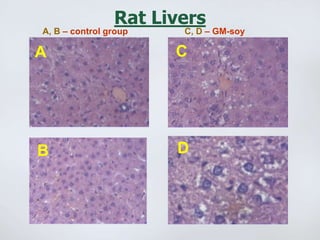
Rat Livers 
C, D – GM-soy 
group 
А, B – control group 
A 
B 
C 
D
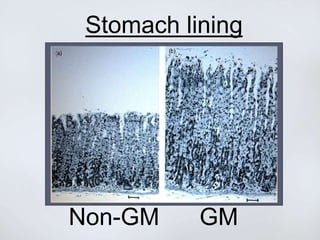
Stomach lining 
Non-GM GM
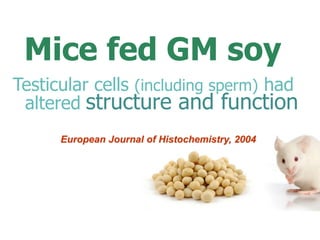
Mice fed GM soy 
Testicular cells (including sperm) had 
altered structure and function 
European Journal of Histochemistry, 2004
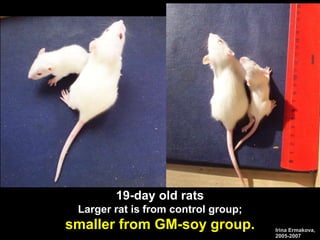
19-day old rats 
Larger rat is from control group; 
smaller from GM-soy group. Irina Ermakova, 
2005-2007
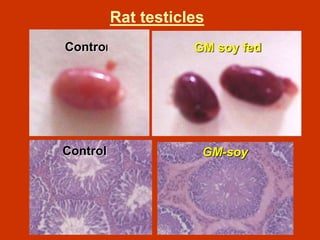
Rat testicles 
Control GM soy fed 
Control GM-soy
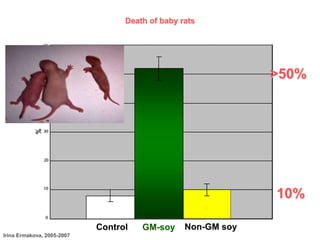
Death of baby rats 
Control GM-soy Non-GM soy 
Irina Ermakova, 2005-2007 
>50% 
10%
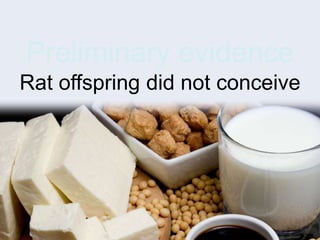
Preliminary evidence 
Rat offspring did not conceive
When the entire 
Russian facility began using 
GM soy-based feed, 
infant mortality 
for all rats hit 55.3%.
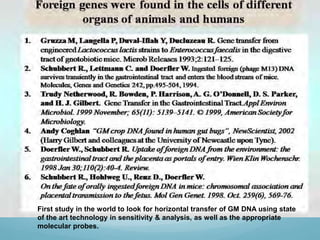
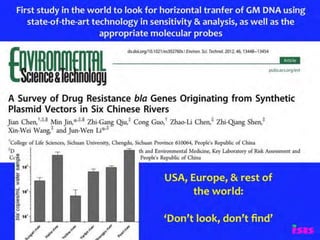
First study in the world to look for horizontal transfer of GM DNA using state 
of the art technology in sensitivity & analysis, as well as the appropriate 
molecular probes.
BIOREMEDIATION
Evidence of GM soy-related 
problems
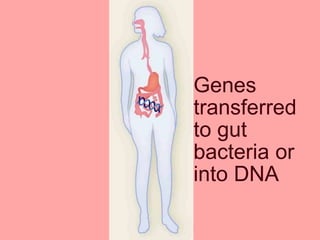
Genes 
transferred 
to gut 
bacteria or 
into DNA
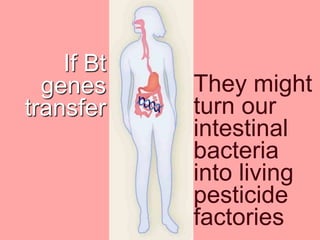
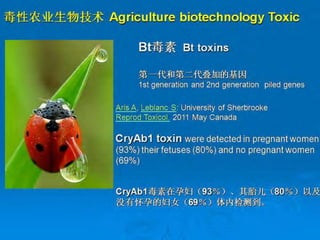
If Bt 
genes 
transfer 
They might 
turn our 
intestinal 
bacteria 
into living 
pesticide 
factories
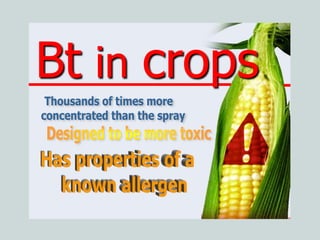
Bt in crops 
Built-in insecticide
Bt-toxin 
Industry claims Bt: 
 Has a history of 
safe use 
 Is destroyed 
during digestion 
 Is not active in 
mammals
In reality
Bt in crops
Laborers in India report the same reactions to Bt cotton as those who 
were sprayed 
Itching, eruptions, wounds, 
discoloration
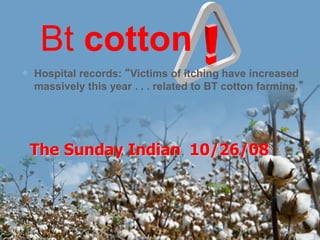
Bt cotton 
 Hospital records: “Victims of itching have increased 
massively this year . . . related to BT cotton farming.” 
The Sunday Indian, 10/26/08
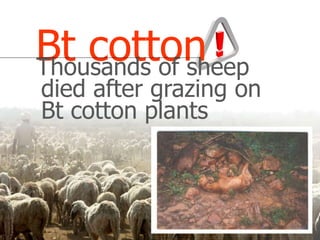
Bt cotton Thousands of sheep 
died after grazing on 
Bt cotton plants
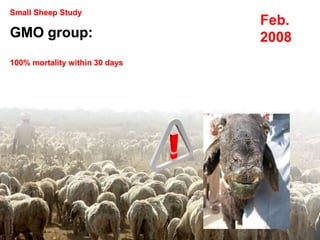
Small Sheep Study 
GMO group: 
100% mortality within 30 days 
Feb. 
2008
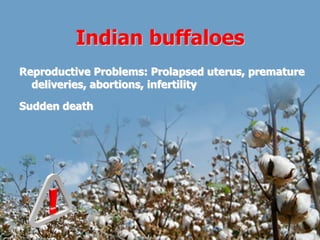
Indian buffaloes 
Reproductive Problems: Prolapsed uterus, premature 
deliveries, abortions, infertility 
Sudden death
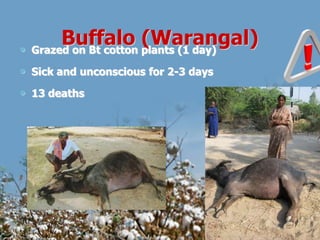
Buffalo (Warangal)  Grazed on Bt cotton plants (1 day) 
 Sick and unconscious for 2-3 days 
 13 deaths
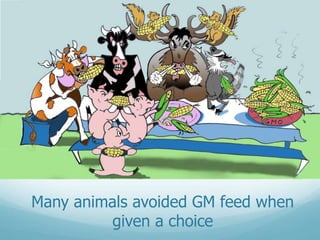
Many animals avoided GM feed when 
given a choice
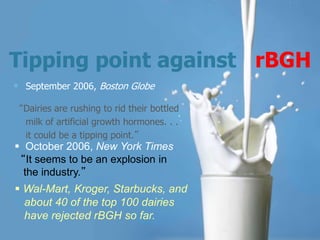
Tipping point against rBGH 
 September 2006, Boston Globe 
“Dairies are rushing to rid their bottled 
milk of artificial growth hormones. . . 
it could be a tipping point.” 
 October 2006, New York Times 
“It seems to be an explosion in 
the industry.” 
 Wal-Mart, Kroger, Starbucks, and 
about 40 of the top 100 dairies 
have rejected rBGH so far.
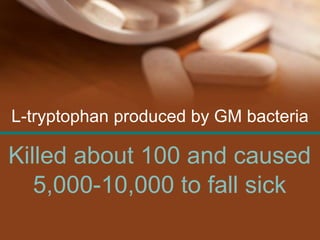
L-tryptophan produced by GM bacteria 
Killed about 100 and caused 
5,000-10,000 to fall sick
CONCLUSIONS
If GM crops are so bad, why don’t we see more problems?
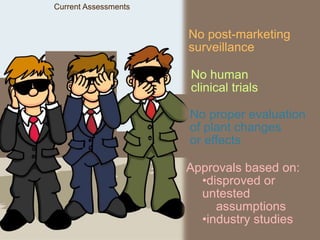
Current Assessments 
No post-marketing 
surveillance 
No human 
clinical trials 
No proper evaluation 
of plant changes 
or effects 
Approvals based on: 
•disproved or 
untested 
assumptions 
•industry studies
The American Academy of 
Environmental Medicine 
“Animal studies indicate serious health risks … including infertility, 
immune dysregulation, accelerated aging, dysregulation of genes 
associated with cholesterol synthesis, insulin regulation, cell 
signaling, and protein formation, and changes in the liver, kidney, 
spleen and gastrointestinal system.”
How do we 
stop the 
genetic 
engineering of 
our food 
supply?
Tipping point for 
rejection of GM crops
Scientists Appeal to Pope to Get GM 
Foods Banned in Brazil appeared first on 
Sustainable Pulse. 
Pope-Francis 
Aug 11, 2014 04:36 pm | Sustainable 
Pulse 
Chinese and International Experts Slam 
GMOs and Glyphosate at Beijing 
Conference 
Aug 09, 2014 06:52 am | Sustainable 
Pulse 
Top Scientists Challenge Makeup of US 
GMO Risks Panel 
Aug 06, 2014 05:59 am | Sustainable 
Pulse
Campaign for Healthier Eating 
in America 
www.ResponsibleTechnology.org

Dr. arun behl glyphosates

  • 2.
    SOIL, AGRICULTURE, LIVESTOCKAND HUMAN HEALTH CURRENT ISSUES AND CHALLENGES NATURAL PATHWAYS TOWARDS REMEDIATION AND FEEDING NINE BILLION PEOPLE BY 2050 Arun K. Bahl, DVM, MPH, PHD, DACPV Bahl Farms/Consulting Inc. 17519 Jetton Road Cornelius, North Carolina 28031 Email: abahl1@hotmail.com Phone: cell: 704-904-8373
  • 3.
    KEY ISSUES FARMERSARE FACING WORLDWIDE  INCREASING GLOBAL DEMAND FOR FOOD AND FUEL  SOIL MANAGEMENT AND SUSTAINABILITY  WATER CONSERVATION  LAND AVAILABILITY AND COST  GOVERNMENT REGULATIONS (OR LACK OF)  TRANSPORTATION AND LABOR COSTS
  • 4.
    INCREASING DEMAND FOR SUSTAINABLE FOODS*  SLOW BUT DRAMATIC INCREASE FOR NATUAL ORGANIC OR SUSTAINABLE PLANT AND ANIMAL PROTEINS  A DRAMATIC SHIFT AWAY FROM CONVENTIONAL CHEMICAL BASED FARMING METHODS  ARE INDUSTRIAL PRODUCTIONS METHODS TO BE BLAMED?  OR IS THERE A BIG FLAW IN PROCESS CONTROLL? * USA “ORGANIC FOODS” SALES ARE INCREASING AT 15% EVERY YEAR. LAST 10 YEAR $ GROWTH HAS ALMOST 1000%
  • 5.
    INCREASING YIELDS: PASTPRESENT AND FUTURE  DURING THE 1930’S US FARMER HARVESTED 1.6 TONS OF CORN PER HECTOR  1960’S THIS INCREASED TO 4 TONS/HECTOR  TODAY THE FARMER AVERAGES ALMOST 10 TONS/HECTOR  BETTER FERTILIZER MANAGEMENT  MORE EFFICIENT FARMING MACHINERY  BREEDING OF HYBRID SEEDS WITH BETTTER STRESS TOLERANCE  OTHER FACTORS DESERVE CREDITS
  • 6.
    LIVESTOCK FARMING, INCREASEDYIELDS  FROM BREED SUBSTITUTION  CROSS BREEDING  WITHIN BREED SELECTION  ADVANCED NUTRITION  IMPROVED MANAGEMENT, ENVIRONMENTAL CONTROL OF TEMPERATURE, HUMIDITY, AIR SPEED, VENTILATION RATES ETC.
  • 7.
    CARCASS WEIGHTS (SAMEAGE MARKETED) 1960’S NOW (2013) CATTLE 160 KG 400 KG PIGS 70 KG 140 KG CHICKENS 1.4 KG 2.5 KG TURKEYS 10 KG 21 KG  ALL CONSUMING THE SAME AMOUNT OF FEED AS 1960’S BUT WITH MORE THAN DOUBLE THE WEIGHT  CONTINUED IMPROVEMENT IN FEED CONVERSATION  BETTER DISEASE CONTROL ETC.
  • 8.
    NEWER TECHNOLOGY AGRICULTURALCROPS AND SOIL MANAGEMENT  PRECISION TECHNOLOGIES TO MONITOR FEEDING  GPS TRACKING TO ANALYSE EQUIPMENT USE AND PLANTING  USE OF HYBRIDS AND GENETIC BIOTECHNOLOGY TRAITS: CORN HYBRIDS WITH RESISTANCE TO CORN BORERS AND ROOTWORM  APPLICATION OF BIOLOGICAL GROWTH PROMOTERS: AUXINS HUMIC AID/FULVIC ACID OTHERS  BETTER AGRONOMICS PLANTING DENSITY, FERTILIZER USE EFFICIENCY, BETTER SOIL MANAGEMENT
  • 9.
    MODERN CHEMICAL ANDINDUSTRIAL AGRICULTURE CONTRIBUTE TO RELATIVELY LARGE YIELDS, BUT CORE PRODUCTIVITY STILL DEPENDS ON MANY BASIC FACTORS INCLUDING  SOIL HEALTH  SOIL TEXTURE  AGGREGATE SIZE  CATION EXCHANGE CAPACITY  SOIL MICROBIOLOGY  WATER AVAILABILITY, SOIL WATER HOLDING CAPACITY  ENVIRONMENTAL ISSUES AS NITROGEN AND PHOSPHOROUS RUNOFF
  • 10.
    SOME CHEMICAL ANDINDUSTRIAL AGRICULTURAL PRACTICES ARE NOW COMING UNDER SCRUTINY AS BEING UNSUSTAINABLE AND UNSUITABLE IT IS NOW REPORTED THAT THE CARBON CONTENT OF SOME MID-WESTERN STATES OF USA, SOILS HAVE REDUCED CARBON CONTENT, FROM 20% TO AROUND 1% IN THE PAST 40 YEARS
  • 11.
    FERTILE SOILS CONTAINHUNDREDS OF MILLIONS OF MICROBES IN A SINGLE GRAM MICROBIAL BIOMASS IN 1000 SQUARE FEET OF TYPICAL FERTILE SOIL INCLUDE  12 POUNDS OF BACTERIA  17 POUNDS OF ACTINOMYCETES (BACTERIA THAT PRODUCE ANTIBIOTICS)  35 POUNDS OF FUNGI  8 POUNDS OF PROTOZOA (DECOMPOSERS)  3 POUNDS OF ALGAE
  • 12.
    UNDER FAVORABLE CONDITIONS  OF MOISTURE  AERATION  PH  TEMPERATURE  AVAILABLE CARBON  INORGANIC NUTRIENTS (eg NITROGEN) SOIL HAS ENORMOUS POTENTIAL FOR MICROBIAL ACTIVITY* *ADDITION OF HUMIC ACID TO MICROBIAL CULTURES AT CONCENTRATION OF 30 MG PER LITER RESULTED IN PROLIFERATION OF SOIL MICROBES UPTO 2000 FOLD. VISSER S. A. 1985
  • 13.
    CURRENT ISSUES AND CHALLANGES
  • 14.
    The Health Risksof Genetically Modified Foods
  • 15.
    Allergens Toxins Newdiseases In reality, agency scientists warned of: Nutritional problems
  • 16.
    Person in chargeof FDA’s GMO policy ignored scientists’ warnings Michael Taylor Former Monsanto attorney Later Monsanto vice president Now back at FDA as US Food Safety Czar
  • 17.
    GMOs are InherentlyUnsafe The GM process creates massive collateral damage in the plant, which can cause side-effects
  • 18.
    GM potatoes damagedrats (10 or 110 days) Rats developed • Potentially pre-cancerous cell growth in the digestive tract • Smaller brains, livers and testicles • Partial atrophy of the liver, and • Immune system damage Lancet, 1999
  • 19.
    Rat Livers C,D – GM-soy group А, B – control group A B C D
  • 20.
  • 21.
    Mice fed GMsoy Testicular cells (including sperm) had altered structure and function European Journal of Histochemistry, 2004
  • 22.
    19-day old rats Larger rat is from control group; smaller from GM-soy group. Irina Ermakova, 2005-2007
  • 23.
    Rat testicles ControlGM soy fed Control GM-soy
  • 24.
    Death of babyrats Control GM-soy Non-GM soy Irina Ermakova, 2005-2007 >50% 10%
  • 25.
    Preliminary evidence Ratoffspring did not conceive
  • 26.
    When the entire Russian facility began using GM soy-based feed, infant mortality for all rats hit 55.3%.
  • 29.
    First study inthe world to look for horizontal transfer of GM DNA using state of the art technology in sensitivity & analysis, as well as the appropriate molecular probes.
  • 45.
  • 46.
    Evidence of GMsoy-related problems
  • 50.
    Genes transferred togut bacteria or into DNA
  • 51.
    If Bt genes transfer They might turn our intestinal bacteria into living pesticide factories
  • 60.
    Bt in crops Built-in insecticide
  • 61.
    Bt-toxin Industry claimsBt:  Has a history of safe use  Is destroyed during digestion  Is not active in mammals
  • 62.
  • 63.
  • 64.
    Laborers in Indiareport the same reactions to Bt cotton as those who were sprayed Itching, eruptions, wounds, discoloration
  • 65.
    Bt cotton Hospital records: “Victims of itching have increased massively this year . . . related to BT cotton farming.” The Sunday Indian, 10/26/08
  • 66.
    Bt cotton Thousandsof sheep died after grazing on Bt cotton plants
  • 67.
    Small Sheep Study GMO group: 100% mortality within 30 days Feb. 2008
  • 68.
    Indian buffaloes ReproductiveProblems: Prolapsed uterus, premature deliveries, abortions, infertility Sudden death
  • 69.
    Buffalo (Warangal) Grazed on Bt cotton plants (1 day)  Sick and unconscious for 2-3 days  13 deaths
  • 70.
    Many animals avoidedGM feed when given a choice
  • 71.
    Tipping point againstrBGH  September 2006, Boston Globe “Dairies are rushing to rid their bottled milk of artificial growth hormones. . . it could be a tipping point.”  October 2006, New York Times “It seems to be an explosion in the industry.”  Wal-Mart, Kroger, Starbucks, and about 40 of the top 100 dairies have rejected rBGH so far.
  • 72.
    L-tryptophan produced byGM bacteria Killed about 100 and caused 5,000-10,000 to fall sick
  • 74.
  • 75.
    If GM cropsare so bad, why don’t we see more problems?
  • 76.
    Current Assessments Nopost-marketing surveillance No human clinical trials No proper evaluation of plant changes or effects Approvals based on: •disproved or untested assumptions •industry studies
  • 77.
    The American Academyof Environmental Medicine “Animal studies indicate serious health risks … including infertility, immune dysregulation, accelerated aging, dysregulation of genes associated with cholesterol synthesis, insulin regulation, cell signaling, and protein formation, and changes in the liver, kidney, spleen and gastrointestinal system.”
  • 78.
    How do we stop the genetic engineering of our food supply?
  • 79.
    Tipping point for rejection of GM crops
  • 80.
    Scientists Appeal toPope to Get GM Foods Banned in Brazil appeared first on Sustainable Pulse. Pope-Francis Aug 11, 2014 04:36 pm | Sustainable Pulse Chinese and International Experts Slam GMOs and Glyphosate at Beijing Conference Aug 09, 2014 06:52 am | Sustainable Pulse Top Scientists Challenge Makeup of US GMO Risks Panel Aug 06, 2014 05:59 am | Sustainable Pulse
  • 81.
    Campaign for HealthierEating in America www.ResponsibleTechnology.org