PREPARED BY
IDUNA SOPHIA DCOUTO
ASSOCIATE PROFESSOR
NHCON
DOCUMENTATION AND
RECORDING
DOCUMENTATION
 Documentation is anything written or printed
on which you rely as record or proof of patient
actions and activities.- Potter and Perry
 The process of making and entry on a client
record is called recording, charting or
documenting. - Kozier
REPORTING
 A report is oral, written or computer
based communication intended to
convey information to others.
RECORD
 It is also called a chart or client record,
is a formal, legal document that provides
evidence of a clients care and can be
written or computer based.
PURPOSES OF REPORTS AND
RECORD
 1. Communication
 2. Planning client care
 3. Legal documentation
 4. Research
 5. Education
 6. Auditing Health Agencies
 7.Reimbursement
 8. Health Care Analysis
CONFIDENTIALITY
TYPES OF CLIENT
RECORDS/COMMON RECORD
KEEPING FORMS
MEDICAL RECORDS
 1. Patient identification and demographic data
 2. Present complaints
 3.Informed consent for treatment and procedure
 4. Admission nursing history
 5.Family history
 6. Physical examination findings
 7. Medical history
 8. Tentative diagnosis
 9. Medical diagnosis
 10.Theraputic orders
Con’t
 11. Treatment given
 12. Medical progress notes
 13. Supportive care given
 14. Reports of diagnostic studies
 15. Final diagnosis
 16. Patient education
 17. Summary of operative pocedures
 18. Discharge plan and summary
 19. Any specific special instructions
COMMON NURSING RECORDS/
FORMATS FOR NURSING
DOCUMENTATION
 1. Nursing assessment
 2. Nursing care plans
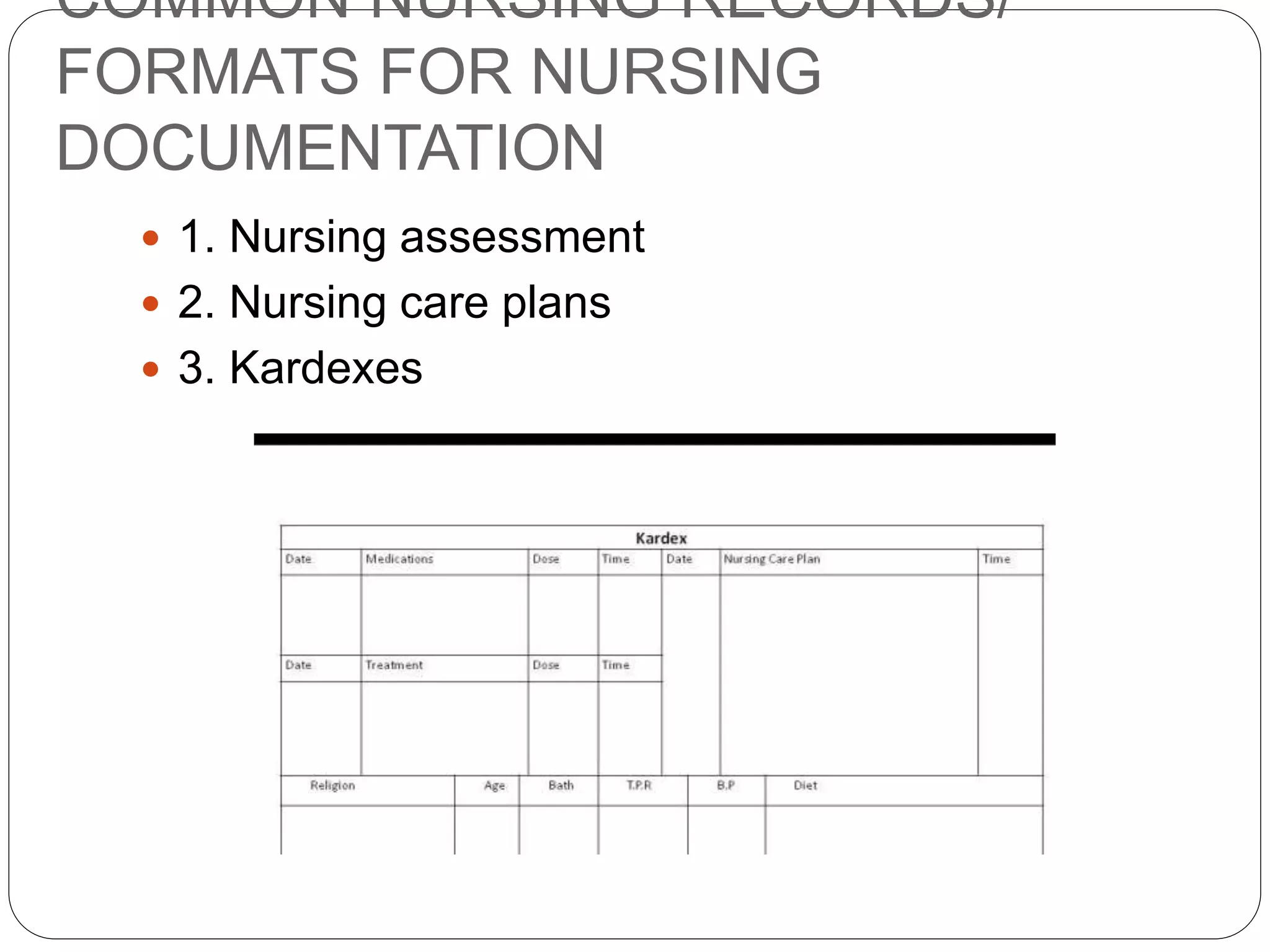
 3. Kardexes
CON’T
 4. Flow sheets
 5. Graphic records
 6. Fluid balance record
 7. Medication administration form
 8.Skin assessment record
 9. Progress notes
METHODS /SYSTEMS OF
DOCUMENTATION/RECORDING
 1. SOURCE – ORIENTED RECORD
 2. PROBLEM – ORIENTED MEDICAL RECORD
(POMR)/PROBLEM ORIENTED RECORD (POR)
o 1.Database
o 2.Problem list
o 3. Plan of care
o 4. Progress notes
3. PIE
4. FOCUS CHARTING
CON’T
 5. CHARTING BY EXCEPTION (CBE)
 1. Flow sheets
 2. Standards of nursing care
 3. Bedside access to chart forms
6. COMPUTERIZED DOCUMENTATION/ ELECTRONIC
MEDICAL RECORDS (EMR)
7. CASE MANAGEMENT
8. PERSONAL HEALTH RECORDS (PHRs)
LEGAL GUIDELINES FOR
DOCUMENTATION
 Date and Time
 Timing
 Legibility
 Permanence
 Accepted terminology
 Correct spelling
 Signature
 Accuracy
 Sequence
 Appropriateness
 Completeness
 Conciseness
 Legal Prudence
 Factual
REPORTING
 Reports are oral written or audio taped exchange
of information between caregivers
Purposes of writing reports
1. To identify the quality of service
2. To show the progress in reaching goal
3. To study health conditions
4. To interpret the services to the public and to
other agencies
CRITERIA OF A GOOD REPORT
 Made promptly
 To be clear, concise and complete
 All identified data to be included
 Easily understood
 Important points to be emphasized
GUIDELINES FOR REPORTING
Factual
Accurate
Complete
Current issue
Organisation
TYPES OF REPORT
1. Change of shift report/hand off
communication
2. Transfer reports
3. Telephone reports
4. Incident report/ accident report
5. Intra division reports
6. Inter departmental reports
7. Care Plan Conference
8. Nursing rounds

DOCUMENTATION AND RECORDING.pptx

  • 1.
    PREPARED BY IDUNA SOPHIADCOUTO ASSOCIATE PROFESSOR NHCON DOCUMENTATION AND RECORDING
  • 2.
    DOCUMENTATION  Documentation isanything written or printed on which you rely as record or proof of patient actions and activities.- Potter and Perry  The process of making and entry on a client record is called recording, charting or documenting. - Kozier
  • 3.
    REPORTING  A reportis oral, written or computer based communication intended to convey information to others. RECORD  It is also called a chart or client record, is a formal, legal document that provides evidence of a clients care and can be written or computer based.
  • 4.
    PURPOSES OF REPORTSAND RECORD  1. Communication  2. Planning client care  3. Legal documentation  4. Research  5. Education  6. Auditing Health Agencies  7.Reimbursement  8. Health Care Analysis
  • 5.
  • 6.
    TYPES OF CLIENT RECORDS/COMMONRECORD KEEPING FORMS MEDICAL RECORDS  1. Patient identification and demographic data  2. Present complaints  3.Informed consent for treatment and procedure  4. Admission nursing history  5.Family history  6. Physical examination findings  7. Medical history  8. Tentative diagnosis  9. Medical diagnosis  10.Theraputic orders
  • 7.
    Con’t  11. Treatmentgiven  12. Medical progress notes  13. Supportive care given  14. Reports of diagnostic studies  15. Final diagnosis  16. Patient education  17. Summary of operative pocedures  18. Discharge plan and summary  19. Any specific special instructions
  • 8.
    COMMON NURSING RECORDS/ FORMATSFOR NURSING DOCUMENTATION  1. Nursing assessment  2. Nursing care plans  3. Kardexes
  • 9.
    CON’T  4. Flowsheets  5. Graphic records  6. Fluid balance record  7. Medication administration form  8.Skin assessment record  9. Progress notes
  • 10.
    METHODS /SYSTEMS OF DOCUMENTATION/RECORDING 1. SOURCE – ORIENTED RECORD  2. PROBLEM – ORIENTED MEDICAL RECORD (POMR)/PROBLEM ORIENTED RECORD (POR) o 1.Database o 2.Problem list o 3. Plan of care o 4. Progress notes 3. PIE 4. FOCUS CHARTING
  • 11.
    CON’T  5. CHARTINGBY EXCEPTION (CBE)  1. Flow sheets  2. Standards of nursing care  3. Bedside access to chart forms 6. COMPUTERIZED DOCUMENTATION/ ELECTRONIC MEDICAL RECORDS (EMR) 7. CASE MANAGEMENT 8. PERSONAL HEALTH RECORDS (PHRs)
  • 12.
    LEGAL GUIDELINES FOR DOCUMENTATION Date and Time  Timing  Legibility  Permanence  Accepted terminology  Correct spelling  Signature  Accuracy  Sequence  Appropriateness  Completeness  Conciseness  Legal Prudence  Factual
  • 13.
    REPORTING  Reports areoral written or audio taped exchange of information between caregivers Purposes of writing reports 1. To identify the quality of service 2. To show the progress in reaching goal 3. To study health conditions 4. To interpret the services to the public and to other agencies
  • 14.
    CRITERIA OF AGOOD REPORT  Made promptly  To be clear, concise and complete  All identified data to be included  Easily understood  Important points to be emphasized
  • 15.
  • 16.
    TYPES OF REPORT 1.Change of shift report/hand off communication 2. Transfer reports 3. Telephone reports 4. Incident report/ accident report 5. Intra division reports 6. Inter departmental reports 7. Care Plan Conference 8. Nursing rounds