1
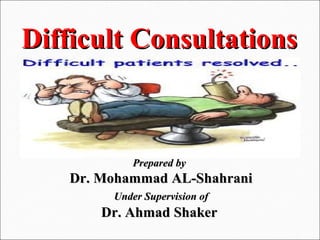
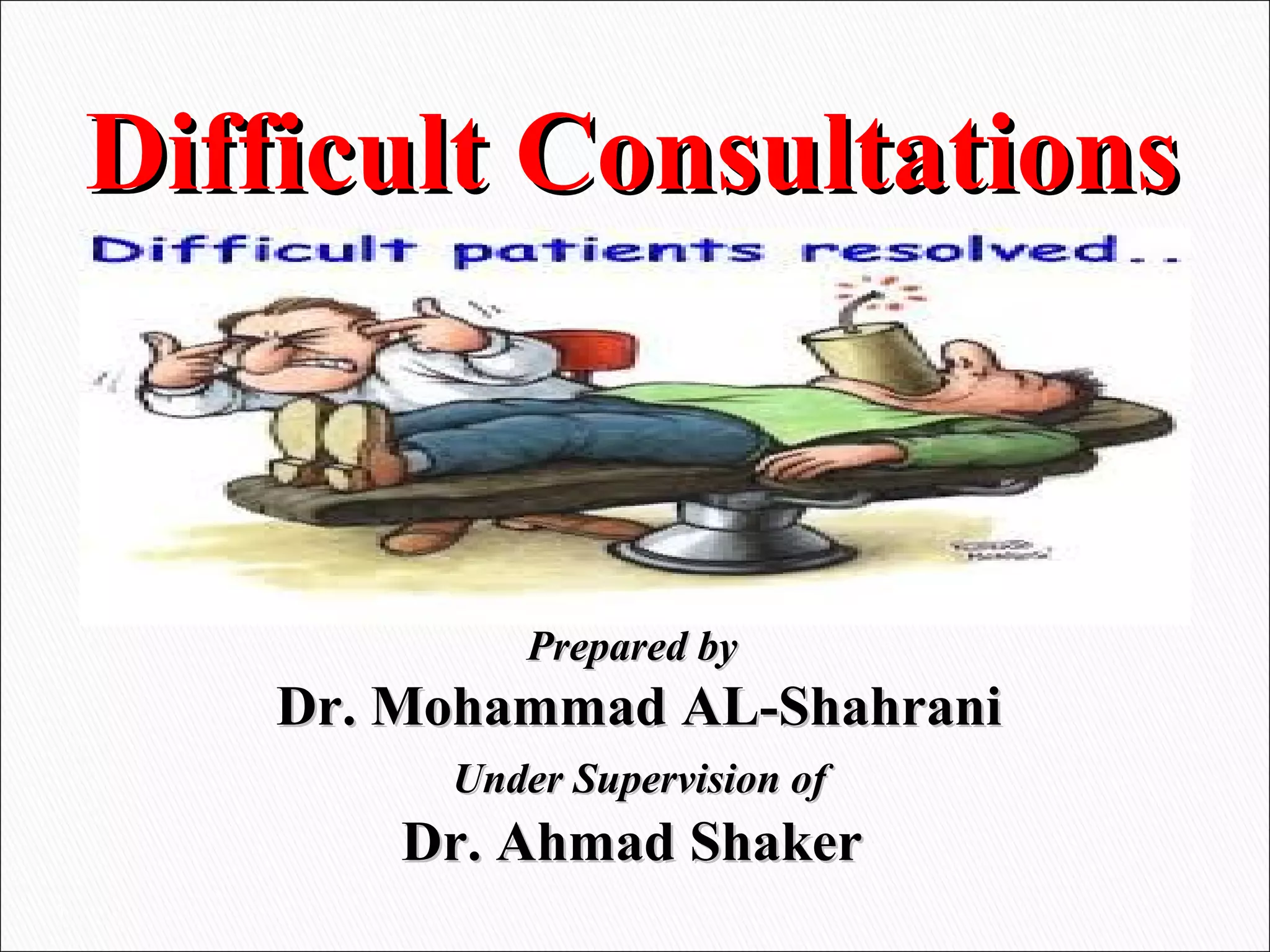
DifficultDifficult ConsultationsConsultations
Prepared byPrepared by
Dr. Mohammad AL-ShahraniDr. Mohammad AL-Shahrani
Under Supervision ofUnder Supervision of
Dr. Ahmad ShakerDr. Ahmad Shaker
Introduction
Causes
Examples
Dealing with difficult patients and
managing a difficult consultation
appropriately.
2
CONTENTS
To know the causes of difficult
consultations in general.
To be aware about different types of
difficult patients.
How to deal by an appropriate way with
such difficult patients.
3
Groves (1978) developed four stereotypes
of difficult patients, whom he labeled
dependent clingers, manipulative help-
rejecters, entitled demanders and self-
destructive deniers.
These patients consistently trigger
negative feelings in physicians, who
cannot satisfy their endless demands
4
5
Around ( 10 – 20 % ) of daily consultations areAround ( 10 – 20 % ) of daily consultations are
considered to be difficult. These difficulties are eitherconsidered to be difficult. These difficulties are either
due to :due to :
1. Difficult patient .
2. Difficult doctor .
3. Difficult communication between the doctor and
the patient.
4. Difficult environment.
6
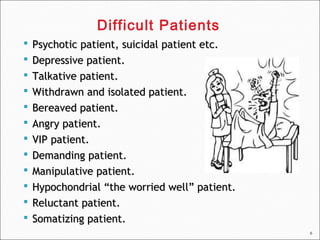
 Psychotic patient, suicidal patient etc.Psychotic patient, suicidal patient etc.
 Depressive patient.Depressive patient.
 Talkative patient.Talkative patient.
 Withdrawn and isolated patient.Withdrawn and isolated patient.
 Bereaved patient.Bereaved patient.
 Angry patient.Angry patient.
 VIP patient.VIP patient.
 Demanding patient.Demanding patient.
 Manipulative patient.Manipulative patient.
 Hypochondrial “the worried well” patient.Hypochondrial “the worried well” patient.
 Reluctant patient.Reluctant patient.
 Somatizing patient.Somatizing patient.
Difficult Patients
7
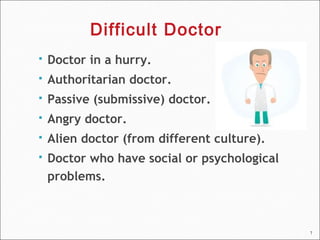
 Doctor in a hurry.
 Authoritarian doctor.
 Passive (submissive) doctor.
 Angry doctor.
 Alien doctor (from different culture).
 Doctor who have social or psychological
problems.
Difficult Doctor
8
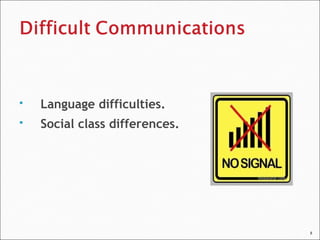
 Language difficulties.
 Social class differences.
9
 Crowded clinic.
 Poor organization.
10
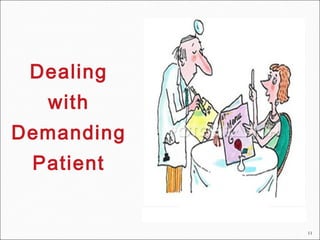
Dealing
with
Demanding
Patient
11
12
 The first step in addressing unnecessary
demands is to ascertain the patient's needs.
 Allow the patient to fully tell the story, with
minimal interruptions.
 Ask the patient for details: “I understand you are
here because you want an MRI of your knee; I'd
like to understand how you reached that
decision.”
 Consider agreeing with the patient.
Dealing with Demanding Patients
13
 Negotiate agenda and goals :
 Set limits.
 Reinforcement and help.
 Compromise and be flexible.
 Avoid argumentation.
 Explain your rationale.
 Pay attention to the way you say no.
 Under pressure, breathe deeply and start over.
 For some patients
“firm boundaries are the rule”
Dealing with Demanding Patients
Communication Skills
14
 summarize the points aloud for the patient.
This allows the patient to correct or amplify. It
also gives the patient the experience of being
heard and understood.
 An attempt to reflect the emotion behind the
request is important. e.g “It sounds incredibly
frustrating to be laid up with knee pain for so long,
but…”
15
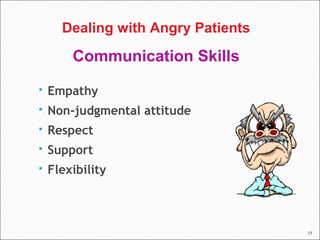
 Empathy
 Non-judgmental attitude
 Respect
 Support
 Flexibility
Dealing with Angry Patients
Communication Skills
16
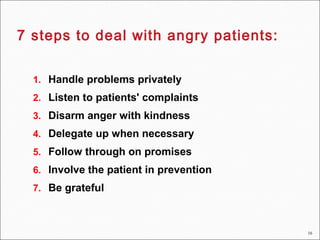
7 steps to deal with angry patients:
1. Handle problems privately
2. Listen to patients' complaints
3. Disarm anger with kindness
4. Delegate up when necessary
5. Follow through on promises
6. Involve the patient in prevention
7. Be grateful
17
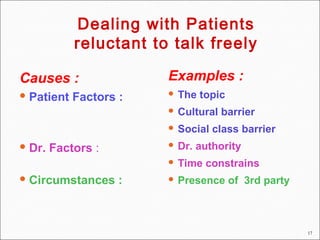
Examples :
 The topic
 Cultural barrier
 Social class barrier
 Dr. authority
 Time constrains
 Presence of 3rd party
Causes :
 Patient Factors :
 Dr. Factors :
 Circumstances :
Dealing with Patients
reluctant to talk freely
18
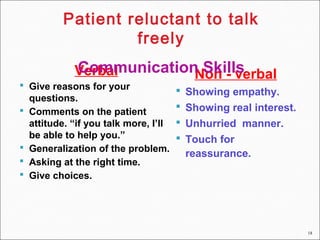
Verbal
 Give reasons for your
questions.
 Comments on the patient
attitude. “if you talk more, I’ll
be able to help you.”
 Generalization of the problem.
 Asking at the right time.
 Give choices.
Non - verbal
 Showing empathy.
 Showing real interest.
 Unhurried manner.
 Touch for
reassurance.
Patient reluctant to talk
freely
Communication Skills
19
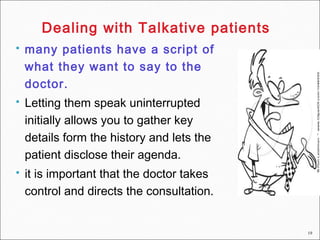
 many patients have a script of
what they want to say to the
doctor.
 Letting them speak uninterrupted
initially allows you to gather key
details form the history and lets the
patient disclose their agenda.
 it is important that the doctor takes
control and directs the consultation.
Dealing with Talkative patients
20
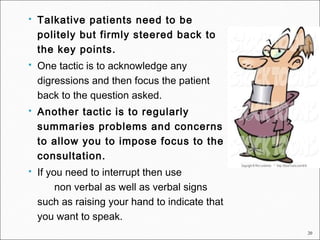
 Talkative patients need to be
politely but firmly steered back to
the key points.
 One tactic is to acknowledge any
digressions and then focus the patient
back to the question asked.
 Another tactic is to regularly
summaries problems and concerns
to allow you to impose focus to the
consultation.
 If you need to interrupt then use
non verbal as well as verbal signs
such as raising your hand to indicate that
you want to speak.
21
Verbal Communication
 Summarization
 Prioritization
 Interruption
 Close ended question
Non - verbal Comm.
 Hand movement.
 Sympathy & empathy.
Talkative Patients
Communication Skills
22
 Recognize your true feelings.
Difficult patients evoke a
feeling of anxiety, pressure,
boredom, or frustration.
 Be alert for counter-transferance
reaction.
 Use resources.
 Involve colleagues in your
management plan. “you are not
alone.”
 Improve yourself .
Coping Strategies for the Doctor
23
Whatever the difficulty, the physicianWhatever the difficulty, the physician
maintains rapport, respect, and relationshipmaintains rapport, respect, and relationship
with these difficult patients by listening forwith these difficult patients by listening for
their concerns.their concerns.
By giving the impression of being unhurriedBy giving the impression of being unhurried
and having time to listen, the physicianand having time to listen, the physician
maintains relationship and conveys to themaintains relationship and conveys to the
patient that the physician-patientpatient that the physician-patient
relationship will continue undamaged by therelationship will continue undamaged by the
difficulty of the present moment. In thisdifficulty of the present moment. In this
way, the relationship becomes a part of theway, the relationship becomes a part of the
healing process.healing process.
24
Difficult consultation

Difficult consultation

  • 1.
    1 DifficultDifficult ConsultationsConsultations Prepared byPreparedby Dr. Mohammad AL-ShahraniDr. Mohammad AL-Shahrani Under Supervision ofUnder Supervision of Dr. Ahmad ShakerDr. Ahmad Shaker
  • 2.
    Introduction Causes Examples Dealing with difficultpatients and managing a difficult consultation appropriately. 2 CONTENTS
  • 3.
    To know thecauses of difficult consultations in general. To be aware about different types of difficult patients. How to deal by an appropriate way with such difficult patients. 3
  • 4.
    Groves (1978) developedfour stereotypes of difficult patients, whom he labeled dependent clingers, manipulative help- rejecters, entitled demanders and self- destructive deniers. These patients consistently trigger negative feelings in physicians, who cannot satisfy their endless demands 4
  • 5.
    5 Around ( 10– 20 % ) of daily consultations areAround ( 10 – 20 % ) of daily consultations are considered to be difficult. These difficulties are eitherconsidered to be difficult. These difficulties are either due to :due to : 1. Difficult patient . 2. Difficult doctor . 3. Difficult communication between the doctor and the patient. 4. Difficult environment.
  • 6.
    6  Psychotic patient,suicidal patient etc.Psychotic patient, suicidal patient etc.  Depressive patient.Depressive patient.  Talkative patient.Talkative patient.  Withdrawn and isolated patient.Withdrawn and isolated patient.  Bereaved patient.Bereaved patient.  Angry patient.Angry patient.  VIP patient.VIP patient.  Demanding patient.Demanding patient.  Manipulative patient.Manipulative patient.  Hypochondrial “the worried well” patient.Hypochondrial “the worried well” patient.  Reluctant patient.Reluctant patient.  Somatizing patient.Somatizing patient. Difficult Patients
  • 7.
    7  Doctor ina hurry.  Authoritarian doctor.  Passive (submissive) doctor.  Angry doctor.  Alien doctor (from different culture).  Doctor who have social or psychological problems. Difficult Doctor
  • 8.
    8  Language difficulties. Social class differences.
  • 9.
    9  Crowded clinic. Poor organization.
  • 10.
  • 11.
  • 12.
    12  The firststep in addressing unnecessary demands is to ascertain the patient's needs.  Allow the patient to fully tell the story, with minimal interruptions.  Ask the patient for details: “I understand you are here because you want an MRI of your knee; I'd like to understand how you reached that decision.”  Consider agreeing with the patient. Dealing with Demanding Patients
  • 13.
    13  Negotiate agendaand goals :  Set limits.  Reinforcement and help.  Compromise and be flexible.  Avoid argumentation.  Explain your rationale.  Pay attention to the way you say no.  Under pressure, breathe deeply and start over.  For some patients “firm boundaries are the rule” Dealing with Demanding Patients Communication Skills
  • 14.
    14  summarize thepoints aloud for the patient. This allows the patient to correct or amplify. It also gives the patient the experience of being heard and understood.  An attempt to reflect the emotion behind the request is important. e.g “It sounds incredibly frustrating to be laid up with knee pain for so long, but…”
  • 15.
    15  Empathy  Non-judgmentalattitude  Respect  Support  Flexibility Dealing with Angry Patients Communication Skills
  • 16.
    16 7 steps todeal with angry patients: 1. Handle problems privately 2. Listen to patients' complaints 3. Disarm anger with kindness 4. Delegate up when necessary 5. Follow through on promises 6. Involve the patient in prevention 7. Be grateful
  • 17.
    17 Examples :  Thetopic  Cultural barrier  Social class barrier  Dr. authority  Time constrains  Presence of 3rd party Causes :  Patient Factors :  Dr. Factors :  Circumstances : Dealing with Patients reluctant to talk freely
  • 18.
    18 Verbal  Give reasonsfor your questions.  Comments on the patient attitude. “if you talk more, I’ll be able to help you.”  Generalization of the problem.  Asking at the right time.  Give choices. Non - verbal  Showing empathy.  Showing real interest.  Unhurried manner.  Touch for reassurance. Patient reluctant to talk freely Communication Skills
  • 19.
    19  many patientshave a script of what they want to say to the doctor.  Letting them speak uninterrupted initially allows you to gather key details form the history and lets the patient disclose their agenda.  it is important that the doctor takes control and directs the consultation. Dealing with Talkative patients
  • 20.
    20  Talkative patientsneed to be politely but firmly steered back to the key points.  One tactic is to acknowledge any digressions and then focus the patient back to the question asked.  Another tactic is to regularly summaries problems and concerns to allow you to impose focus to the consultation.  If you need to interrupt then use non verbal as well as verbal signs such as raising your hand to indicate that you want to speak.
  • 21.
    21 Verbal Communication  Summarization Prioritization  Interruption  Close ended question Non - verbal Comm.  Hand movement.  Sympathy & empathy. Talkative Patients Communication Skills
  • 22.
    22  Recognize yourtrue feelings. Difficult patients evoke a feeling of anxiety, pressure, boredom, or frustration.  Be alert for counter-transferance reaction.  Use resources.  Involve colleagues in your management plan. “you are not alone.”  Improve yourself . Coping Strategies for the Doctor
  • 23.
    23 Whatever the difficulty,the physicianWhatever the difficulty, the physician maintains rapport, respect, and relationshipmaintains rapport, respect, and relationship with these difficult patients by listening forwith these difficult patients by listening for their concerns.their concerns. By giving the impression of being unhurriedBy giving the impression of being unhurried and having time to listen, the physicianand having time to listen, the physician maintains relationship and conveys to themaintains relationship and conveys to the patient that the physician-patientpatient that the physician-patient relationship will continue undamaged by therelationship will continue undamaged by the difficulty of the present moment. In thisdifficulty of the present moment. In this way, the relationship becomes a part of theway, the relationship becomes a part of the healing process.healing process.
  • 24.

Editor's Notes

  • #3 Here, starting the strategies of management of difficult consultations