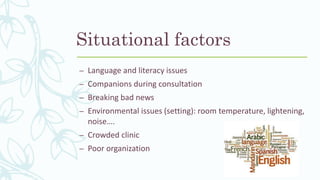
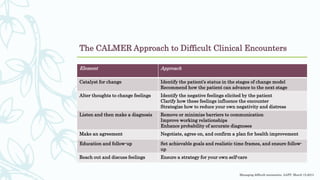
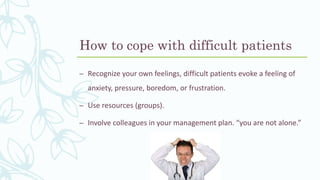
The document discusses handling difficult patients and provides several case studies and strategies. It defines difficult patients as those who block the therapeutic relationship or deviate from expected behavior. Common causes of difficult interactions include fear, conflict, surprise, and change. When dealing with difficult patients, it is important to listen empathetically, acknowledge their perspective, respond appropriately, and take responsibility for next steps. Specific strategies include setting limits, avoiding argumentation, explaining rationales clearly, and maintaining firm boundaries for some patients. The document also outlines the CALMER approach and stresses the importance of recognizing one's own feelings when dealing with difficult encounters.