DNA, RNA & PROTEINS
The molecules of life
NUCLEOTIDES
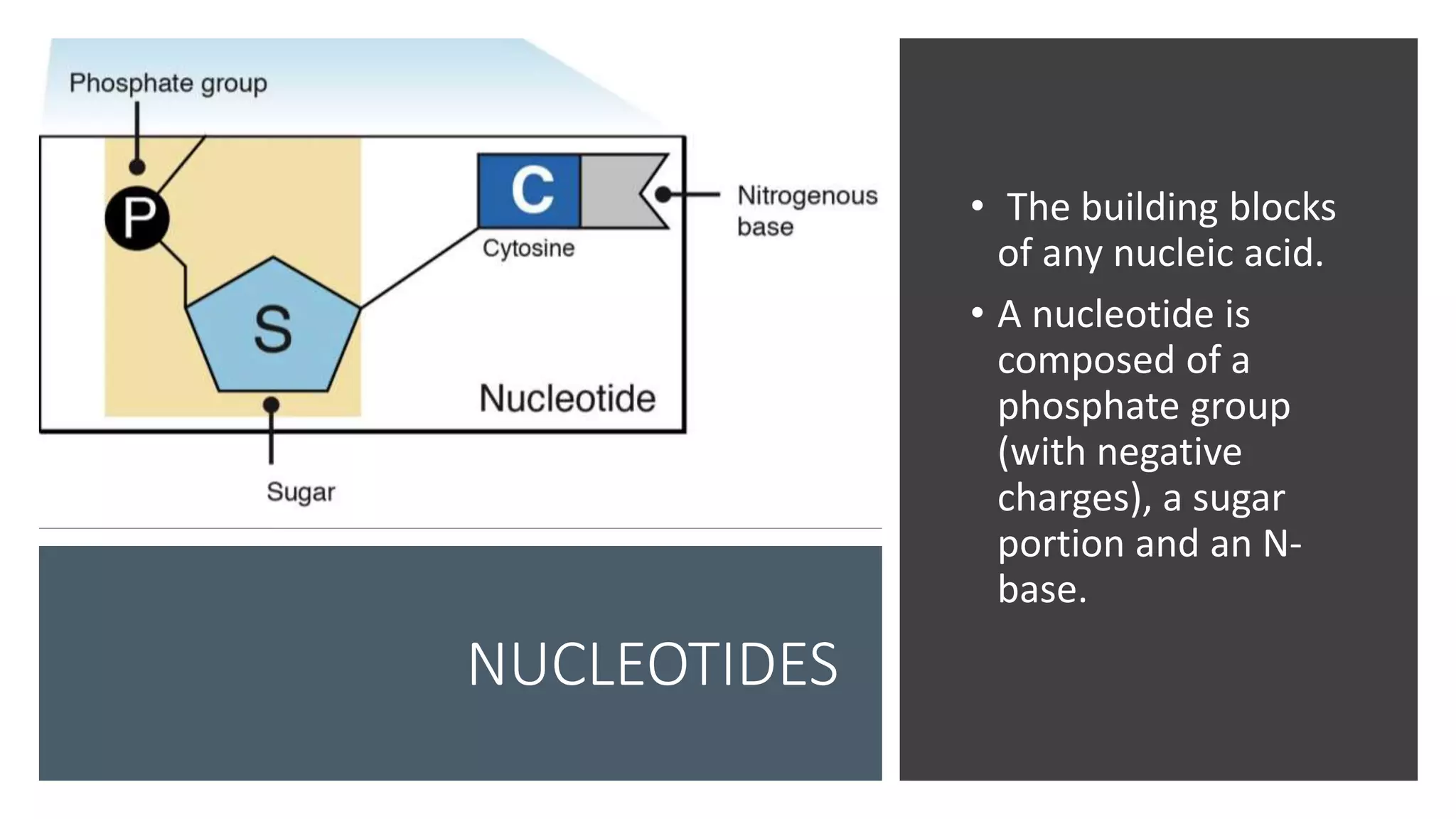
• The building blocks
of any nucleic acid.
• A nucleotide is
composed of a
phosphate group
(with negative
charges), a sugar
portion and an N-
base.
DNA STRUCTURE
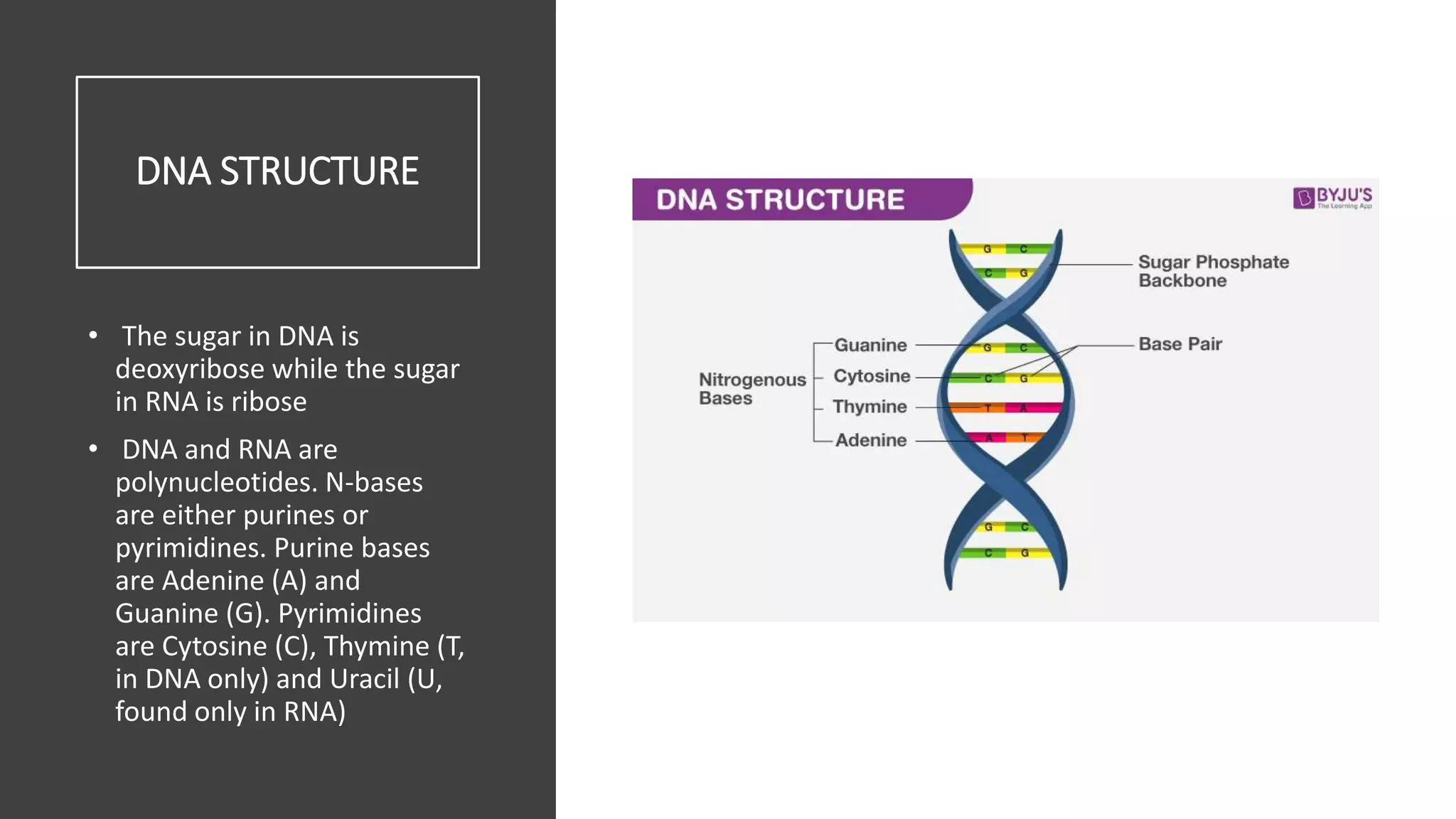
• The sugar in DNA is
deoxyribose while the sugar
in RNA is ribose
• DNA and RNA are
polynucleotides. N-bases
are either purines or
pyrimidines. Purine bases
are Adenine (A) and
Guanine (G). Pyrimidines
are Cytosine (C), Thymine (T,
in DNA only) and Uracil (U,
found only in RNA)
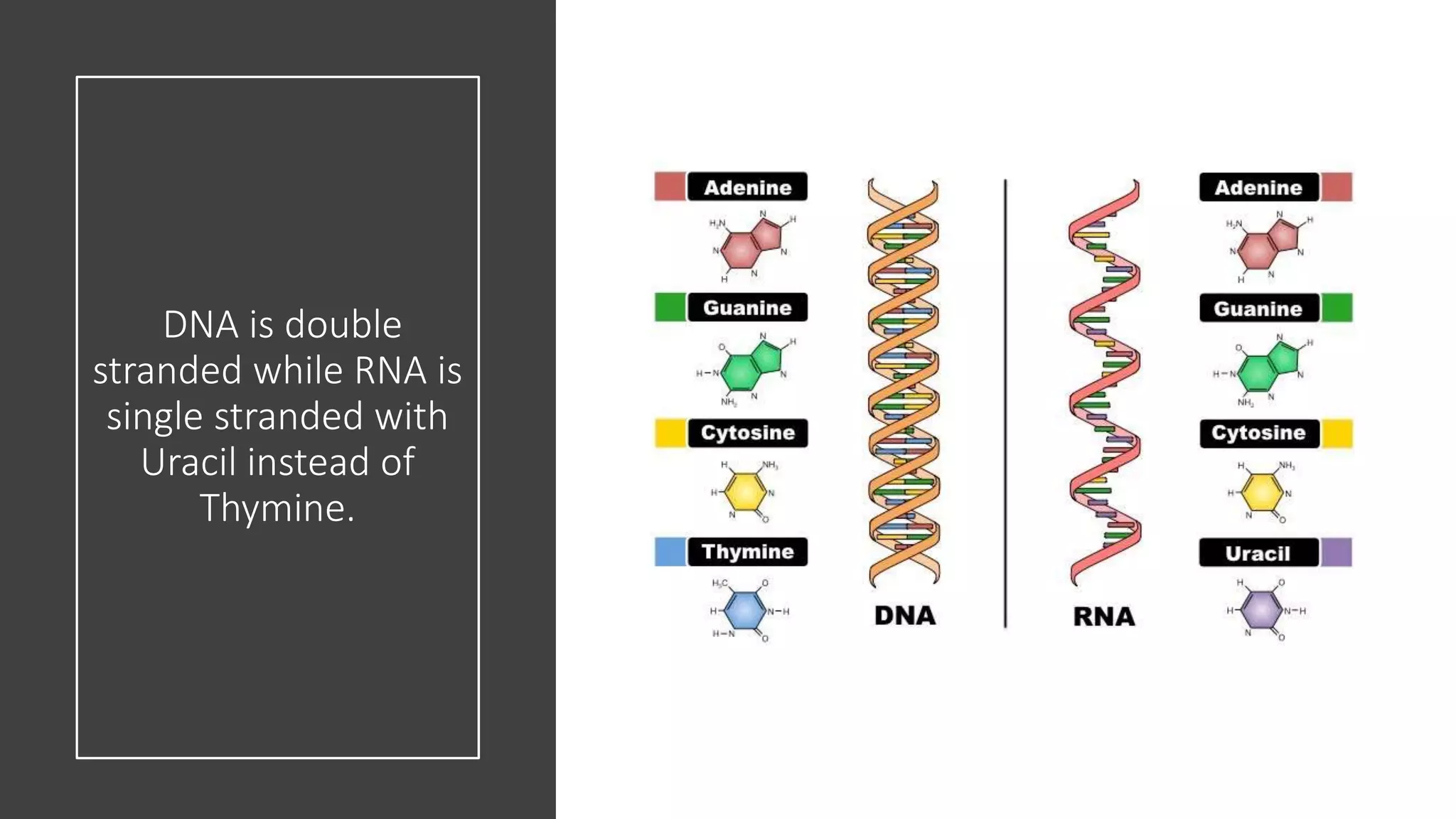
DNA is double
stranded while RNA is
single stranded with
Uracil instead of
Thymine.
Main Function
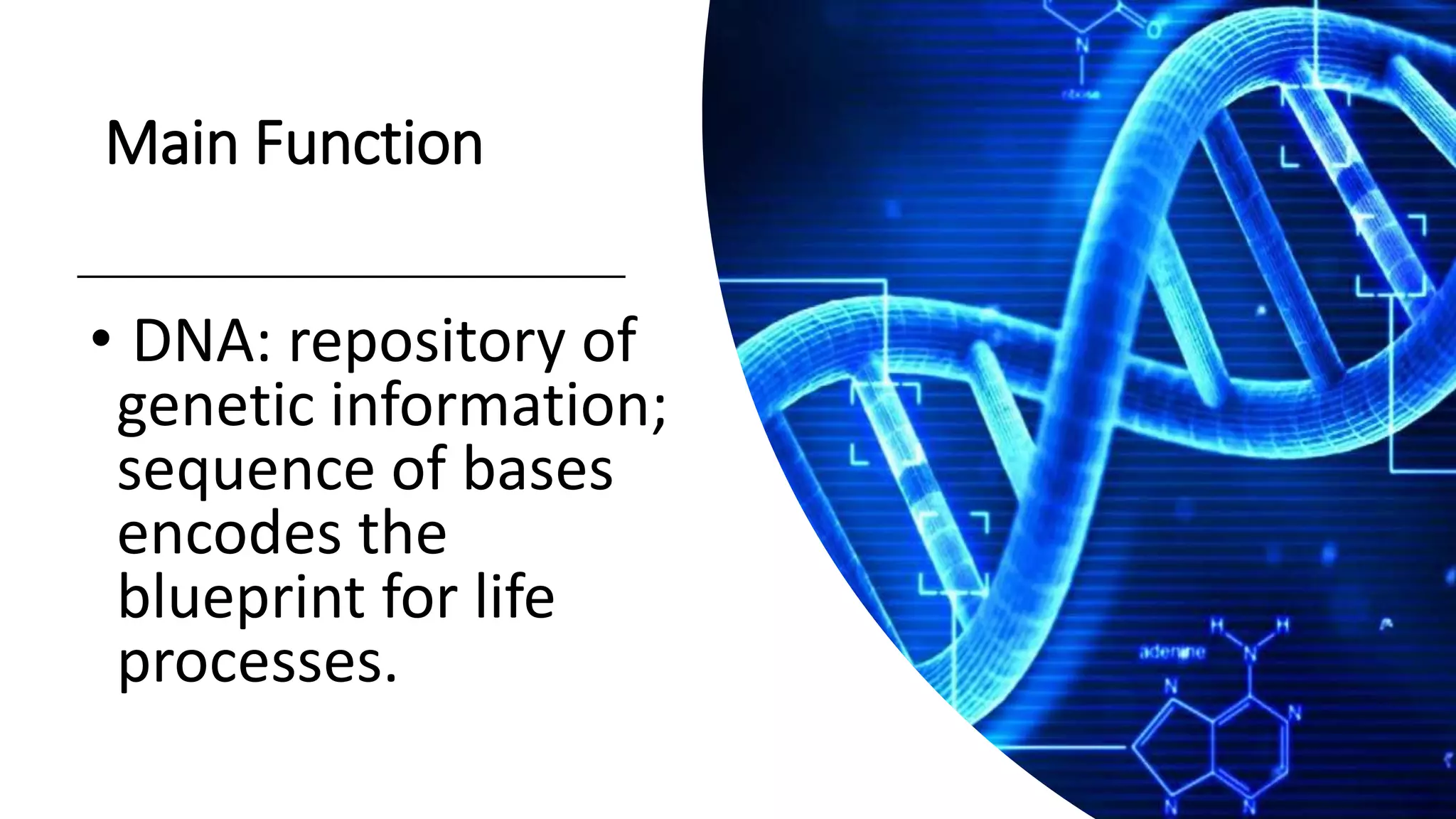
• DNA: repository of
genetic information;
sequence of bases
encodes the
blueprint for life
processes.
RNA
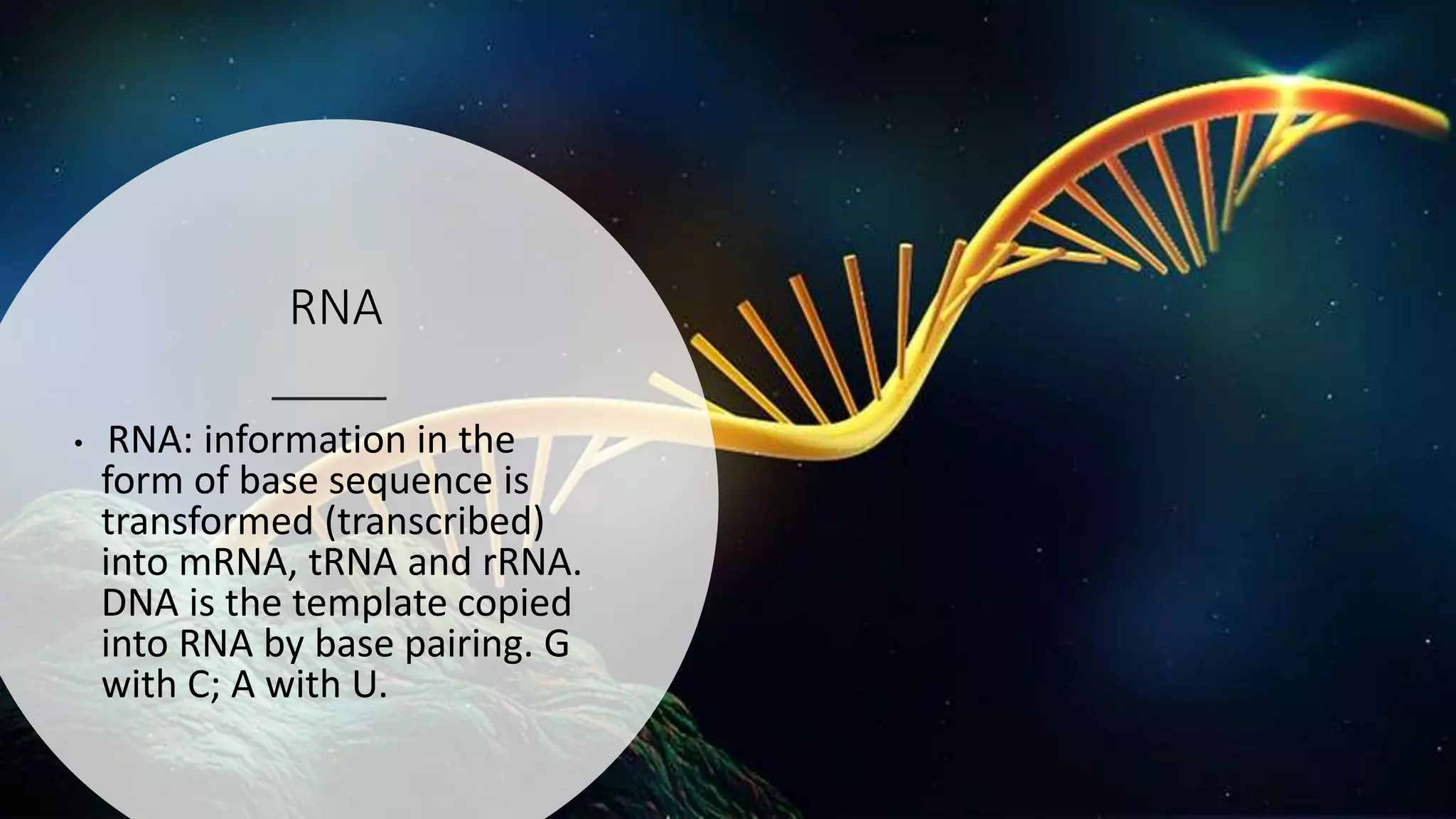
• RNA: information in the
form of base sequence is
transformed (transcribed)
into mRNA, tRNA and rRNA.
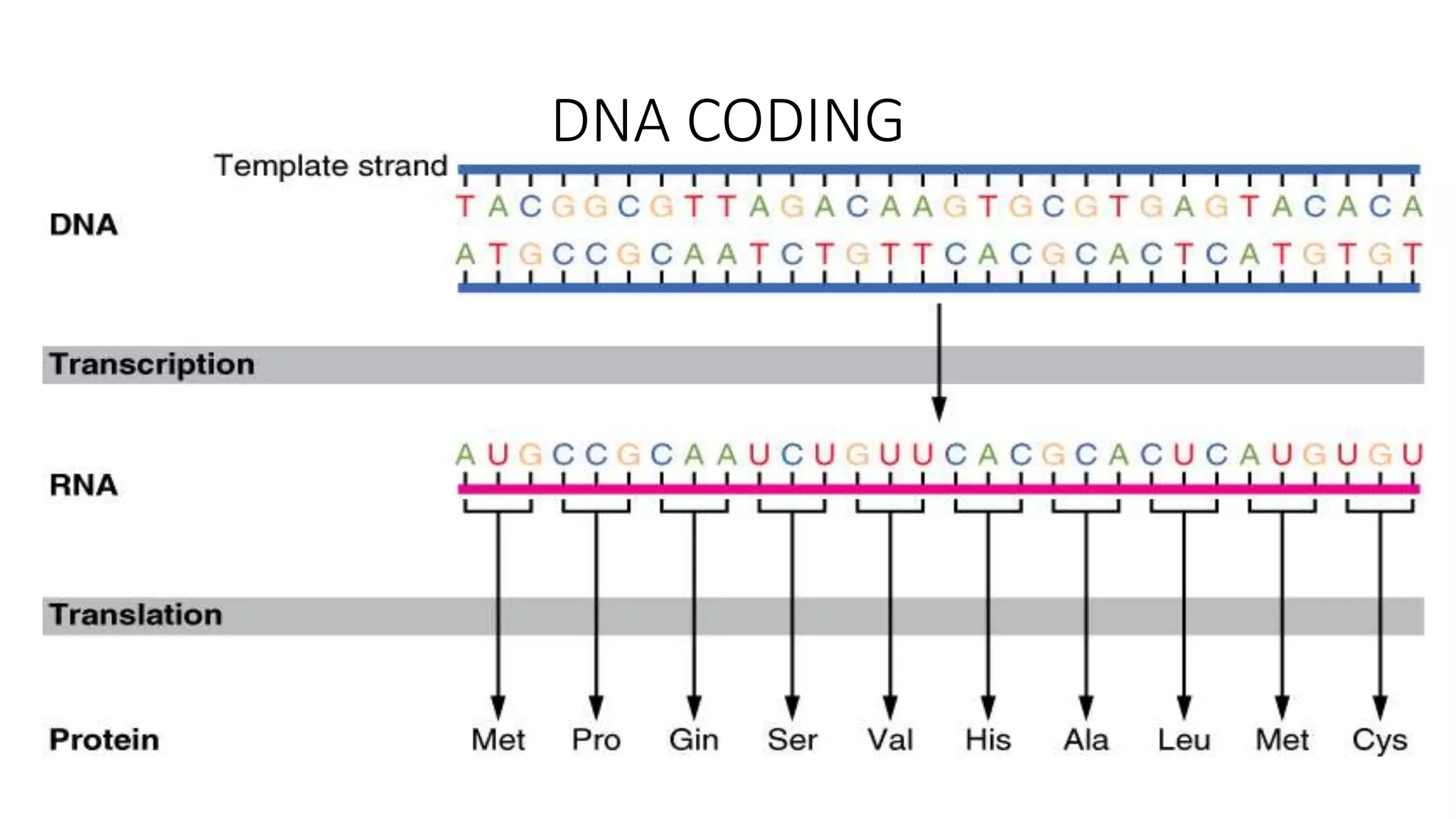
DNA is the template copied
into RNA by base pairing. G
with C; A with U.
PROTEIN
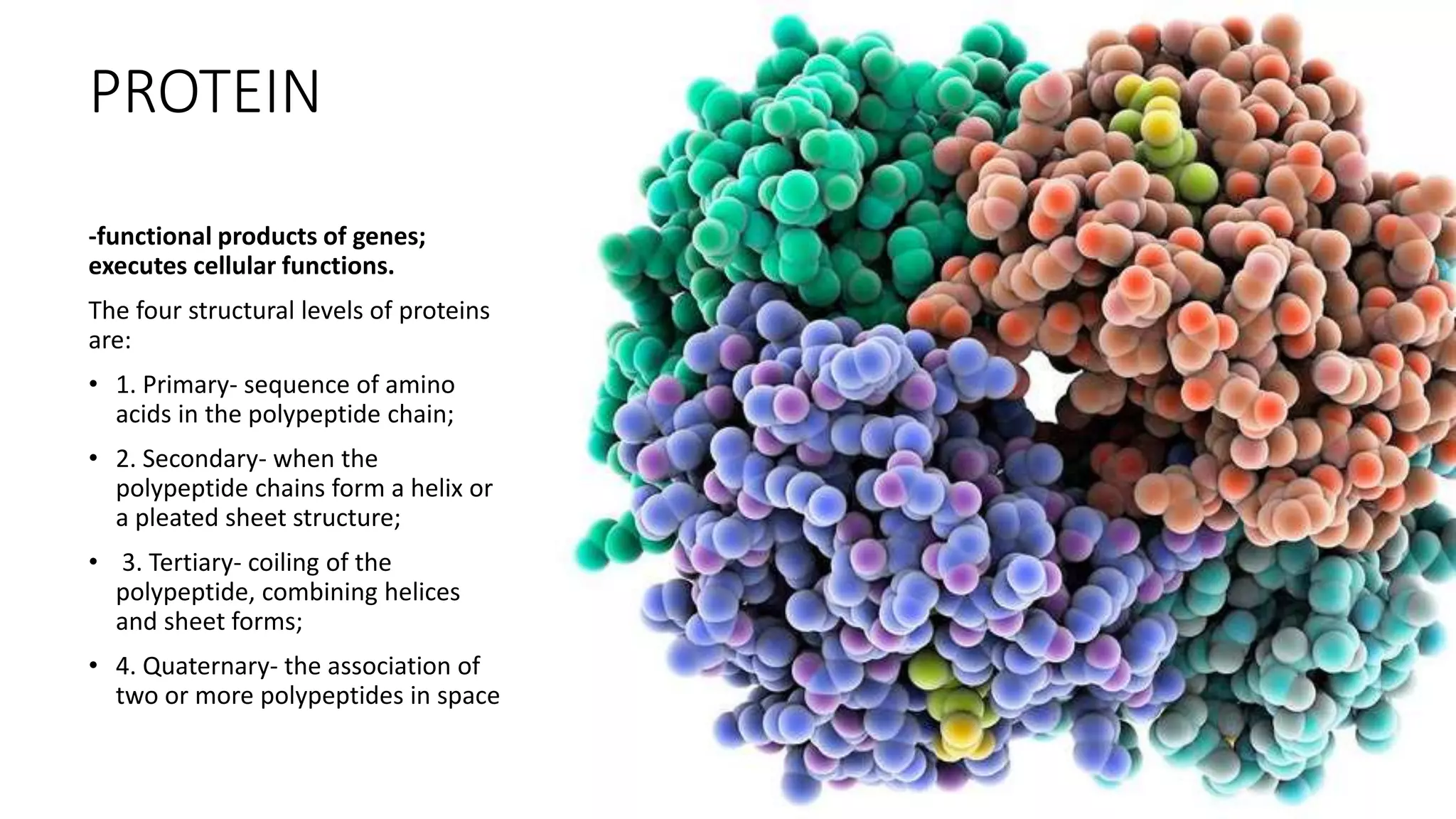
-functional products of genes;
executes cellular functions.
The four structural levels of proteins
are:
• 1. Primary- sequence of amino
acids in the polypeptide chain;
• 2. Secondary- when the
polypeptide chains form a helix or
a pleated sheet structure;
• 3. Tertiary- coiling of the
polypeptide, combining helices
and sheet forms;
• 4. Quaternary- the association of
two or more polypeptides in space
Messenger RNA (mRNA) carries
the genetic information copied
from DNA in the form
of a series of three-base code
“words,” each of which specifies
a particular amino acid.
Transfer RNA (tRNA) is the key to deciphering the
code words in mRNA. Each type of amino acid has
its own type of tRNA, which binds it and carries it to
the growing end of a polypeptide chain if the next
code word on mRNA calls for it. The correct tRNA
with its attached amino acid is selected at each step
because each specific tRNA molecule contains a
three-base sequence that can base-pair with
its complementary code word in the mRNA.
• Ribosomal RNA (rRNA) associates with a set of
proteins to form ribosomes. These complex structures,
which physically move along an mRNA molecule,
catalyze the assembly of amino acids
into protein chains. They also bind tRNAs and various
accessory molecules necessary for protein synthesis.
Ribosomes are composed of a large and small subunit,
each of which contains its own rRNA molecule or
molecules.
•Translation is the whole process by which
the base sequence of an mRNA is used to order and
to join the amino acids in a protein. The three types
of RNA participate in this essential protein-
synthesizing pathway in all cells; in fact,
the development of the three distinct functions of
RNA was probably the molecular key to the origin of
life. How each RNA carries out its specific task is
discussed in this section, while the biochemical
events in protein synthesis and the required protein
factors are described in the final section of the
chapter.
DNA CODING
DNA, RNA, and PROTEINS

DNA, RNA, and PROTEINS

  • 1.
    DNA, RNA &PROTEINS The molecules of life
  • 2.
    NUCLEOTIDES • The buildingblocks of any nucleic acid. • A nucleotide is composed of a phosphate group (with negative charges), a sugar portion and an N- base.
  • 3.
    DNA STRUCTURE • Thesugar in DNA is deoxyribose while the sugar in RNA is ribose • DNA and RNA are polynucleotides. N-bases are either purines or pyrimidines. Purine bases are Adenine (A) and Guanine (G). Pyrimidines are Cytosine (C), Thymine (T, in DNA only) and Uracil (U, found only in RNA)
  • 4.
    DNA is double strandedwhile RNA is single stranded with Uracil instead of Thymine.
  • 5.
    Main Function • DNA:repository of genetic information; sequence of bases encodes the blueprint for life processes.
  • 6.
    RNA • RNA: informationin the form of base sequence is transformed (transcribed) into mRNA, tRNA and rRNA. DNA is the template copied into RNA by base pairing. G with C; A with U.
  • 7.
    PROTEIN -functional products ofgenes; executes cellular functions. The four structural levels of proteins are: • 1. Primary- sequence of amino acids in the polypeptide chain; • 2. Secondary- when the polypeptide chains form a helix or a pleated sheet structure; • 3. Tertiary- coiling of the polypeptide, combining helices and sheet forms; • 4. Quaternary- the association of two or more polypeptides in space
  • 8.
    Messenger RNA (mRNA)carries the genetic information copied from DNA in the form of a series of three-base code “words,” each of which specifies a particular amino acid.
  • 9.
    Transfer RNA (tRNA)is the key to deciphering the code words in mRNA. Each type of amino acid has its own type of tRNA, which binds it and carries it to the growing end of a polypeptide chain if the next code word on mRNA calls for it. The correct tRNA with its attached amino acid is selected at each step because each specific tRNA molecule contains a three-base sequence that can base-pair with its complementary code word in the mRNA.
  • 10.
    • Ribosomal RNA(rRNA) associates with a set of proteins to form ribosomes. These complex structures, which physically move along an mRNA molecule, catalyze the assembly of amino acids into protein chains. They also bind tRNAs and various accessory molecules necessary for protein synthesis. Ribosomes are composed of a large and small subunit, each of which contains its own rRNA molecule or molecules.
  • 11.
    •Translation is thewhole process by which the base sequence of an mRNA is used to order and to join the amino acids in a protein. The three types of RNA participate in this essential protein- synthesizing pathway in all cells; in fact, the development of the three distinct functions of RNA was probably the molecular key to the origin of life. How each RNA carries out its specific task is discussed in this section, while the biochemical events in protein synthesis and the required protein factors are described in the final section of the chapter.
  • 12.