Disruptive Innovations
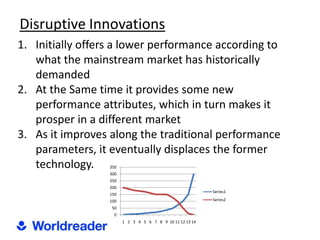
1. Initially offers a lower performance according to
   what the mainstream market has historically
   demanded
2. At the Same time it provides some new
   performance attributes, which in turn makes it
   prosper in a different market
3. As it improves along the traditional performance
   parameters, it eventually displaces the former
   technology.    350
                  300
                  250
                  200
                                                           Series1
                  150
                  100                                      Series2
                   50
                    0
                        1 2 3 4 5 6 7 8 9 10 11 12 13 14
#TOCDI                         #TOCCON
    Disruptive Innovations
          2/14/2013

         Michael Smith
    michael@worldreader.org
        @rothwellsmith

         www.worldreader.org

              #TOCDI #TOCCON
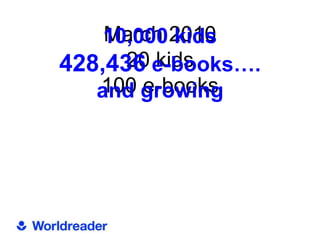
10,000 2010
    March kids
      20 kids
428,436 e-books….
   100 e-books
   and growing
1,200,000.00


1,000,000.00


 800,000.00


 600,000.00
                                                                                                                                                  Series1


 400,000.00


 200,000.00


          -
               1   2   3   4   5   6   7   8   9   10   11   12   13   14   15   16   17   18   19   20   21   22   23   24   25   26   27   28
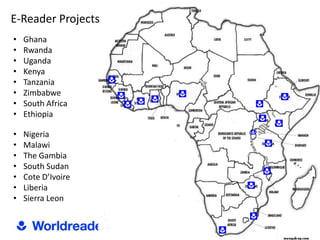
E-Reader Projects
•   Ghana
•   Rwanda
•   Uganda
•   Kenya
•   Tanzania
•   Zimbabwe
•   South Africa
•   Ethiopia

•   Nigeria
•   Malawi
•   The Gambia
•   South Sudan
•   Cote D’Ivoire
•   Liberia
•   Sierra Leon
Is E-reader Program a Disruptive Technology?


         North America, Europe, Australia?
                   YES / NO?


           Africa & the Developing World?
                      YES / NO?
What Next?


  #TOCDI, #TOCCON
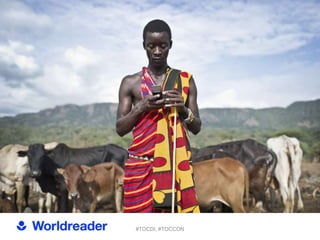
Africa is a Mobile-Only Continent

• More People Own a Mobile Phone than a toothbrush
• 1 Billion People in Africa and there are over 800million
  Active Sim Cards
• 450 million mobile phones in Africa, almost one for every
  two people here.
• USAID claims that every household in Africa has access to a
  mobile phone
• 77% of Global Mobile Subscriptions are in Developing
   Countries,


                          #TOCDI #TOCCON
When Worldreader came to me and asked if I'd
like to donate a story, I immediately said "Yes!".
When it comes to literature and education, one
  of the biggest issues in developing nations is
 getting physical books to the people who want
 to read them. Worldreader is using technology
in precisely the way I've wanted to see in a long
                       time.
                 Nnedi Okorafor


                    #TOCDI #TOCCON
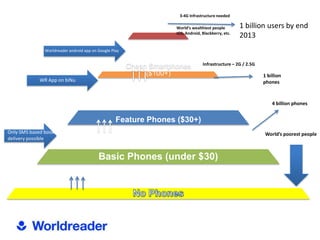
3-4G Infrastructure needed

                                                                                   World’s wealthiest people        1 billion users by end
                                                                                   IOS, Android, Blackberry, etc.
                                                                                                                    2013
               Worldreader android app on Google Play


                                                        Cheap Smartphones                        Infrastructure – 2G / 2.5G
                                                             ($100+)                                                          1 billion
             WR App on biNu                                                                                                   phones
                                                  Upgrades as smartphones are
                                                  cheaper, but the infrastructure is lagging


                                                                                                                                  4 billion phones


Only Voice and SMS                                 Feature Phones ($30+)
Only SMS based book                                                                                                            World’s poorest people
                                  Upgrades as feature phones become cheaper
delivery possible


                                          Basic Phones (under $30)
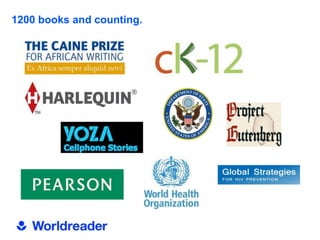
1200 books and counting.
Disruptive innovations  tocny 2013

Disruptive innovations tocny 2013

  • 2.
    Disruptive Innovations 1. Initiallyoffers a lower performance according to what the mainstream market has historically demanded 2. At the Same time it provides some new performance attributes, which in turn makes it prosper in a different market 3. As it improves along the traditional performance parameters, it eventually displaces the former technology. 350 300 250 200 Series1 150 100 Series2 50 0 1 2 3 4 5 6 7 8 9 10 11 12 13 14
  • 3.
    #TOCDI #TOCCON Disruptive Innovations 2/14/2013 Michael Smith michael@worldreader.org @rothwellsmith www.worldreader.org #TOCDI #TOCCON
  • 7.
    10,000 2010 March kids 20 kids 428,436 e-books…. 100 e-books and growing
  • 8.
    1,200,000.00 1,000,000.00 800,000.00 600,000.00 Series1 400,000.00 200,000.00 - 1 2 3 4 5 6 7 8 9 10 11 12 13 14 15 16 17 18 19 20 21 22 23 24 25 26 27 28
  • 9.
    E-Reader Projects • Ghana • Rwanda • Uganda • Kenya • Tanzania • Zimbabwe • South Africa • Ethiopia • Nigeria • Malawi • The Gambia • South Sudan • Cote D’Ivoire • Liberia • Sierra Leon
  • 10.
    Is E-reader Programa Disruptive Technology? North America, Europe, Australia? YES / NO? Africa & the Developing World? YES / NO?
  • 11.
    What Next? #TOCDI, #TOCCON
  • 12.
    Africa is aMobile-Only Continent • More People Own a Mobile Phone than a toothbrush • 1 Billion People in Africa and there are over 800million Active Sim Cards • 450 million mobile phones in Africa, almost one for every two people here. • USAID claims that every household in Africa has access to a mobile phone • 77% of Global Mobile Subscriptions are in Developing Countries, #TOCDI #TOCCON
  • 13.
    When Worldreader cameto me and asked if I'd like to donate a story, I immediately said "Yes!". When it comes to literature and education, one of the biggest issues in developing nations is getting physical books to the people who want to read them. Worldreader is using technology in precisely the way I've wanted to see in a long time. Nnedi Okorafor #TOCDI #TOCCON
  • 14.
    3-4G Infrastructure needed World’s wealthiest people 1 billion users by end IOS, Android, Blackberry, etc. 2013 Worldreader android app on Google Play Cheap Smartphones Infrastructure – 2G / 2.5G ($100+) 1 billion WR App on biNu phones Upgrades as smartphones are cheaper, but the infrastructure is lagging 4 billion phones Only Voice and SMS Feature Phones ($30+) Only SMS based book World’s poorest people Upgrades as feature phones become cheaper delivery possible Basic Phones (under $30)
  • 15.
    1200 books andcounting.

Editor's Notes

  • #3 M- PESA: Mobile – Pesa (money)between 2011 and 2012 made deposits worth $8 billion, a 38 per cent jump and almost half the current national budgetWith 2012 total Mobile money transactions at 171 billion, mobile money is projected to become a $617-billion industry by 2016, according to researchers Gartner.Disruptive – it is already significantly replacing debit and credit cards in Kenya
  • #5 I want to introduce you to David – (blue shirt) – David is 10 years old – goes to Upendo Middle Primary school outside of Arusha Tanzania. David just finished reading his first ever fictional story called Kanuki – a story about a Giraffe with a short neck. It was the first Story book David has ever read.
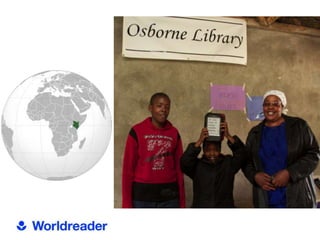
  • #6 At the end of November we launchedan e-reader project in the town of MaaiMahiu Kenya – and what’s awesome about this project is that it’s the first ever library to open in this town of 10,000 people. In this picture is Julia with her son Patrick and daughter Devotha. Julia said to us that she will be bringing her kids every Saturday for reading sessions. Just this week I was speaking with the Project manager for the Osborne library who told me that he has a sign up sheet and waiting list for each and every Saturday at the library.
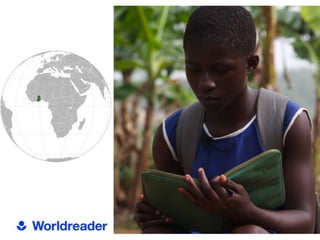
  • #7 I want you to meet Linda. Linda is 16years old and goes to Kade Junior Secondary school in Ghana. Linda wants to be a nurse – having seen her mother get sick 2 years ago, she took her to the local hospital and that was the last time she told her that she loved her. Today Linda says that she wants to help others who get sick so they won’t have to go through what she did.
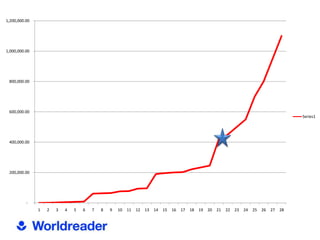
  • #8 For every book we push – kids are downloading 2xMost kids have 4 sibblings, for 1 e-reader is touching at least 4 people avg
  • #9 The Ability to send 400,000 e-books in just over 22 months is something that can only be done with our current technology. We are on track to send over 1 Million E-books in under 3 years. The Rise in this graph can be attributed to not just the projects we are deploying in, but that kids are downloading books at a rapid pace.
  • #11 Argument can be Both WaysAmerica – No it is not, and Yes it is…. We’re just getting use to it, Disruption to Publishers Textbook SalesAfrica - there are few devices for digital reading: Malawi hardly uses email.. Rural communities are getting access to 1000’s of books (MaaiMahiu)
  • #12 As David, Linda and Julia, Patrick & Sophia continue to read and seek out books, their mobile phones become the next vehicle or ‘where can i get more’
  • #13 Techonology is getting better, cheaper, faster, more developedNigeria has 101,271,578 – with little to no penetration for basic cell phone utility/ development
  • #15 What Market Size are we talking about?1 Billion People with Feature Phones, 4 Billion People with basic phones (these are the ones moving up the chain
  • #16 As all books are free and the numbers are so big, it’s a challenge getting content. Some of our content comes from public domain and creative commons materials like Yoza, CK 12 and Project Gutenberg. Other material is via partnerships with harl
  • #17 All photos here were uploaded by Mobile Phone subscribers during a recent survey.NEED A WAY TO SUM UP THE END