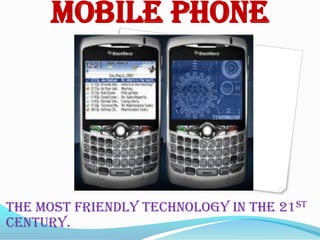
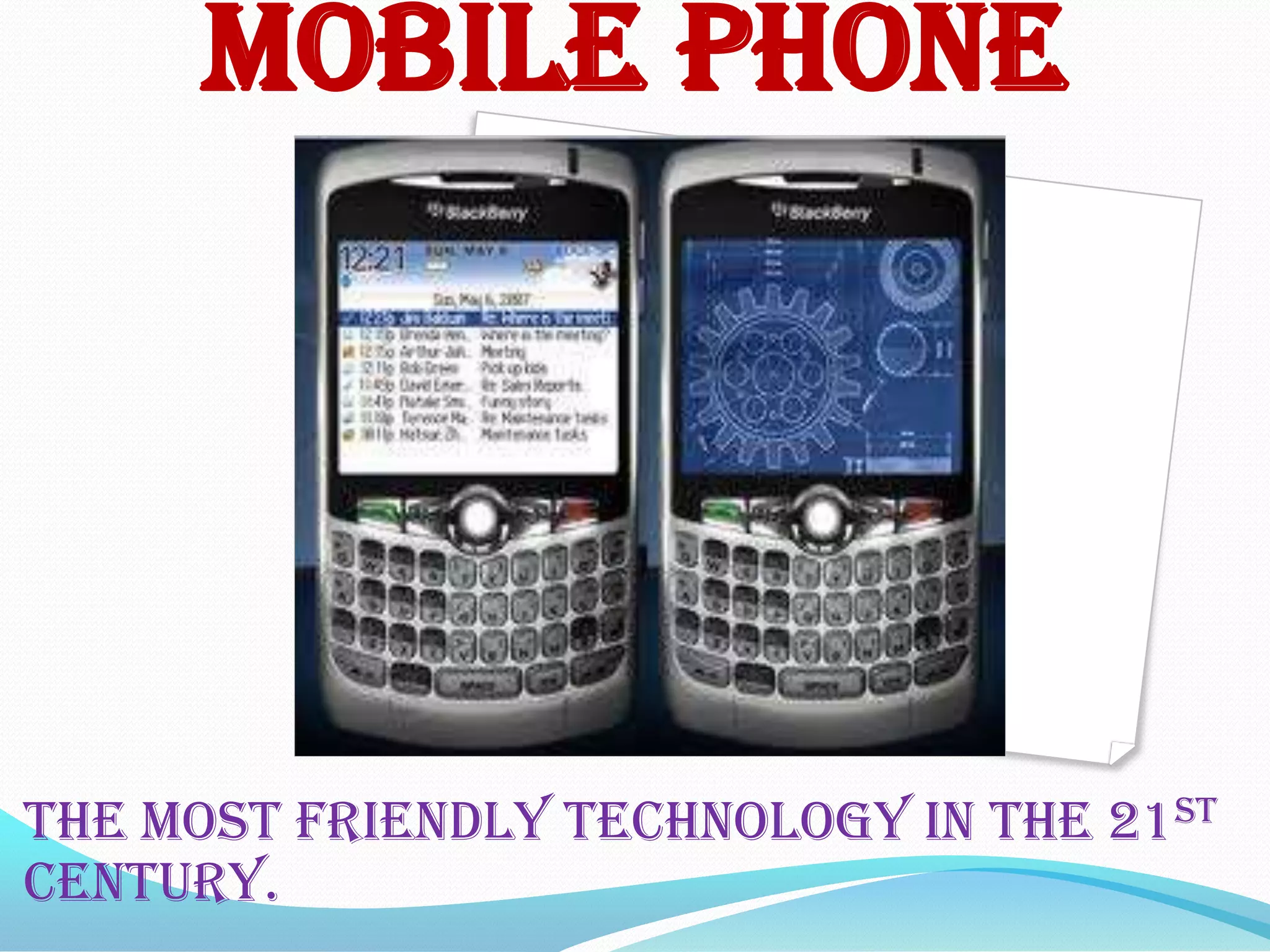
Mobile phone


The most friendly technology in the 21st
century.
Introduction
HISTORY
In 1940s Motorola developed a
backpacked two-way radio, the
Walkie-Talkie and a large hand-held
two-way radio for the US military.
The same technology developed
further and produced the mobile
phone that we know today.
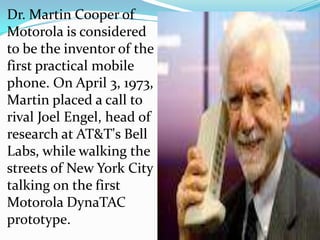
Dr. Martin Cooper of
Motorola is considered
to be the inventor of the
first practical mobile
phone. On April 3, 1973,
Martin placed a call to
rival Joel Engel, head of
research at AT&T's Bell
Labs, while walking the
streets of New York City
talking on the first
Motorola DynaTAC
prototype.
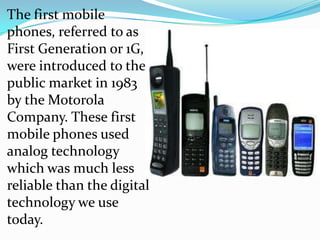
The first mobile
phones, referred to as
First Generation or 1G,
were introduced to the
public market in 1983
by the Motorola
Company. These first
mobile phones used
analog technology
which was much less
reliable than the digital
technology we use
today.
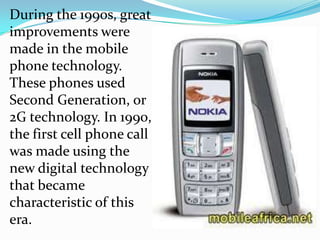
During the 1990s, great
improvements were
made in the mobile
phone technology.
These phones used
Second Generation, or
2G technology. In 1990,
the first cell phone call
was made using the
new digital technology
that became
characteristic of this
era.
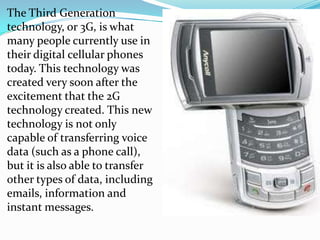
The Third Generation
technology, or 3G, is what
many people currently use in
their digital cellular phones
today. This technology was
created very soon after the
excitement that the 2G
technology created. This new
technology is not only
capable of transferring voice
data (such as a phone call),
but it is also able to transfer
other types of data, including
emails, information and
instant messages.
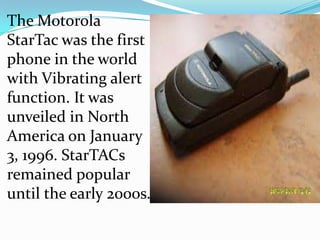
The Motorola
StarTac was the first
phone in the world
with Vibrating alert
function. It was
unveiled in North
America on January
3, 1996. StarTACs
remained popular
until the early 2000s.
Mobile manufactures & brands
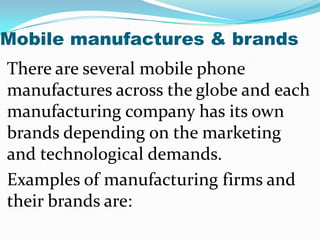
There are several mobile phone
manufactures across the globe and each
manufacturing company has its own
brands depending on the marketing
and technological demands.
Examples of manufacturing firms and
their brands are:
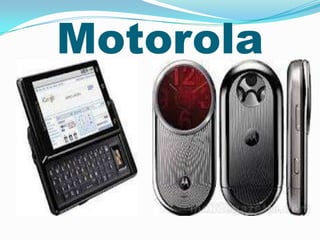
Motorola
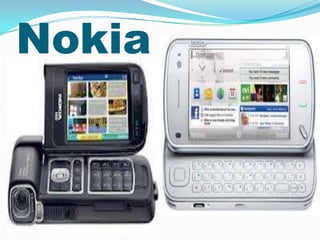
Nokia
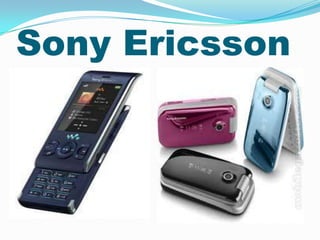
Sony Ericsson
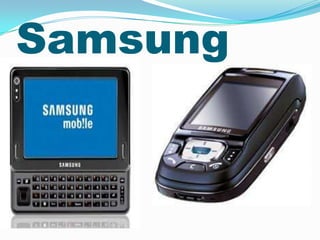
Samsung
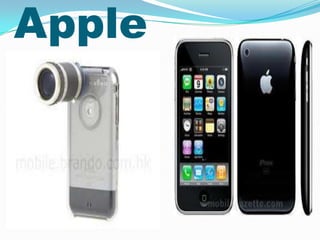
Apple
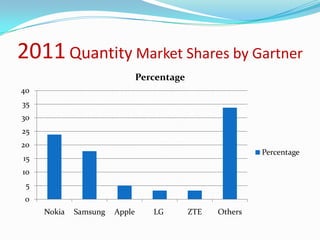
2011 Quantity Market Shares by Gartner
                               Percentage
40
35
30
25
20
                                                           Percentage
15
10
 5
 0
     Nokia   Samsung   Apple      LG        ZTE   Others
How mobile phones work
Mobile phone can make and receive
telephone calls over a radio link
whilst moving around a wide
geographic area. It does so by
connecting to a cellular network
provided by a mobile phone
operator, allowing access to the
public telephone network.
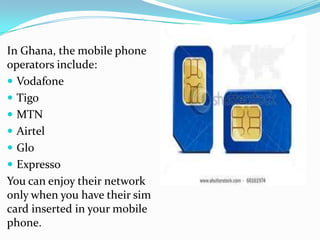
In Ghana, the mobile phone
operators include:
 Vodafone
 Tigo
 MTN
 Airtel
 Glo
 Expresso
You can enjoy their network
only when you have their sim
card inserted in your mobile
phone.
Uses Of Mobile Phone
Mobile phones have already started
functioning as more than just
communications devices. Mobiles
serve as watches and alarm clocks.
Even with the limited free games
that come with basic phones, they
are already good for "time-pass".
They can also function as
calculators and . . .
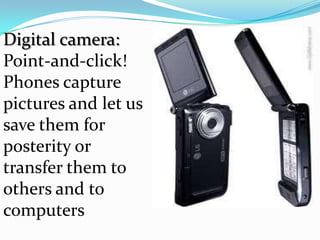
Digital camera:
Point-and-click!
Phones capture
pictures and let us
save them for
posterity or
transfer them to
others and to
computers
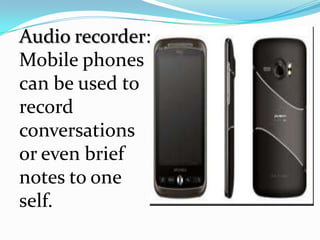
Audio recorder:
Mobile phones
can be used to
record
conversations
or even brief
notes to one
self.
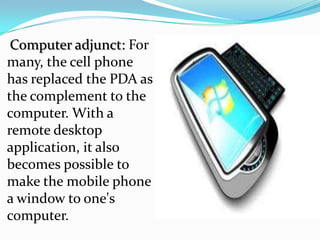
Computer adjunct: For
many, the cell phone
has replaced the PDA as
the complement to the
computer. With a
remote desktop
application, it also
becomes possible to
make the mobile phone
a window to one's
computer.
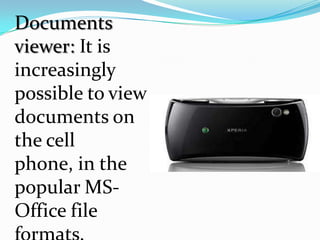
Documents
viewer: It is
increasingly
possible to view
documents on
the cell
phone, in the
popular MS-
Office file
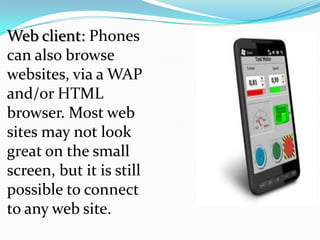
Web client: Phones
can also browse
websites, via a WAP
and/or HTML
browser. Most web
sites may not look
great on the small
screen, but it is still
possible to connect
to any web site.
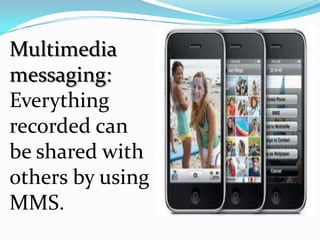
Multimedia
messaging:
Everything
recorded can
be shared with
others by using
MMS.
Conclusion
Every good thing when abused can be
harmful, so is mobile phone.
Consider when to use it, how to use it
and what to use it for and just make
sure you benefit fully from the mobile
phone you are having because it is the
next biggest technological device ever
to hit the globe.
References
 www.wikipedia.org
 www.thinkdigit.com/Mobiles-and-PDAs
 www.dialaphone.co.uk
 letsgodigital.org
o newspaper.li
mobilephonereviews.org
• leicesterdeafclub.co.uk
• Presentation by Kofi Asare Mensah

Presentation on mobile phones

  • 1.
    Mobile phone The mostfriendly technology in the 21st century.
  • 2.
  • 3.
    HISTORY In 1940s Motoroladeveloped a backpacked two-way radio, the Walkie-Talkie and a large hand-held two-way radio for the US military. The same technology developed further and produced the mobile phone that we know today.
  • 4.
    Dr. Martin Cooperof Motorola is considered to be the inventor of the first practical mobile phone. On April 3, 1973, Martin placed a call to rival Joel Engel, head of research at AT&T's Bell Labs, while walking the streets of New York City talking on the first Motorola DynaTAC prototype.
  • 5.
    The first mobile phones,referred to as First Generation or 1G, were introduced to the public market in 1983 by the Motorola Company. These first mobile phones used analog technology which was much less reliable than the digital technology we use today.
  • 6.
    During the 1990s,great improvements were made in the mobile phone technology. These phones used Second Generation, or 2G technology. In 1990, the first cell phone call was made using the new digital technology that became characteristic of this era.
  • 7.
    The Third Generation technology,or 3G, is what many people currently use in their digital cellular phones today. This technology was created very soon after the excitement that the 2G technology created. This new technology is not only capable of transferring voice data (such as a phone call), but it is also able to transfer other types of data, including emails, information and instant messages.
  • 8.
    The Motorola StarTac wasthe first phone in the world with Vibrating alert function. It was unveiled in North America on January 3, 1996. StarTACs remained popular until the early 2000s.
  • 9.
    Mobile manufactures &brands There are several mobile phone manufactures across the globe and each manufacturing company has its own brands depending on the marketing and technological demands. Examples of manufacturing firms and their brands are:
  • 10.
  • 11.
  • 12.
  • 13.
  • 14.
  • 15.
    2011 Quantity MarketShares by Gartner Percentage 40 35 30 25 20 Percentage 15 10 5 0 Nokia Samsung Apple LG ZTE Others
  • 16.
    How mobile phoneswork Mobile phone can make and receive telephone calls over a radio link whilst moving around a wide geographic area. It does so by connecting to a cellular network provided by a mobile phone operator, allowing access to the public telephone network.
  • 17.
    In Ghana, themobile phone operators include:  Vodafone  Tigo  MTN  Airtel  Glo  Expresso You can enjoy their network only when you have their sim card inserted in your mobile phone.
  • 18.
    Uses Of MobilePhone Mobile phones have already started functioning as more than just communications devices. Mobiles serve as watches and alarm clocks. Even with the limited free games that come with basic phones, they are already good for "time-pass". They can also function as calculators and . . .
  • 19.
    Digital camera: Point-and-click! Phones capture picturesand let us save them for posterity or transfer them to others and to computers
  • 20.
    Audio recorder: Mobile phones canbe used to record conversations or even brief notes to one self.
  • 21.
    Computer adjunct: For many,the cell phone has replaced the PDA as the complement to the computer. With a remote desktop application, it also becomes possible to make the mobile phone a window to one's computer.
  • 22.
    Documents viewer: It is increasingly possibleto view documents on the cell phone, in the popular MS- Office file
  • 23.
    Web client: Phones canalso browse websites, via a WAP and/or HTML browser. Most web sites may not look great on the small screen, but it is still possible to connect to any web site.
  • 24.
  • 25.
    Conclusion Every good thingwhen abused can be harmful, so is mobile phone. Consider when to use it, how to use it and what to use it for and just make sure you benefit fully from the mobile phone you are having because it is the next biggest technological device ever to hit the globe.
  • 26.
    References  www.wikipedia.org  www.thinkdigit.com/Mobiles-and-PDAs www.dialaphone.co.uk  letsgodigital.org o newspaper.li mobilephonereviews.org • leicesterdeafclub.co.uk • Presentation by Kofi Asare Mensah