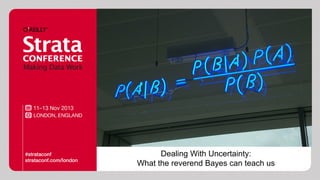
Dealing With Uncertainty:
What the reverend Bayes can teach us
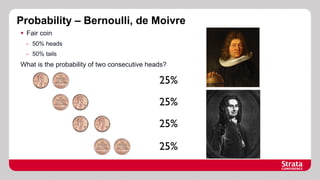
Probability – Bernoulli, de Moivre
§  Fair coin
-  50% heads
-  50% tails

What is the probability of two consecutive heads?

25%	

25%	

25%	

25%
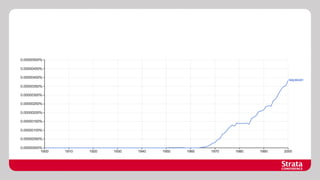
1701
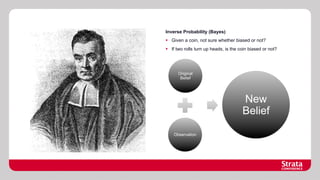
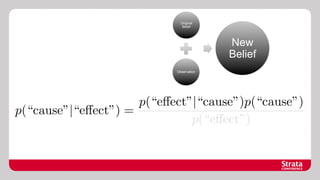
Inverse Probability (Bayes)
§  Given a coin, not sure whether biased or not?
§  If two rolls turn up heads, is the coin biased or not?

Original
Belief

New
Belief
Observation
BAYESIAN PROBABILITY
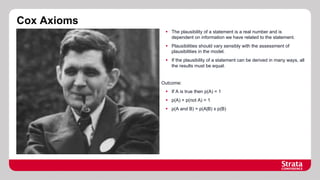
Cox Axioms
§  The plausibility of a statement is a real number and is
dependent on information we have related to the statement.
§  Plausibilities should vary sensibly with the assessment of
plausibilities in the model.
§  If the plausibility of a statement can be derived in many ways, all
the results must be equal.

Outcome:
§  If A is true then p(A) = 1
§  p(A) + p(not A) = 1
§  p(A and B) = p(A|B) x p(B)
Original
Belief

New
Belief
Observation

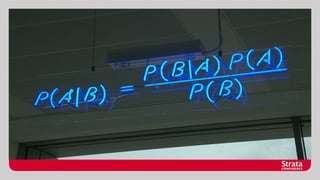
p(“e↵ect”|“cause”)p(“cause”)
p(“cause”|“e↵ect”) =
p(“e↵ect”)
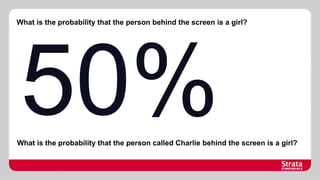
What is the probability that the person behind the screen is a girl?

50%

What is the probability that the person called Charlie behind the screen is a girl?
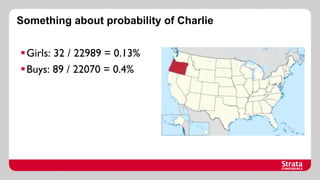
Something about probability of Charlie

§ Girls: 32 / 22989 = 0.13%	

§ Buys: 89 / 22070 = 0.4%
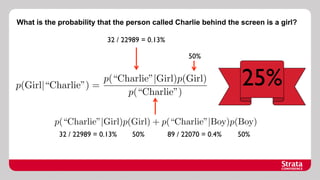
What is the probability that the person called Charlie behind the screen is a girl?
32 / 22989 = 0.13%	

50%	


p(“Charlie”|Girl)p(Girl)
p(Girl|“Charlie”) =
p(“Charlie”)

25%	


p(“Charlie”|Girl)p(Girl) + p(“Charlie”|Boy)p(Boy)
32 / 22989 = 0.13%	


50%	


89 / 22070 = 0.4%	


50%
BAYESIAN MACHINE LEARNING
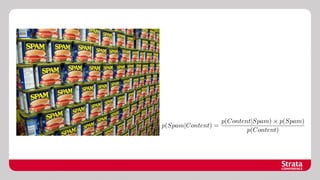
p(Content|Spam) ⇥ p(Spam)
p(Spam|Content) =
p(Content)
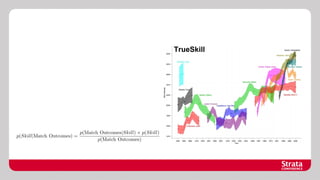
TrueSkill

p(Match Outcomes|Skill) ⇥ p(Skill)
p(Skill|Match Outcomes) =
p(Match Outcomes)
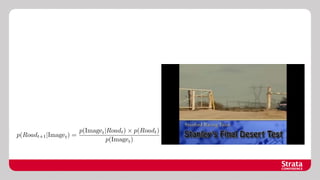
p(Imaget |Roadt ) ⇥ p(Roadt )
p(Roadt+1 |Imaget ) =
p(Imaget )
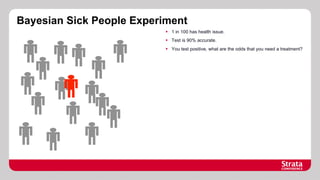
Bayesian Sick People Experiment
§  1 in 100 has health issue.
§  Test is 90% accurate.
§  You test positive, what are the odds that you need a treatment?
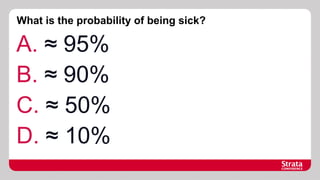
What is the probability of being sick?

A.  ≈ 95%
B.  ≈ 90%
C.  ≈ 50%
D.  ≈ 10%
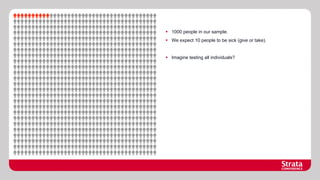
§  1000 people in our sample.
§  We expect 10 people to be sick (give or take).

§  Imagine testing all individuals?
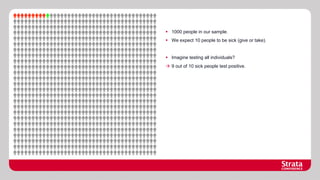
§  1000 people in our sample.
§  We expect 10 people to be sick (give or take).

§  Imagine testing all individuals?
à  9 out of 10 sick people test positive.
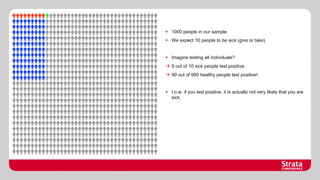
§  1000 people in our sample.
§  We expect 10 people to be sick (give or take).

§  Imagine testing all individuals?
à  9 out of 10 sick people test positive.
à  99 out of 990 healthy people test positive!

§  I.o.w. if you test positive, it is actually not very likely that you are
sick.
PROBABILISTIC PROGRAMMING
Cause à Effect
Inputà Output
Effect à Cause
Output à Input
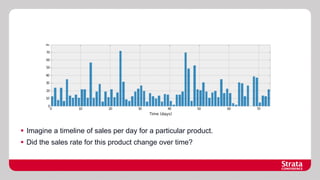
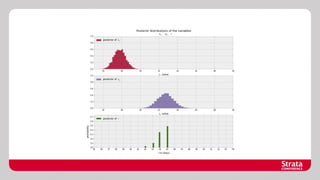
§  Imagine a timeline of sales per day for a particular product.
§  Did the sales rate for this product change over time?
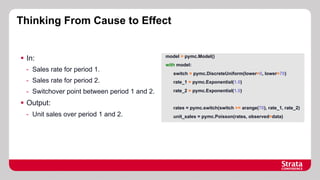
Thinking From Cause to Effect

§  In:
-  Sales rate for period 1.

model = pymc.Model()
with model:
switch = pymc.DiscreteUniform(lower=0, lower=70)

-  Sales rate for period 2.

rate_1 = pymc.Exponential(1.0)

-  Switchover point between period 1 and 2.

rate_2 = pymc.Exponential(1.0)

§  Output:
-  Unit sales over period 1 and 2.

rates = pymc.switch(switch >= arange(70), rate_1, rate_2)
unit_sales = pymc.Poisson(rates, observed=data)
References
§  Bayesian vs. Frequentist Statistics
-  http://www.stat.ufl.edu/~casella/Talks/BayesRefresher.pdf
§  Probabilistic Programming & Bayesian Methods for Hackers
-  https://github.com/CamDavidsonPilon/Probabilistic-Programming-and-BayesianMethods-for-Hackers
§  Bayesian Methods
-  http://www.gatsby.ucl.ac.uk/~zoubin/tmp/tutorial.pdf
§  “The Theory That Would not Die”, Sharon Bertsch Mcgrayne
-  http://www.amazon.co.uk/dp/0300188226
Medical Example using PyMC
model = pymc.Model()
with model:
sick = pymc.Bernoulli(p=0.01)
test_result = pymc.Bernoulli(sick * 0.9 + (1-sick) * (1.0-0.9), observed=[1])
algorithm = pymc.Metropolis()
print “Pr(Sick | Test) = %f” % pymc.sample(1000, algorithm)[sick].mean()

Dealing with Uncertainty: What the reverend Bayes can teach us.

  • 1.
    Dealing With Uncertainty: Whatthe reverend Bayes can teach us
  • 2.
    Probability – Bernoulli,de Moivre §  Fair coin -  50% heads -  50% tails What is the probability of two consecutive heads? 25% 25% 25% 25%
  • 3.
  • 4.
    Inverse Probability (Bayes) § Given a coin, not sure whether biased or not? §  If two rolls turn up heads, is the coin biased or not? Original Belief New Belief Observation
  • 6.
  • 7.
    Cox Axioms §  Theplausibility of a statement is a real number and is dependent on information we have related to the statement. §  Plausibilities should vary sensibly with the assessment of plausibilities in the model. §  If the plausibility of a statement can be derived in many ways, all the results must be equal. Outcome: §  If A is true then p(A) = 1 §  p(A) + p(not A) = 1 §  p(A and B) = p(A|B) x p(B)
  • 8.
  • 9.
    What is theprobability that the person behind the screen is a girl? 50% What is the probability that the person called Charlie behind the screen is a girl?
  • 10.
    Something about probabilityof Charlie § Girls: 32 / 22989 = 0.13% § Buys: 89 / 22070 = 0.4%
  • 11.
    What is theprobability that the person called Charlie behind the screen is a girl? 32 / 22989 = 0.13% 50% p(“Charlie”|Girl)p(Girl) p(Girl|“Charlie”) = p(“Charlie”) 25% p(“Charlie”|Girl)p(Girl) + p(“Charlie”|Boy)p(Boy) 32 / 22989 = 0.13% 50% 89 / 22070 = 0.4% 50%
  • 12.
  • 13.
  • 14.
    TrueSkill p(Match Outcomes|Skill) ⇥p(Skill) p(Skill|Match Outcomes) = p(Match Outcomes)
  • 15.
    p(Imaget |Roadt )⇥ p(Roadt ) p(Roadt+1 |Imaget ) = p(Imaget )
  • 16.
    Bayesian Sick PeopleExperiment §  1 in 100 has health issue. §  Test is 90% accurate. §  You test positive, what are the odds that you need a treatment?
  • 17.
    What is theprobability of being sick? A.  ≈ 95% B.  ≈ 90% C.  ≈ 50% D.  ≈ 10%
  • 18.
    §  1000 peoplein our sample. §  We expect 10 people to be sick (give or take). §  Imagine testing all individuals?
  • 19.
    §  1000 peoplein our sample. §  We expect 10 people to be sick (give or take). §  Imagine testing all individuals? à  9 out of 10 sick people test positive.
  • 20.
    §  1000 peoplein our sample. §  We expect 10 people to be sick (give or take). §  Imagine testing all individuals? à  9 out of 10 sick people test positive. à  99 out of 990 healthy people test positive! §  I.o.w. if you test positive, it is actually not very likely that you are sick.
  • 21.
  • 22.
    Cause à Effect InputàOutput Effect à Cause Output à Input
  • 23.
    §  Imagine atimeline of sales per day for a particular product. §  Did the sales rate for this product change over time?
  • 24.
    Thinking From Causeto Effect §  In: -  Sales rate for period 1. model = pymc.Model() with model: switch = pymc.DiscreteUniform(lower=0, lower=70) -  Sales rate for period 2. rate_1 = pymc.Exponential(1.0) -  Switchover point between period 1 and 2. rate_2 = pymc.Exponential(1.0) §  Output: -  Unit sales over period 1 and 2. rates = pymc.switch(switch >= arange(70), rate_1, rate_2) unit_sales = pymc.Poisson(rates, observed=data)
  • 27.
    References §  Bayesian vs.Frequentist Statistics -  http://www.stat.ufl.edu/~casella/Talks/BayesRefresher.pdf §  Probabilistic Programming & Bayesian Methods for Hackers -  https://github.com/CamDavidsonPilon/Probabilistic-Programming-and-BayesianMethods-for-Hackers §  Bayesian Methods -  http://www.gatsby.ucl.ac.uk/~zoubin/tmp/tutorial.pdf §  “The Theory That Would not Die”, Sharon Bertsch Mcgrayne -  http://www.amazon.co.uk/dp/0300188226
  • 28.
    Medical Example usingPyMC model = pymc.Model() with model: sick = pymc.Bernoulli(p=0.01) test_result = pymc.Bernoulli(sick * 0.9 + (1-sick) * (1.0-0.9), observed=[1]) algorithm = pymc.Metropolis() print “Pr(Sick | Test) = %f” % pymc.sample(1000, algorithm)[sick].mean()