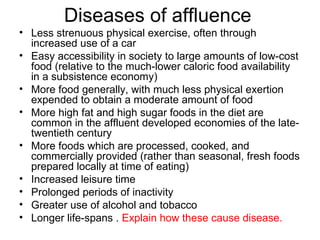
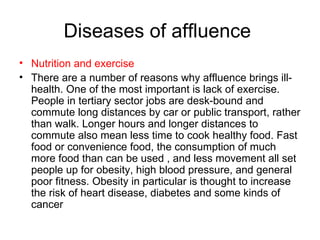
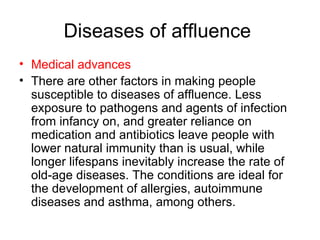
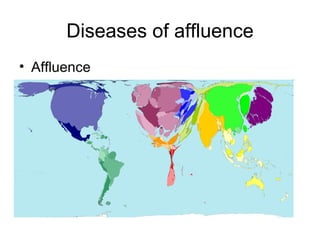
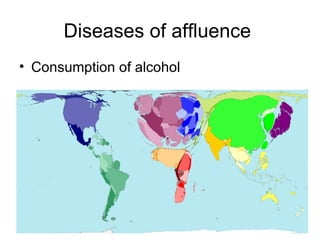
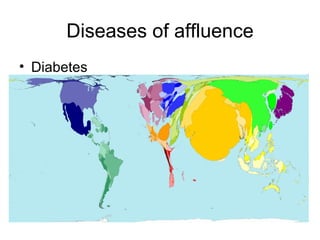
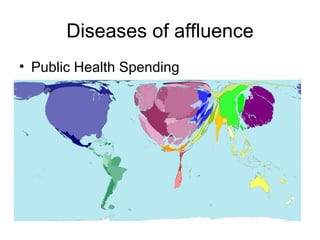
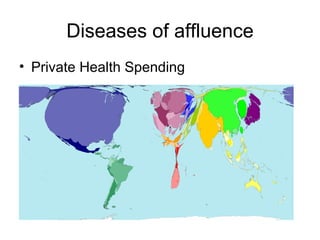
Diseases of affluence refer to diseases that result from increasing wealth in a society, in contrast to diseases of poverty. Examples include type 2 diabetes, heart disease, obesity, and certain cancers. These diseases are considered non-communicable. Factors that contribute to diseases of affluence include less physical exercise due to more sedentary jobs and transportation, easy access to inexpensive but unhealthy food, processed and pre-cooked foods, prolonged periods of inactivity, greater alcohol and tobacco use, and stress from long work hours and independent living. Public health experts now argue that while risks of diseases of poverty have decreased, diseases of affluence pose a major social and economic burden on societies.