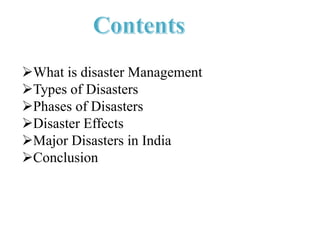
What is disaster Management
Types of Disasters
Phases of Disasters
Disaster Effects
Major Disasters in India
Conclusion
What is disaster management???
 “A disaster can be defined as any
occurrence that cause damage, ecological
disruption, loss of human life,
deterioration of health and health services
on a scale, sufficient to warrant an
extraordinary response from outside the
affected community or area”.
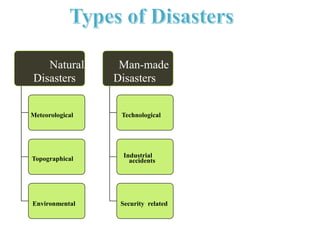
accidents
Natural Man-made
Disasters Disasters
Meteorological Technological
Topographical Industrial
Environmental Security related
Meteorological:
• Floods
• Tsunamis
• Cyclones
• Hurricanes
• Snow storm
Topographical:
• Earth quakes
• Volcanic eruption
• Land slides
• Asteroids
Environmental:
• Global warming
• Ozone depletion
• Solar flare
Technological:
• Transportation failure
• Public failure
• Fire
Industrial:
• Chemical spills
• Radioactive spills
Security related:
• War
• Terrorism
• Internal conflicts
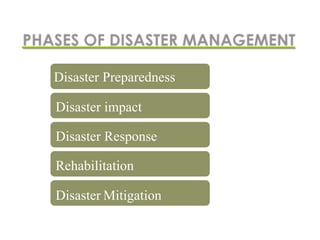
Disaster Preparedness
Disaster impact
Disaster Response
Rehabilitation
Disaster Mitigation
Preparedness shouldbe in the form of
money,manpower and materials
 Evaluation from past experiencesabout risk
 Location of disaster proneareas
 Organization of communication, information
and warningsystem
 Ensuring co-ordination and response
mechanisms
Epidemiologic surveillance and disease control
 Vaccination
 Nutrition
 Water supply
 Food safety
 Basic sanitation and personal hygiene
 Vector control
 This involves lessening the likely effects of emergencies.
These include depending upon the disaster,
protection of
vulnerable population and structure.
Eg. improving structural qualities of schools, houses and
suchother
buildings so that medical causalities can be minimized.
 Deaths
 Disability
 Increase in communicable disease
 Psychological problems
 Food shortage
 Socioeconomic losses
 Shortage of drugsand medical supplies.
 Environmental disruption
Major Disasters in India
 1984 Bhopal Gas Tragedy
 2001 Gujarat earthquake
 2004 Indian Ocean tsunami
 2008 Mumbai attacks
Disaster Reduction Day
 NIDM observed "Disaster Reduction Day" on the
12th October
 Rallies and special lectureswere organizedin the
universities and colleges to markthe initiatives of
awareness for disaster reduction amongst youth &
children
 Children's Colour Activity Book for Disaster
Preparedness
Sometimes the best response to natural or man-
made disasters can be effective planning before
tragedy strikes. An entire academic and practical
body of learning and practice has evolved
around what to do in a disaster and how to
prepare for one.
Any Questions ??Any Quest

DISASTER MANAGEMENT

  • 2.
    What is disasterManagement Types of Disasters Phases of Disasters Disaster Effects Major Disasters in India Conclusion
  • 3.
    What is disastermanagement???  “A disaster can be defined as any occurrence that cause damage, ecological disruption, loss of human life, deterioration of health and health services on a scale, sufficient to warrant an extraordinary response from outside the affected community or area”.
  • 4.
    accidents Natural Man-made Disasters Disasters MeteorologicalTechnological Topographical Industrial Environmental Security related
  • 5.
    Meteorological: • Floods • Tsunamis •Cyclones • Hurricanes • Snow storm Topographical: • Earth quakes • Volcanic eruption • Land slides • Asteroids Environmental: • Global warming • Ozone depletion • Solar flare
  • 6.
    Technological: • Transportation failure •Public failure • Fire Industrial: • Chemical spills • Radioactive spills Security related: • War • Terrorism • Internal conflicts
  • 7.
    Disaster Preparedness Disaster impact DisasterResponse Rehabilitation Disaster Mitigation
  • 8.
    Preparedness shouldbe inthe form of money,manpower and materials  Evaluation from past experiencesabout risk  Location of disaster proneareas  Organization of communication, information and warningsystem  Ensuring co-ordination and response mechanisms
  • 9.
    Epidemiologic surveillance anddisease control  Vaccination  Nutrition
  • 10.
     Water supply Food safety  Basic sanitation and personal hygiene  Vector control
  • 11.
     This involveslessening the likely effects of emergencies. These include depending upon the disaster, protection of vulnerable population and structure. Eg. improving structural qualities of schools, houses and suchother buildings so that medical causalities can be minimized.
  • 12.
     Deaths  Disability Increase in communicable disease  Psychological problems  Food shortage  Socioeconomic losses  Shortage of drugsand medical supplies.  Environmental disruption
  • 13.
    Major Disasters inIndia  1984 Bhopal Gas Tragedy  2001 Gujarat earthquake  2004 Indian Ocean tsunami  2008 Mumbai attacks
  • 14.
    Disaster Reduction Day NIDM observed "Disaster Reduction Day" on the 12th October  Rallies and special lectureswere organizedin the universities and colleges to markthe initiatives of awareness for disaster reduction amongst youth & children  Children's Colour Activity Book for Disaster Preparedness
  • 15.
    Sometimes the bestresponse to natural or man- made disasters can be effective planning before tragedy strikes. An entire academic and practical body of learning and practice has evolved around what to do in a disaster and how to prepare for one.
  • 16.