
A Technical presentation
on
“ UTILIZATION OF CERAMIC WASTE AS A RAW MATERIAL IN CONCRETE”
B.VIJAYA
14L41A0116
CONTENTS:
 Introduction
 Materials used
 Tests
 Result analysis
 Advantages
 Conclusion
 References
 future scope
INTRODUCTION
 Concrete as a construction material, has been used in construction
industry for about many centuries.
 Approximately one ton of concrete is used per capita per year through
out the world.
 The global production of ceramic tiles in the world is about 8500 million
square meters, this amount is about 400 million square in Iran, which
make Iran has fifth ceramic tile produce in the world.
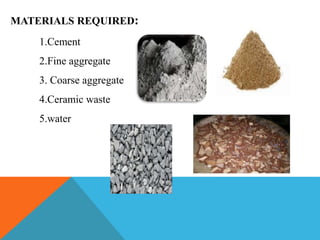
MATERIALS REQUIRED:
1.Cement
2.Fine aggregate
3. Coarse aggregate
4.Ceramic waste
5.water
Material preparation:
 ceramic collected from substation
 Manually crush ceramic
 Store at the at room temperature
TESTS:
We are conducting two types of tests
i)Workability test
ii) compressive strength test
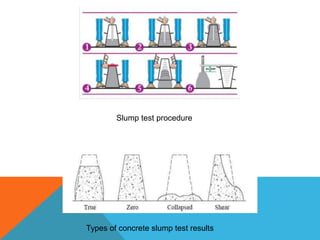
i) slump cone test:
dimensions of slump cone test
Top Diameter =10cm
Bottom Diameter=20cm
Height of slump cone =30cm
Types of concrete slump test results
Slump test procedure
PREPARATION OF SPECIMEN:
size =150*150*150mm.
shape = cube
type of test = compressive strength.
age of testing= 7,14and28days.
partial replacement of 0-30%
take mix design is M25(1:1:2)
RESULT ANALYSIS:
Compressive strength test based on their age of testing.
PERFORMING COMPRESSIVR STRENGTH TEST:
Compressive strength machine
0
5
10
15
20
25
30
35
40
0% 5% 10% 15% 20% 25% 30% 35%
Compressivestrength
(N/mm2)
Compressive strength
7days
14 days
28 days
Compressive strength for 7,14and 28 days
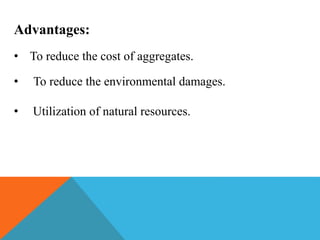
Advantages:
• To reduce the cost of aggregates.
• To reduce the environmental damages.
• Utilization of natural resources.
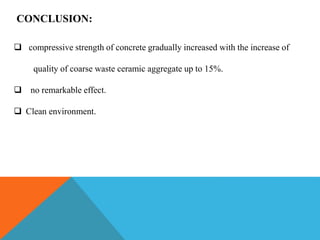
CONCLUSION:
 compressive strength of concrete gradually increased with the increase of
quality of coarse waste ceramic aggregate up to 15%.
 no remarkable effect.
 Clean environment.
REFERENCES:
1) Aruna D, Rajendra Prabhu, Subhash C Yaragal, Katta Venkataramana
IJRET:eISSN: 2319-1163 | pISSN: 2321-7308.
2) Batriti Monhun R. Marwein, M. Sneha, I. Bharathidasan International
Journal of Scientific &Engineering Research, Volume 7, Issue 4, April-2016
ISSN 2229-5518.
4) Department of Engineering and Agricultural Sciences, University of Leon,
Avenida Portugal 41, Leon 24071, Spain.
5) International Journal of Innovative Research in Science, Engineering and
TechnologyISSN (Online): 2319-8753 ISSN (Print): 2347-6710.
FUTURE SCOPE:
• Establishment of industries
• Saving of resources.
• Waste management.
CERAMIC WASTE CONCRETE

CERAMIC WASTE CONCRETE

  • 1.
    A Technical presentation on “UTILIZATION OF CERAMIC WASTE AS A RAW MATERIAL IN CONCRETE” B.VIJAYA 14L41A0116
  • 2.
    CONTENTS:  Introduction  Materialsused  Tests  Result analysis  Advantages  Conclusion  References  future scope
  • 3.
    INTRODUCTION  Concrete asa construction material, has been used in construction industry for about many centuries.  Approximately one ton of concrete is used per capita per year through out the world.  The global production of ceramic tiles in the world is about 8500 million square meters, this amount is about 400 million square in Iran, which make Iran has fifth ceramic tile produce in the world.
  • 4.
    MATERIALS REQUIRED: 1.Cement 2.Fine aggregate 3.Coarse aggregate 4.Ceramic waste 5.water
  • 5.
    Material preparation:  ceramiccollected from substation  Manually crush ceramic  Store at the at room temperature
  • 6.
    TESTS: We are conductingtwo types of tests i)Workability test ii) compressive strength test i) slump cone test: dimensions of slump cone test Top Diameter =10cm Bottom Diameter=20cm Height of slump cone =30cm
  • 7.
    Types of concreteslump test results Slump test procedure
  • 8.
    PREPARATION OF SPECIMEN: size=150*150*150mm. shape = cube type of test = compressive strength. age of testing= 7,14and28days. partial replacement of 0-30% take mix design is M25(1:1:2)
  • 9.
    RESULT ANALYSIS: Compressive strengthtest based on their age of testing.
  • 10.
    PERFORMING COMPRESSIVR STRENGTHTEST: Compressive strength machine
  • 11.
    0 5 10 15 20 25 30 35 40 0% 5% 10%15% 20% 25% 30% 35% Compressivestrength (N/mm2) Compressive strength 7days 14 days 28 days Compressive strength for 7,14and 28 days
  • 12.
    Advantages: • To reducethe cost of aggregates. • To reduce the environmental damages. • Utilization of natural resources.
  • 13.
    CONCLUSION:  compressive strengthof concrete gradually increased with the increase of quality of coarse waste ceramic aggregate up to 15%.  no remarkable effect.  Clean environment.
  • 14.
    REFERENCES: 1) Aruna D,Rajendra Prabhu, Subhash C Yaragal, Katta Venkataramana IJRET:eISSN: 2319-1163 | pISSN: 2321-7308. 2) Batriti Monhun R. Marwein, M. Sneha, I. Bharathidasan International Journal of Scientific &Engineering Research, Volume 7, Issue 4, April-2016 ISSN 2229-5518. 4) Department of Engineering and Agricultural Sciences, University of Leon, Avenida Portugal 41, Leon 24071, Spain. 5) International Journal of Innovative Research in Science, Engineering and TechnologyISSN (Online): 2319-8753 ISSN (Print): 2347-6710.
  • 15.
    FUTURE SCOPE: • Establishmentof industries • Saving of resources. • Waste management.