
11
ECOLOGICAL SANITATION
Presented by:
K.Venkateswarlu
14L41A0123
DEPARTMENT OF CIVIL ENGINEERING
CONTENTS
 INTRODUCTION
 DEFINITION OF SANITATION
 PRINCIPLES OF SANITATION
 SANITATION IN INDIA
 RECYCLEMENT
 SANITATION DISEASES RELATED
 CHALLENGES TO BE TAKEN
 DISADVANTAGES
 CONCLUSION
2
Introduction
 In many cities and towns, and rural areas of the world today
people live and raise in highly polluted environment.
 Mainly urban and peri-urban areas in developing countries are
among the worst polluted .
 Much of this pollution , which leads to high rate of disease,
malnutrition and death, is caused by a lack of toilets and
inadequate sanitation services.
3
Definition of sanitation:
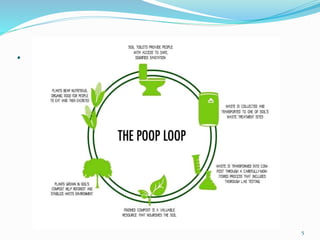
 Ecological sanitation (EcoSan) is a concept that treats
various types of waste generated by us.
 All this waste to be collected safely, as a resource which
can be treated and reused to prevent the pollution of
water bodies and the environment.
4
.
5
Principles of EcoSan:
 Ecological sanitation is based on three fundamental principles.
 Preventing pollution rather than attempting to control it after
we pollute.
 Sanitizing the urine and faeces.
 And using the safe products as agricultural products in
agricultural purposes.
 This approach can be characterized as “sanitize and recycle”.
6
7
Sanitation in India
 Environmental sanitation is a major public health issue in
India by the recent studies on environmental sanitation in India.
 A study published in 1980 by the World Bank identified over
20 systems for sanitation, varying from simple on-site latrines
to water-borne sewerage.
 Out of 20 only three systems have been found appropriate for
adoption on mass scale in India.
 No major city in India is known to have a continuous water
supply and an estimated 72% of Indians still lack access to
improved sanitation facilities.
8
Practices to be taken up :
 various types of Ecosan practices such as promotion of
1.Ecosan toilets
2. compost pits
3. bio-gas plants
4. reed-beds for treatment of waste water, etc.
 Recently in delhi, over 100 mobile toilet vans (MTVs) have
been installed in several slum pockets to improve sanitation in
such areas.
9

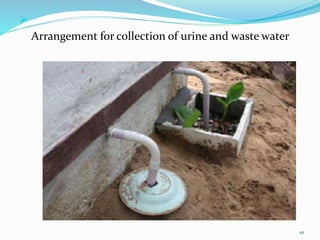
Arrangement for collection of urine and waste water
10
Recyclement
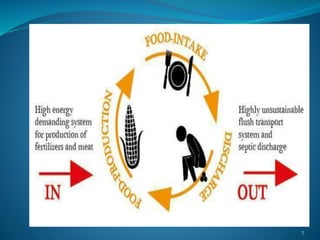
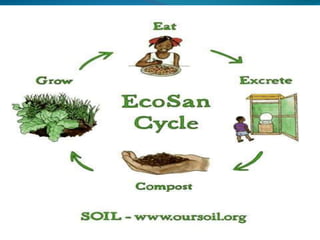
 How nutrients are returned to the soil Ecological
sanitation regards human excreta as a resource to be
recycled rather than as waste to be disposed of.
 The use of human excreta for crop fertilization has been
widely practised in many regions of the world.
 The Chinese and Japan introduced the practice of
recycling human faeces and urine for agriculture in the
twelfth century.
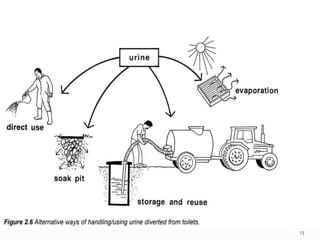
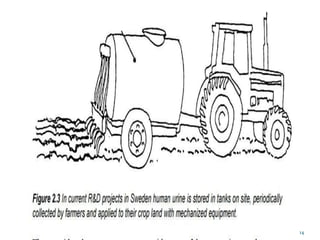
 In Sweden, where urine diversion has begun to be
practised, farmers collect urine from underground tanks
for a fee, and apply it to their crop land with mechanized
equipment .
11
12
13
14
SANITATION DISEASES RELATED
 Human excreta contain germs, and other living things
(organisms). Some organisms cause disease and are
called pathogens.
 The major pathogens found in urine can cause
typhoid, paratyphoid and bilharzia. Urine is a major
source for the spread of bilharzia.
 Faeces are the major source of pathogens for typhoid
and paratyphoid even when they are found in urine.
15
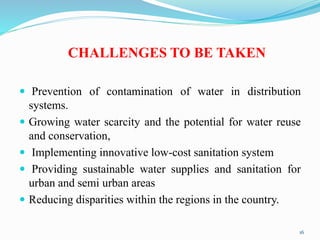
CHALLENGES TO BE TAKEN
 Prevention of contamination of water in distribution
systems.
 Growing water scarcity and the potential for water reuse
and conservation,
 Implementing innovative low-cost sanitation system
 Providing sustainable water supplies and sanitation for
urban and semi urban areas
 Reducing disparities within the regions in the country.
16
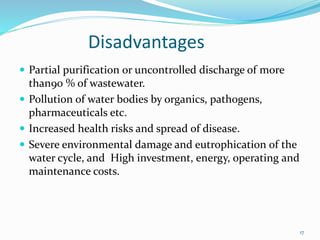
Disadvantages
 Partial purification or uncontrolled discharge of more
than90 % of wastewater.
 Pollution of water bodies by organics, pathogens,
pharmaceuticals etc.
 Increased health risks and spread of disease.
 Severe environmental damage and eutrophication of the
water cycle, and High investment, energy, operating and
maintenance costs.
17
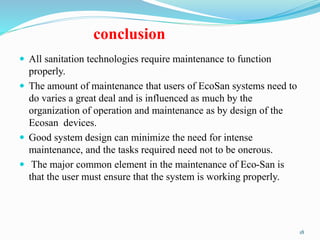
conclusion
 All sanitation technologies require maintenance to function
properly.
 The amount of maintenance that users of EcoSan systems need to
do varies a great deal and is influenced as much by the
organization of operation and maintenance as by design of the
Ecosan devices.
 Good system design can minimize the need for intense
maintenance, and the tasks required need not to be onerous.
 The major common element in the maintenance of Eco-San is
that the user must ensure that the system is working properly.
18
..
19

SANITATION

  • 1.
  • 2.
    CONTENTS  INTRODUCTION  DEFINITIONOF SANITATION  PRINCIPLES OF SANITATION  SANITATION IN INDIA  RECYCLEMENT  SANITATION DISEASES RELATED  CHALLENGES TO BE TAKEN  DISADVANTAGES  CONCLUSION 2
  • 3.
    Introduction  In manycities and towns, and rural areas of the world today people live and raise in highly polluted environment.  Mainly urban and peri-urban areas in developing countries are among the worst polluted .  Much of this pollution , which leads to high rate of disease, malnutrition and death, is caused by a lack of toilets and inadequate sanitation services. 3
  • 4.
    Definition of sanitation: Ecological sanitation (EcoSan) is a concept that treats various types of waste generated by us.  All this waste to be collected safely, as a resource which can be treated and reused to prevent the pollution of water bodies and the environment. 4
  • 5.
  • 6.
    Principles of EcoSan: Ecological sanitation is based on three fundamental principles.  Preventing pollution rather than attempting to control it after we pollute.  Sanitizing the urine and faeces.  And using the safe products as agricultural products in agricultural purposes.  This approach can be characterized as “sanitize and recycle”. 6
  • 7.
  • 8.
    Sanitation in India Environmental sanitation is a major public health issue in India by the recent studies on environmental sanitation in India.  A study published in 1980 by the World Bank identified over 20 systems for sanitation, varying from simple on-site latrines to water-borne sewerage.  Out of 20 only three systems have been found appropriate for adoption on mass scale in India.  No major city in India is known to have a continuous water supply and an estimated 72% of Indians still lack access to improved sanitation facilities. 8
  • 9.
    Practices to betaken up :  various types of Ecosan practices such as promotion of 1.Ecosan toilets 2. compost pits 3. bio-gas plants 4. reed-beds for treatment of waste water, etc.  Recently in delhi, over 100 mobile toilet vans (MTVs) have been installed in several slum pockets to improve sanitation in such areas. 9
  • 10.
     Arrangement for collectionof urine and waste water 10
  • 11.
    Recyclement  How nutrientsare returned to the soil Ecological sanitation regards human excreta as a resource to be recycled rather than as waste to be disposed of.  The use of human excreta for crop fertilization has been widely practised in many regions of the world.  The Chinese and Japan introduced the practice of recycling human faeces and urine for agriculture in the twelfth century.  In Sweden, where urine diversion has begun to be practised, farmers collect urine from underground tanks for a fee, and apply it to their crop land with mechanized equipment . 11
  • 12.
  • 13.
  • 14.
  • 15.
    SANITATION DISEASES RELATED Human excreta contain germs, and other living things (organisms). Some organisms cause disease and are called pathogens.  The major pathogens found in urine can cause typhoid, paratyphoid and bilharzia. Urine is a major source for the spread of bilharzia.  Faeces are the major source of pathogens for typhoid and paratyphoid even when they are found in urine. 15
  • 16.
    CHALLENGES TO BETAKEN  Prevention of contamination of water in distribution systems.  Growing water scarcity and the potential for water reuse and conservation,  Implementing innovative low-cost sanitation system  Providing sustainable water supplies and sanitation for urban and semi urban areas  Reducing disparities within the regions in the country. 16
  • 17.
    Disadvantages  Partial purificationor uncontrolled discharge of more than90 % of wastewater.  Pollution of water bodies by organics, pathogens, pharmaceuticals etc.  Increased health risks and spread of disease.  Severe environmental damage and eutrophication of the water cycle, and High investment, energy, operating and maintenance costs. 17
  • 18.
    conclusion  All sanitationtechnologies require maintenance to function properly.  The amount of maintenance that users of EcoSan systems need to do varies a great deal and is influenced as much by the organization of operation and maintenance as by design of the Ecosan devices.  Good system design can minimize the need for intense maintenance, and the tasks required need not to be onerous.  The major common element in the maintenance of Eco-San is that the user must ensure that the system is working properly. 18
  • 19.