LESSON 4:
PERSPECTIVES OF DISASTER
1
Learning Competency:
Analyze disaster from the different perspectives
(physical, psychological, socio-cultural, economic,
political, and biological).
2
 This module will let you analyze disaster from the different
perspectives. Specifically, you will be able to learn the
following:
a. demonstrate understanding how disaster is
influenced through physical and psychological factors;
b. describe how impact of disaster is affected in terms
of socio-cultural and economic perspectives; and
c. state how politics and biological factors could affect
impact of disaster.
3
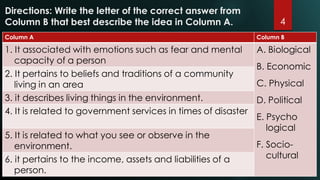
Directions: Write the letter of the correct answer from
Column B that best describe the idea in Column A.
Column A Column B
1. It associated with emotions such as fear and mental
capacity of a person
A. Biological
B. Economic
C. Physical
D. Political
E. Psycho
logical
F. Socio-
cultural
2. It pertains to beliefs and traditions of a community
living in an area
3. it describes living things in the environment.
4. It is related to government services in times of disaster
5. It is related to what you see or observe in the
environment.
6. it pertains to the income, assets and liabilities of a
person.
4
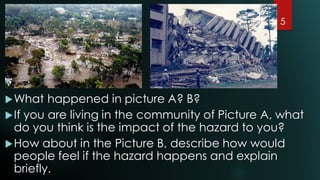
What happened in picture A? B?
If you are living in the community of Picture A, what
do you think is the impact of the hazard to you?
How about in the Picture B, describe how would
people feel if the hazard happens and explain
briefly.
5
 Disaster could come any time in our life when we are not
ready to face the effects of hazard.
 There are several perspectives that you could analyze
before hazard strikes and be cautious to avoid disaster or
at least lessen its impact.
 It is imperative likewise to understand each perspectives
on how it contribute to the degree of disaster after
hazard. It will make us more confident in dealing with
upcoming hazards whether it is natural or man-made.
6
Furthermore, analyzing the different perspectives of
disaster will orient us on the role of each one in the
community in dealing with disasters.
It will give us the idea on the importance of
preparedness not only for yourself or for your family
but for the whole community in battling the effects
of hazard which is the disaster.
7
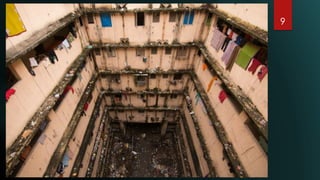
ACTIVITY 1:
PHYSICALLY AND MENTALLY AFFECTED
 What is the picture all about?
 Describe the picture briefly.
 Do you think the picture is safe to live in? Why or Why not?
 What hazard could make the building vulnerable to disaster?
Why?
 Who are probably living in the building?
 If the building will be exposed to earthquake, describe how
the people living in the building would react and feel.
 Recommend some tips for a safe building to live in.
 What can you suggest to the family or person living in the
building?
8
9
ACTIVITY 2: A PLACE LIKE HOME
Analyze the given pictures below and answer the
questions that follow. Assume that both picture will
be devastated by strong typhoon
10
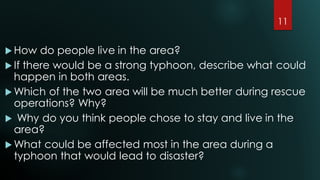
 How do people live in the area?
 If there would be a strong typhoon, describe what could
happen in both areas.
 Which of the two area will be much better during rescue
operations? Why?
 Why do you think people chose to stay and live in the
area?
 What could be affected most in the area during a
typhoon that would lead to disaster?
11
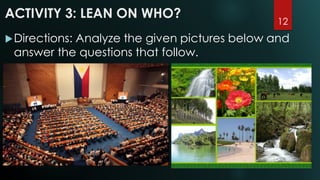
ACTIVITY 3: LEAN ON WHO?
Directions: Analyze the given pictures below and
answer the questions that follow.
12
Describe what the picture is all about. Who or what
are they?
In case of hazard, what could be the role of each
picture for disaster?
How could each picture help you during disaster?
How could each picture harm you during disaster?
13
REMEMBER
Physical perspectives – it describes observable
objects in a building/infrastructure which include
durability of building, fire exits availability, and
absence or presence of an important objects that
would help or harm you in any ways.
14
REMEMBER
Psychological perspectives – it pertains to the
mental capacity and health of an individual to deal
with disasters. Age, perception, and self-capacity
are some of the point of considerations.
15
REMEMBER
Socio-cultural perspectives – it involves people’s
beliefs, religion, traditions, social status, and
perceptions within a community with respect to
considering their response to disaster.
Economic perspectives – it involves income, assets
and liabilities, and economic class of an individual or
a community in the society
16
REMEMBER
Political perspectives – it involves structure of the
government, issues in diplomacy, etc. in dealing with
disasters.
Biological perspectives – it involves the role of flora
(plants) and fauna (animals) in the environment,
diseases, health, etc.
17
CHECK YOUR UNDERSTANDING
Directions: Describe briefly the advantages and
disadvantages of each perspectives of disaster.
Provide a one-liner idea for an ideal perspective in
dealing with a disaster.
Perspectives of
Disaster
Advantage Disadvantage Ideal point of view in
dealing with disaster
Physical
Psychological
Socio-cultural
Economic
Political
Biological
18
Care and Concern for others:
As a Filipino citizen, in what ways can you show
concern in lessening the impact of hazards that will
eventually contribute to disaster?
19

DRRR Week 2 Module 2.pdf

  • 1.
  • 2.
    Learning Competency: Analyze disasterfrom the different perspectives (physical, psychological, socio-cultural, economic, political, and biological). 2
  • 3.
     This modulewill let you analyze disaster from the different perspectives. Specifically, you will be able to learn the following: a. demonstrate understanding how disaster is influenced through physical and psychological factors; b. describe how impact of disaster is affected in terms of socio-cultural and economic perspectives; and c. state how politics and biological factors could affect impact of disaster. 3
  • 4.
    Directions: Write theletter of the correct answer from Column B that best describe the idea in Column A. Column A Column B 1. It associated with emotions such as fear and mental capacity of a person A. Biological B. Economic C. Physical D. Political E. Psycho logical F. Socio- cultural 2. It pertains to beliefs and traditions of a community living in an area 3. it describes living things in the environment. 4. It is related to government services in times of disaster 5. It is related to what you see or observe in the environment. 6. it pertains to the income, assets and liabilities of a person. 4
  • 5.
    What happened inpicture A? B? If you are living in the community of Picture A, what do you think is the impact of the hazard to you? How about in the Picture B, describe how would people feel if the hazard happens and explain briefly. 5
  • 6.
     Disaster couldcome any time in our life when we are not ready to face the effects of hazard.  There are several perspectives that you could analyze before hazard strikes and be cautious to avoid disaster or at least lessen its impact.  It is imperative likewise to understand each perspectives on how it contribute to the degree of disaster after hazard. It will make us more confident in dealing with upcoming hazards whether it is natural or man-made. 6
  • 7.
    Furthermore, analyzing thedifferent perspectives of disaster will orient us on the role of each one in the community in dealing with disasters. It will give us the idea on the importance of preparedness not only for yourself or for your family but for the whole community in battling the effects of hazard which is the disaster. 7
  • 8.
    ACTIVITY 1: PHYSICALLY ANDMENTALLY AFFECTED  What is the picture all about?  Describe the picture briefly.  Do you think the picture is safe to live in? Why or Why not?  What hazard could make the building vulnerable to disaster? Why?  Who are probably living in the building?  If the building will be exposed to earthquake, describe how the people living in the building would react and feel.  Recommend some tips for a safe building to live in.  What can you suggest to the family or person living in the building? 8
  • 9.
  • 10.
    ACTIVITY 2: APLACE LIKE HOME Analyze the given pictures below and answer the questions that follow. Assume that both picture will be devastated by strong typhoon 10
  • 11.
     How dopeople live in the area?  If there would be a strong typhoon, describe what could happen in both areas.  Which of the two area will be much better during rescue operations? Why?  Why do you think people chose to stay and live in the area?  What could be affected most in the area during a typhoon that would lead to disaster? 11
  • 12.
    ACTIVITY 3: LEANON WHO? Directions: Analyze the given pictures below and answer the questions that follow. 12
  • 13.
    Describe what thepicture is all about. Who or what are they? In case of hazard, what could be the role of each picture for disaster? How could each picture help you during disaster? How could each picture harm you during disaster? 13
  • 14.
    REMEMBER Physical perspectives –it describes observable objects in a building/infrastructure which include durability of building, fire exits availability, and absence or presence of an important objects that would help or harm you in any ways. 14
  • 15.
    REMEMBER Psychological perspectives –it pertains to the mental capacity and health of an individual to deal with disasters. Age, perception, and self-capacity are some of the point of considerations. 15
  • 16.
    REMEMBER Socio-cultural perspectives –it involves people’s beliefs, religion, traditions, social status, and perceptions within a community with respect to considering their response to disaster. Economic perspectives – it involves income, assets and liabilities, and economic class of an individual or a community in the society 16
  • 17.
    REMEMBER Political perspectives –it involves structure of the government, issues in diplomacy, etc. in dealing with disasters. Biological perspectives – it involves the role of flora (plants) and fauna (animals) in the environment, diseases, health, etc. 17
  • 18.
    CHECK YOUR UNDERSTANDING Directions:Describe briefly the advantages and disadvantages of each perspectives of disaster. Provide a one-liner idea for an ideal perspective in dealing with a disaster. Perspectives of Disaster Advantage Disadvantage Ideal point of view in dealing with disaster Physical Psychological Socio-cultural Economic Political Biological 18
  • 19.
    Care and Concernfor others: As a Filipino citizen, in what ways can you show concern in lessening the impact of hazards that will eventually contribute to disaster? 19