Dr Neeta Gupta
Associate Professor
Department of psychology
Certified Practitioner of EFT &
REBT (London) & CBT
(Scotland)
DAV PG College
Dehradun
Disability,Death &
Dying
Developmental disabilities are a group of conditions
due to an impairment in physical, learning, language,
or behaviour areas. These conditions begin during the
developmental period, may impact day-to-day
functioning, and usually last throughout a person’s
lifetime.
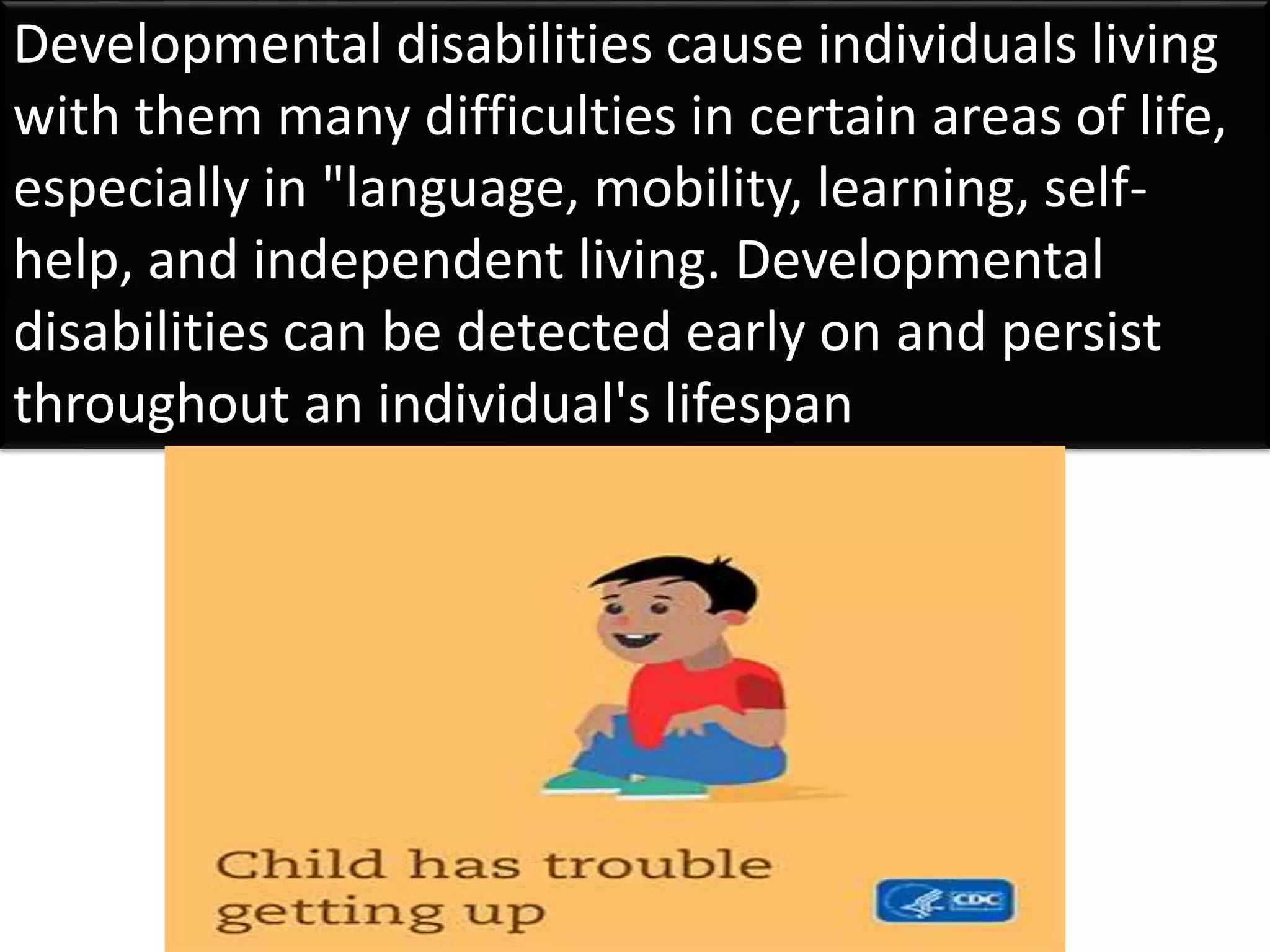
Developmental disabilities cause individuals living
with them many difficulties in certain areas of life,
especially in "language, mobility, learning, self-
help, and independent living. Developmental
disabilities can be detected early on and persist
throughout an individual's lifespan
Being healthy means the same thing for all of us—getting and
staying well so we can lead full, active lives. Some health
conditions, such as asthma, gastrointestinal symptoms,
eczema and skin allergies, and migraine headaches, have
been found to be more common among children with
developmental disabilities. Thus, it is especially important for
children with developmental disabilities to see a health care
provider regularly.
Physical disabilities are categorised into groups. The main
physical disability groups are:
1.Musculoskeletal and 2.Neuromusculoskeletal disability
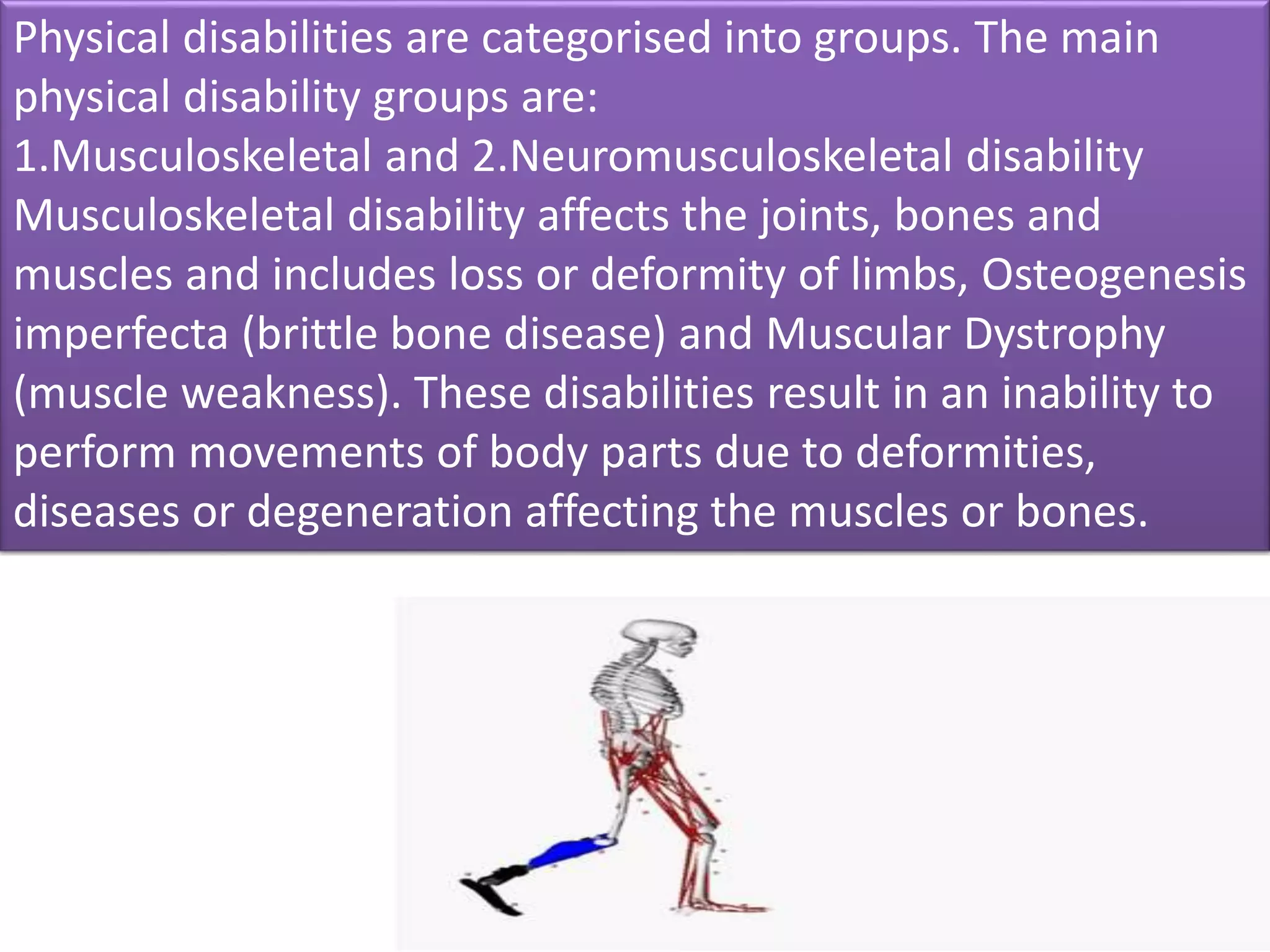
Musculoskeletal disability affects the joints, bones and
muscles and includes loss or deformity of limbs, Osteogenesis
imperfecta (brittle bone disease) and Muscular Dystrophy
(muscle weakness). These disabilities result in an inability to
perform movements of body parts due to deformities,
diseases or degeneration affecting the muscles or bones.
Neuromusculoskeletal disability
Neuromusculoskeletal disability, defined as the inability to
move affected body parts due to diseases, degeneration or
disorder of the nervous system, resulting in physical disability.
Conditions that fall under Neuromusculoskeletal disabilities
are cerebral palsy, spina bifida, stroke, spinal cord injury, head
injury and poliomyelitis.
Cerebral palsy
Cerebral palsy occurs in young children and is a group
of non-progressive disorders that damage the brain,
causing impairment of motor function. Including
associated disabilities such as intellectual and
behavioural,.
Spina bifida
Spina bifida is when there are problems in the
development of a baby’s spinal cord, resulting in a gap
in the spine, causing spinal nerves to be exposed. The
development defect of the spinal canal may cause
paralysis of the lower part of the body.
Acquired brain injury
Acquired brain injuries are due to damage to the brain
after birth and can be caused by a wide range of
factors, including stroke, head injury, alcohol, drugs,
lack of oxygen or various diseases such as cancer. This
can cause the person to find it difficult to move
certain parts of their body and struggle with daily
activities.
Spinal cord injury
Spinal cord injuries can result in total or partial impairment of
sensory and motor functions in the body and limbs. A spinal
cord injury can lead to paraplegia and tetraplegia.
Paraplegia affects the lower limbs and results in a loss of
movement and bowel and bladder control. Tetraplegia is a
paralysis affecting both arms and legs resulting in total
impairment of sensory and motor functions.
Epilepsy
Epilepsy is a neurological condition that causes a
person to have a tendency of recurring seizures. There
are many types of epilepsy which range in severity
and each person with epilepsy experiences it
differently.
Multiple sclerosis (MS)
Multiple sclerosis is a condition affecting a person’s
brain and spinal cord, causing a range of physical
problems including movement, sensation and
balance.
MS lasts for a person’s whole life and can cause
severe disability.
Arthritis
Arthritis comes in many forms and causes pain and
inflammation in joints and can affect children as
well as adults. The most common form of arthritis
is osteoarthritis, which affect the smooth cartilage
lining of the joint, making movement more difficult
and can cause pain and stiffness.
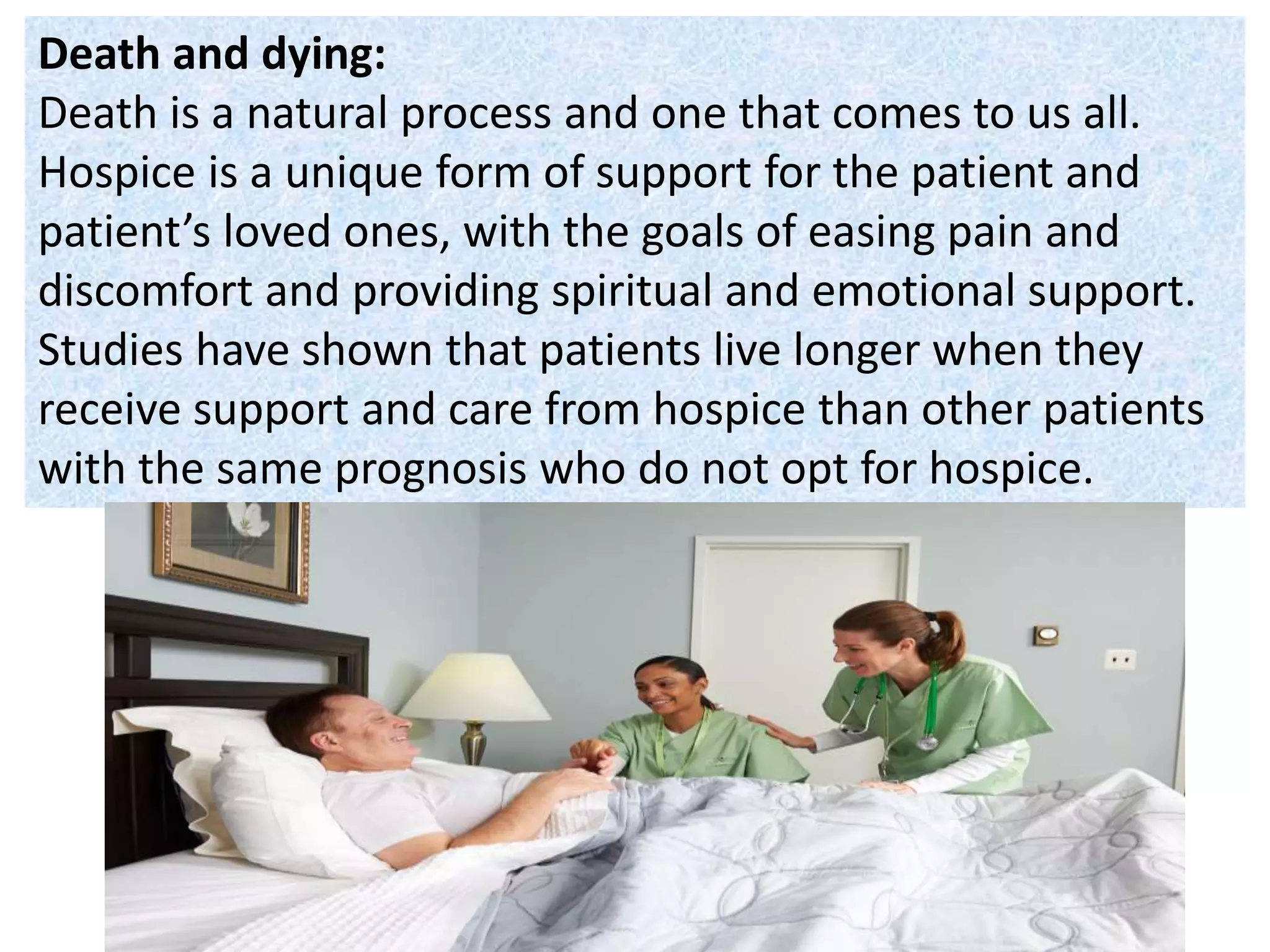
Death and dying:
Death is a natural process and one that comes to us all.
Hospice is a unique form of support for the patient and
patient’s loved ones, with the goals of easing pain and
discomfort and providing spiritual and emotional support.
Studies have shown that patients live longer when they
receive support and care from hospice than other patients
with the same prognosis who do not opt for hospice.
Signs of dying:
Changes in the way the body works are a normal
part of the dying process. Your hospice care team
can help you understand what changes to expect and
how the pain and stress of dying can be minimized.
Some of the natural changes that occur include:
Less appetite or interest in food.
Loss of bladder and bowel control, change in
colour or consistency
Breathing rate
Body temperature
Skin appearance
Mental state or behaviour
Sleeping more or being unresponsive
The five leading causes of death for men:
Ischemic heart diseases 14.3 % of all male deaths
Dementia and Alzheimer disease 7.9%
Malignant neoplasm of trachea, bronchus and lung
6.4%
Chronic lower respiratory diseases 6.2%
Cerebrovascular diseases 5.6%
The five leading causes of death for women:
Dementia and Alzheimer disease 15.2% of all
female deaths
Ischaemic heart diseases 8.8%
Cerebrovascular diseases 7.5%
Influenza and Pneumonia 6.1%
Chronic lower respiratory diseases 6.0%
https://www.cdc.gov/ncbddd/developmentaldisabilities/facts.html#:~
:text=Developmental%20disabilities%20are%20a%20group,last%20th
roughout%20a%20person's%20lifetime.
https://www.westernsydney.edu.au/educationtoemployment/for_em
ployment_and_career_services/what_is_disability/accordion/commo
n_types_of_disability_and_affects_at_work/physical_disability
https://www.carehome.co.uk/advice/types-of-physical-disabilities
https://thumbs.gfycat.com/RingedVeneratedLice-size_restricted.gif
https://thumbs.gfycat.com/SinfulVeneratedAddax-size_restricted.gif
https://thumbs.gfycat.com/PresentHelplessCivet-max-1mb.gif
https://i.makeagif.com/media/5-12-2018/cuxkW2.gif
https://media3.giphy.com/media/xT5LMvA8PpoTmEoXq8/giphy.gif
https://thumbs.gfycat.com/TanVelvetyKentrosaurus-small.gif
https://j.gifs.com/KraPa8.gif
https://media2.giphy.com/media/xT9DPk24HaOX12yyZ2/200.gif
https://www.hospicare.org/education/death-and-dying/
REFERENCE:
https://animationsa2z.com/uploads/1/2/9/7/129700864/304250448.gif
https://static01.nyt.com/images/2020/01/29/multimedia/29parenting-rashes-all/29parenting-
rashes-all-articleLarge.gif?quality=75&auto=webp&disable=upscale
https://www.cdc.gov/ncbddd/musculardystrophy/images/motor-delay-tool-animation.gif
https://www.embs.org/wp-content/uploads/2016/04/07.-TBME-01395-
2015_CoverStory_Figure.gif
https://thumbs.gfycat.com/HappyUniformCoqui-max-1mb.gif
https://media1.giphy.com/media/xT1Ra0qpgq8PwDzaA8/200.gif
https://aisforaoifenotautism.files.wordpress.com/2017/02/giphy-18.gif?w=334

Disability, Death and Dying