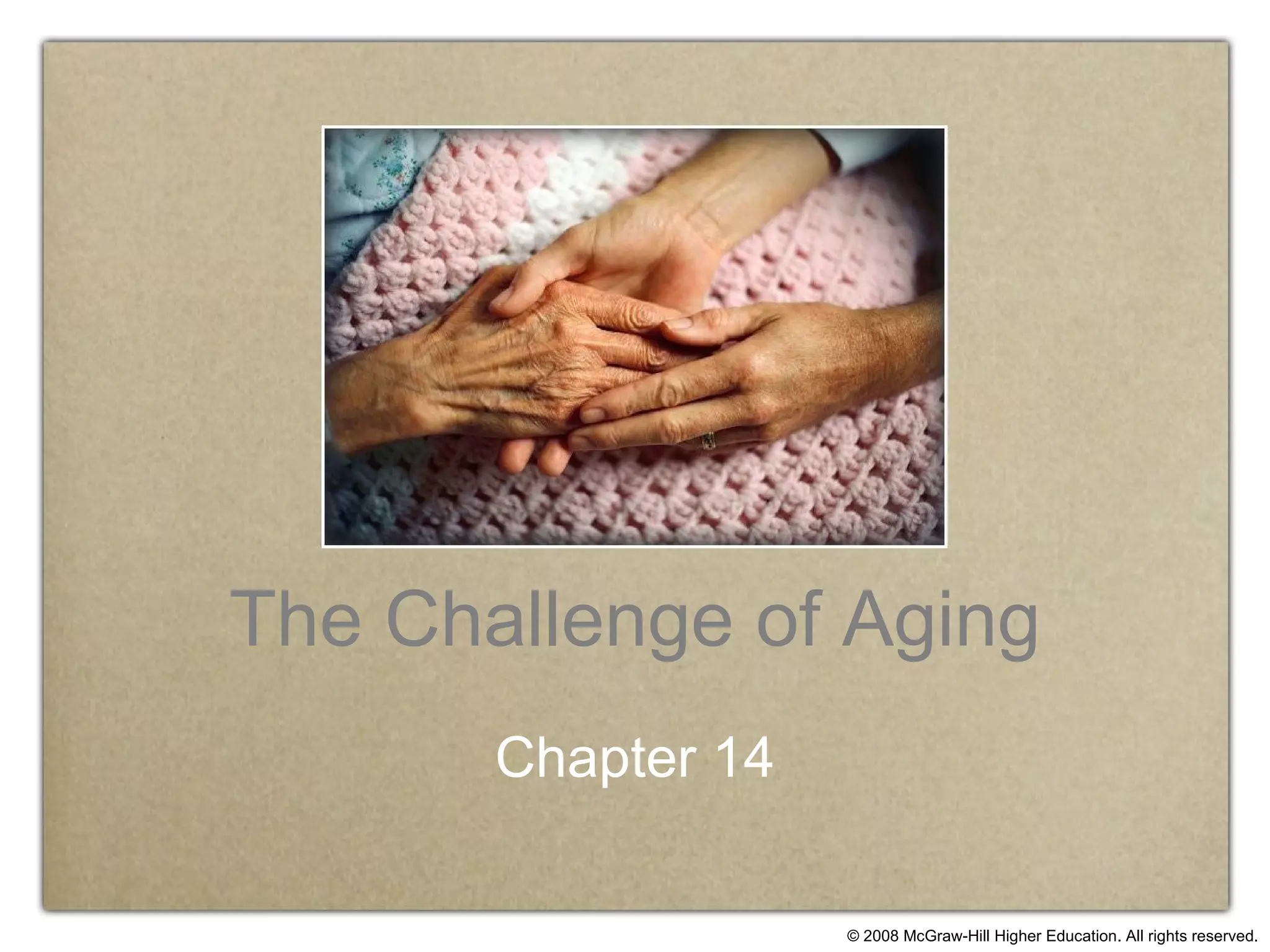
The Challenge of Aging Chapter 14
Life is Like a River “The flow is continuous, and you never step in the same place twice.” There is no precise age when a person becomes “old.”
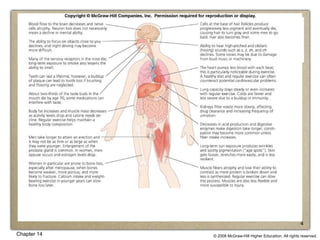
Generating Vitality As You Age What happens As You Age? Characteristics associated with aging are not due to aging but to abuse and neglect. Life-Enhancing Measures: Age-Proofing Challenge Your Mind. Stay mentally active Develop Physical Fitness. Eat Wisely. Maintain a Healthy weight. Control Drinking and Overdependence on Medications. Don’t Smoke. Schedule Physical Examinations to Detect Treatable Disease. Recognize and Reduce Stress.
 
Confronting the Changes Of Aging Planning for Social Changes. Changing Roles and Relationships. Increased Leisure Time. The Economics of Retirement.
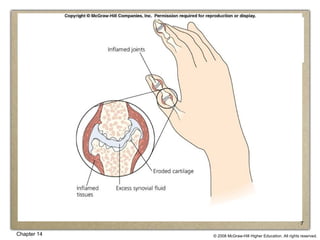
Adapting to Physical Changes Some physical changes are inevitable Hearing Loss Vision Changes Age-related macular degeneration (AMD) Presbyopia Cataracts Arthritis Osteoarthritis (OA) Rheumatoid arthritis Lupus
 
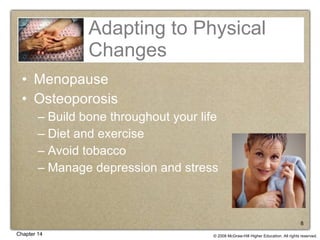
Adapting to Physical Changes Menopause Osteoporosis Build bone throughout your life Diet and exercise Avoid tobacco Manage depression and stress
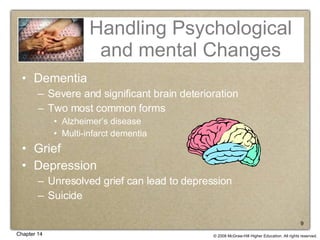
Handling Psychological and mental Changes Dementia Severe and significant brain deterioration Two most common forms Alzheimer’s disease Multi-infarct dementia Grief Depression Unresolved grief can lead to depression Suicide
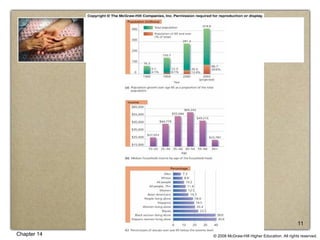
Life In An Aging America America’s Aging Minority 65 or Older. 35 million people, about 13% of the total American population in 2000. Affecting the stereotypes. Political attention to the growing population. The Aging population is increasing proportionately.
 
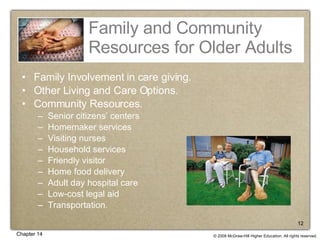
Family and Community Resources for Older Adults Family Involvement in care giving. Other Living and Care Options. Community Resources. Senior citizens’ centers Homemaker services Visiting nurses Household services Friendly visitor Home food delivery Adult day hospital care Low-cost legal aid Transportation.
Government Aid and Policies Food stamps Housing subsidies Social Security Medicare and Medicaid Life insurance and old-age pension plan
What is Death? Defining death. Defined as cessation of the flow of bodily fluids. Life-support systems. 1968 Harvard Medical School Committee, Brain death involves: Lack of receptivity and response to external stimuli. Absence of spontaneous muscular movement and breathing. Absence of observable reflexes. Absence of brain activity. Electroencephalogram (EEG). Second set of tests after 24 hours Hypothermia (Below 90 degrees F) Central nervous system depressants Clinical death Cellular death
Dying Versus Welcoming Death Anxiety associated with death.  Many seek to avoid any thought or mention of death. “Out of sight, out or mind” United states attitude is to “death denying”.
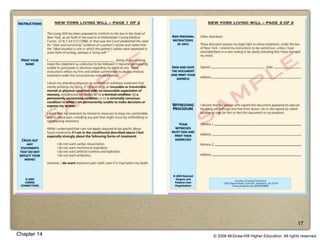
Planning for Death Making a will. Legal instrument expressing a person’s intentions and wishes for the disposition of his or her property after death. Estate. Money, property, and other possessions Testator. The person making the will Interstate. Without having left a valid will
 
Considering Options for End-of Life Care Spending your last days at home, cared for by relatives and friends? -OR- Access to the sophisticated medical technologies in the hospitals. Home care. Hospital-based palliative care. Hospice programs.
Deciding to Prolong Life or Hasten Death Would you want aggressive treatment to keep you alive, even if it meant that your were put on life-support? Modern medicine. Persistent vegetative state. Ethical questions about the “right to die”. U.S. Supreme Court  1990. Cruzan case 2003. Schiavo case The right to refuse life sustaining treatment is constitutionally protected. The importance of expressing one’s wishes about life-sustaining treatment
Deciding to Prolong Life or Hasten Death Withholding or Withdrawing Treatment. The right of a competent patient to refuse unwanted treatment. Passive euthanasia. Assisted Suicide and Active Euthanasia. Physician-assisted suicide (PAS). 1997. Supreme Court cases Washington v. Glucksberg Vacco v. Quill Oregon is the only state permitting PAS The Death with Dignity Act (1994) Active euthanasia.
Completing an Advance Directive Living will. Enables individuals to provide instructions about the kind of medical care they wish to receive. Health care proxy. Durable power of attorney for health care Appoint another person to make decisions about medical treatment Surrogate.
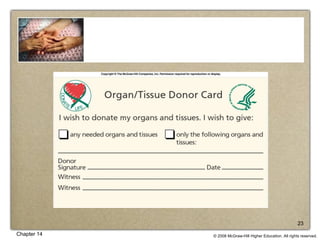
Becoming an Organ Donor Human body is a valuable resource. Each day 60 people receive an organ transplant. Each day 18 people on the waiting list die because not enough organs to assist. Uniform Donor Card.
 
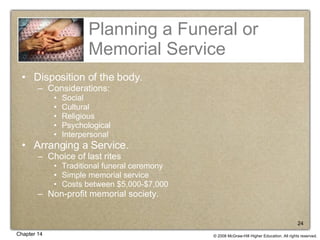
Planning a Funeral or Memorial Service Disposition of the body. Considerations: Social Cultural Religious  Psychological  Interpersonal Arranging a Service. Choice of last rites Traditional funeral ceremony Simple memorial service Costs between $5,000-$7,000 Non-profit memorial society.
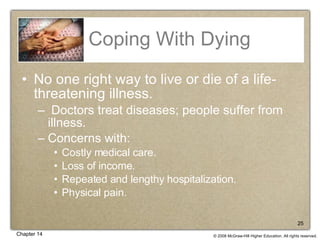
Coping With Dying No one right way to live or die of a life-threatening illness. Doctors treat diseases; people suffer from illness. Concerns with: Costly medical care. Loss of income. Repeated and lengthy hospitalization. Physical pain.
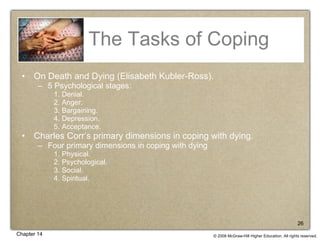
The Tasks of Coping On Death and Dying (Elisabeth Kubler-Ross). 5 Psychological stages: Denial. Anger. Bargaining. Depression. Acceptance. Charles Corr’s primary dimensions in coping with dying. Four primary dimensions in coping with dying Physical. Psychological. Social. Spiritual.
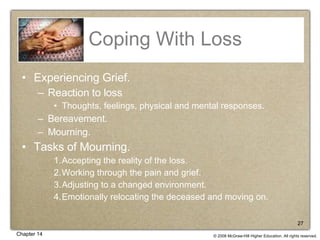
Coping With Loss Experiencing Grief. Reaction to loss Thoughts, feelings, physical and mental responses. Bereavement. Mourning. Tasks of Mourning. Accepting the reality of the loss. Working through the pain and grief. Adjusting to a changed environment. Emotionally relocating the deceased and moving on.
Coping With Loss The Course of Grief. Early phase Middle phase Last phase
Supporting a Grieving Person Give kind and loving support. Be a good listener. Refrain from making judgments about the survivor’s feelings are “good” or “bad”. Social support is critical.
Coming To Terms With Death Confronted with emotions and thoughts that relate to the immediate loss but also to our own mortality. Teaches us that relationships are  more important than things Allow ourselves to make room for death Denying death, it turns out, results in denying life.
Aging: A Vital Process Chapter 14

Insel10ebrup Ppt Ch14

  • 1.
    The Challenge ofAging Chapter 14
  • 2.
    Life is Likea River “The flow is continuous, and you never step in the same place twice.” There is no precise age when a person becomes “old.”
  • 3.
    Generating Vitality AsYou Age What happens As You Age? Characteristics associated with aging are not due to aging but to abuse and neglect. Life-Enhancing Measures: Age-Proofing Challenge Your Mind. Stay mentally active Develop Physical Fitness. Eat Wisely. Maintain a Healthy weight. Control Drinking and Overdependence on Medications. Don’t Smoke. Schedule Physical Examinations to Detect Treatable Disease. Recognize and Reduce Stress.
  • 4.
  • 5.
    Confronting the ChangesOf Aging Planning for Social Changes. Changing Roles and Relationships. Increased Leisure Time. The Economics of Retirement.
  • 6.
    Adapting to PhysicalChanges Some physical changes are inevitable Hearing Loss Vision Changes Age-related macular degeneration (AMD) Presbyopia Cataracts Arthritis Osteoarthritis (OA) Rheumatoid arthritis Lupus
  • 7.
  • 8.
    Adapting to PhysicalChanges Menopause Osteoporosis Build bone throughout your life Diet and exercise Avoid tobacco Manage depression and stress
  • 9.
    Handling Psychological andmental Changes Dementia Severe and significant brain deterioration Two most common forms Alzheimer’s disease Multi-infarct dementia Grief Depression Unresolved grief can lead to depression Suicide
  • 10.
    Life In AnAging America America’s Aging Minority 65 or Older. 35 million people, about 13% of the total American population in 2000. Affecting the stereotypes. Political attention to the growing population. The Aging population is increasing proportionately.
  • 11.
  • 12.
    Family and CommunityResources for Older Adults Family Involvement in care giving. Other Living and Care Options. Community Resources. Senior citizens’ centers Homemaker services Visiting nurses Household services Friendly visitor Home food delivery Adult day hospital care Low-cost legal aid Transportation.
  • 13.
    Government Aid andPolicies Food stamps Housing subsidies Social Security Medicare and Medicaid Life insurance and old-age pension plan
  • 14.
    What is Death?Defining death. Defined as cessation of the flow of bodily fluids. Life-support systems. 1968 Harvard Medical School Committee, Brain death involves: Lack of receptivity and response to external stimuli. Absence of spontaneous muscular movement and breathing. Absence of observable reflexes. Absence of brain activity. Electroencephalogram (EEG). Second set of tests after 24 hours Hypothermia (Below 90 degrees F) Central nervous system depressants Clinical death Cellular death
  • 15.
    Dying Versus WelcomingDeath Anxiety associated with death. Many seek to avoid any thought or mention of death. “Out of sight, out or mind” United states attitude is to “death denying”.
  • 16.
    Planning for DeathMaking a will. Legal instrument expressing a person’s intentions and wishes for the disposition of his or her property after death. Estate. Money, property, and other possessions Testator. The person making the will Interstate. Without having left a valid will
  • 17.
  • 18.
    Considering Options forEnd-of Life Care Spending your last days at home, cared for by relatives and friends? -OR- Access to the sophisticated medical technologies in the hospitals. Home care. Hospital-based palliative care. Hospice programs.
  • 19.
    Deciding to ProlongLife or Hasten Death Would you want aggressive treatment to keep you alive, even if it meant that your were put on life-support? Modern medicine. Persistent vegetative state. Ethical questions about the “right to die”. U.S. Supreme Court 1990. Cruzan case 2003. Schiavo case The right to refuse life sustaining treatment is constitutionally protected. The importance of expressing one’s wishes about life-sustaining treatment
  • 20.
    Deciding to ProlongLife or Hasten Death Withholding or Withdrawing Treatment. The right of a competent patient to refuse unwanted treatment. Passive euthanasia. Assisted Suicide and Active Euthanasia. Physician-assisted suicide (PAS). 1997. Supreme Court cases Washington v. Glucksberg Vacco v. Quill Oregon is the only state permitting PAS The Death with Dignity Act (1994) Active euthanasia.
  • 21.
    Completing an AdvanceDirective Living will. Enables individuals to provide instructions about the kind of medical care they wish to receive. Health care proxy. Durable power of attorney for health care Appoint another person to make decisions about medical treatment Surrogate.
  • 22.
    Becoming an OrganDonor Human body is a valuable resource. Each day 60 people receive an organ transplant. Each day 18 people on the waiting list die because not enough organs to assist. Uniform Donor Card.
  • 23.
  • 24.
    Planning a Funeralor Memorial Service Disposition of the body. Considerations: Social Cultural Religious Psychological Interpersonal Arranging a Service. Choice of last rites Traditional funeral ceremony Simple memorial service Costs between $5,000-$7,000 Non-profit memorial society.
  • 25.
    Coping With DyingNo one right way to live or die of a life-threatening illness. Doctors treat diseases; people suffer from illness. Concerns with: Costly medical care. Loss of income. Repeated and lengthy hospitalization. Physical pain.
  • 26.
    The Tasks ofCoping On Death and Dying (Elisabeth Kubler-Ross). 5 Psychological stages: Denial. Anger. Bargaining. Depression. Acceptance. Charles Corr’s primary dimensions in coping with dying. Four primary dimensions in coping with dying Physical. Psychological. Social. Spiritual.
  • 27.
    Coping With LossExperiencing Grief. Reaction to loss Thoughts, feelings, physical and mental responses. Bereavement. Mourning. Tasks of Mourning. Accepting the reality of the loss. Working through the pain and grief. Adjusting to a changed environment. Emotionally relocating the deceased and moving on.
  • 28.
    Coping With LossThe Course of Grief. Early phase Middle phase Last phase
  • 29.
    Supporting a GrievingPerson Give kind and loving support. Be a good listener. Refrain from making judgments about the survivor’s feelings are “good” or “bad”. Social support is critical.
  • 30.
    Coming To TermsWith Death Confronted with emotions and thoughts that relate to the immediate loss but also to our own mortality. Teaches us that relationships are more important than things Allow ourselves to make room for death Denying death, it turns out, results in denying life.
  • 31.
    Aging: A VitalProcess Chapter 14