DIRECTED EVOLUTION OF ENZYMES
PRESENTED BY:
DEEPANKER BISHT
P-2145
VETERINARY BIOTECHNOLOGY DIVISION
outline
Introduction
Devising Strategies
Developments
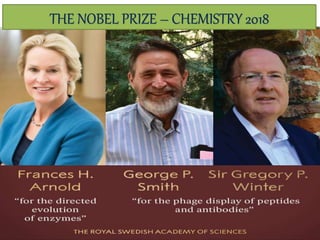
THE NOBEL PRIZE – CHEMISTRY 2018
Professor of Chemical Engineering,
Bioengineering and Biochemistry
at the California Institute of
Technology (Caltech).
Mechanical Engineer
Aerospace Engineer
Finally a Protein Engineer
Conducted the first directed
evolution of enzymes
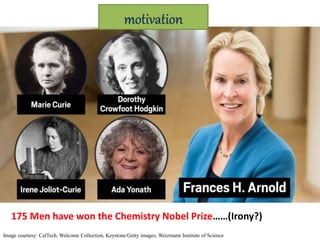
motivation
175 Men have won the Chemistry Nobel Prize……(Irony?)
Image courtesy: CalTech, Welcome Collection, Keystone/Getty images, Weizmann Institute of Science
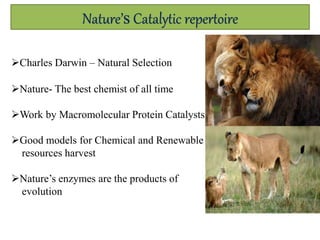
Nature’s Catalytic repertoire
May be after
billions of
years…..sad
Nature- The best chemist of all time
Work by Macromolecular Protein Catalysts
Good models for Chemical and Renewable
resources harvest
Nature’s enzymes are the products of
evolution
Charles Darwin – Natural Selection
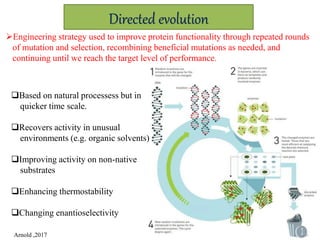
Directed evolution
Engineering strategy used to improve protein functionality through repeated rounds
of mutation and selection, recombining beneficial mutations as needed, and
continuing until we reach the target level of performance.
Based on natural processess but in
quicker time scale.
Recovers activity in unusual
environments (e.g. organic solvents)
Improving activity on non-native
substrates
Enhancing thermostability
Changing enantioselectivity
Arnold ,2017
Choice of starting state
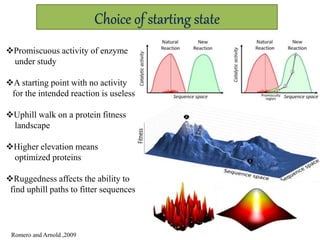
Promiscuous activity of enzyme
under study
A starting point with no activity
for the intended reaction is useless
Uphill walk on a protein fitness
landscape
Higher elevation means
optimized proteins
Ruggedness affects the ability to
find uphill paths to fitter sequences
Romero and Arnold ,2009
strategic methods in practice
"Asexual" Evolution by Sequential Rounds of Random Mutagenesis
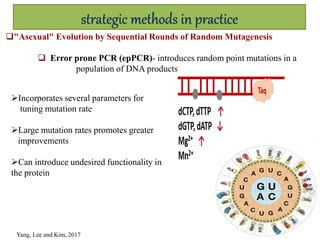
 Error prone PCR (epPCR)- introduces random point mutations in a
population of DNA products
Incorporates several parameters for
tuning mutation rate
Large mutation rates promotes greater
improvements
Can introduce undesired functionality in
the protein
Yang, Lee and Kim, 2017
“Sexual" Evolution by in vitro Recombination through DNA shuffling
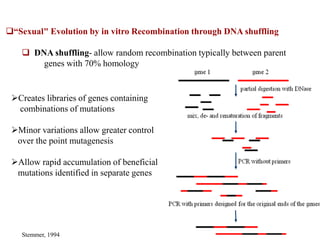
 DNA shuffling- allow random recombination typically between parent
genes with 70% homology
Creates libraries of genes containing
combinations of mutations
Minor variations allow greater control
over the point mutagenesis
Allow rapid accumulation of beneficial
mutations identified in separate genes
Stemmer, 1994
“Sexual" Evolution by in vitro Recombination through StEP
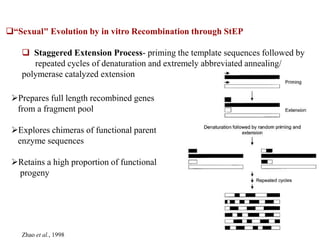
 Staggered Extension Process- priming the template sequences followed by
repeated cycles of denaturation and extremely abbreviated annealing/
polymerase catalyzed extension
Prepares full length recombined genes
from a fragment pool
Explores chimeras of functional parent
enzyme sequences
Retains a high proportion of functional
progeny
Zhao et al., 1998
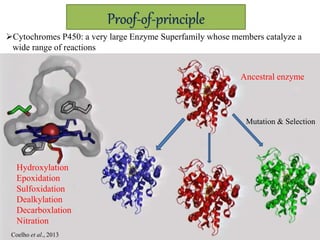
Proof-of-principle
Cytochromes P450: a very large Enzyme Superfamily whose members catalyze a
wide range of reactions
Ancestral enzyme
Mutation & Selection
Hydroxylation
Epoxidation
Sulfoxidation
Dealkylation
Decarboxlation
Nitration
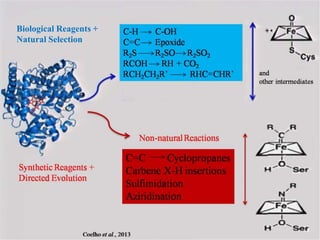
Coelho et al., 2013
Biological Reagents +
Natural Selection
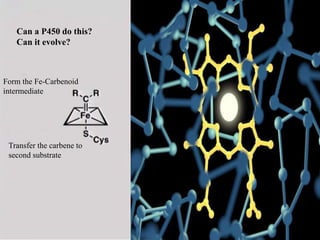
Can a P450 do this?
Can it evolve?
Form the Fe-Carbenoid
intermediate
Transfer the carbene to
second substrate
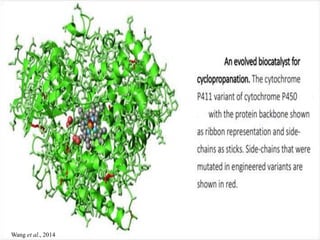
P450 BM3 268A 323 1:99 -99
Wang et al., 2014
applications
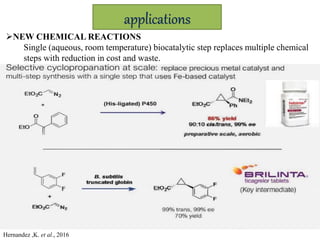
NEW CHEMICAL REACTIONS
Single (aqueous, room temperature) biocatalytic step replaces multiple chemical
steps with reduction in cost and waste.
Hernandez ,K. et al., 2016
applications
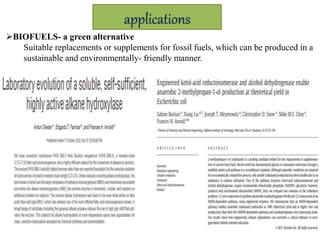
BIOFUELS- a green alternative
Suitable replacements or supplements for fossil fuels, which can be produced in a
sustainable and environmentally- friendly manner.
applications
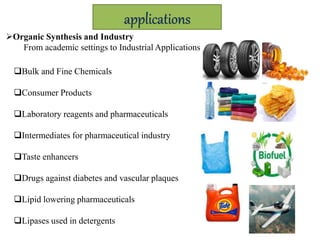
Organic Synthesis and Industry
From academic settings to Industrial Applications
Bulk and Fine Chemicals
Consumer Products
Laboratory reagents and pharmaceuticals
Intermediates for pharmaceutical industry
Taste enhancers
Drugs against diabetes and vascular plaques
Lipid lowering pharmaceuticals
Lipases used in detergents
Summary & outlook
Highly efficient protocol for development of biocatalysts with high specificity,
limited side reactions and tolerance of diverse reaction conditions.
Versatile path towards optimised enzymes and enzymes with novel functions.
Enzymes can be tuned to catalyse new reactions and to reactions very different
from the ones catalysed by nature’s own enzymes.
Ample room for optimisation and redirection of enzyme function in terms of
reactivity, substrate specificity and chemical reactions, as well as tolerance to
various reaction conditions.
 Instead of simply asking what enzymes do in nature, we can now ask the
question, “what CAN they do?”
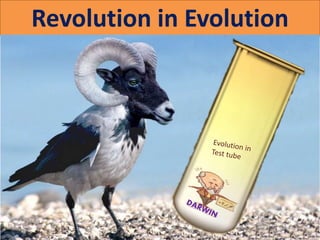
Revolution in Evolution
REFERENCES
 Arnold, F. (2017). Directed Evolution: Bringing New Chemistry to Life. Angewandte
Chemie International Edition, 57(16), pp.4143-4148.
Chen K, Arnold FH (1993) Tuning the activity of an enzyme for unusual environments:
sequential random mutagenesis of subtilisin E for catalysis in dimethylformamide. Proc
Natl Acad Sci U S A. 90:5618-5622.
Romero, P. and Arnold, F. (2009). Exploring protein fitness landscapes by directed
evolution. Nature Reviews Molecular Cell Biology, 10(12), pp.866-876.
 Yang, M., Lee, H. and Kim, H. (2017). Enhancement of thermostability of Bacillus subtilis
endoglucanase by error-prone PCR and DNA shuffling. Applied Biological Chemistry,
60(1), pp.73-78.
Stemmer WP (1994) DNA shuffling by random fragmentation and reassembly: in vitro
recombination for molecular evolution. Proc Natl Acad Sci U S A. 91:10747-10751.
Zhao H, Giver L, Shao Z, Affholter JA, Arnold FH (1998) Molecular evolution by
staggered extension process (StEP) in vitro recombination. Nat Biotechnol 16:258-61.
Coelho PS, Brustad EM, Kannan A, Arnold FH (2013) Olefin cyclopropanation via carbene
transfer catalyzed by engineered cytochrome P450 enzymes. Science 339:307-310.
Glieder A, Farinas ET, Arnold FH (2002) Laboratory evolution of a soluble, self-sufficient,
highly active alkane hydroxylase. Nature Biotech 20:1135–1139.
McIntosh JA, Coelho PS, Farwell CC, Wang ZJ, Lewis JC, Brown TR, Arnold FH (2013)
Enantioselective intramolecular C-H amination catalyzed by engineered cytochrome P450
enzymes in vitro and in vivo. Angew Chem Int Ed Engl 52:9309-9312.

Directed evolution of enzymes

  • 1.
    DIRECTED EVOLUTION OFENZYMES PRESENTED BY: DEEPANKER BISHT P-2145 VETERINARY BIOTECHNOLOGY DIVISION
  • 2.
  • 3.
    THE NOBEL PRIZE– CHEMISTRY 2018
  • 4.
    Professor of ChemicalEngineering, Bioengineering and Biochemistry at the California Institute of Technology (Caltech). Mechanical Engineer Aerospace Engineer Finally a Protein Engineer Conducted the first directed evolution of enzymes motivation 175 Men have won the Chemistry Nobel Prize……(Irony?) Image courtesy: CalTech, Welcome Collection, Keystone/Getty images, Weizmann Institute of Science
  • 5.
    Nature’s Catalytic repertoire Maybe after billions of years…..sad Nature- The best chemist of all time Work by Macromolecular Protein Catalysts Good models for Chemical and Renewable resources harvest Nature’s enzymes are the products of evolution Charles Darwin – Natural Selection
  • 7.
    Directed evolution Engineering strategyused to improve protein functionality through repeated rounds of mutation and selection, recombining beneficial mutations as needed, and continuing until we reach the target level of performance. Based on natural processess but in quicker time scale. Recovers activity in unusual environments (e.g. organic solvents) Improving activity on non-native substrates Enhancing thermostability Changing enantioselectivity Arnold ,2017
  • 8.
    Choice of startingstate Promiscuous activity of enzyme under study A starting point with no activity for the intended reaction is useless Uphill walk on a protein fitness landscape Higher elevation means optimized proteins Ruggedness affects the ability to find uphill paths to fitter sequences Romero and Arnold ,2009
  • 9.
    strategic methods inpractice "Asexual" Evolution by Sequential Rounds of Random Mutagenesis  Error prone PCR (epPCR)- introduces random point mutations in a population of DNA products Incorporates several parameters for tuning mutation rate Large mutation rates promotes greater improvements Can introduce undesired functionality in the protein Yang, Lee and Kim, 2017
  • 10.
    “Sexual" Evolution byin vitro Recombination through DNA shuffling  DNA shuffling- allow random recombination typically between parent genes with 70% homology Creates libraries of genes containing combinations of mutations Minor variations allow greater control over the point mutagenesis Allow rapid accumulation of beneficial mutations identified in separate genes Stemmer, 1994
  • 11.
    “Sexual" Evolution byin vitro Recombination through StEP  Staggered Extension Process- priming the template sequences followed by repeated cycles of denaturation and extremely abbreviated annealing/ polymerase catalyzed extension Prepares full length recombined genes from a fragment pool Explores chimeras of functional parent enzyme sequences Retains a high proportion of functional progeny Zhao et al., 1998
  • 12.
    Proof-of-principle Cytochromes P450: avery large Enzyme Superfamily whose members catalyze a wide range of reactions Ancestral enzyme Mutation & Selection Hydroxylation Epoxidation Sulfoxidation Dealkylation Decarboxlation Nitration Coelho et al., 2013
  • 13.
  • 14.
    Can a P450do this? Can it evolve? Form the Fe-Carbenoid intermediate Transfer the carbene to second substrate
  • 15.
    P450 BM3 268A323 1:99 -99 Wang et al., 2014
  • 16.
    applications NEW CHEMICAL REACTIONS Single(aqueous, room temperature) biocatalytic step replaces multiple chemical steps with reduction in cost and waste. Hernandez ,K. et al., 2016
  • 17.
    applications BIOFUELS- a greenalternative Suitable replacements or supplements for fossil fuels, which can be produced in a sustainable and environmentally- friendly manner.
  • 18.
    applications Organic Synthesis andIndustry From academic settings to Industrial Applications Bulk and Fine Chemicals Consumer Products Laboratory reagents and pharmaceuticals Intermediates for pharmaceutical industry Taste enhancers Drugs against diabetes and vascular plaques Lipid lowering pharmaceuticals Lipases used in detergents
  • 19.
    Summary & outlook Highlyefficient protocol for development of biocatalysts with high specificity, limited side reactions and tolerance of diverse reaction conditions. Versatile path towards optimised enzymes and enzymes with novel functions. Enzymes can be tuned to catalyse new reactions and to reactions very different from the ones catalysed by nature’s own enzymes. Ample room for optimisation and redirection of enzyme function in terms of reactivity, substrate specificity and chemical reactions, as well as tolerance to various reaction conditions.  Instead of simply asking what enzymes do in nature, we can now ask the question, “what CAN they do?”
  • 20.
  • 21.
    REFERENCES  Arnold, F.(2017). Directed Evolution: Bringing New Chemistry to Life. Angewandte Chemie International Edition, 57(16), pp.4143-4148. Chen K, Arnold FH (1993) Tuning the activity of an enzyme for unusual environments: sequential random mutagenesis of subtilisin E for catalysis in dimethylformamide. Proc Natl Acad Sci U S A. 90:5618-5622. Romero, P. and Arnold, F. (2009). Exploring protein fitness landscapes by directed evolution. Nature Reviews Molecular Cell Biology, 10(12), pp.866-876.  Yang, M., Lee, H. and Kim, H. (2017). Enhancement of thermostability of Bacillus subtilis endoglucanase by error-prone PCR and DNA shuffling. Applied Biological Chemistry, 60(1), pp.73-78. Stemmer WP (1994) DNA shuffling by random fragmentation and reassembly: in vitro recombination for molecular evolution. Proc Natl Acad Sci U S A. 91:10747-10751. Zhao H, Giver L, Shao Z, Affholter JA, Arnold FH (1998) Molecular evolution by staggered extension process (StEP) in vitro recombination. Nat Biotechnol 16:258-61. Coelho PS, Brustad EM, Kannan A, Arnold FH (2013) Olefin cyclopropanation via carbene transfer catalyzed by engineered cytochrome P450 enzymes. Science 339:307-310. Glieder A, Farinas ET, Arnold FH (2002) Laboratory evolution of a soluble, self-sufficient, highly active alkane hydroxylase. Nature Biotech 20:1135–1139. McIntosh JA, Coelho PS, Farwell CC, Wang ZJ, Lewis JC, Brown TR, Arnold FH (2013) Enantioselective intramolecular C-H amination catalyzed by engineered cytochrome P450 enzymes in vitro and in vivo. Angew Chem Int Ed Engl 52:9309-9312.