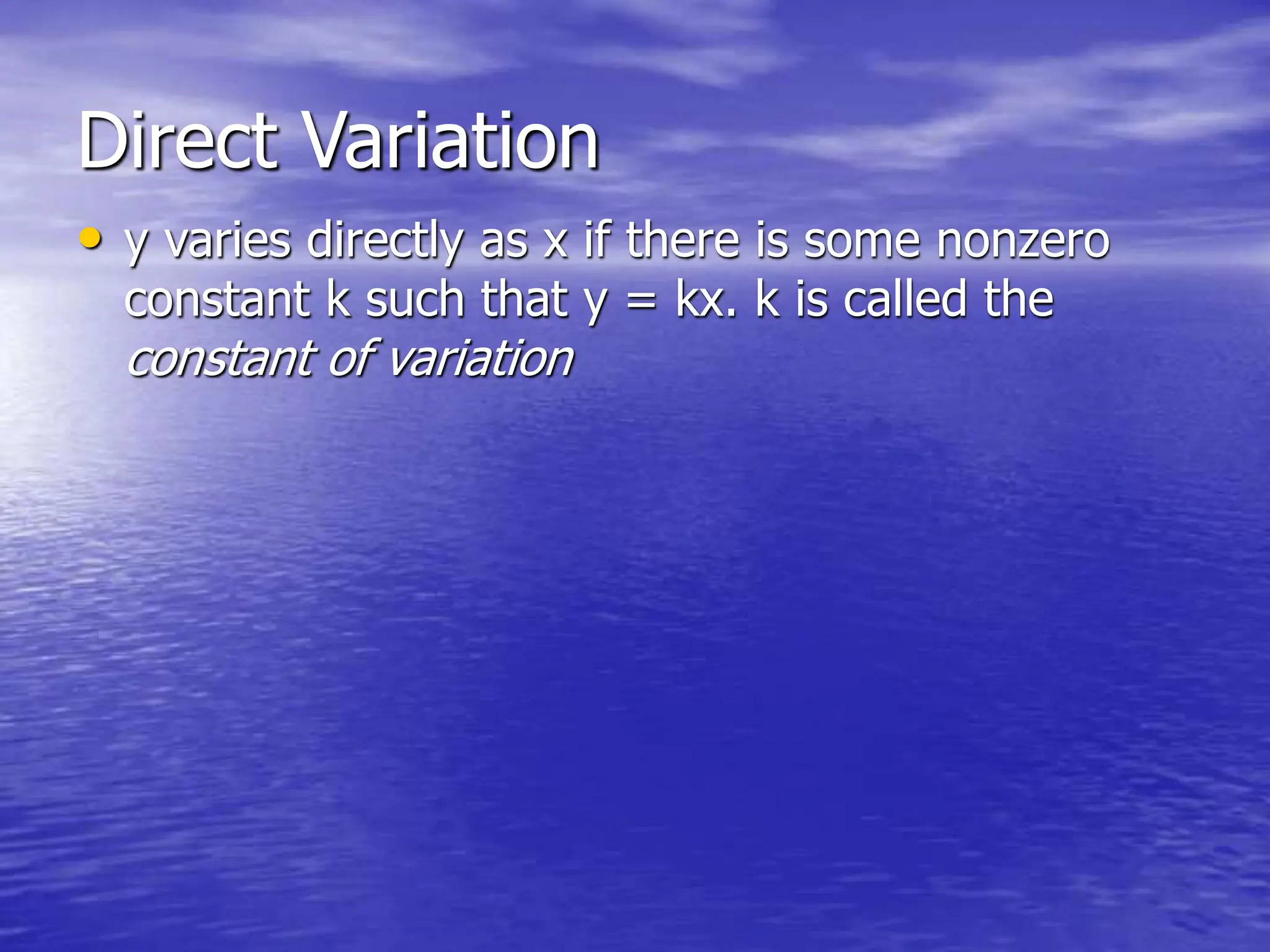
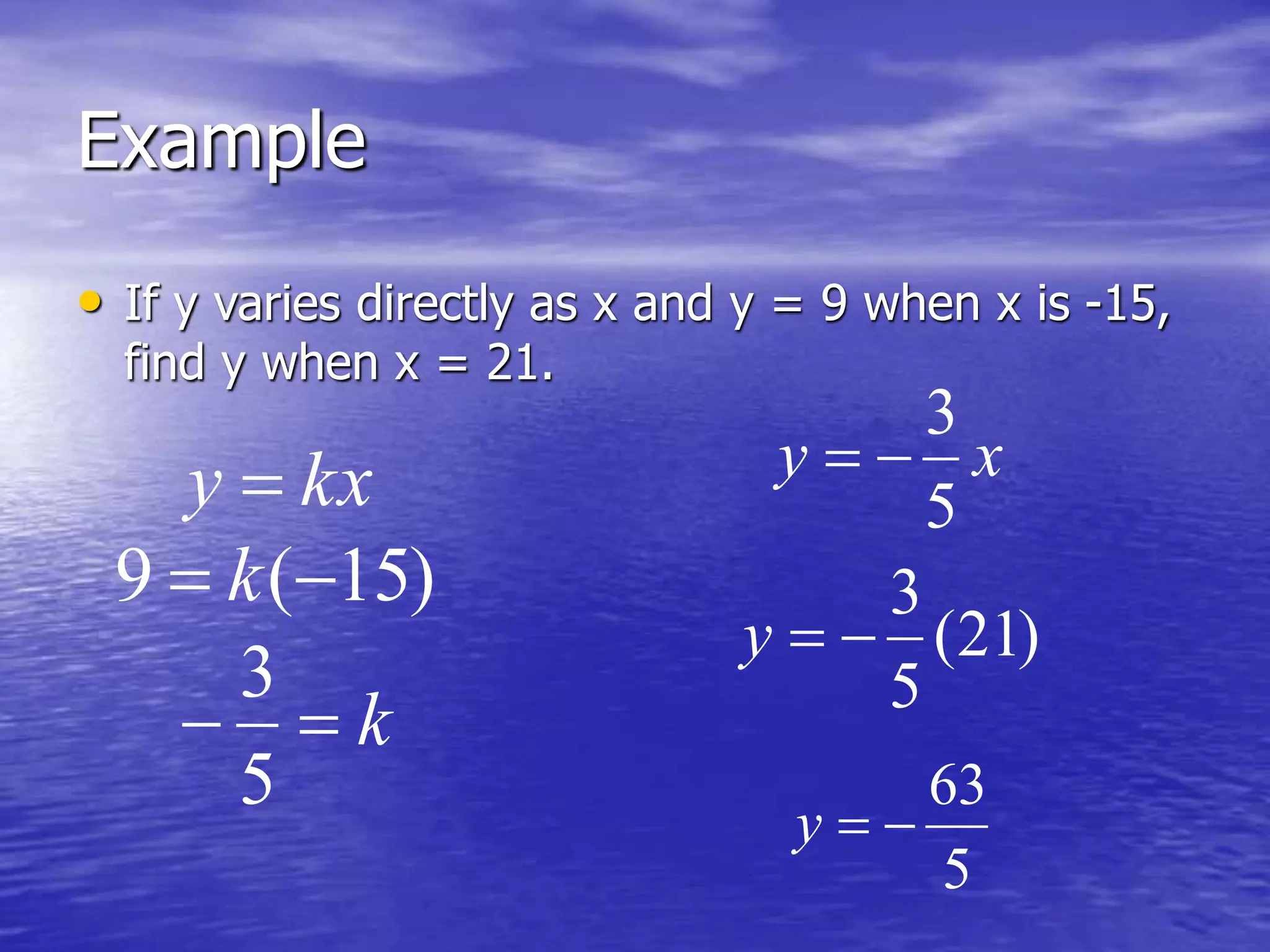
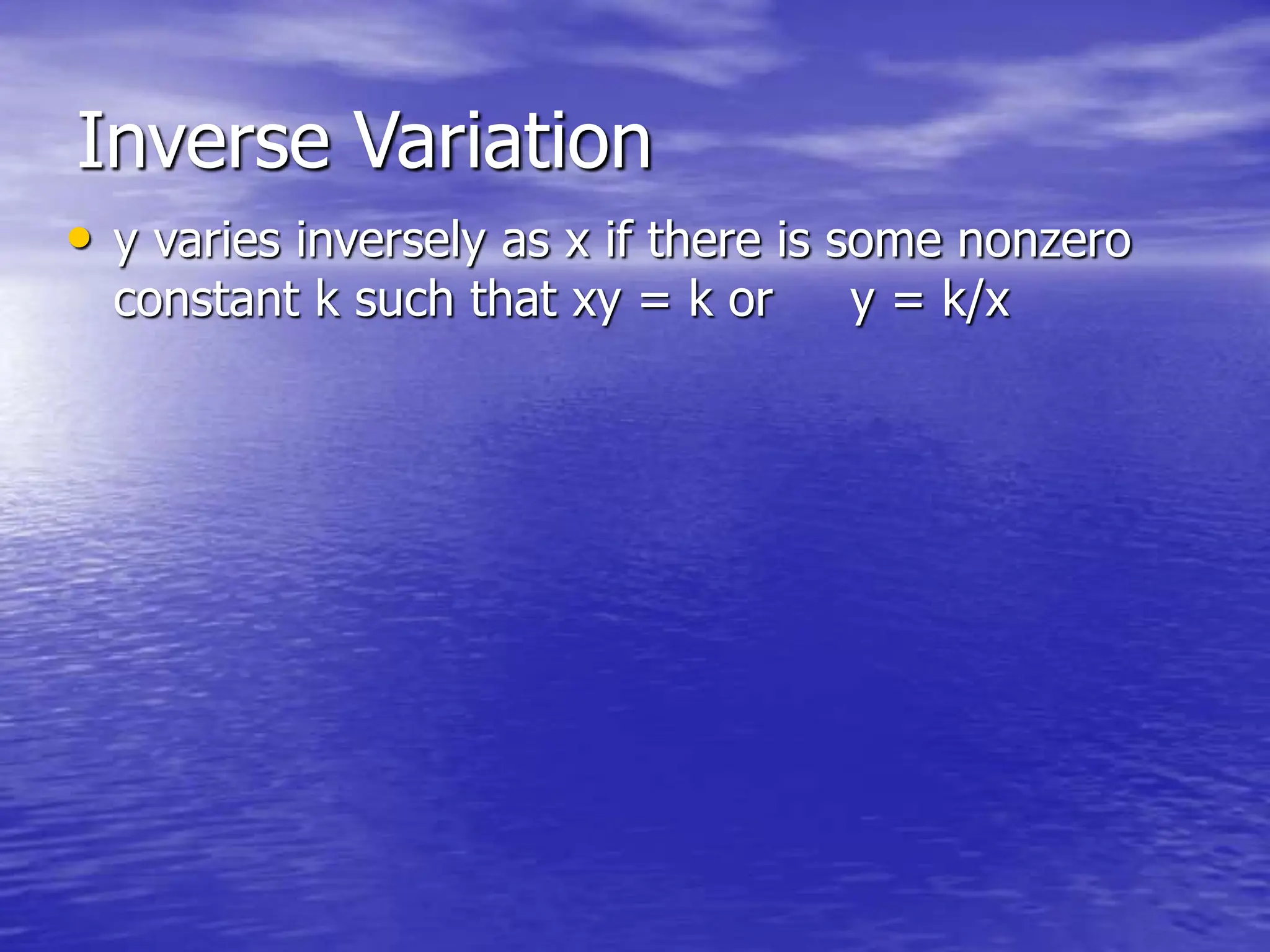
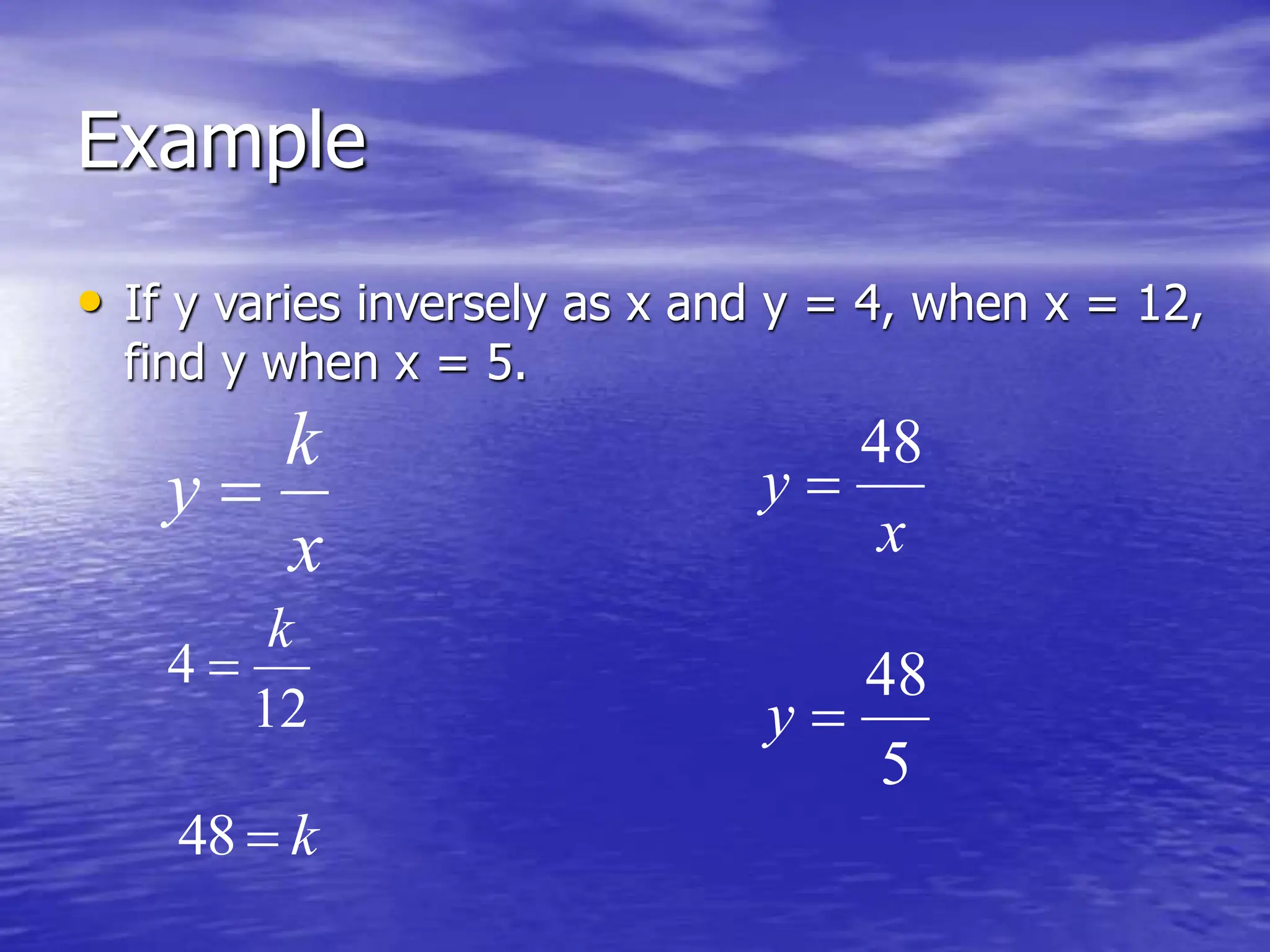
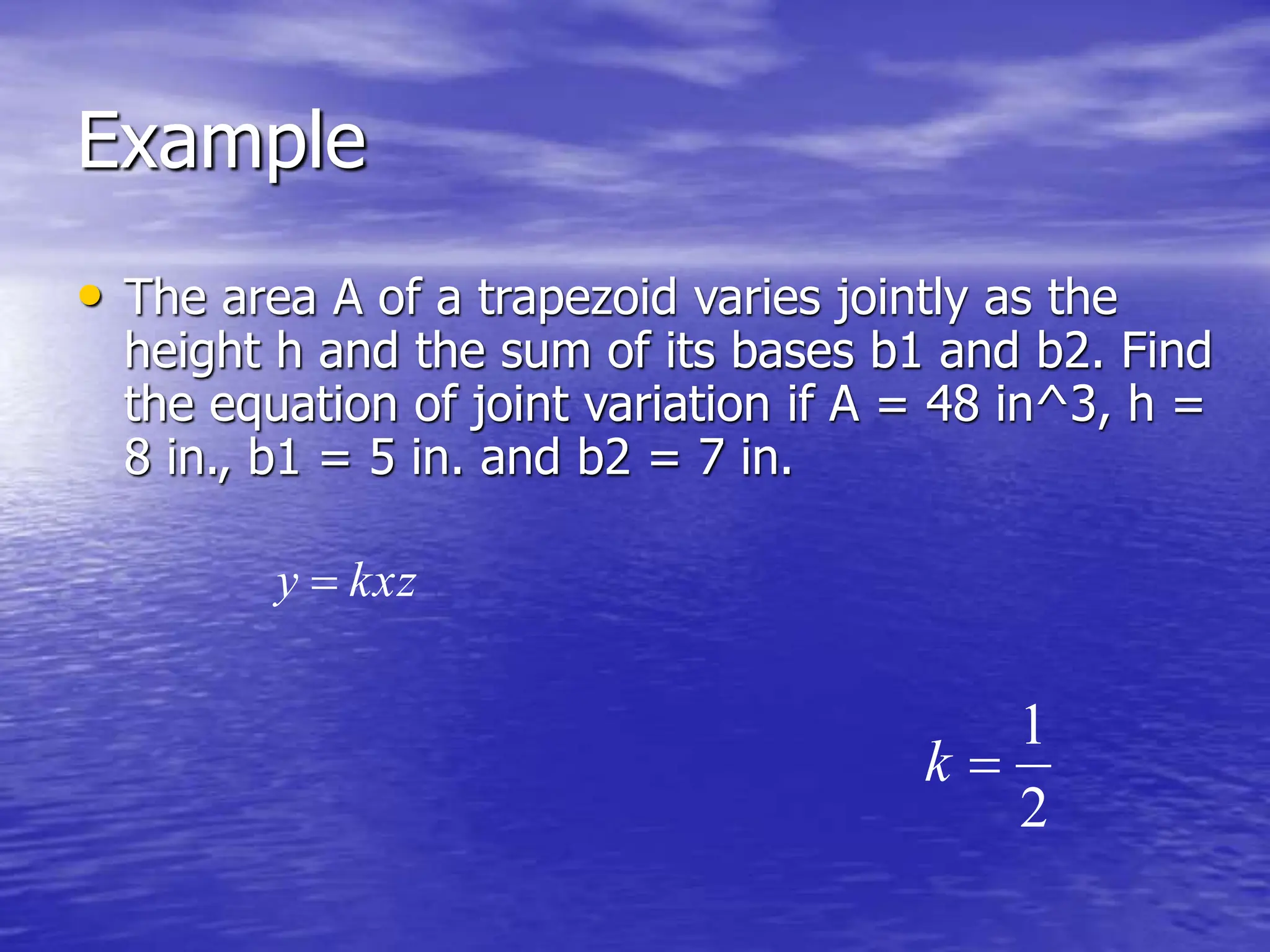
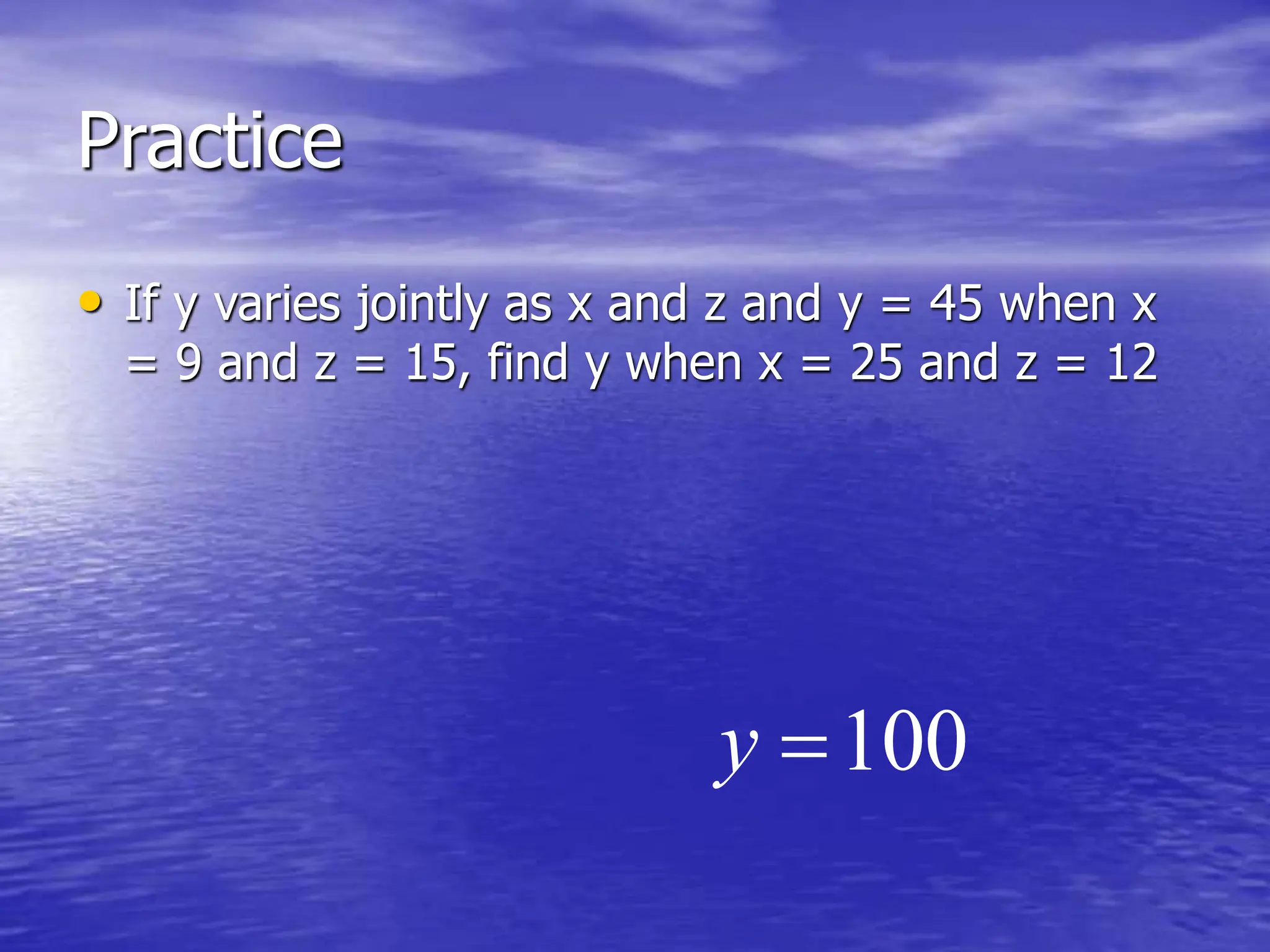
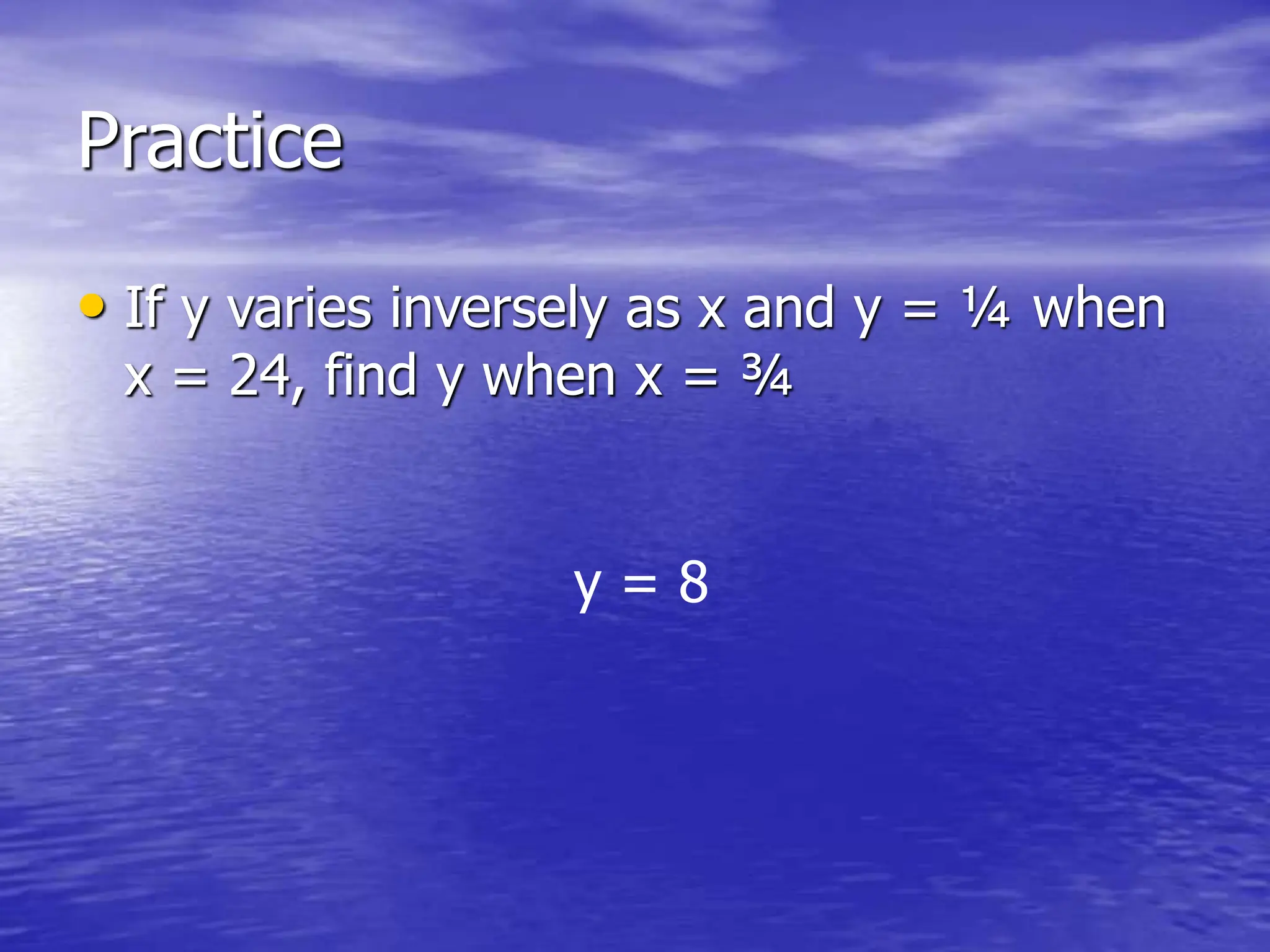
Direct, inverse, and joint variation are types of proportional relationships between two or more variables. Direct variation means one variable (y) varies directly with another (x) in the form of y=kx, where k is the constant of variation. Inverse variation means y varies inversely with x in the form of y=k/x. Joint variation means y varies jointly with two or more variables, like x and z, in the form of y=kxz. Examples are provided to demonstrate calculating values for each type of variation relationship given information about the variables.