Developing the Digital Practitioner 
image from wikicommons licensed under the Creative Commons Attribution 2.0 Generic license 
University of Stirling
Developing the Digital Practitioner 2 
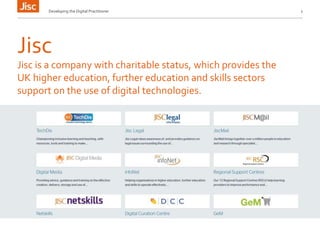
Jisc 
Jisc is a company with charitable status, which provides the 
UK higher education, further education and skills sectors 
support on the use of digital technologies.
Developing the Digital Practitioner 3 
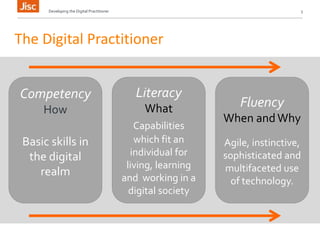
Competency 
How 
Basic skills in 
the digital 
realm 
Literacy 
What 
Capabilities 
which fit an 
individual for 
living, learning 
and working in a 
digital society 
Fluency 
When and Why 
Agile, instinctive, 
sophisticated and 
multifaceted use 
of technology. 
The Digital Practitioner
Developing the Digital Practitioner 4 
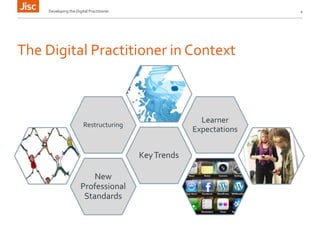
The Digital Practitioner in Context 
New 
Professional 
Standards 
Key Trends 
Restructuring 
Learner 
Expectations
Developing the Digital Practitioner 5 
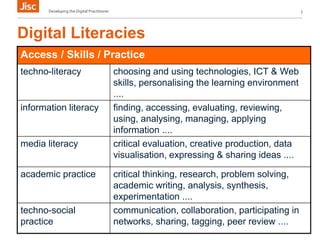
Digital Literacies 
Access / Skills / Practice 
techno-literacy choosing and using technologies, ICT & Web 
skills, personalising the learning environment 
.... 
information literacy finding, accessing, evaluating, reviewing, 
using, analysing, managing, applying 
information .... 
media literacy critical evaluation, creative production, data 
visualisation, expressing & sharing ideas .... 
academic practice critical thinking, research, problem solving, 
academic writing, analysis, synthesis, 
experimentation .... 
techno-social 
practice 
communication, collaboration, participating in 
networks, sharing, tagging, peer review ....
Developing the Digital Practitioner 6 
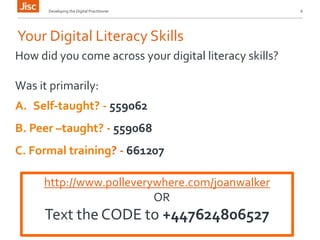
Your Digital Literacy Skills 
How did you come across your digital literacy skills? 
Was it primarily: 
A. Self-taught? - 559062 
B. Peer –taught? - 559068 
C. Formal training? - 661207 
http://www.polleverywhere.com/joanwalker 
OR 
Text the CODE to +447624806527
Developing the Digital Practitioner 7 
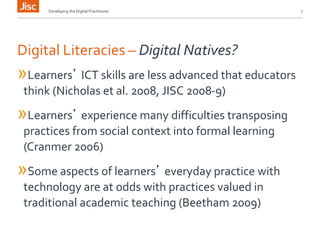
Digital Literacies – Digital Natives? 
»Learners’ ICT skills are less advanced that educators 
think (Nicholas et al. 2008, JISC 2008-9) 
»Learners’ experience many difficulties transposing 
practices from social context into formal learning 
(Cranmer 2006) 
»Some aspects of learners’ everyday practice with 
technology are at odds with practices valued in 
traditional academic teaching (Beetham 2009)
Developing the Digital Practitioner 8 
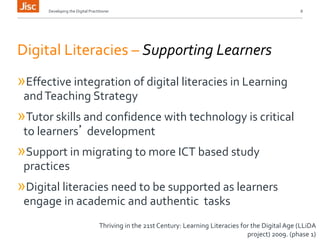
Digital Literacies – Supporting Learners 
»Effective integration of digital literacies in Learning 
and Teaching Strategy 
»Tutor skills and confidence with technology is critical 
to learners’ development 
»Support in migrating to more ICT based study 
practices 
»Digital literacies need to be supported as learners 
engage in academic and authentic tasks 
Thriving in the 21st Century: Learning Literacies for the Digital Age (LLiDA 
project) 2009. (phase 1)
Developing the Digital Practitioner 
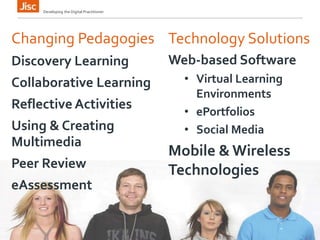
Changing Pedagogies 
Discovery Learning 
Collaborative Learning 
Reflective Activities 
Using & Creating 
Multimedia 
Peer Review 
eAssessment 
Technology Solutions 
Web-based Software 
• Virtual Learning 
Environments 
• ePortfolios 
• Social Media 
Mobile & Wireless 
Technologies
Developing the Digital Practitioner 10 
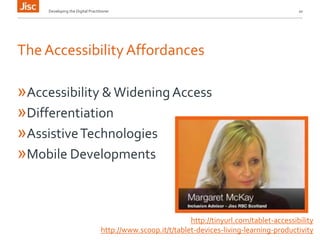
The Accessibility Affordances 
»Accessibility & Widening Access 
»Differentiation 
»Assistive Technologies 
»Mobile Developments 
http://tinyurl.com/tablet-accessibility 
http://www.scoop.it/t/tablet-devices-living-learning-productivity
Developing the Digital Practitioner 
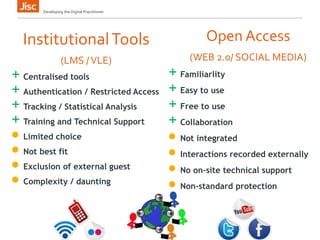
Institutional Tools 
(LMS / VLE) 
+ Centralised tools 
+ Authentication / Restricted Access 
+ Tracking / Statistical Analysis 
+ Training and Technical Support 
 Limited choice 
 Not best fit 
 Exclusion of external guest 
 Complexity / daunting 
Open Access 
(WEB 2.0/ SOCIAL MEDIA) 
+ Familiarlity 
+ Easy to use 
+ Free to use 
+ Collaboration 
 Not integrated 
 Interactions recorded externally 
 No on-site technical support 
 Non-standard protection
Developing the Digital Practitioner 12 
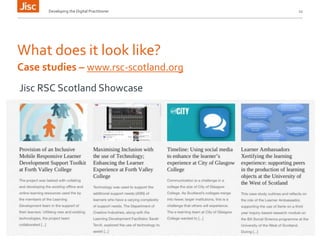
What does it look like? 
Case studies – www.rsc-scotland.org 
Jisc RSC Scotland Showcase
Developing the Digital Practitioner 13 
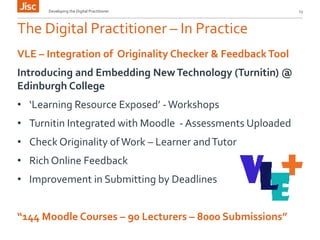
The Digital Practitioner – In Practice 
VLE – Integration of Originality Checker & Feedback Tool 
Introducing and Embedding New Technology (Turnitin) @ 
Edinburgh College 
• ‘Learning Resource Exposed’ -Workshops 
• Turnitin Integrated with Moodle - Assessments Uploaded 
• Check Originality of Work – Learner and Tutor 
• Rich Online Feedback 
• Improvement in Submitting by Deadlines 
“144 Moodle Courses – 90 Lecturers – 8000 Submissions”
Developing the Digital Practitioner 14 
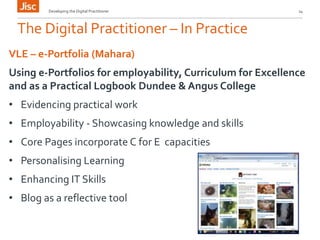
The Digital Practitioner – In Practice 
VLE – e-Portfolia (Mahara) 
Using e-Portfolios for employability, Curriculum for Excellence 
and as a Practical Logbook Dundee & Angus College 
• Evidencing practical work 
• Employability - Showcasing knowledge and skills 
• Core Pages incorporate C for E capacities 
• Personalising Learning 
• Enhancing IT Skills 
• Blog as a reflective tool
Developing the Digital Practitioner 15 
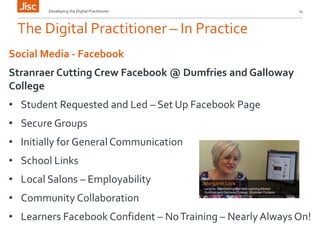
The Digital Practitioner – In Practice 
Social Media - Facebook 
Stranraer Cutting Crew Facebook @ Dumfries and Galloway 
College 
• Student Requested and Led – Set Up Facebook Page 
• Secure Groups 
• Initially for General Communication 
• School Links 
• Local Salons – Employability 
• Community Collaboration 
• Learners Facebook Confident – No Training – Nearly Always On!
Developing the Digital Practitioner 16 
Today’s resources 
Case studies – www.rsc-scotland.org 
Tablet Accessibility - http://tinyurl.com/tablet-accessibility 
Scoop-it - http://www.scoop.it/t/tablet-devices-living-learning- 
productivity 
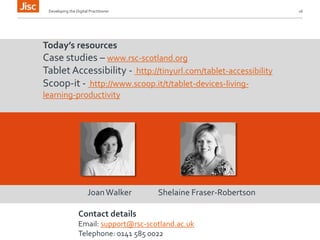
Joan Walker Shelaine Fraser-Robertson 
Contact details 
Email: support@rsc-scotland.ac.uk 
Telephone: 0141 585 0022

Digital practitioner university stirling

  • 1.
    Developing the DigitalPractitioner image from wikicommons licensed under the Creative Commons Attribution 2.0 Generic license University of Stirling
  • 2.
    Developing the DigitalPractitioner 2 Jisc Jisc is a company with charitable status, which provides the UK higher education, further education and skills sectors support on the use of digital technologies.
  • 3.
    Developing the DigitalPractitioner 3 Competency How Basic skills in the digital realm Literacy What Capabilities which fit an individual for living, learning and working in a digital society Fluency When and Why Agile, instinctive, sophisticated and multifaceted use of technology. The Digital Practitioner
  • 4.
    Developing the DigitalPractitioner 4 The Digital Practitioner in Context New Professional Standards Key Trends Restructuring Learner Expectations
  • 5.
    Developing the DigitalPractitioner 5 Digital Literacies Access / Skills / Practice techno-literacy choosing and using technologies, ICT & Web skills, personalising the learning environment .... information literacy finding, accessing, evaluating, reviewing, using, analysing, managing, applying information .... media literacy critical evaluation, creative production, data visualisation, expressing & sharing ideas .... academic practice critical thinking, research, problem solving, academic writing, analysis, synthesis, experimentation .... techno-social practice communication, collaboration, participating in networks, sharing, tagging, peer review ....
  • 6.
    Developing the DigitalPractitioner 6 Your Digital Literacy Skills How did you come across your digital literacy skills? Was it primarily: A. Self-taught? - 559062 B. Peer –taught? - 559068 C. Formal training? - 661207 http://www.polleverywhere.com/joanwalker OR Text the CODE to +447624806527
  • 7.
    Developing the DigitalPractitioner 7 Digital Literacies – Digital Natives? »Learners’ ICT skills are less advanced that educators think (Nicholas et al. 2008, JISC 2008-9) »Learners’ experience many difficulties transposing practices from social context into formal learning (Cranmer 2006) »Some aspects of learners’ everyday practice with technology are at odds with practices valued in traditional academic teaching (Beetham 2009)
  • 8.
    Developing the DigitalPractitioner 8 Digital Literacies – Supporting Learners »Effective integration of digital literacies in Learning and Teaching Strategy »Tutor skills and confidence with technology is critical to learners’ development »Support in migrating to more ICT based study practices »Digital literacies need to be supported as learners engage in academic and authentic tasks Thriving in the 21st Century: Learning Literacies for the Digital Age (LLiDA project) 2009. (phase 1)
  • 9.
    Developing the DigitalPractitioner Changing Pedagogies Discovery Learning Collaborative Learning Reflective Activities Using & Creating Multimedia Peer Review eAssessment Technology Solutions Web-based Software • Virtual Learning Environments • ePortfolios • Social Media Mobile & Wireless Technologies
  • 10.
    Developing the DigitalPractitioner 10 The Accessibility Affordances »Accessibility & Widening Access »Differentiation »Assistive Technologies »Mobile Developments http://tinyurl.com/tablet-accessibility http://www.scoop.it/t/tablet-devices-living-learning-productivity
  • 11.
    Developing the DigitalPractitioner Institutional Tools (LMS / VLE) + Centralised tools + Authentication / Restricted Access + Tracking / Statistical Analysis + Training and Technical Support  Limited choice  Not best fit  Exclusion of external guest  Complexity / daunting Open Access (WEB 2.0/ SOCIAL MEDIA) + Familiarlity + Easy to use + Free to use + Collaboration  Not integrated  Interactions recorded externally  No on-site technical support  Non-standard protection
  • 12.
    Developing the DigitalPractitioner 12 What does it look like? Case studies – www.rsc-scotland.org Jisc RSC Scotland Showcase
  • 13.
    Developing the DigitalPractitioner 13 The Digital Practitioner – In Practice VLE – Integration of Originality Checker & Feedback Tool Introducing and Embedding New Technology (Turnitin) @ Edinburgh College • ‘Learning Resource Exposed’ -Workshops • Turnitin Integrated with Moodle - Assessments Uploaded • Check Originality of Work – Learner and Tutor • Rich Online Feedback • Improvement in Submitting by Deadlines “144 Moodle Courses – 90 Lecturers – 8000 Submissions”
  • 14.
    Developing the DigitalPractitioner 14 The Digital Practitioner – In Practice VLE – e-Portfolia (Mahara) Using e-Portfolios for employability, Curriculum for Excellence and as a Practical Logbook Dundee & Angus College • Evidencing practical work • Employability - Showcasing knowledge and skills • Core Pages incorporate C for E capacities • Personalising Learning • Enhancing IT Skills • Blog as a reflective tool
  • 15.
    Developing the DigitalPractitioner 15 The Digital Practitioner – In Practice Social Media - Facebook Stranraer Cutting Crew Facebook @ Dumfries and Galloway College • Student Requested and Led – Set Up Facebook Page • Secure Groups • Initially for General Communication • School Links • Local Salons – Employability • Community Collaboration • Learners Facebook Confident – No Training – Nearly Always On!
  • 16.
    Developing the DigitalPractitioner 16 Today’s resources Case studies – www.rsc-scotland.org Tablet Accessibility - http://tinyurl.com/tablet-accessibility Scoop-it - http://www.scoop.it/t/tablet-devices-living-learning- productivity Joan Walker Shelaine Fraser-Robertson Contact details Email: support@rsc-scotland.ac.uk Telephone: 0141 585 0022