Human Digestive System
•Digestion is the process of breaking down large
food molecules into smaller soluble molecules that
can be readily absorbed by the body.
•Digestion occurs in an eight – metre long tube
called the gut or alimentary canal.
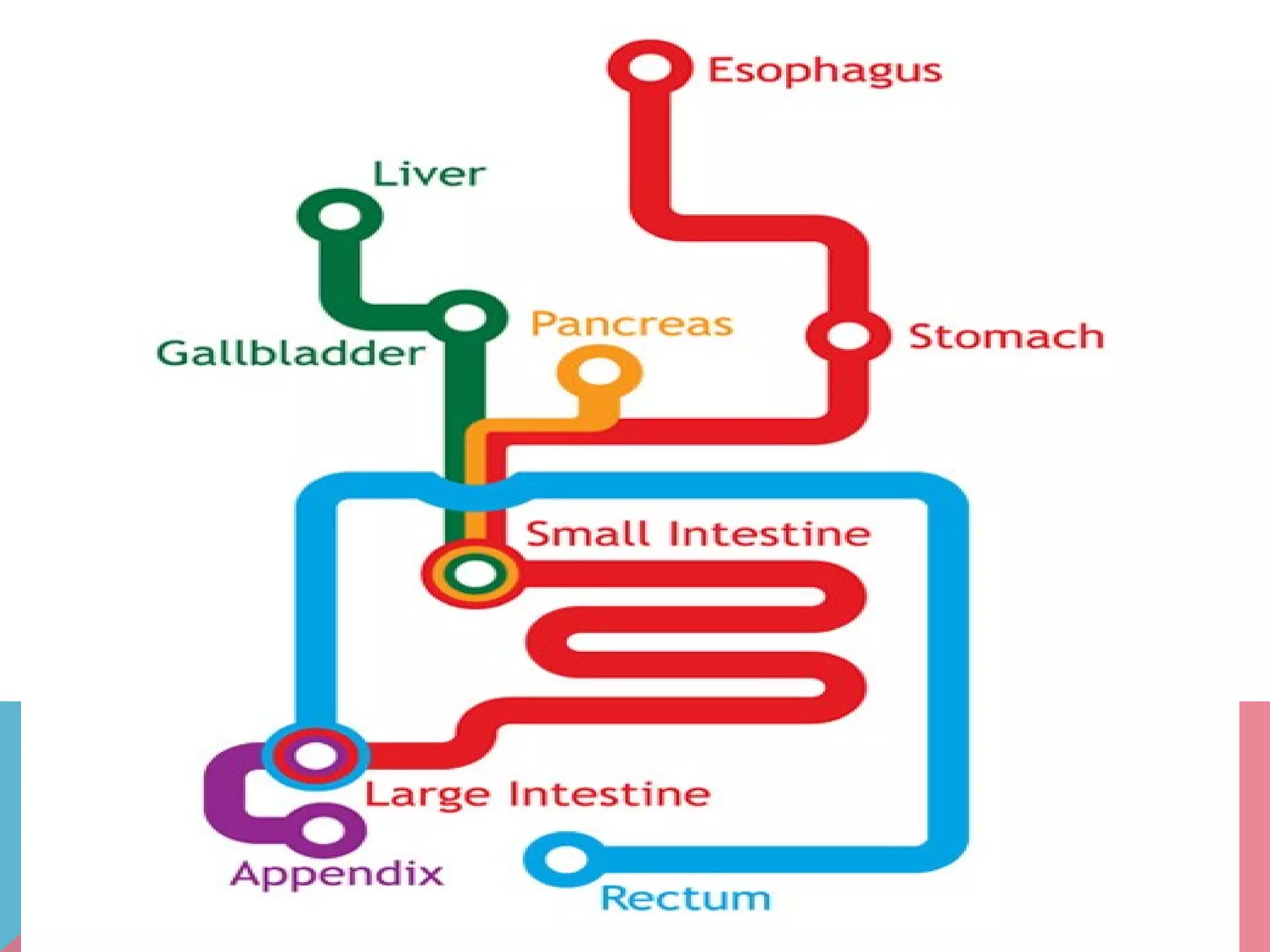
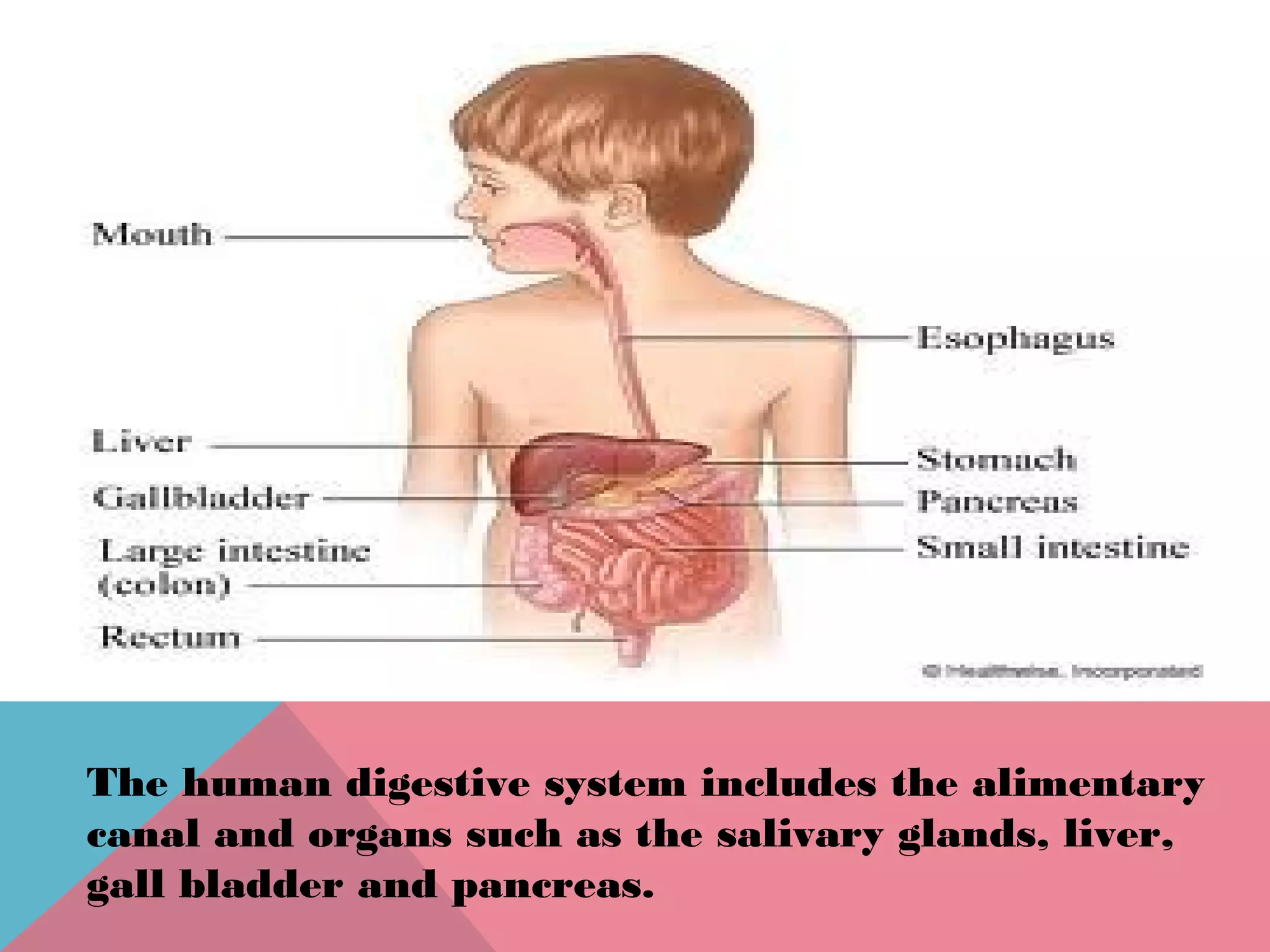
The human digestive system includes the alimentary
canal and organs such as the salivary glands, liver,
gall bladder and pancreas.
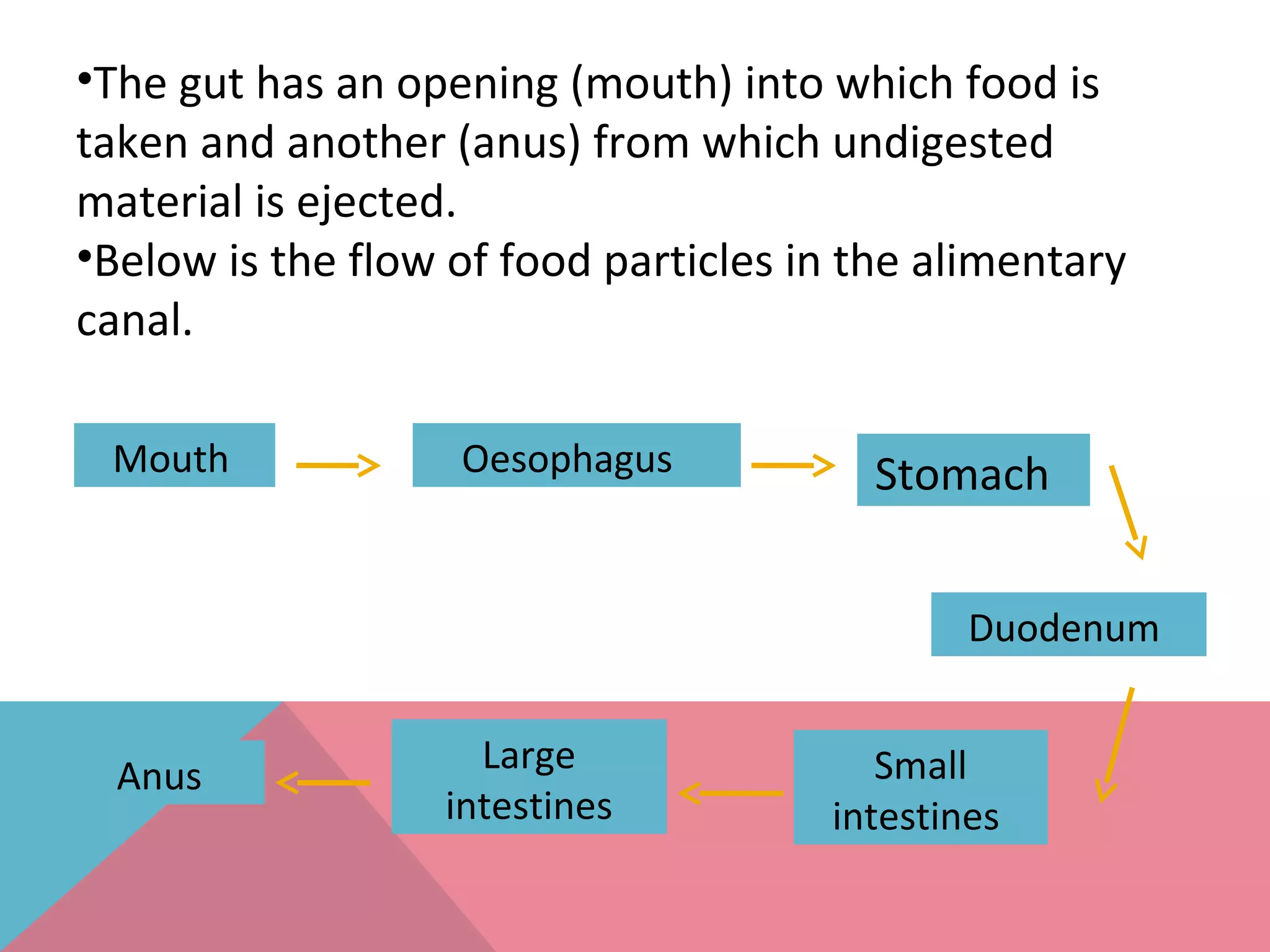
•The gut has an opening (mouth) into which food is
taken and another (anus) from which undigested
material is ejected.
•Below is the flow of food particles in the alimentary
canal.
Mouth Oesophagus Stomach
Anus
Large
intestines
Small
intestines
Duodenum
•There are two types of digestion – physical digestion and
chemical digestion.
•Physical digestion is the mechanical breakdown of
food by the chewing action of the teeth and the
churning action of the stomach.
•Chemical digestion involves the use of enzymes to break
down food substances.
•Enzymes are protein substances which act as catalysts
and generally speed up the chemical reactions in our
body. Enzymes that break down food substances in the
gut are called digestive enzymes.
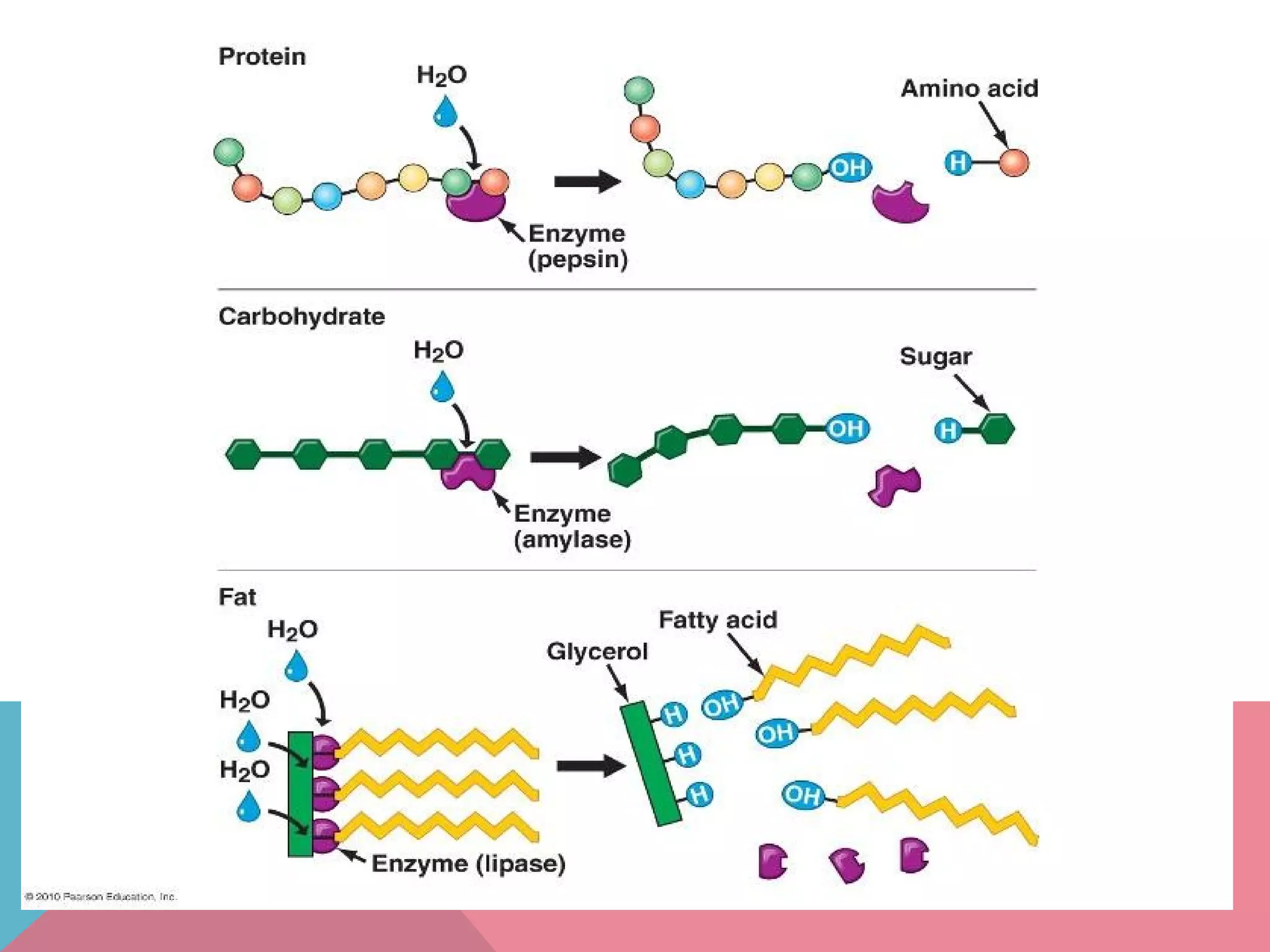
There are three main types of digestive enzymes.
a.Carbohydrates – break down carbohydrates
b.Proteases – break down proteins
c.Lipases – break down fats and oils.
Process of Digestion
•Digestion in the mouth
a.Food is broken down into smaller pieces by the teeth.
b.At the same time, food is mixes with saliva from the
salivary glands.
c.Saliva contains salivary amylase (a kind of
carbohydrates) which catalyses the breaking down of
starch into maltose ( a kind of sugar)
•Swallowing and peristalsis
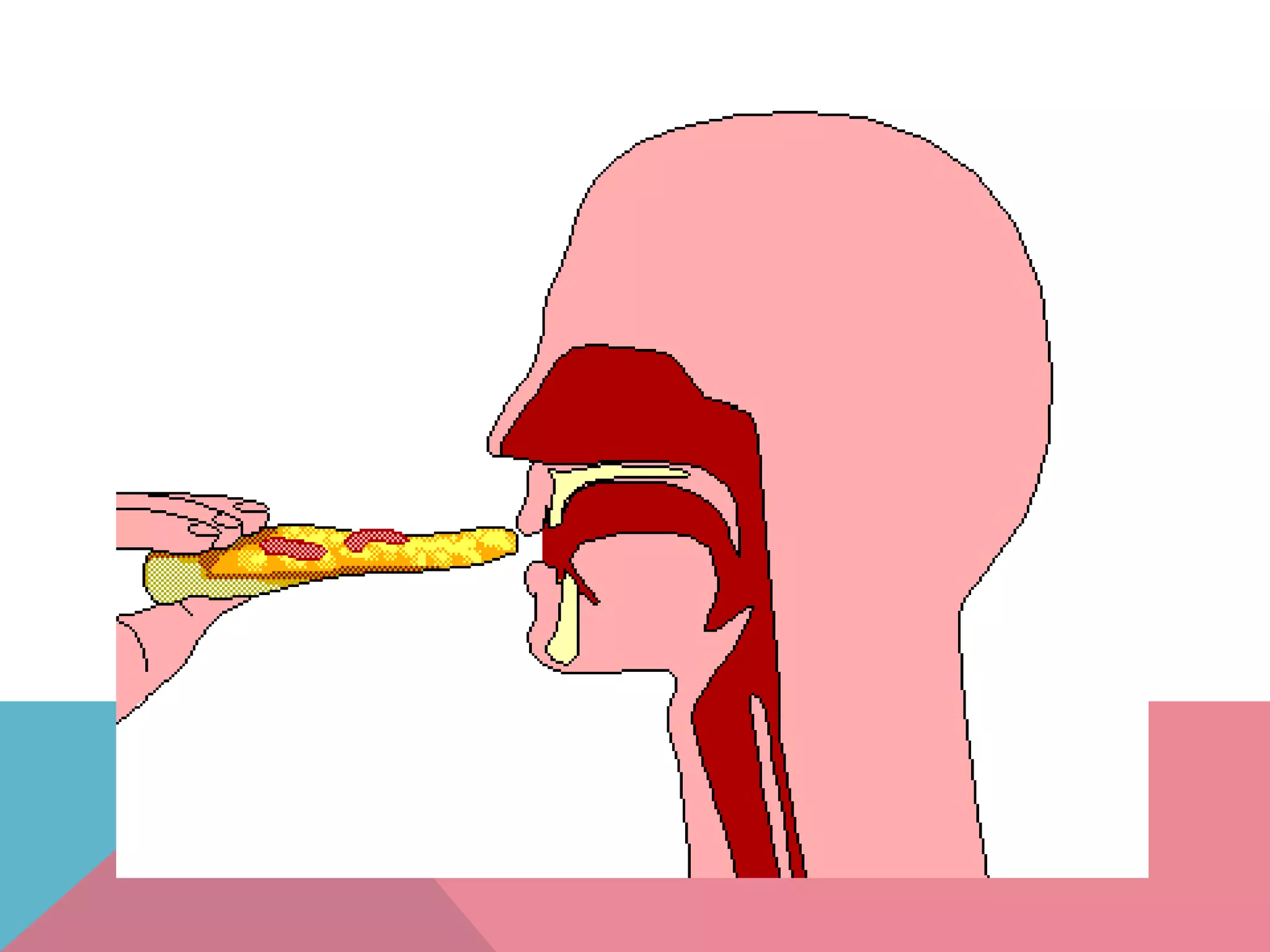
a.Our tongue shapes the food into a round lump called
bolus before it is swallowed.
b.The bolus is swallowed down the oesophagus
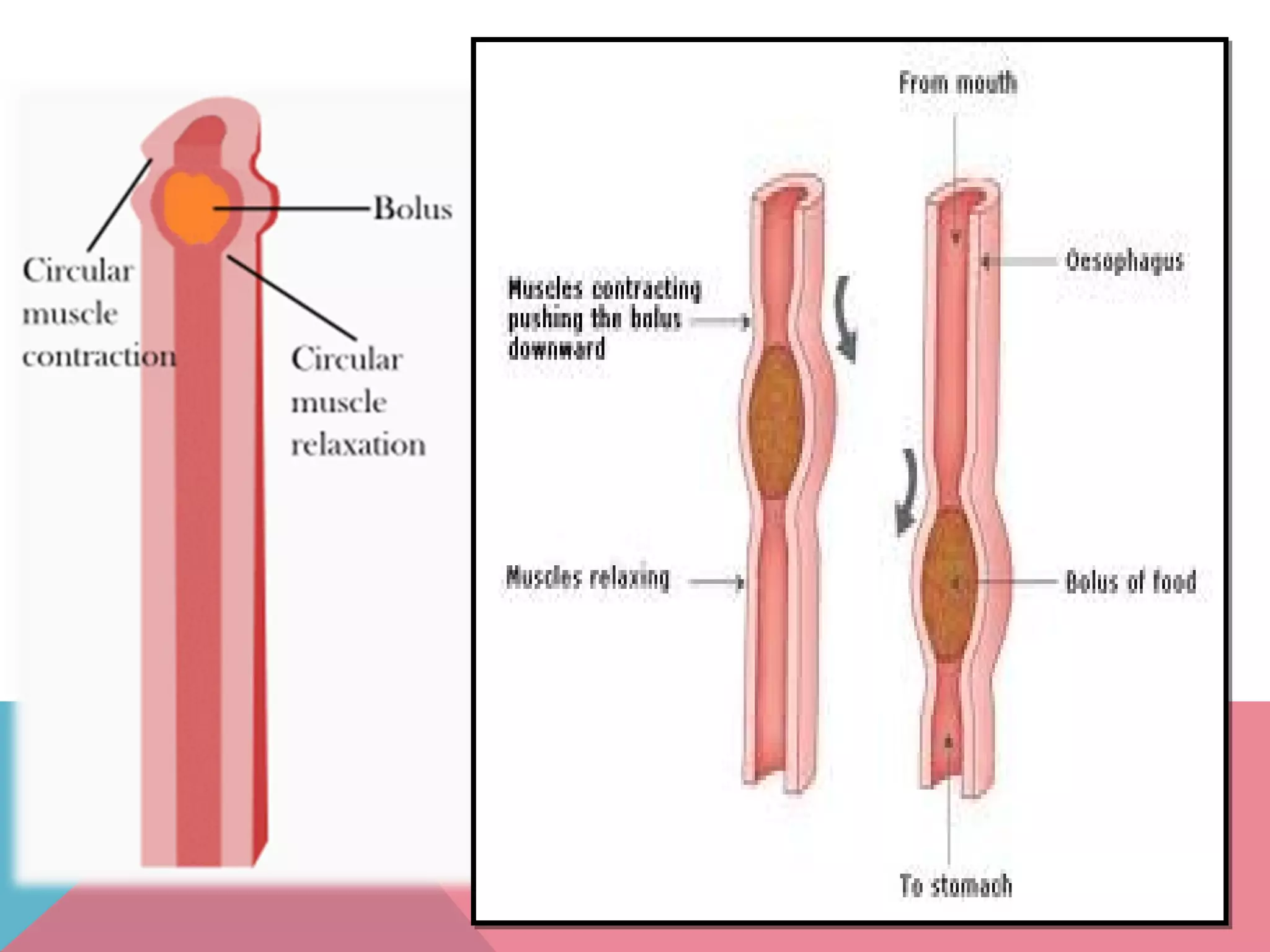
c.The bolus is pushed along the oesophagus to the
stomach by a wave – like action called peristalsis.
d.Peristalsis is caused by the contraction and
relaxation of muscles in the oesophagus.
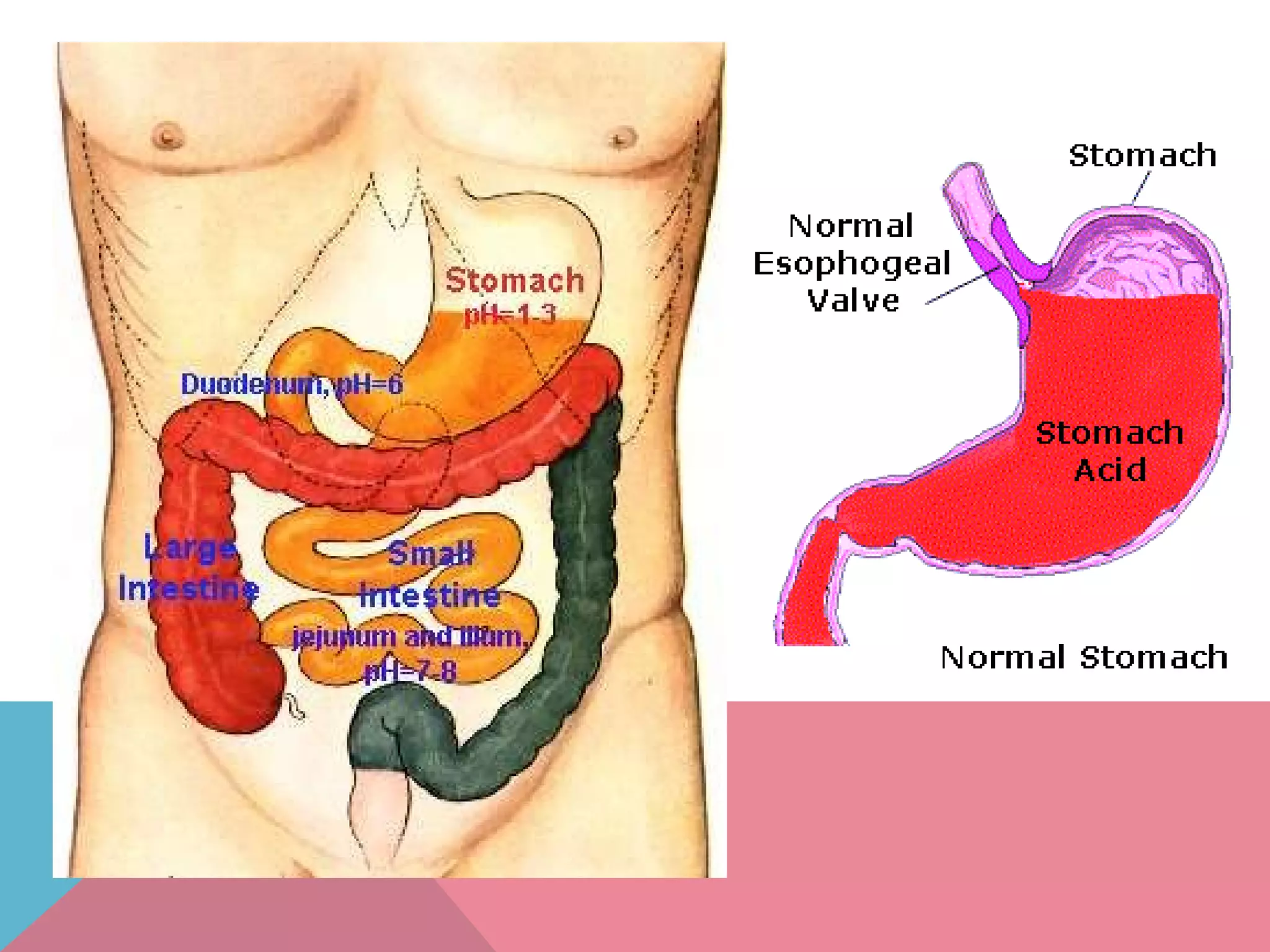
•Digestion in the stomach
a.The stomach is a muscular sac with a volume of 2 to
4 litres.
b.Functions of the stomach:
Stores food for 2 to 6 hours.
Assist in the mechanical breakdown of food
(peristaltic and churning actions break apart the food
substances)
Secretes gastric juices.
c. Gastric juices contain proteases and hydrochloric
acid.
d. Proteases catalyse the breakdown of proteins into
polypeptides or peptones.
e. Functions of hydrochloric acids:
Stops the action of salivary amylase
Provides an acidic medium suitable for the action of
proteases.
Changes the inactive forms of proteases to their
active forms
Kills most micro – organisms in food.
f. Food is gradually converted to a semi – fluid
substance called chyme.
g. Mucus in the stomach protects the stomach wall
from being destroyed by the acid and proteases.
h. Chyme is pushed into the duodenum.
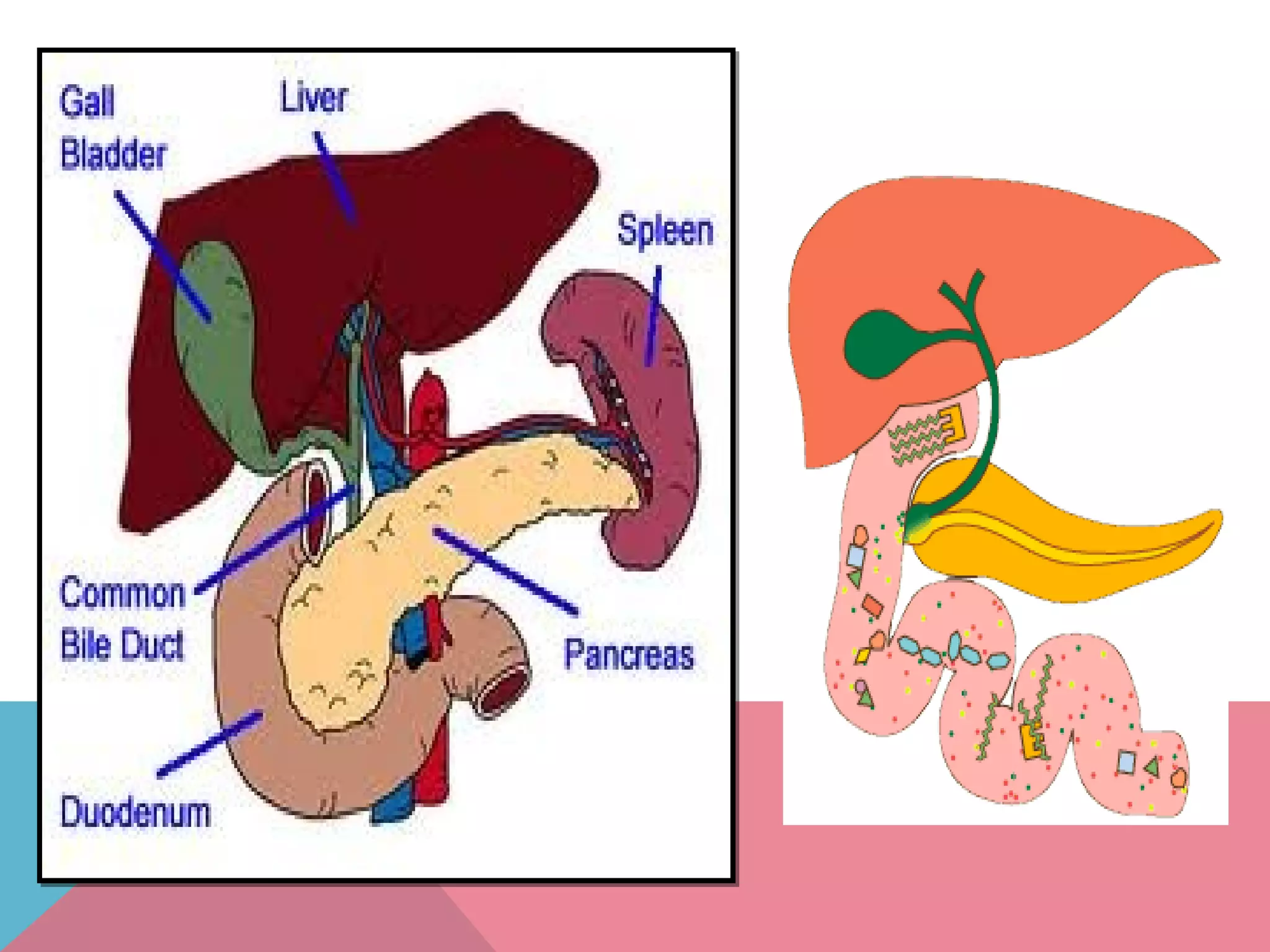
•The liver and the pancreas
a.The main function of the liver in digestion is to
produce bile.
b.Bile is a brownish – green liquid which contains bile
salts and bile pigments.
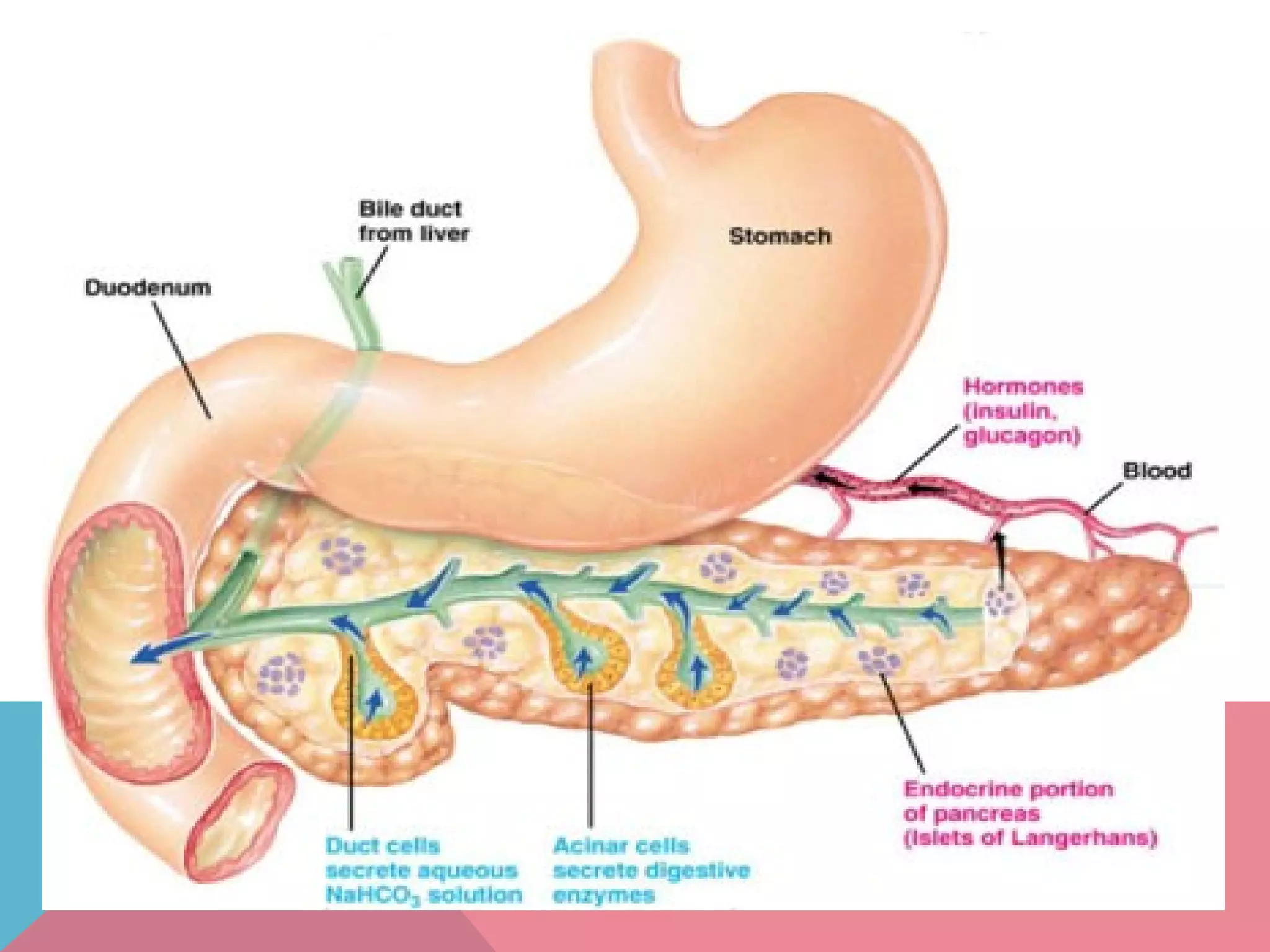
c.Bile is stored in the gall bladder and released into
the duodenum through a tube called the bile duct.
d.The pancreas produces pancreatic juice which is
released into the duodenum through the pancreatic
duct.
•Digestion in the duodenum
a.The duodenum is the first part of the small
intestines.
b.The duodenum receives bile from the liver and
pancreatic juice from the pancreas.
c.Functions of bile:
Neutralizes acidic chyme
Digests carbohydrate, lipids and proteins
- pancreatic amylase breaks down starch into
maltose.
- protease changes proteins to poliypeptides.
- lipase turns fats and oil into fatty acids and
glycerol.
•Digestion in the lower part of the small intestine
a.Tiny glands in the small intestine produce intestinal
juice which contains several type of digestive
enzymes.
b.Carbohydrate turns maltose into amino acids, and
lipases convert fats to fatty acids and glycerol
Class of food End product
Carbohydrates Glucose
Proteins Amino acids
Fats Fatty acids and glycerol
The end products of digestion
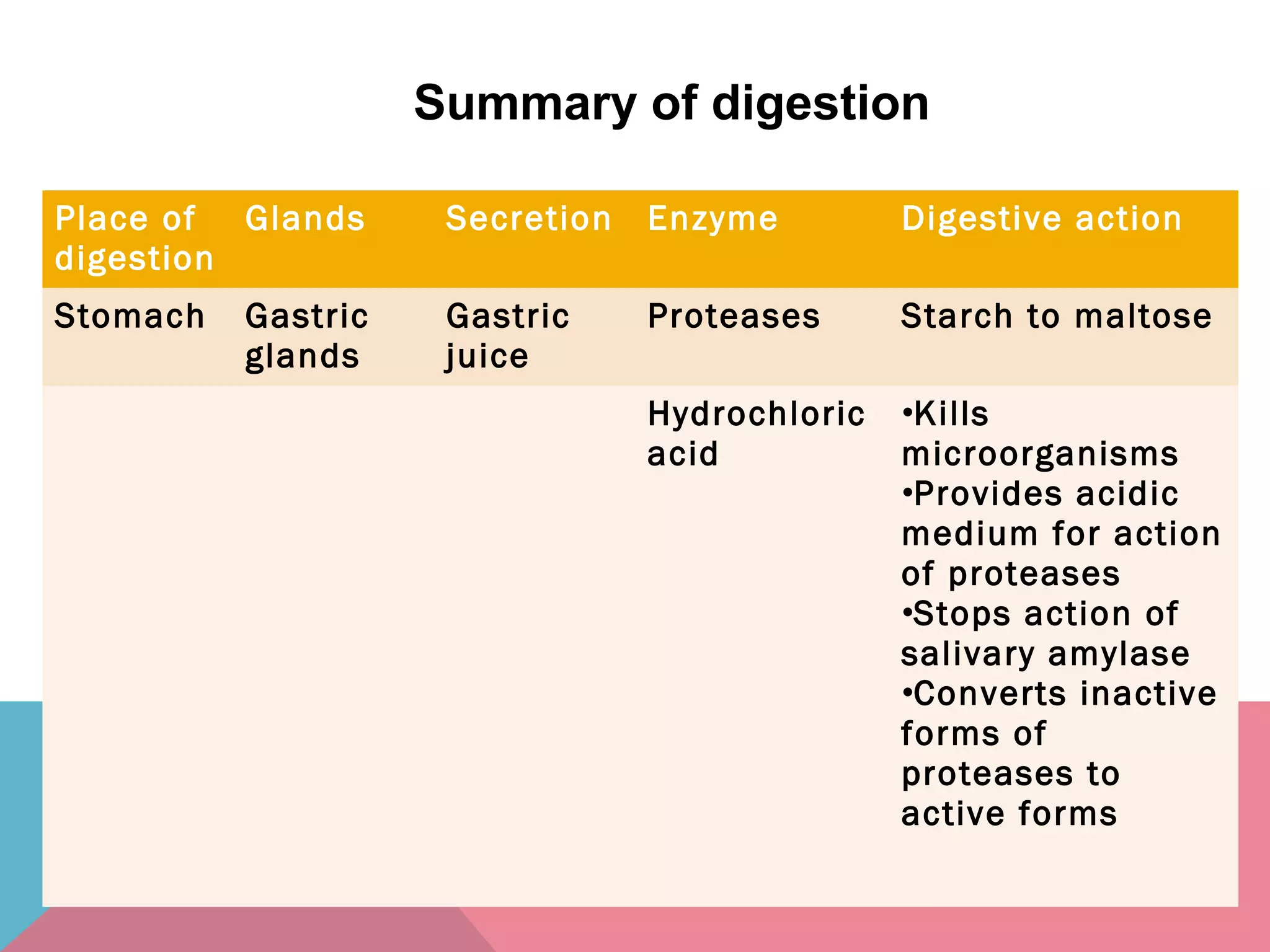
Place of
digestion
Glands Secretion Enzyme Digestive action
Stomach Gastric
glands
Gastric
juice
Proteases Starch to maltose
Hydrochloric
acid
•Kills
microorganisms
•Provides acidic
medium for action
of proteases
•Stops action of
salivary amylase
•Converts inactive
forms of
proteases to
active forms
Summary of digestion
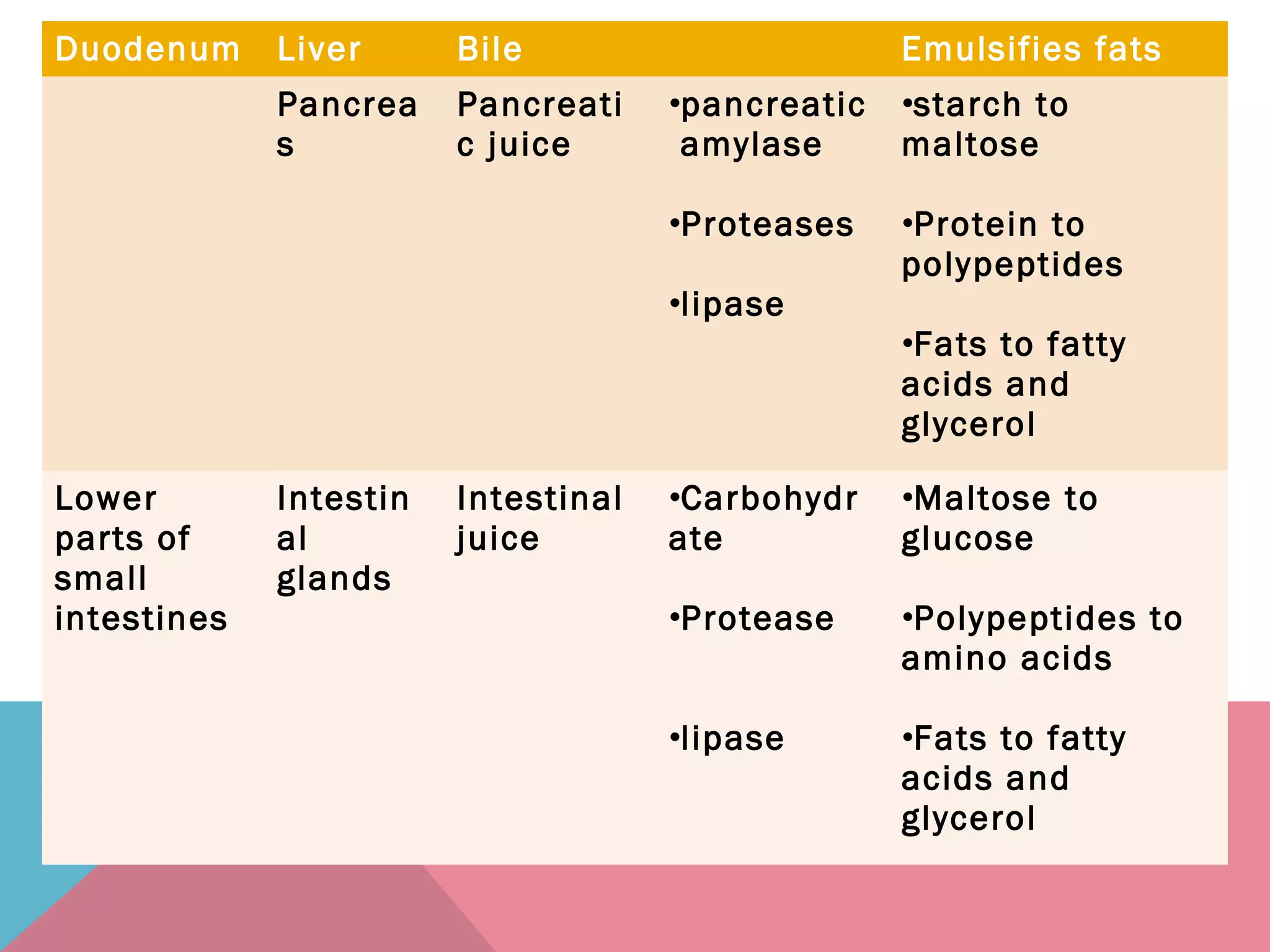
Duodenum Liver Bile Emulsifies fats
Pancrea
s
Pancreati
c juice
•pancreatic
amylase
•Proteases
•lipase
•starch to
maltose
•Protein to
polypeptides
•Fats to fatty
acids and
glycerol
Lower
parts of
small
intestines
Intestin
al
glands
Intestinal
juice
•Carbohydr
ate
•Protease
•lipase
•Maltose to
glucose
•Polypeptides to
amino acids
•Fats to fatty
acids and
glycerol

Digestive system

  • 2.
    Human Digestive System •Digestionis the process of breaking down large food molecules into smaller soluble molecules that can be readily absorbed by the body. •Digestion occurs in an eight – metre long tube called the gut or alimentary canal.
  • 3.
    The human digestivesystem includes the alimentary canal and organs such as the salivary glands, liver, gall bladder and pancreas.
  • 4.
    •The gut hasan opening (mouth) into which food is taken and another (anus) from which undigested material is ejected. •Below is the flow of food particles in the alimentary canal. Mouth Oesophagus Stomach Anus Large intestines Small intestines Duodenum
  • 5.
    •There are twotypes of digestion – physical digestion and chemical digestion. •Physical digestion is the mechanical breakdown of food by the chewing action of the teeth and the churning action of the stomach. •Chemical digestion involves the use of enzymes to break down food substances. •Enzymes are protein substances which act as catalysts and generally speed up the chemical reactions in our body. Enzymes that break down food substances in the gut are called digestive enzymes.
  • 6.
    There are threemain types of digestive enzymes. a.Carbohydrates – break down carbohydrates b.Proteases – break down proteins c.Lipases – break down fats and oils.
  • 8.
    Process of Digestion •Digestionin the mouth a.Food is broken down into smaller pieces by the teeth. b.At the same time, food is mixes with saliva from the salivary glands. c.Saliva contains salivary amylase (a kind of carbohydrates) which catalyses the breaking down of starch into maltose ( a kind of sugar)
  • 10.
    •Swallowing and peristalsis a.Ourtongue shapes the food into a round lump called bolus before it is swallowed. b.The bolus is swallowed down the oesophagus c.The bolus is pushed along the oesophagus to the stomach by a wave – like action called peristalsis. d.Peristalsis is caused by the contraction and relaxation of muscles in the oesophagus.
  • 12.
    •Digestion in thestomach a.The stomach is a muscular sac with a volume of 2 to 4 litres. b.Functions of the stomach: Stores food for 2 to 6 hours. Assist in the mechanical breakdown of food (peristaltic and churning actions break apart the food substances) Secretes gastric juices. c. Gastric juices contain proteases and hydrochloric acid. d. Proteases catalyse the breakdown of proteins into polypeptides or peptones.
  • 14.
    e. Functions ofhydrochloric acids: Stops the action of salivary amylase Provides an acidic medium suitable for the action of proteases. Changes the inactive forms of proteases to their active forms Kills most micro – organisms in food. f. Food is gradually converted to a semi – fluid substance called chyme. g. Mucus in the stomach protects the stomach wall from being destroyed by the acid and proteases. h. Chyme is pushed into the duodenum.
  • 15.
    •The liver andthe pancreas a.The main function of the liver in digestion is to produce bile. b.Bile is a brownish – green liquid which contains bile salts and bile pigments. c.Bile is stored in the gall bladder and released into the duodenum through a tube called the bile duct. d.The pancreas produces pancreatic juice which is released into the duodenum through the pancreatic duct.
  • 17.
    •Digestion in theduodenum a.The duodenum is the first part of the small intestines. b.The duodenum receives bile from the liver and pancreatic juice from the pancreas. c.Functions of bile: Neutralizes acidic chyme Digests carbohydrate, lipids and proteins - pancreatic amylase breaks down starch into maltose. - protease changes proteins to poliypeptides. - lipase turns fats and oil into fatty acids and glycerol.
  • 19.
    •Digestion in thelower part of the small intestine a.Tiny glands in the small intestine produce intestinal juice which contains several type of digestive enzymes. b.Carbohydrate turns maltose into amino acids, and lipases convert fats to fatty acids and glycerol Class of food End product Carbohydrates Glucose Proteins Amino acids Fats Fatty acids and glycerol The end products of digestion
  • 21.
    Place of digestion Glands SecretionEnzyme Digestive action Stomach Gastric glands Gastric juice Proteases Starch to maltose Hydrochloric acid •Kills microorganisms •Provides acidic medium for action of proteases •Stops action of salivary amylase •Converts inactive forms of proteases to active forms Summary of digestion
  • 22.
    Duodenum Liver BileEmulsifies fats Pancrea s Pancreati c juice •pancreatic amylase •Proteases •lipase •starch to maltose •Protein to polypeptides •Fats to fatty acids and glycerol Lower parts of small intestines Intestin al glands Intestinal juice •Carbohydr ate •Protease •lipase •Maltose to glucose •Polypeptides to amino acids •Fats to fatty acids and glycerol