Digestive System
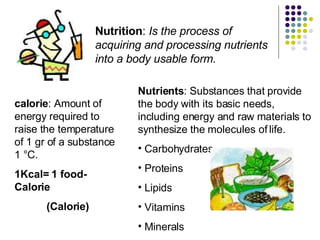
Nutrition :  Is the process of acquiring and processing nutrients into a body usable form. Nutrients : Substances that provide the body with its basic needs, including energy and raw materials to synthesize the molecules of life. Carbohydrates Proteins Lipids Vitamins Minerals calorie : Amount of energy required to raise the temperature of 1 gr of a substance 1 °C.  1Kcal= 1 food-Calorie (Calorie)
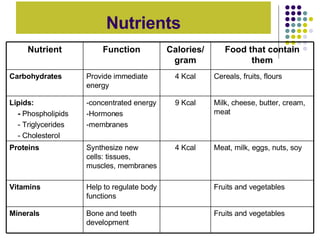
Nutrients Fruits and vegetables Bone and teeth development Minerals Fruits and vegetables Help to regulate body functions Vitamins Meat, milk, eggs, nuts, soy 4 Kcal Synthesize new cells: tissues, muscles, membranes Proteins Milk, cheese, butter, cream, meat 9 Kcal -concentrated energy -Hormones  -membranes Lipids: -  Phospholipids - Triglycerides - Cholesterol Cereals, fruits, flours  4 Kcal Provide immediate energy Carbohydrates Food that contain them Calories/ gram Function Nutrient
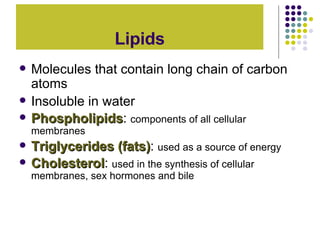
Lipids Molecules that contain long chain of carbon atoms Insoluble in water Phospholipids :  components of all cellular membranes Triglycerides (fats) :  used as a source of energy Cholesterol :  used in the synthesis of cellular membranes, sex hormones and bile
Carbohydrate : mostly sugars, pasta Protein : Group of amino acids used to synthesize new cells Amino acid : subunit of which proteins are made. Vitamin : should be in small amount in the body. Not generated by the body, mostly gotten from food. Mineral : also in small amount, taken from food, water.
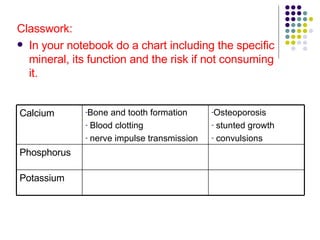
Classwork: In your notebook do a chart including the specific mineral, its function and the risk if not consuming it. Potassium Phosphorus Osteoporosis stunted growth convulsions Bone and tooth formation Blood clotting nerve impulse transmission Calcium
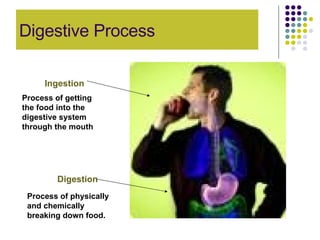
Ingestion Digestion Process of physically and chemically breaking down food. Process of getting the food into the digestive system through the mouth Digestive Process
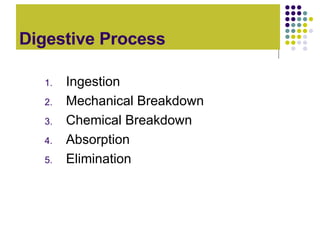
Digestive Process Ingestion Mechanical Breakdown Chemical Breakdown Absorption Elimination
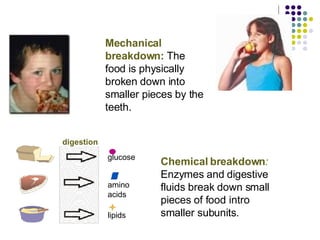
Mechanical breakdown:  The food is physically broken down into smaller pieces by the teeth.   Chemical breakdown :   Enzymes and digestive fluids break down small pieces of food intro smaller subunits. digestion glucose amino acids lipids
Absorption : the small subunits are transported out of the digestive cavity into cells. Elimination : indigestible materials are expelled from the body
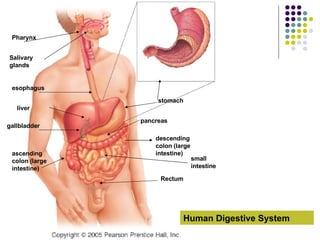
Human Digestive System Pharynx esophagus liver gallbladder ascending colon (large intestine) Rectum descending colon (large intestine) pancreas stomach small intestine Salivary glands
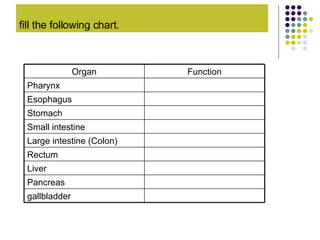
fill the following chart . gallbladder Pancreas Liver Rectum Large intestine (Colon) Small intestine Stomach Esophagus Pharynx Function Organ

Digestive System

  • 1.
  • 2.
    Nutrition : Is the process of acquiring and processing nutrients into a body usable form. Nutrients : Substances that provide the body with its basic needs, including energy and raw materials to synthesize the molecules of life. Carbohydrates Proteins Lipids Vitamins Minerals calorie : Amount of energy required to raise the temperature of 1 gr of a substance 1 °C. 1Kcal= 1 food-Calorie (Calorie)
  • 3.
    Nutrients Fruits andvegetables Bone and teeth development Minerals Fruits and vegetables Help to regulate body functions Vitamins Meat, milk, eggs, nuts, soy 4 Kcal Synthesize new cells: tissues, muscles, membranes Proteins Milk, cheese, butter, cream, meat 9 Kcal -concentrated energy -Hormones -membranes Lipids: - Phospholipids - Triglycerides - Cholesterol Cereals, fruits, flours 4 Kcal Provide immediate energy Carbohydrates Food that contain them Calories/ gram Function Nutrient
  • 4.
    Lipids Molecules thatcontain long chain of carbon atoms Insoluble in water Phospholipids : components of all cellular membranes Triglycerides (fats) : used as a source of energy Cholesterol : used in the synthesis of cellular membranes, sex hormones and bile
  • 5.
    Carbohydrate : mostlysugars, pasta Protein : Group of amino acids used to synthesize new cells Amino acid : subunit of which proteins are made. Vitamin : should be in small amount in the body. Not generated by the body, mostly gotten from food. Mineral : also in small amount, taken from food, water.
  • 6.
    Classwork: In yournotebook do a chart including the specific mineral, its function and the risk if not consuming it. Potassium Phosphorus Osteoporosis stunted growth convulsions Bone and tooth formation Blood clotting nerve impulse transmission Calcium
  • 7.
    Ingestion Digestion Processof physically and chemically breaking down food. Process of getting the food into the digestive system through the mouth Digestive Process
  • 8.
    Digestive Process IngestionMechanical Breakdown Chemical Breakdown Absorption Elimination
  • 9.
    Mechanical breakdown: The food is physically broken down into smaller pieces by the teeth. Chemical breakdown : Enzymes and digestive fluids break down small pieces of food intro smaller subunits. digestion glucose amino acids lipids
  • 10.
    Absorption : thesmall subunits are transported out of the digestive cavity into cells. Elimination : indigestible materials are expelled from the body
  • 11.
    Human Digestive SystemPharynx esophagus liver gallbladder ascending colon (large intestine) Rectum descending colon (large intestine) pancreas stomach small intestine Salivary glands
  • 12.
    fill the followingchart . gallbladder Pancreas Liver Rectum Large intestine (Colon) Small intestine Stomach Esophagus Pharynx Function Organ