“A thousand teacher, a thousand methods.”
-Chinese Proverb
Teaching Approach
 Is a set of principles, beliefs or ideas about the
nature of learning which is translated into the
classroom. It springs from a teacher’s own
philosophy of education, the nature of
education, the role of the teacher and that of
the student.
Teaching Strategy
 Is a long plan of action designed to achieve a
particular goal. Strategies applies to many
disparate fields such as military strategy,
economic strategy, teaching strategy and the
like.
Teaching Methods
 Is a systematic way of doing something. it
implies an orderly logical arrangement of steps.
It is more procedural.
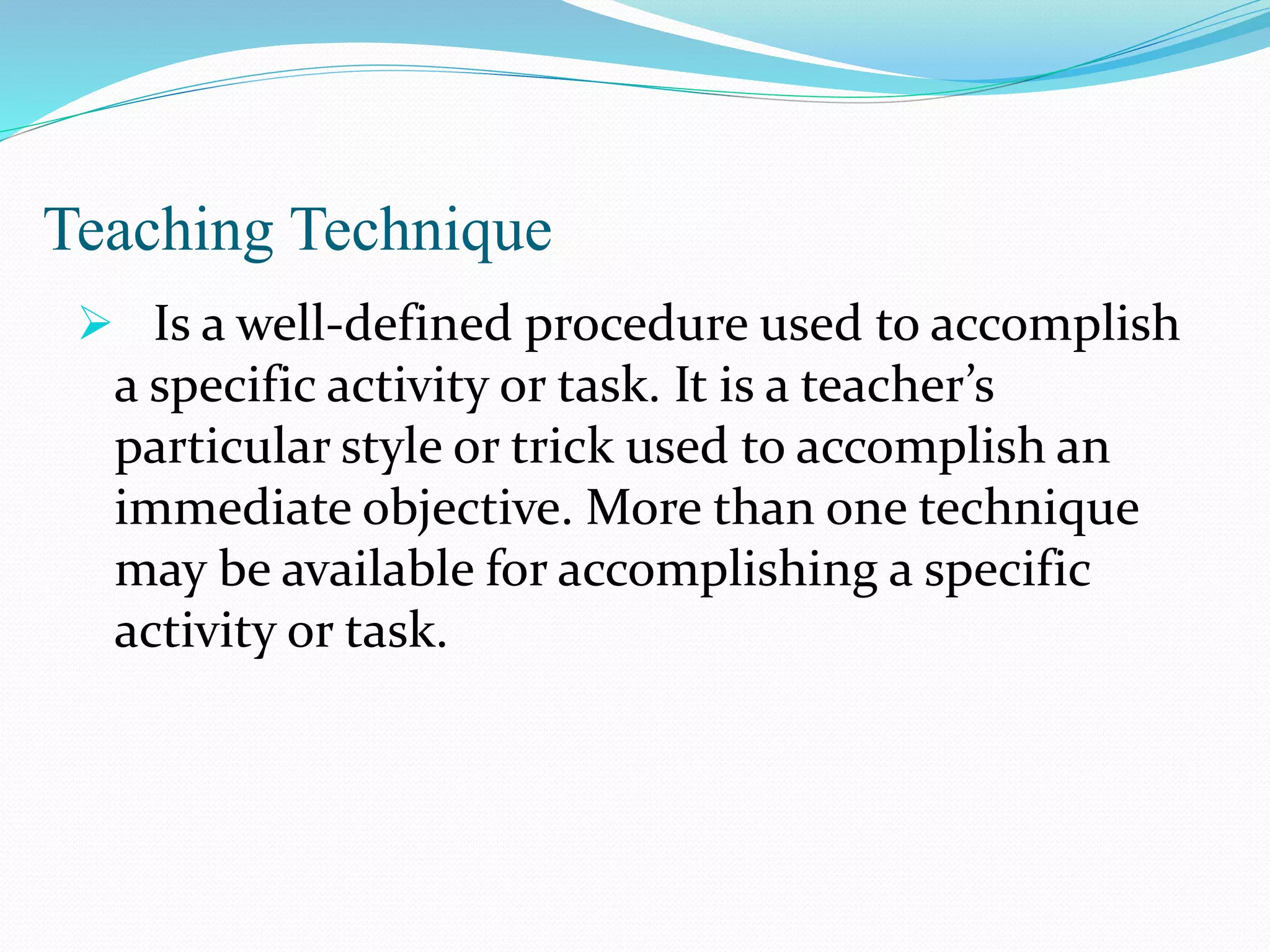
Teaching Technique
 Is a well-defined procedure used to accomplish
a specific activity or task. It is a teacher’s
particular style or trick used to accomplish an
immediate objective. More than one technique
may be available for accomplishing a specific
activity or task.
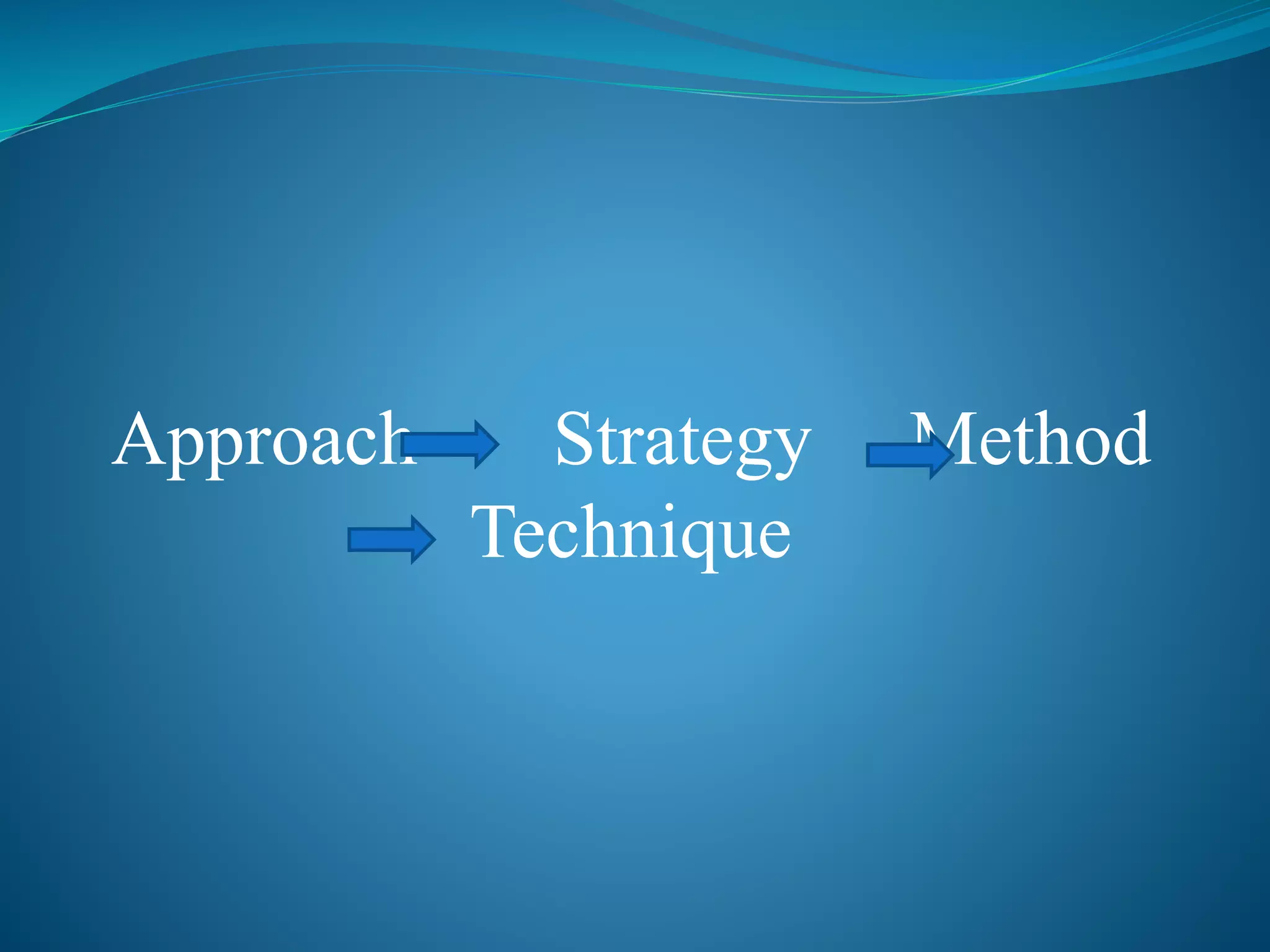
Approach Strategy Method
Technique
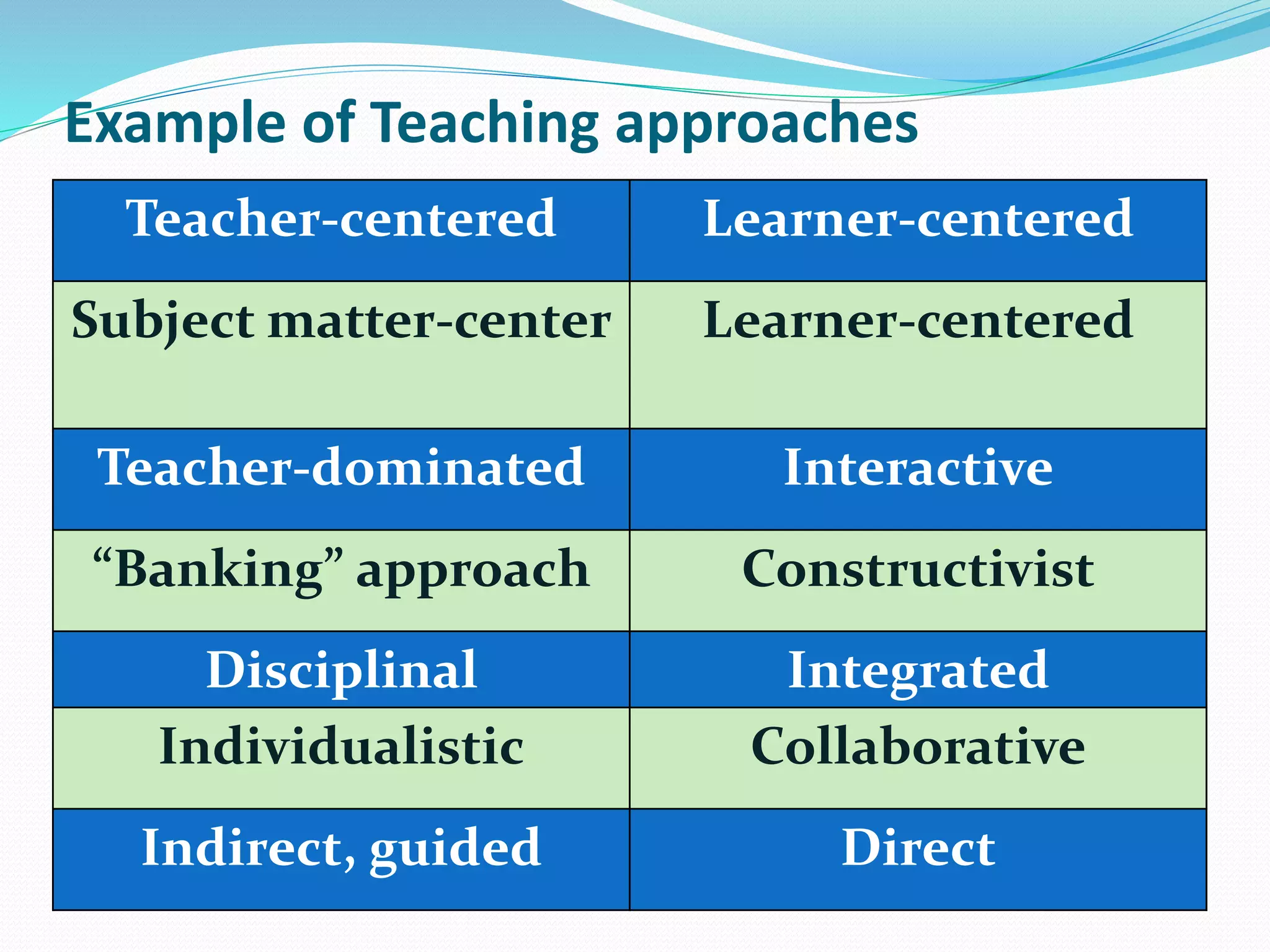
Example of Teaching approaches
Teacher-centered Learner-centered
Subject matter-center Learner-centered
Teacher-dominated Interactive
“Banking” approach Constructivist
Disciplinal Integrated
Individualistic Collaborative
Indirect, guided Direct
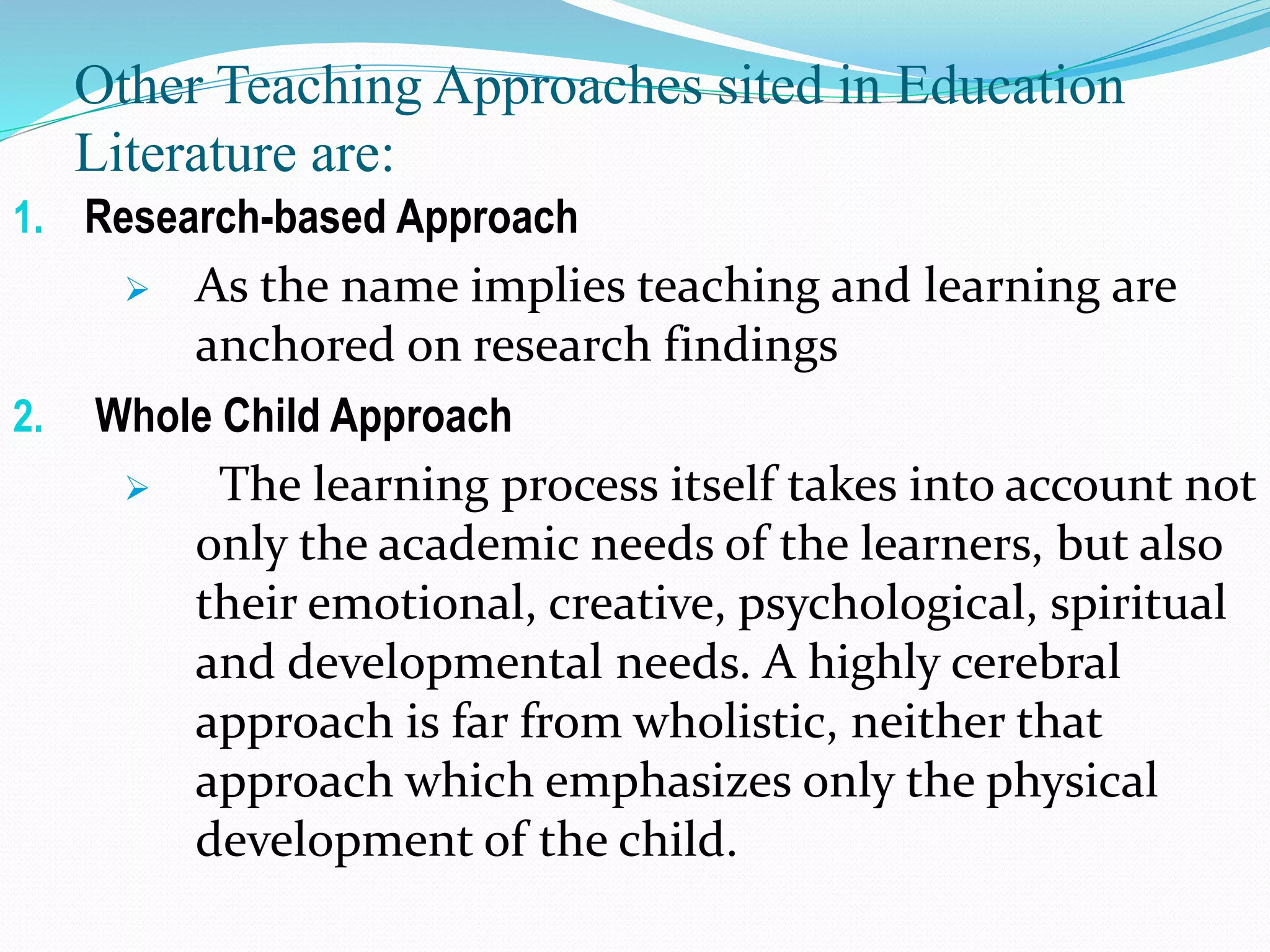
Other Teaching Approaches sited in Education
Literature are:
1. Research-based Approach
 As the name implies teaching and learning are
anchored on research findings
2. Whole Child Approach
 The learning process itself takes into account not
only the academic needs of the learners, but also
their emotional, creative, psychological, spiritual
and developmental needs. A highly cerebral
approach is far from wholistic, neither that
approach which emphasizes only the physical
development of the child.
3. Metacognitive Approach
 The Teaching process brings the learner to the
process of thinking about thinking. The
learner reflects on what he learned and on
his/her ways of learning. He reflects on why
he/she succeeded one time but failed the
other time.
4. Problem-based Approach
 As the name implies, the teaching-learning
process is focused on problems. Time is spent
on analyzing and solving problems.
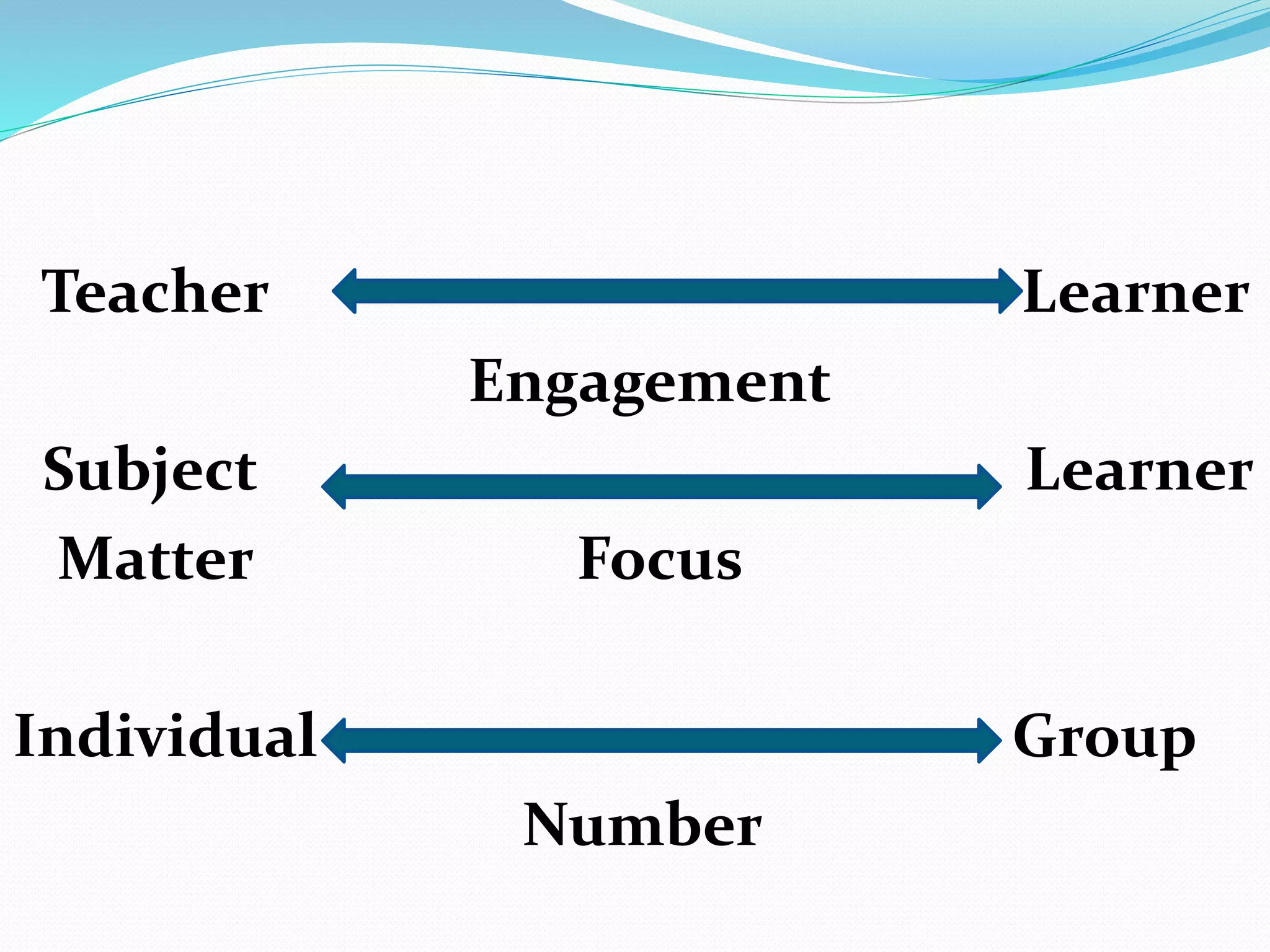
In summary, approaches vary in
the degree of teacher and learner
engagement, focus, number of
learners involved in the teaching-
learning process as shown in the
diagram below:
Teacher Learner
Engagement
Subject Learner
Matter Focus
Individual Group
Number

Different approaches and methods

  • 1.
    “A thousand teacher,a thousand methods.” -Chinese Proverb
  • 2.
    Teaching Approach  Isa set of principles, beliefs or ideas about the nature of learning which is translated into the classroom. It springs from a teacher’s own philosophy of education, the nature of education, the role of the teacher and that of the student.
  • 3.
    Teaching Strategy  Isa long plan of action designed to achieve a particular goal. Strategies applies to many disparate fields such as military strategy, economic strategy, teaching strategy and the like.
  • 4.
    Teaching Methods  Isa systematic way of doing something. it implies an orderly logical arrangement of steps. It is more procedural.
  • 5.
    Teaching Technique  Isa well-defined procedure used to accomplish a specific activity or task. It is a teacher’s particular style or trick used to accomplish an immediate objective. More than one technique may be available for accomplishing a specific activity or task.
  • 6.
  • 7.
    Example of Teachingapproaches Teacher-centered Learner-centered Subject matter-center Learner-centered Teacher-dominated Interactive “Banking” approach Constructivist Disciplinal Integrated Individualistic Collaborative Indirect, guided Direct
  • 8.
    Other Teaching Approachessited in Education Literature are: 1. Research-based Approach  As the name implies teaching and learning are anchored on research findings 2. Whole Child Approach  The learning process itself takes into account not only the academic needs of the learners, but also their emotional, creative, psychological, spiritual and developmental needs. A highly cerebral approach is far from wholistic, neither that approach which emphasizes only the physical development of the child.
  • 9.
    3. Metacognitive Approach The Teaching process brings the learner to the process of thinking about thinking. The learner reflects on what he learned and on his/her ways of learning. He reflects on why he/she succeeded one time but failed the other time. 4. Problem-based Approach  As the name implies, the teaching-learning process is focused on problems. Time is spent on analyzing and solving problems.
  • 10.
    In summary, approachesvary in the degree of teacher and learner engagement, focus, number of learners involved in the teaching- learning process as shown in the diagram below:
  • 11.