


DIFFERENCES
BETWEEN
INDIVIDUAL
AND
GROUPBY,
VEDANTHA VINOD
ASSISTANT LECTURER
CCON-MYSORE
LET US DISCUSS ABOUT THE
DIFFERENCES
BETWEEN
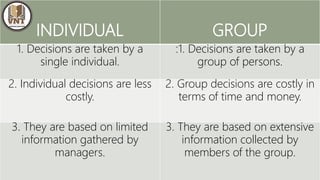
INDIVIDUAL GROUP
1. Decisions are taken by a
single individual.
:1. Decisions are taken by a
group of persons.
2. Individual decisions are less
costly.
2. Group decisions are costly in
terms of time and money.
3. They are based on limited
information gathered by
managers.
3. They are based on extensive
information collected by
members of the group.
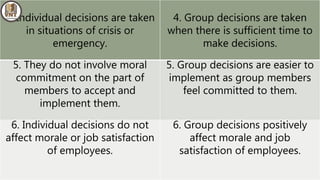
4. Individual decisions are taken
in situations of crisis or
emergency.
4. Group decisions are taken
when there is sufficient time to
make decisions.
5. They do not involve moral
commitment on the part of
members to accept and
implement them.
5. Group decisions are easier to
implement as group members
feel committed to them.
6. Individual decisions do not
affect morale or job satisfaction
of employees.
6. Group decisions positively
affect morale and job
satisfaction of employees.
7. They introduce one-man
control.
7. They introduce self-control.
8. Individual decisions do not
promote interaction amongst
superiors and subordinates.
8. They promote superior-
subordinate interaction and
healthy relationships amongst
them.
9. Decisions are usually based on
clear policy guidelines.
9. Group decisions are taken
when the problem requires
creativity and expert knowledge
of a group.
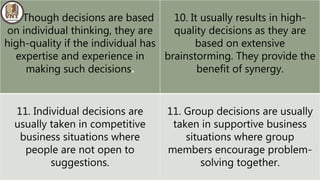
10. Though decisions are based
on individual thinking, they are
high-quality if the individual has
expertise and experience in
making such decisions.
10. It usually results in high-
quality decisions as they are
based on extensive
brainstorming. They provide the
benefit of synergy.
11. Individual decisions are
usually taken in competitive
business situations where
people are not open to
suggestions.
11. Group decisions are usually
taken in supportive business
situations where group
members encourage problem-
solving together.
CONCLUSION
ANY DOUBTS?

Differences between individual and group

  • 1.
  • 3.
    LET US DISCUSSABOUT THE DIFFERENCES BETWEEN
  • 4.
    INDIVIDUAL GROUP 1. Decisionsare taken by a single individual. :1. Decisions are taken by a group of persons. 2. Individual decisions are less costly. 2. Group decisions are costly in terms of time and money. 3. They are based on limited information gathered by managers. 3. They are based on extensive information collected by members of the group.
  • 5.
    4. Individual decisionsare taken in situations of crisis or emergency. 4. Group decisions are taken when there is sufficient time to make decisions. 5. They do not involve moral commitment on the part of members to accept and implement them. 5. Group decisions are easier to implement as group members feel committed to them. 6. Individual decisions do not affect morale or job satisfaction of employees. 6. Group decisions positively affect morale and job satisfaction of employees.
  • 6.
    7. They introduceone-man control. 7. They introduce self-control. 8. Individual decisions do not promote interaction amongst superiors and subordinates. 8. They promote superior- subordinate interaction and healthy relationships amongst them. 9. Decisions are usually based on clear policy guidelines. 9. Group decisions are taken when the problem requires creativity and expert knowledge of a group.
  • 7.
    10. Though decisionsare based on individual thinking, they are high-quality if the individual has expertise and experience in making such decisions. 10. It usually results in high- quality decisions as they are based on extensive brainstorming. They provide the benefit of synergy. 11. Individual decisions are usually taken in competitive business situations where people are not open to suggestions. 11. Group decisions are usually taken in supportive business situations where group members encourage problem- solving together.
  • 8.
  • 9.