By Emmanuel Castaño and Amanda Okazaki
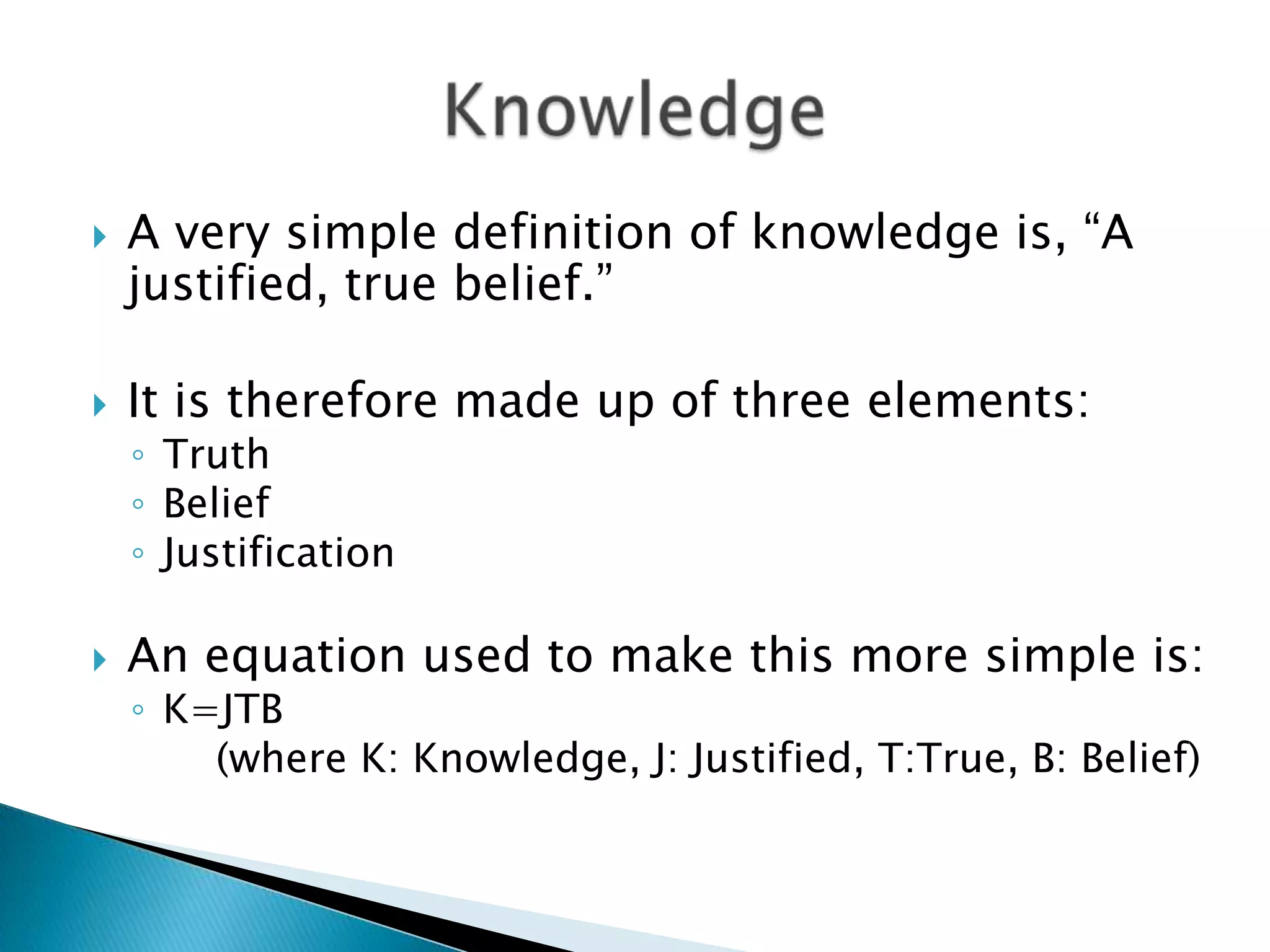
   A very simple definition of knowledge is, “A
    justified, true belief.”

   It is therefore made up of three elements:
    ◦ Truth
    ◦ Belief
    ◦ Justification

   An equation used to make this more simple is:
    ◦ K=JTB
        (where K: Knowledge, J: Justified, T:True, B: Belief)
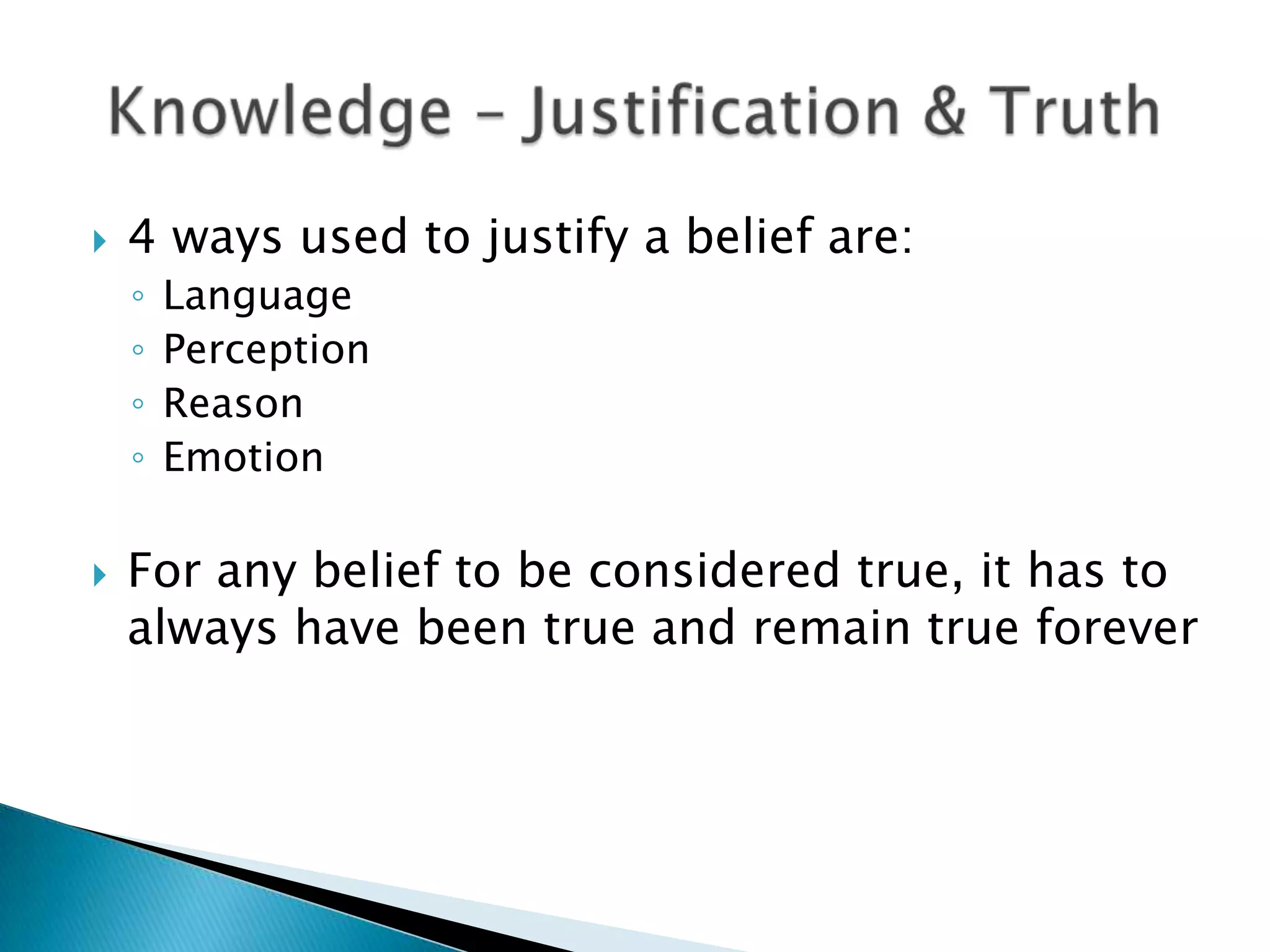
   4 ways used to justify a belief are:
    ◦   Language
    ◦   Perception
    ◦   Reason
    ◦   Emotion

   For any belief to be considered true, it has to
    always have been true and remain true forever
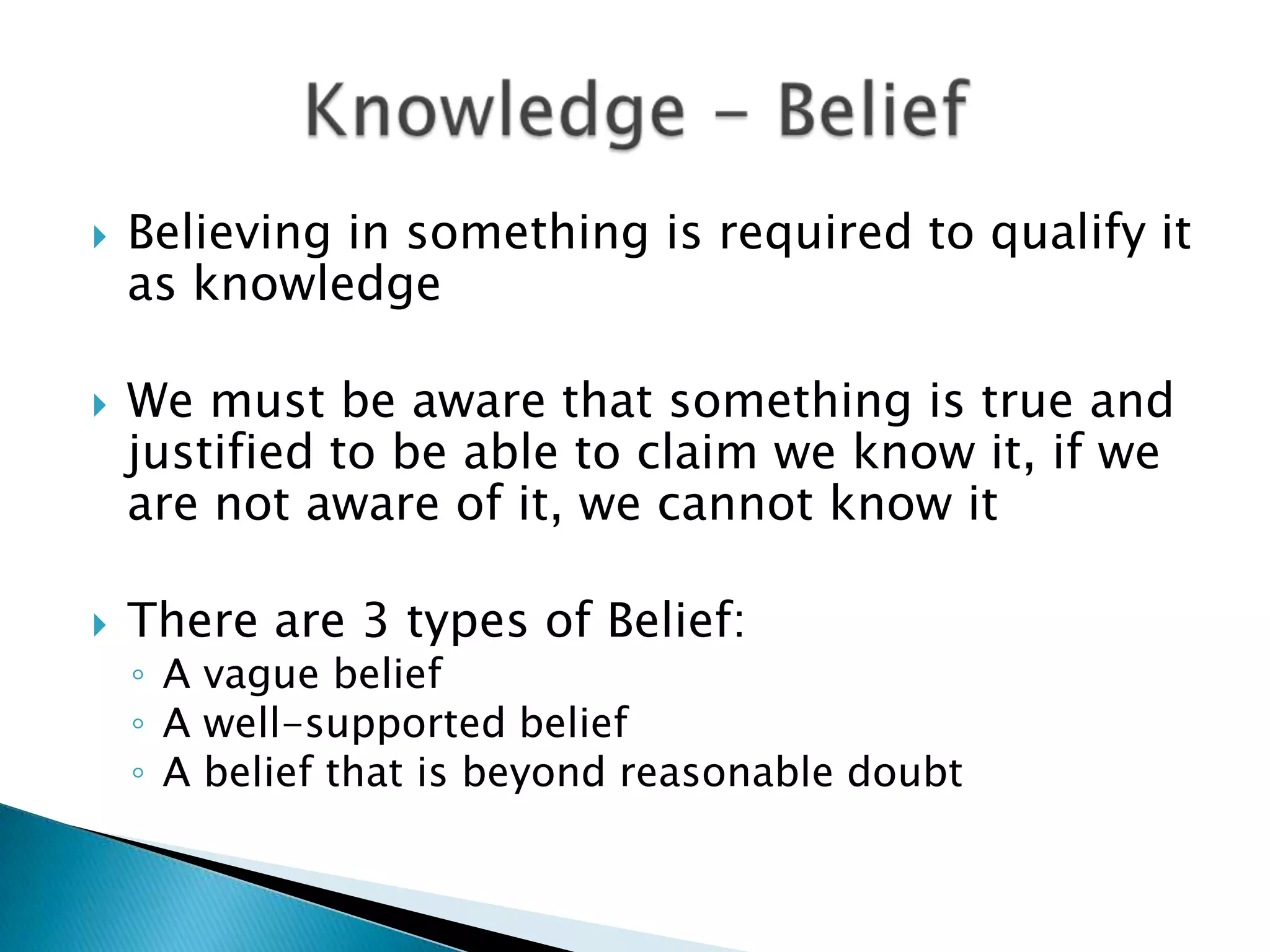
   Believing in something is required to qualify it
    as knowledge

   We must be aware that something is true and
    justified to be able to claim we know it, if we
    are not aware of it, we cannot know it

   There are 3 types of Belief:
    ◦ A vague belief
    ◦ A well-supported belief
    ◦ A belief that is beyond reasonable doubt
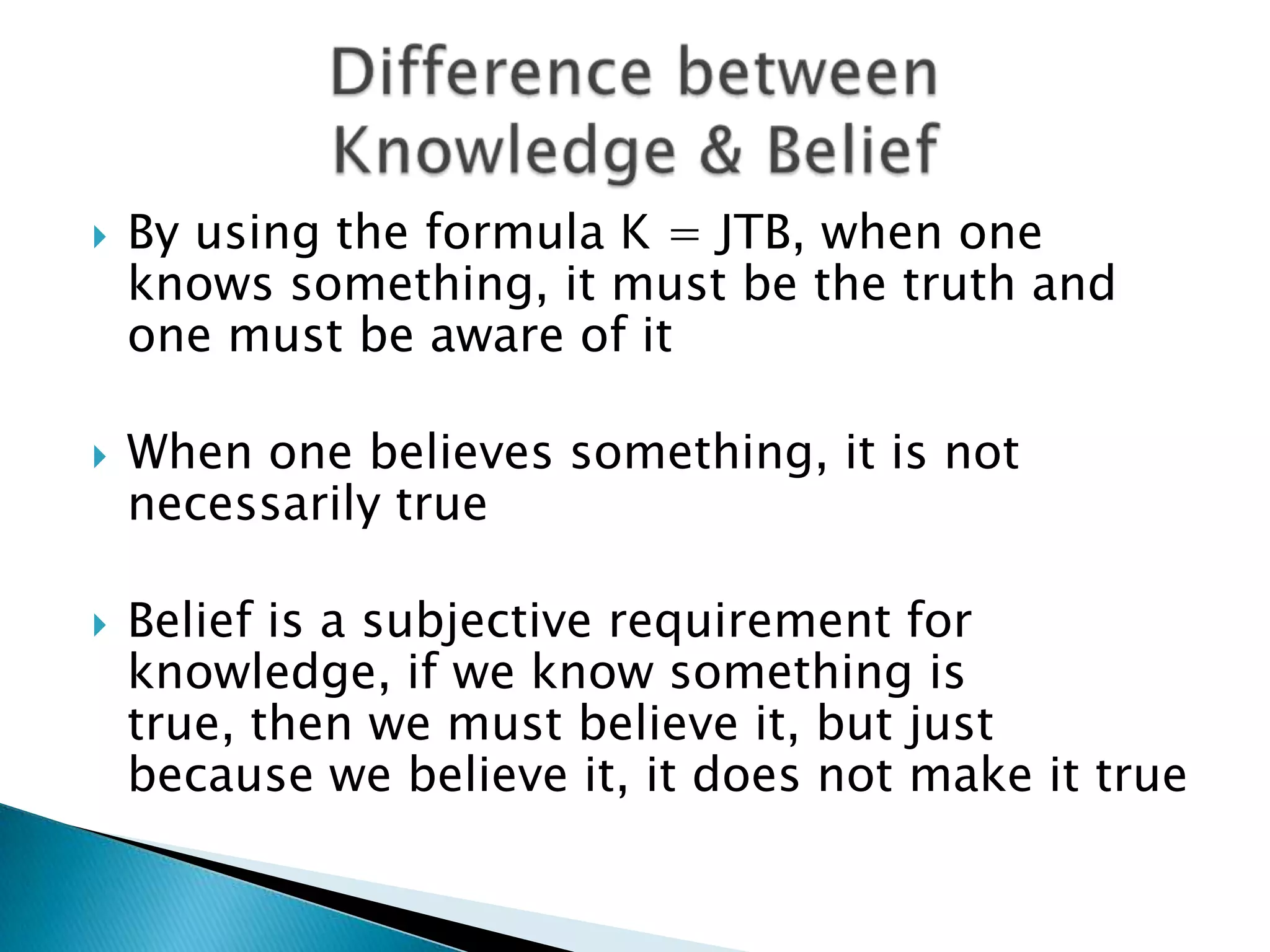
   By using the formula K = JTB, when one
    knows something, it must be the truth and
    one must be aware of it

   When one believes something, it is not
    necessarily true

   Belief is a subjective requirement for
    knowledge, if we know something is
    true, then we must believe it, but just
    because we believe it, it does not make it true
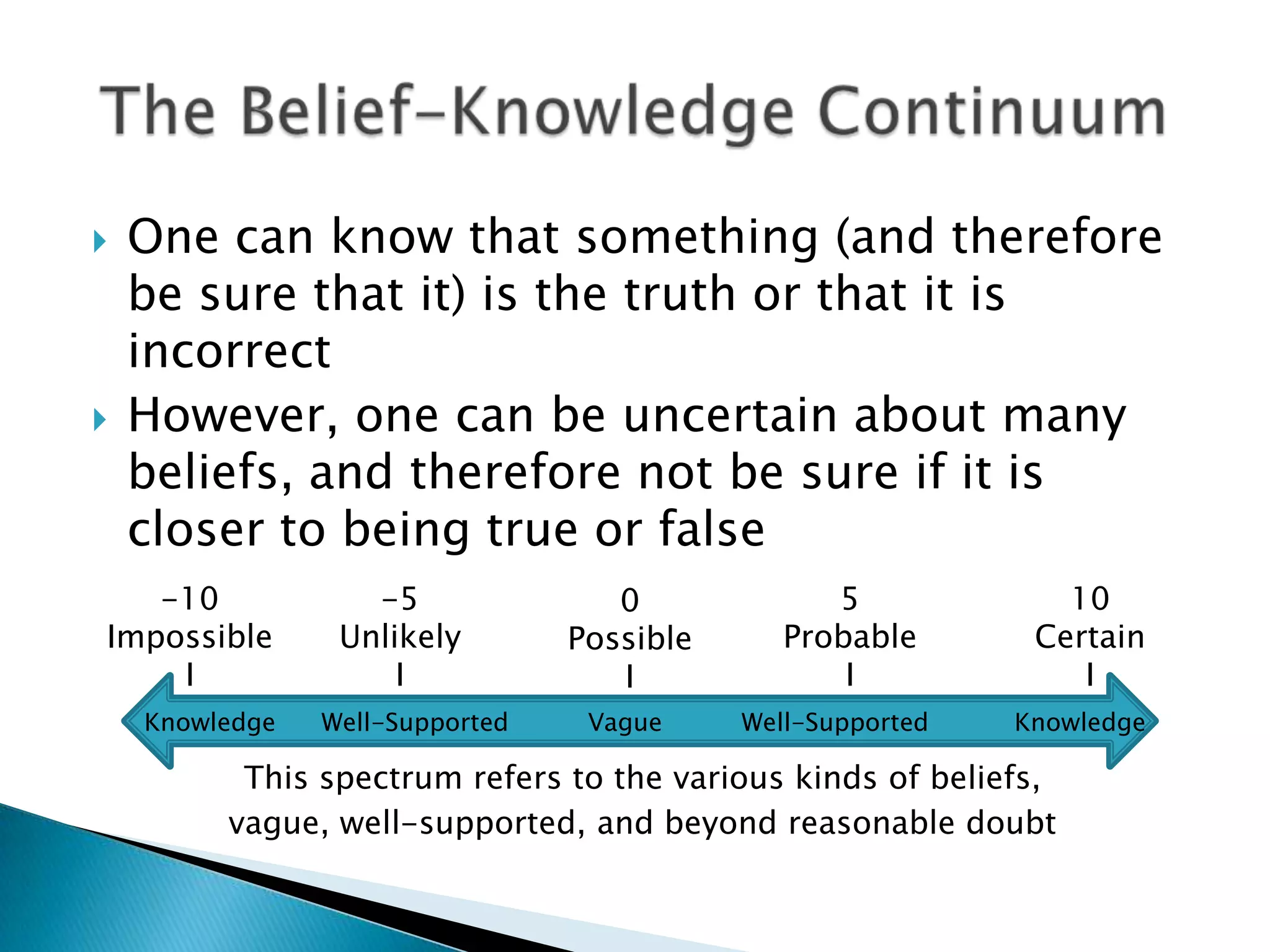
   One can know that something (and therefore
    be sure that it) is the truth or that it is
    incorrect
   However, one can be uncertain about many
    beliefs, and therefore not be sure if it is
    closer to being true or false
   -10             -5               0             5             10
Impossible       Unlikely        Possible      Probable       Certain
    I                I              I              I             I
    Knowledge   Well-Supported    Vague     Well-Supported   Knowledge

          This spectrum refers to the various kinds of beliefs,
         vague, well-supported, and beyond reasonable doubt
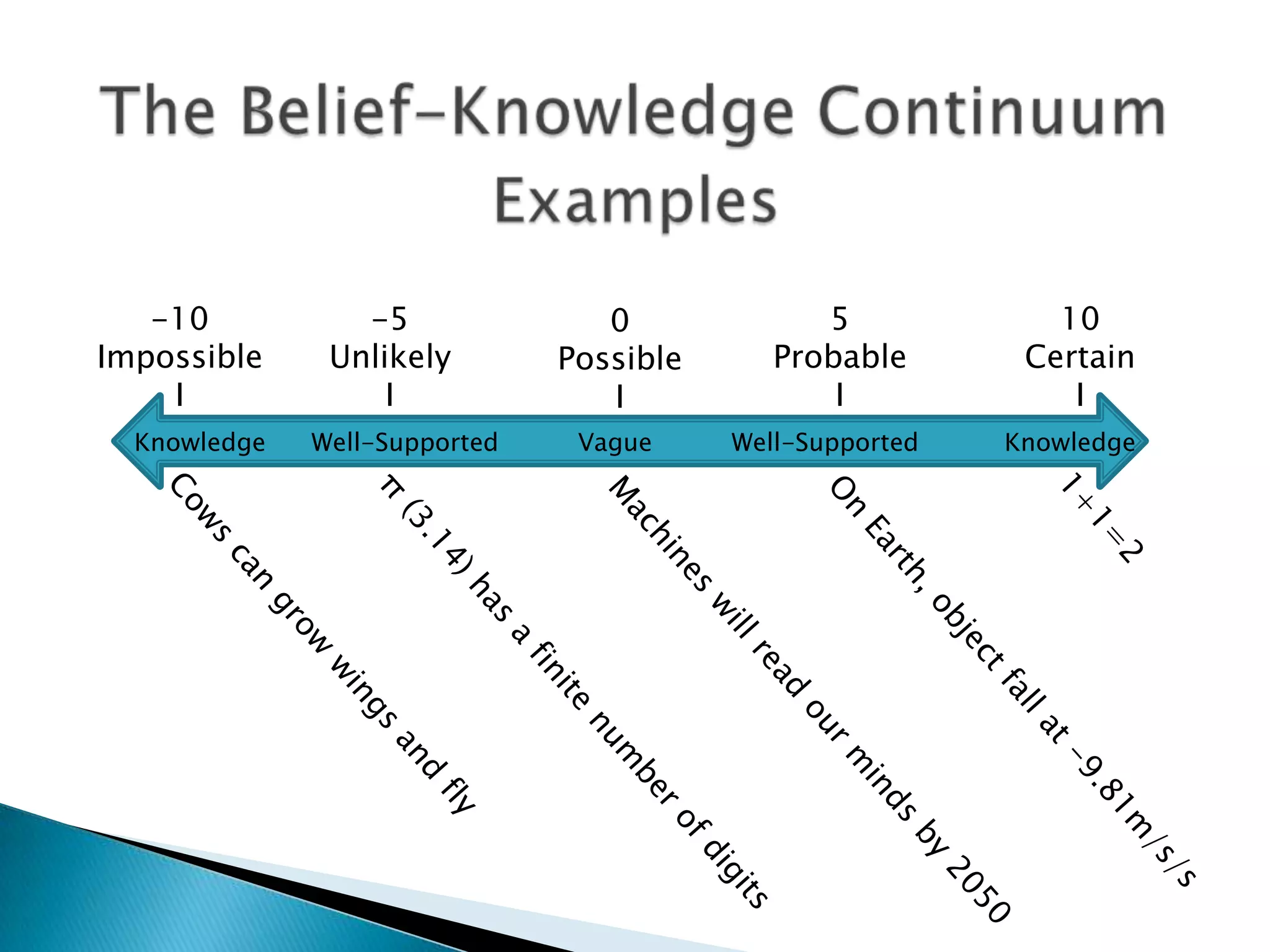
-10           -5               0             5             10
Impossible     Unlikely        Possible      Probable       Certain
    I              I              I              I             I
  Knowledge   Well-Supported    Vague     Well-Supported   Knowledge

Difference Between Knowledge and Belief

  • 1.
    By Emmanuel Castañoand Amanda Okazaki
  • 2.
    A very simple definition of knowledge is, “A justified, true belief.”  It is therefore made up of three elements: ◦ Truth ◦ Belief ◦ Justification  An equation used to make this more simple is: ◦ K=JTB (where K: Knowledge, J: Justified, T:True, B: Belief)
  • 3.
    4 ways used to justify a belief are: ◦ Language ◦ Perception ◦ Reason ◦ Emotion  For any belief to be considered true, it has to always have been true and remain true forever
  • 4.
    Believing in something is required to qualify it as knowledge  We must be aware that something is true and justified to be able to claim we know it, if we are not aware of it, we cannot know it  There are 3 types of Belief: ◦ A vague belief ◦ A well-supported belief ◦ A belief that is beyond reasonable doubt
  • 5.
    By using the formula K = JTB, when one knows something, it must be the truth and one must be aware of it  When one believes something, it is not necessarily true  Belief is a subjective requirement for knowledge, if we know something is true, then we must believe it, but just because we believe it, it does not make it true
  • 6.
    One can know that something (and therefore be sure that it) is the truth or that it is incorrect  However, one can be uncertain about many beliefs, and therefore not be sure if it is closer to being true or false -10 -5 0 5 10 Impossible Unlikely Possible Probable Certain I I I I I Knowledge Well-Supported Vague Well-Supported Knowledge This spectrum refers to the various kinds of beliefs, vague, well-supported, and beyond reasonable doubt
  • 7.
    -10 -5 0 5 10 Impossible Unlikely Possible Probable Certain I I I I I Knowledge Well-Supported Vague Well-Supported Knowledge