Data, Information & 
Knowledge
Data 
 Data 
– Data is the raw facts and figures before they have 
been processed 
– Key Facts: 
 Data can be alphanumeric characters (letters and 
numbers), sound or graphics 
 Data is raw facts before it has been processed 
 Data has no meaning
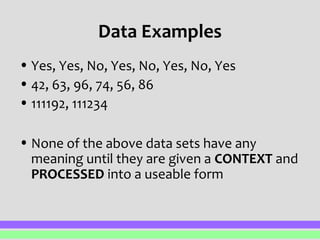
Data Examples 
• Yes, Yes, No, Yes, No, Yes, No, Yes 
• 42, 63, 96, 74, 56, 86 
• 111192, 111234 
• None of the above data sets have any 
meaning until they are given a CONTEXT and 
PROCESSED into a useable form
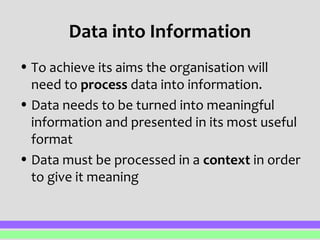
Data into Information 
• To achieve its aims the organisation will 
need to process data into information. 
• Data needs to be turned into meaningful 
information and presented in its most useful 
format 
• Data must be processed in a context in order 
to give it meaning
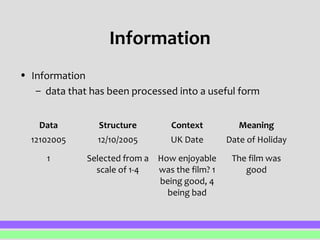
Information 
• Information 
– data that has been processed into a useful form 
Data Structure Context Meaning 
12102005 12/10/2005 UK Date Date of Holiday 
1 Selected from a 
scale of 1-4 
How enjoyable 
was the film? 1 
being good, 4 
being bad 
The film was 
good
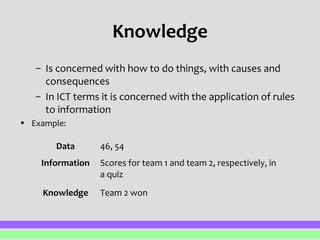
Knowledge 
– Is concerned with how to do things, with causes and 
consequences 
– In ICT terms it is concerned with the application of rules 
to information 
• Example: 
Data 46, 54 
Information Scores for team 1 and team 2, respectively, in 
a quiz 
Knowledge Team 2 won
Examples.. 
Data 101 
Information BBC1 channel number 
Knowledge Sky number to input to get BBC1 
Data The amber light is the data 
Information The information is that you will need to stop 
Knowledge The knowledge is how to stop that vehicle you 
are driving and when you need to stop braking 
to stop the vehicle where you need it to.
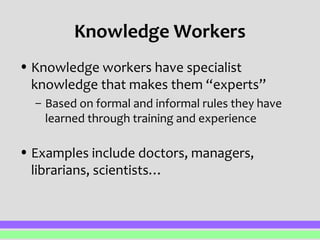
Knowledge Workers 
• Knowledge workers have specialist 
knowledge that makes them “experts” 
– Based on formal and informal rules they have 
learned through training and experience 
• Examples include doctors, managers, 
librarians, scientists…
Expert Systems 
• Because many rules are based on probabilities 
computers can be programmed with “subject 
knowledge” to mimic the role of experts 
• One of the most common uses of expert systems is 
in medicine 
– The ONCOLOG system shown here analyses patient data to 
provide a reference for doctors, and help for the choice, 
prescription and follow-up of chemotherapy
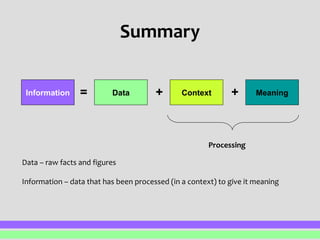
Summary 
Information = Data + Context + Meaning 
Processing 
Data – raw facts and figures 
Information – data that has been processed (in a context) to give it meaning
Methods to convey Information 
• The main representation methods are: 
– Text (including writing) 
– Graphics (including pictures) 
– Sound (including voice) 
– Moving pictures (animation or video) 
– Light-emitting diode (LED) 
– You need to know the advantages and 
disadvantages of each method
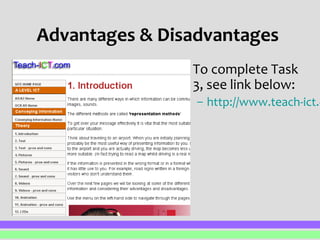
Advantages & Disadvantages 
• To complete Task 
3, see link below: 
– http://www.teach-ict.com/

Pp1 data, information & knowledge

  • 1.
  • 2.
    Data  Data – Data is the raw facts and figures before they have been processed – Key Facts:  Data can be alphanumeric characters (letters and numbers), sound or graphics  Data is raw facts before it has been processed  Data has no meaning
  • 3.
    Data Examples •Yes, Yes, No, Yes, No, Yes, No, Yes • 42, 63, 96, 74, 56, 86 • 111192, 111234 • None of the above data sets have any meaning until they are given a CONTEXT and PROCESSED into a useable form
  • 4.
    Data into Information • To achieve its aims the organisation will need to process data into information. • Data needs to be turned into meaningful information and presented in its most useful format • Data must be processed in a context in order to give it meaning
  • 5.
    Information • Information – data that has been processed into a useful form Data Structure Context Meaning 12102005 12/10/2005 UK Date Date of Holiday 1 Selected from a scale of 1-4 How enjoyable was the film? 1 being good, 4 being bad The film was good
  • 6.
    Knowledge – Isconcerned with how to do things, with causes and consequences – In ICT terms it is concerned with the application of rules to information • Example: Data 46, 54 Information Scores for team 1 and team 2, respectively, in a quiz Knowledge Team 2 won
  • 7.
    Examples.. Data 101 Information BBC1 channel number Knowledge Sky number to input to get BBC1 Data The amber light is the data Information The information is that you will need to stop Knowledge The knowledge is how to stop that vehicle you are driving and when you need to stop braking to stop the vehicle where you need it to.
  • 8.
    Knowledge Workers •Knowledge workers have specialist knowledge that makes them “experts” – Based on formal and informal rules they have learned through training and experience • Examples include doctors, managers, librarians, scientists…
  • 9.
    Expert Systems •Because many rules are based on probabilities computers can be programmed with “subject knowledge” to mimic the role of experts • One of the most common uses of expert systems is in medicine – The ONCOLOG system shown here analyses patient data to provide a reference for doctors, and help for the choice, prescription and follow-up of chemotherapy
  • 10.
    Summary Information =Data + Context + Meaning Processing Data – raw facts and figures Information – data that has been processed (in a context) to give it meaning
  • 11.
    Methods to conveyInformation • The main representation methods are: – Text (including writing) – Graphics (including pictures) – Sound (including voice) – Moving pictures (animation or video) – Light-emitting diode (LED) – You need to know the advantages and disadvantages of each method
  • 12.
    Advantages & Disadvantages • To complete Task 3, see link below: – http://www.teach-ict.com/