KEY WORDS
       in
Food Technology


     By Janet Harper
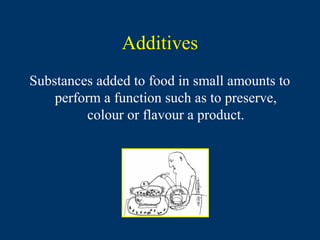
Additives
Substances added to food in small amounts to
    perform a function such as to preserve,
          colour or flavour a product.
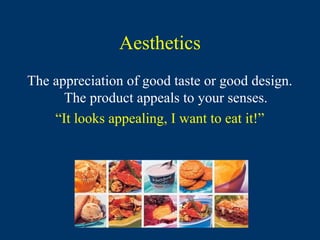
Aesthetics
The appreciation of good taste or good design.
      The product appeals to your senses.
    “It looks appealing, I want to eat it!”
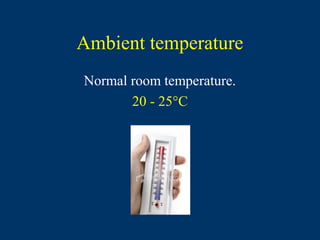
Ambient temperature
Normal room temperature.
       20 - 25°C
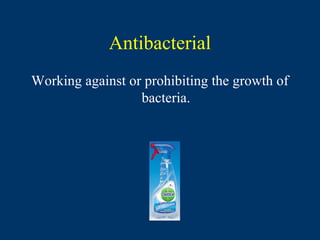
Antibacterial
Working against or prohibiting the growth of
                  bacteria.
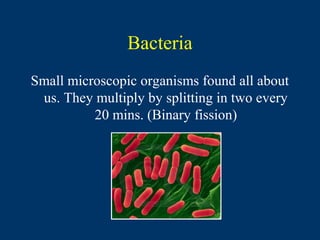
Bacteria
Small microscopic organisms found all about
 us. They multiply by splitting in two every
          20 mins. (Binary fission)
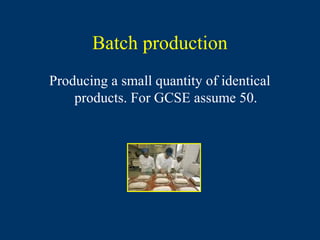
Batch production
Producing a small quantity of identical
    products. For GCSE assume 50.
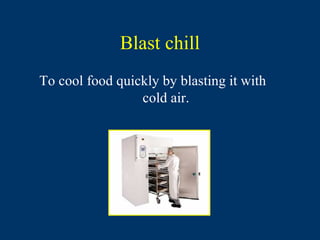
Blast chill
To cool food quickly by blasting it with
                 cold air.
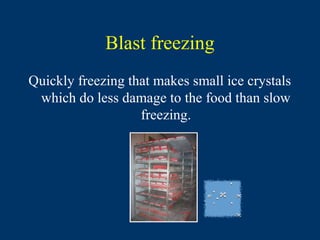
Blast freezing
Quickly freezing that makes small ice crystals
 which do less damage to the food than slow
                   freezing.
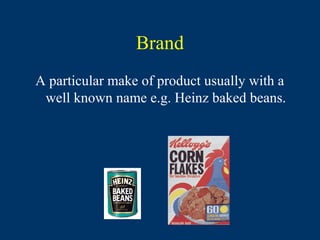
Brand
A particular make of product usually with a
 well known name e.g. Heinz baked beans.
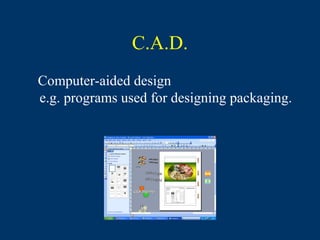
C.A.D.
Computer-aided design
e.g. programs used for designing packaging.
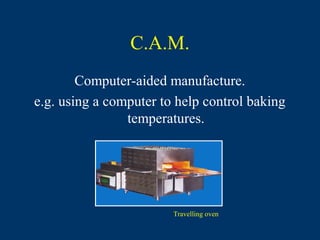
C.A.M.
        Computer-aided manufacture.
e.g. using a computer to help control baking
                temperatures.


                        Travelling oven
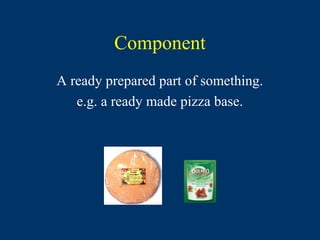
Component
A ready prepared part of something.
   e.g. a ready made pizza base.
Consumer
A person who buys or uses products and
               services.
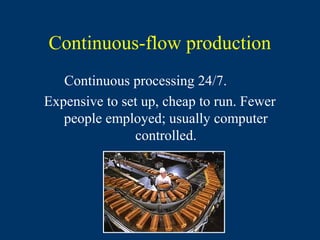
Continuous-flow production
   Continuous processing 24/7.
Expensive to set up, cheap to run. Fewer
   people employed; usually computer
               controlled.
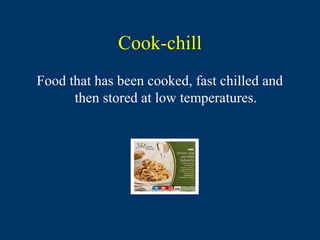
Cook-chill
Food that has been cooked, fast chilled and
      then stored at low temperatures.
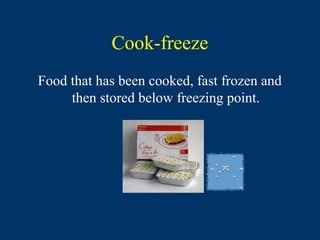
Cook-freeze
Food that has been cooked, fast frozen and
     then stored below freezing point.
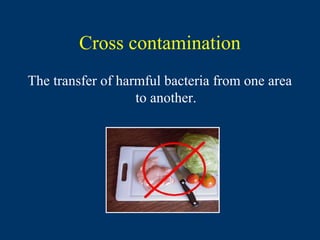
Cross contamination
The transfer of harmful bacteria from one area
                   to another.
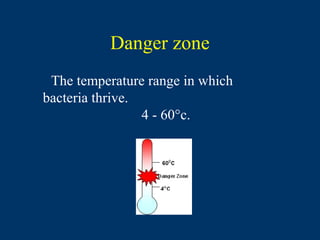
Danger zone
 The temperature range in which
bacteria thrive.
                 4 - 60°c.
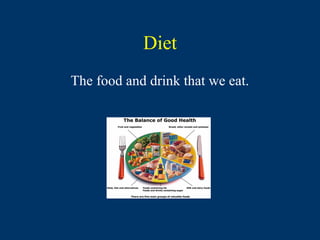
Diet
The food and drink that we eat.
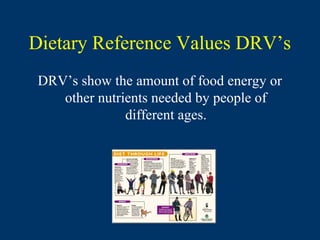
Dietary Reference Values DRV’s
 DRV’s show the amount of food energy or
    other nutrients needed by people of
               different ages.
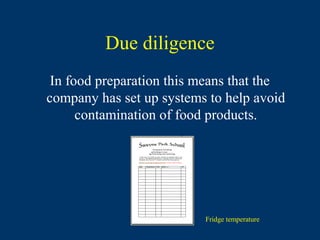
Due diligence
 In food preparation this means that the
company has set up systems to help avoid
      contamination of food products.


                          Fridge temperature
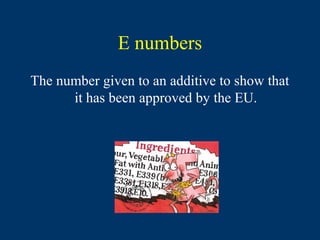
E numbers
The number given to an additive to show that
      it has been approved by the EU.
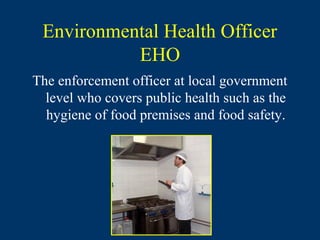
Environmental Health Officer
           EHO
The enforcement officer at local government
  level who covers public health such as the
  hygiene of food premises and food safety.
Flow diagram
Step by step chart or plan of a system or
           production process.
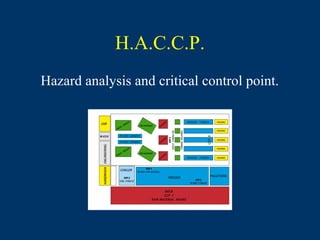
H.A.C.C.P.
Hazard analysis and critical control point.
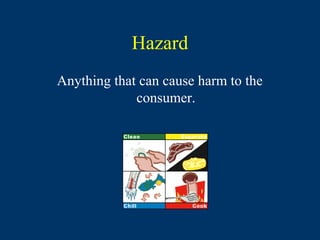
Hazard
Anything that can cause harm to the
             consumer.
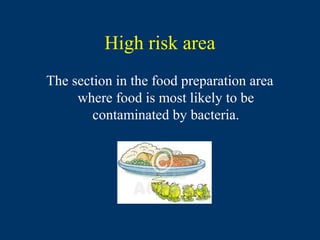
High risk area
The section in the food preparation area
     where food is most likely to be
        contaminated by bacteria.
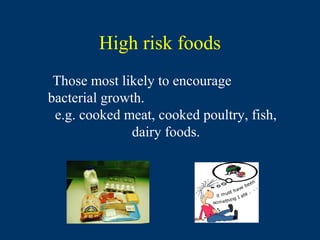
High risk foods
 Those most likely to encourage
bacterial growth.
 e.g. cooked meat, cooked poultry, fish,
               dairy foods.
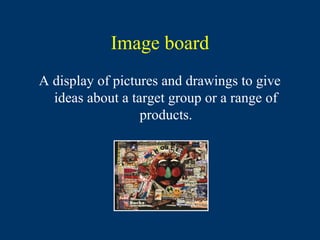
Image board
A display of pictures and drawings to give
  ideas about a target group or a range of
                  products.
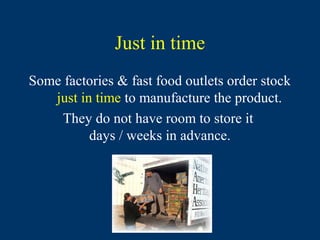
Just in time
Some factories & fast food outlets order stock
   just in time to manufacture the product.
    They do not have room to store it
          days / weeks in advance.
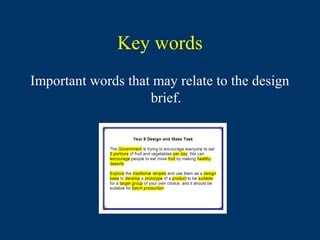
Key words
Important words that may relate to the design
                    brief.
Logo
The symbol of a company used on products.
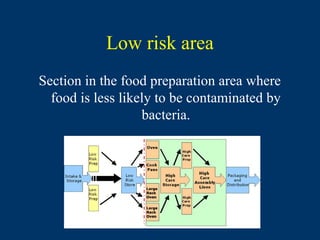
Low risk area
Section in the food preparation area where
  food is less likely to be contaminated by
                   bacteria.
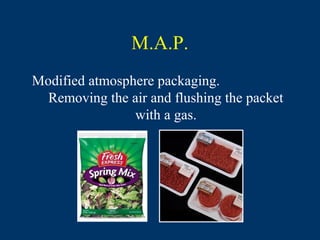
M.A.P.
Modified atmosphere packaging.
  Removing the air and flushing the packet
                with a gas.
Marketable product
One that appeals to people and will sell when
 it reaches the shops; to succeed, all products
              must be marketable.
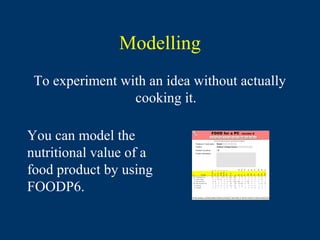
Modelling
 To experiment with an idea without actually
                 cooking it.

You can model the
nutritional value of a
food product by using
FOODP6.
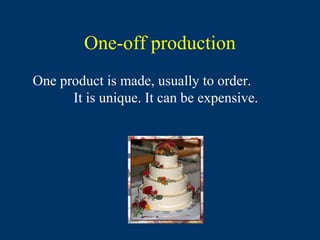
One-off production
One product is made, usually to order.
      It is unique. It can be expensive.
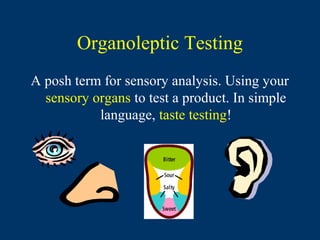
Organoleptic Testing
A posh term for sensory analysis. Using your
  sensory organs to test a product. In simple
           language, taste testing!
Portion
A portion for one is the amount of food that
      satisfies the need for one person.
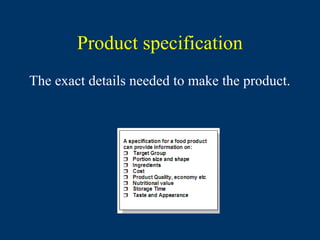
Product specification
The exact details needed to make the product.
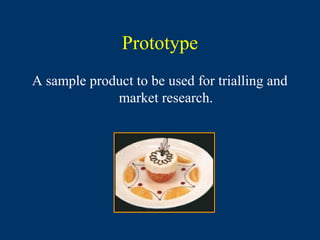
Prototype
A sample product to be used for trialling and
             market research.
Quality assurance
A system that is set up before a product is
made and which lays down procedures for
      making a safe, quality product.
Quality control
The steps in the process of making a product
   to make sure that it meets the standards;
         faulty products are removed.
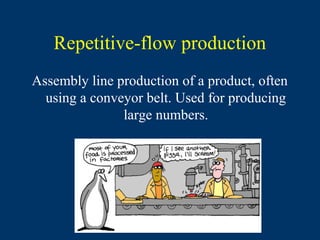
Repetitive-flow production
Assembly line production of a product, often
  using a conveyor belt. Used for producing
               large numbers.
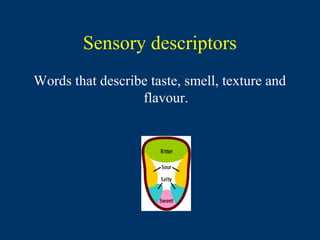
Sensory descriptors
Words that describe taste, smell, texture and
                  flavour.
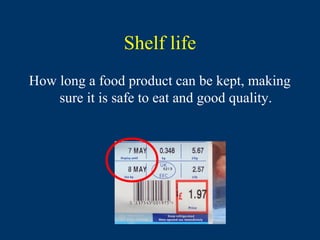
Shelf life
How long a food product can be kept, making
    sure it is safe to eat and good quality.
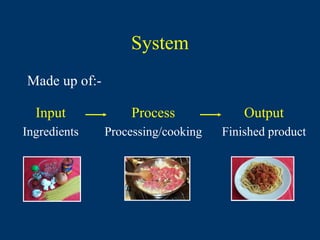
System
Made up of:-

  Input            Process              Output
Ingredients    Processing/cooking   Finished product
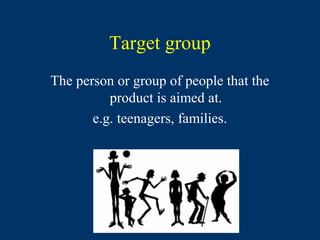
Target group
The person or group of people that the
          product is aimed at.
       e.g. teenagers, families.
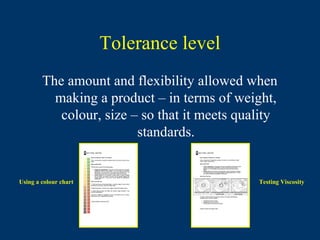
Tolerance level
        The amount and flexibility allowed when
          making a product – in terms of weight,
           colour, size – so that it meets quality
                         standards.


Using a colour chart                          Testing Viscosity
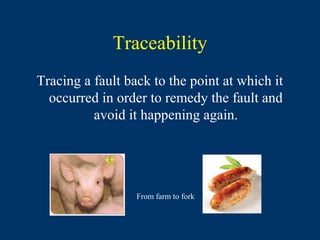
Traceability
Tracing a fault back to the point at which it
  occurred in order to remedy the fault and
          avoid it happening again.


                  From farm to fork
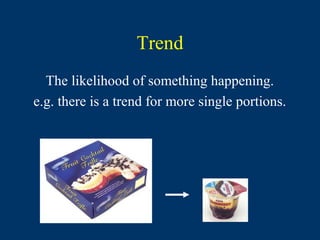
Trend
  The likelihood of something happening.
e.g. there is a trend for more single portions.

Key words in Food Technology

Editor's Notes

  • #2 Janet Harper [email_address] Produced as a slide show whilst a practical lesson might be going on for some “subliminal learning” to take place. Have also used it as a plenary: Ticket out the door; “Tell me one definition you learnt today”. If I have missed any important definitions out, please e-mail me! Most illustrations taken from a Google search, others from www.nutrition.org.uk or www.bmesonline.org.uk