Define the term ‘Catering’

A catering establishment is defined as one that provides food and or drink
(beverage).
This is known as a product-and-service provider.


Lots of different kinds of commercial (for money) businesses operate in the
catering industry, but there are also non-commercial businesses in the industry.
Types of Establishments - Catering
             (Hospitality will be looked at in more detail later in the course)


   There are 3 main categories into which a type of
   establishment can fall.


   1. Residential establishments
   2. Non-residential establishments
   3. Non-commercial residential establishments


   How many can you think of? - Complete your brainstorm
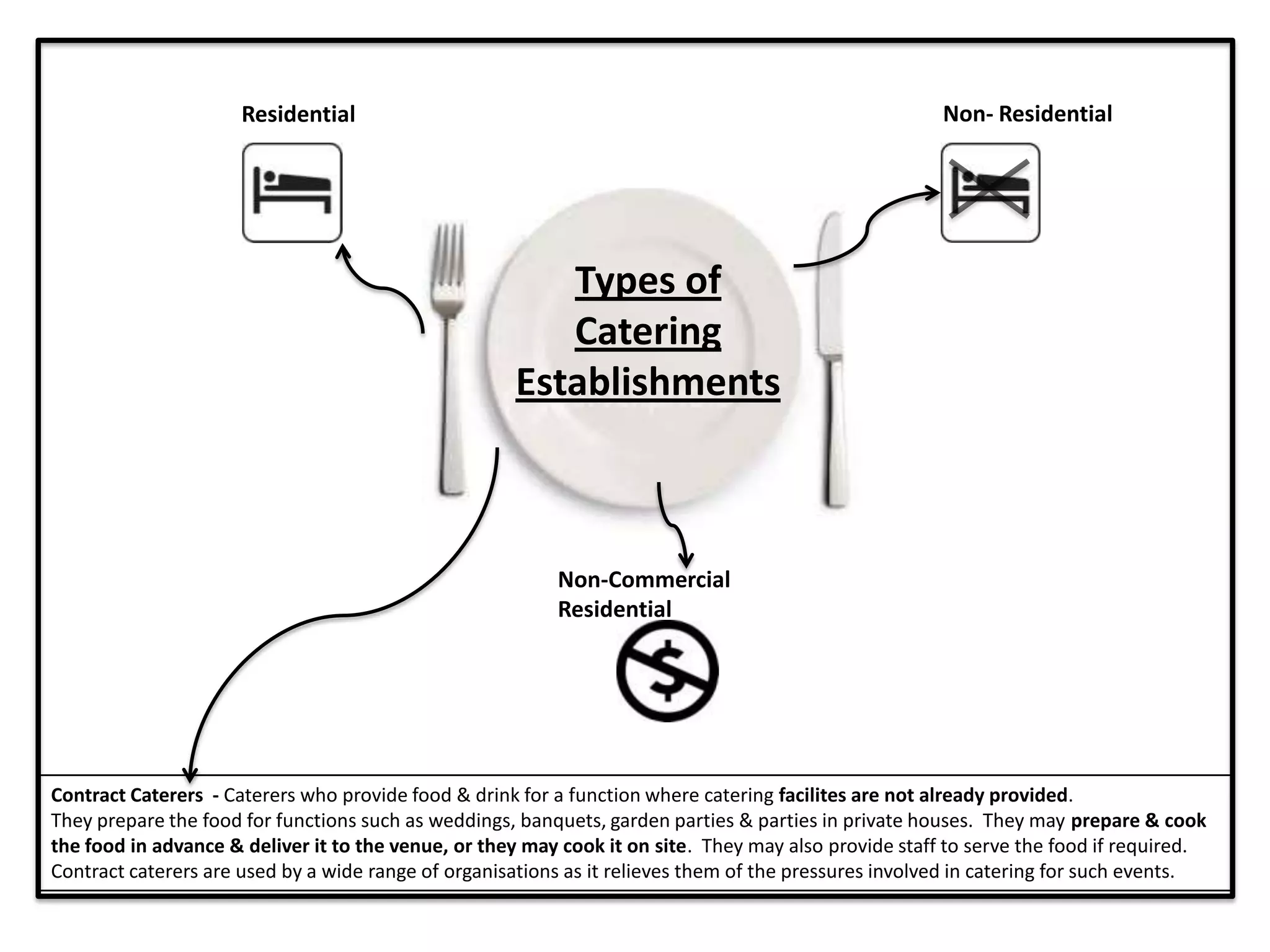
Residential                                                                      Non- Residential


                                                        Types of
                                                        Catering
                                                     Establishments


                                                          Non-Commercial
                                                          Residential


Contract Caterers - Caterers who provide food & drink for a function where catering facilites are not already provided.
They prepare the food for functions such as weddings, banquets, garden parties & parties in private houses. They may prepare & cook
the food in advance & deliver it to the venue, or they may cook it on site. They may also provide staff to serve the food if required.
Contract caterers are used by a wide range of organisations as it relieves them of the pressures involved in catering for such events.
Lists of types of Catering Establishments

 Residential                  Non -Residential                  Non-Commercial
                                                                residential Establishments
 •   Hotels                   • Restaurants
 •   Guest Houses             • Cafes                           •     Hospitals
 •   Holiday Parks            • Fast-food outlets               •     Residential homes
 •   Farmhouses               • Public houses                   •     Prisons
 •   Public Houses            • Wine bars                       •     Armed Services
 •   Bed and Breakfasts       • Delicatessen & Salad
                                Bars
                              • Take-away outlets
                              • School meals &
                                transport catering
                              • Burger vans


Task - Make sure you have included all of these in your brainstorm.

Now add some names of businesses that you know of next to each type of establishment.
E.g Fast-food outlets – Mc Donalds.
Public House
& Wine Bar
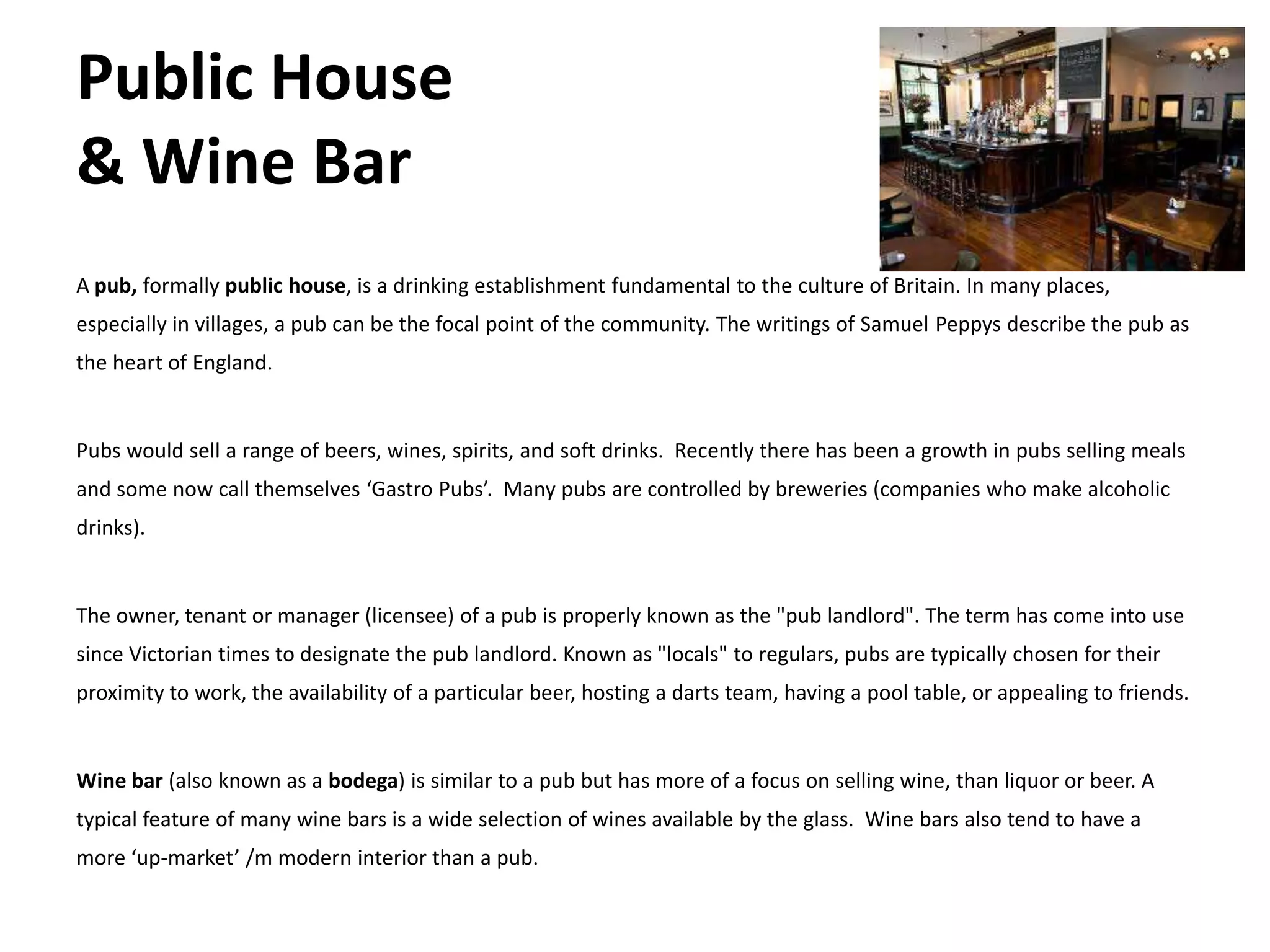
A pub, formally public house, is a drinking establishment fundamental to the culture of Britain. In many places,
especially in villages, a pub can be the focal point of the community. The writings of Samuel Peppys describe the pub as
the heart of England.


Pubs would sell a range of beers, wines, spirits, and soft drinks. Recently there has been a growth in pubs selling meals
and some now call themselves ‘Gastro Pubs’. Many pubs are controlled by breweries (companies who make alcoholic
drinks).


The owner, tenant or manager (licensee) of a pub is properly known as the "pub landlord". The term has come into use
since Victorian times to designate the pub landlord. Known as "locals" to regulars, pubs are typically chosen for their
proximity to work, the availability of a particular beer, hosting a darts team, having a pool table, or appealing to friends.


Wine bar (also known as a bodega) is similar to a pub but has more of a focus on selling wine, than liquor or beer. A
typical feature of many wine bars is a wide selection of wines available by the glass. Wine bars also tend to have a
more ‘up-market’ /m modern interior than a pub.
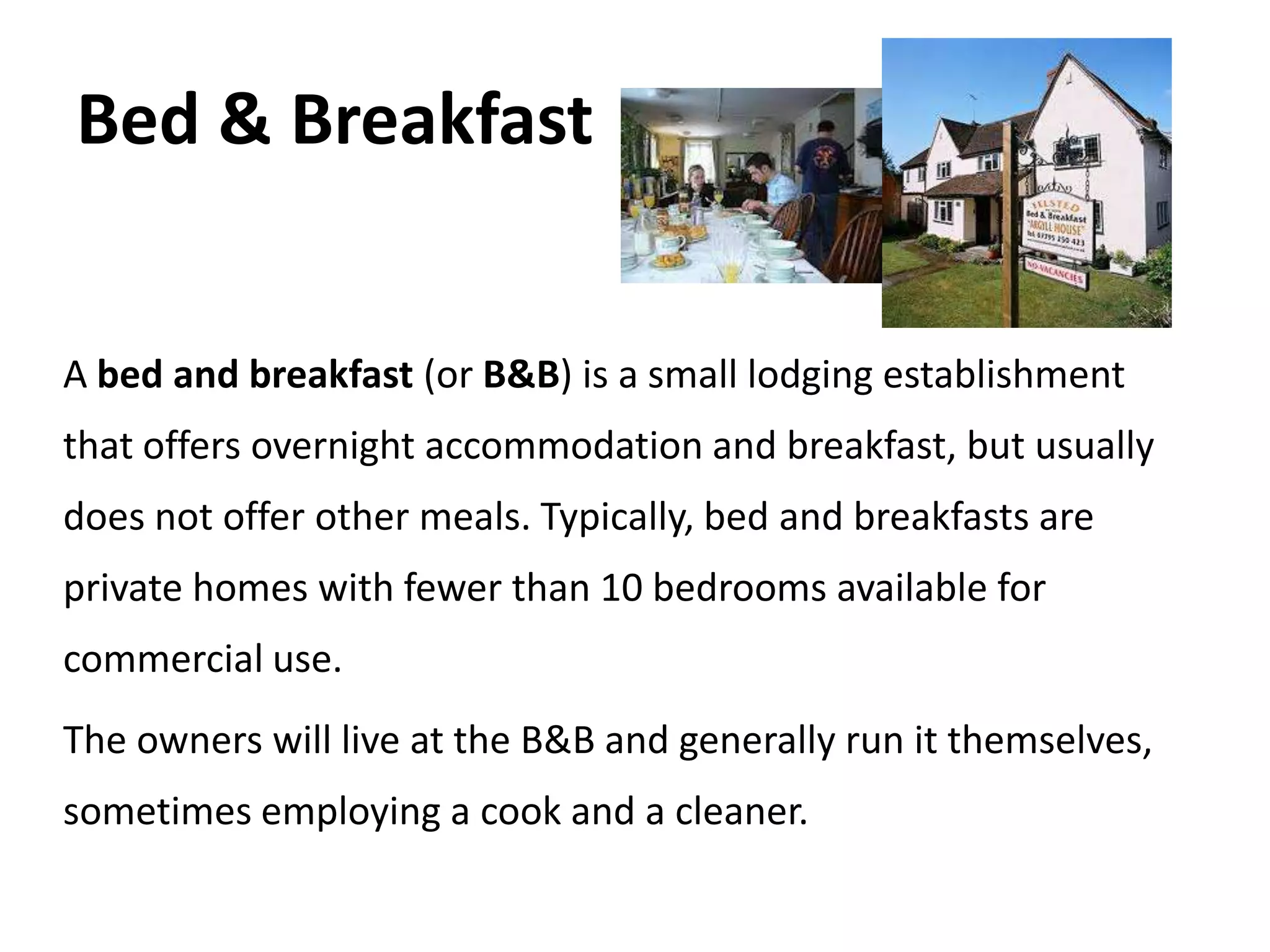
Bed & Breakfast


A bed and breakfast (or B&B) is a small lodging establishment
that offers overnight accommodation and breakfast, but usually
does not offer other meals. Typically, bed and breakfasts are
private homes with fewer than 10 bedrooms available for
commercial use.
The owners will live at the B&B and generally run it themselves,
sometimes employing a cook and a cleaner.
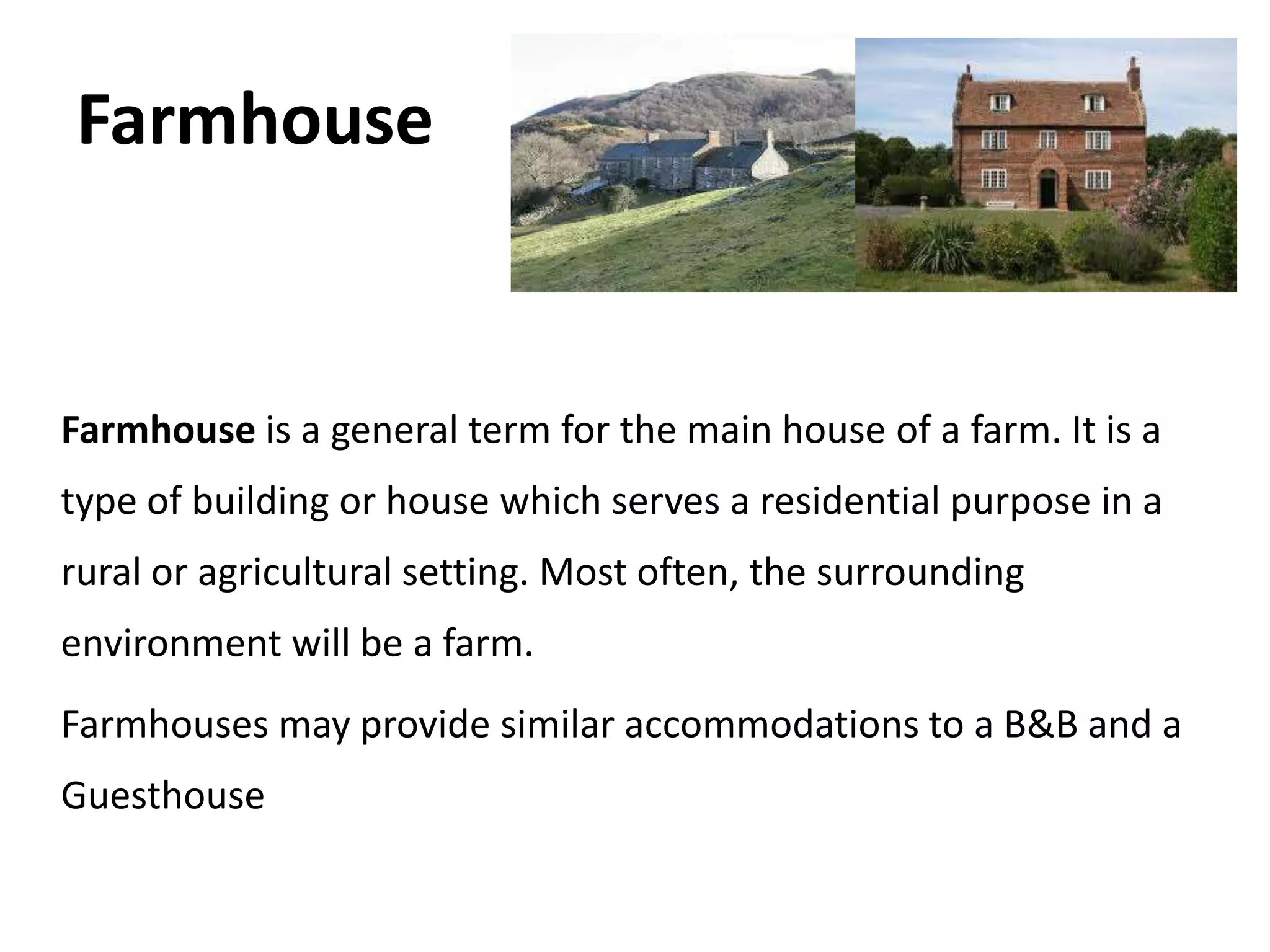
Farmhouse


Farmhouse is a general term for the main house of a farm. It is a
type of building or house which serves a residential purpose in a
rural or agricultural setting. Most often, the surrounding
environment will be a farm.
Farmhouses may provide similar accommodations to a B&B and a
Guesthouse
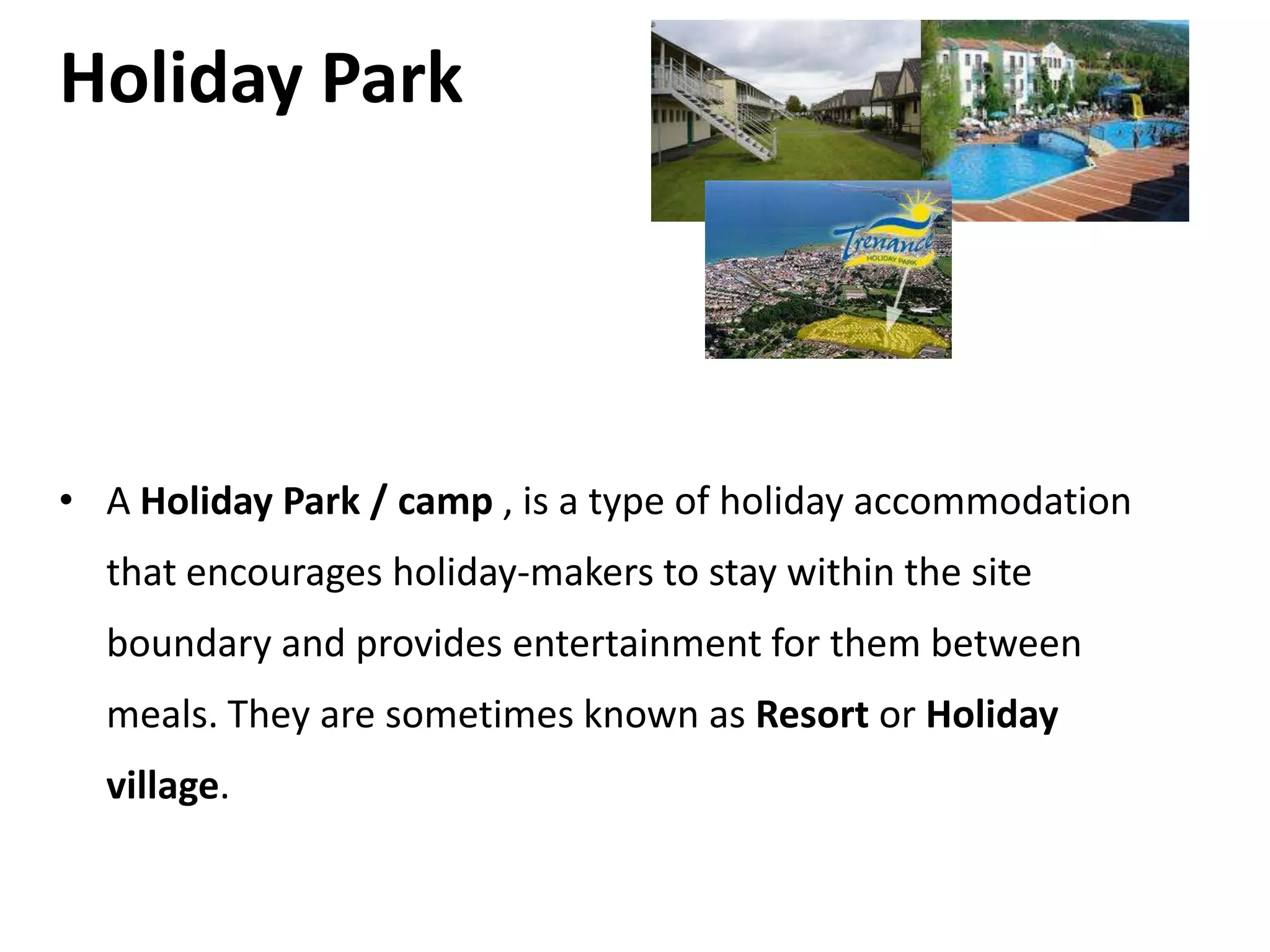
Holiday Park


• A Holiday Park / camp , is a type of holiday accommodation
  that encourages holiday-makers to stay within the site
  boundary and provides entertainment for them between
  meals. They are sometimes known as Resort or Holiday
  village.
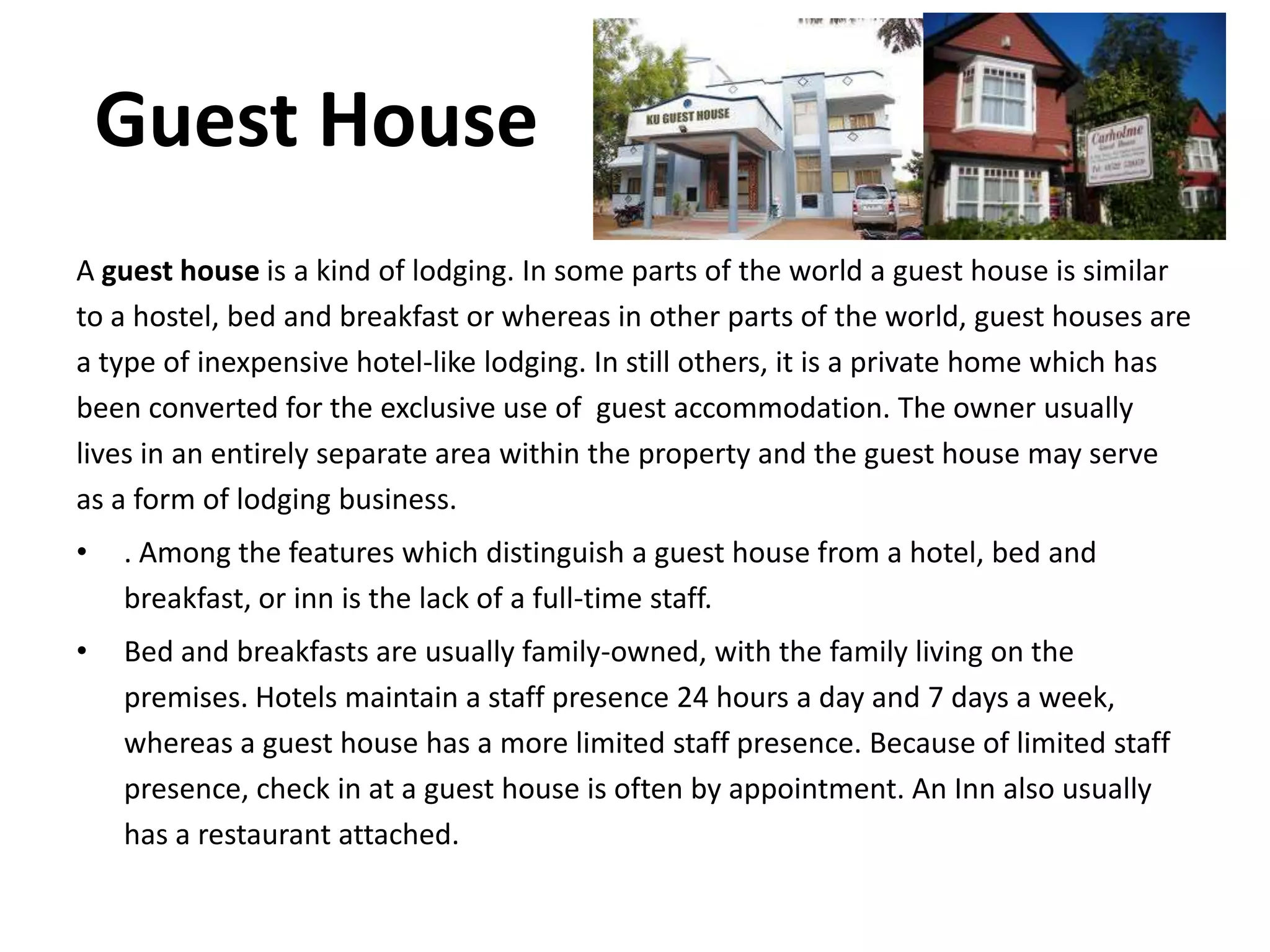
Guest House
A guest house is a kind of lodging. In some parts of the world a guest house is similar
to a hostel, bed and breakfast or whereas in other parts of the world, guest houses are
a type of inexpensive hotel-like lodging. In still others, it is a private home which has
been converted for the exclusive use of guest accommodation. The owner usually
lives in an entirely separate area within the property and the guest house may serve
as a form of lodging business.
•   . Among the features which distinguish a guest house from a hotel, bed and
    breakfast, or inn is the lack of a full-time staff.
•   Bed and breakfasts are usually family-owned, with the family living on the
    premises. Hotels maintain a staff presence 24 hours a day and 7 days a week,
    whereas a guest house has a more limited staff presence. Because of limited staff
    presence, check in at a guest house is often by appointment. An Inn also usually
    has a restaurant attached.
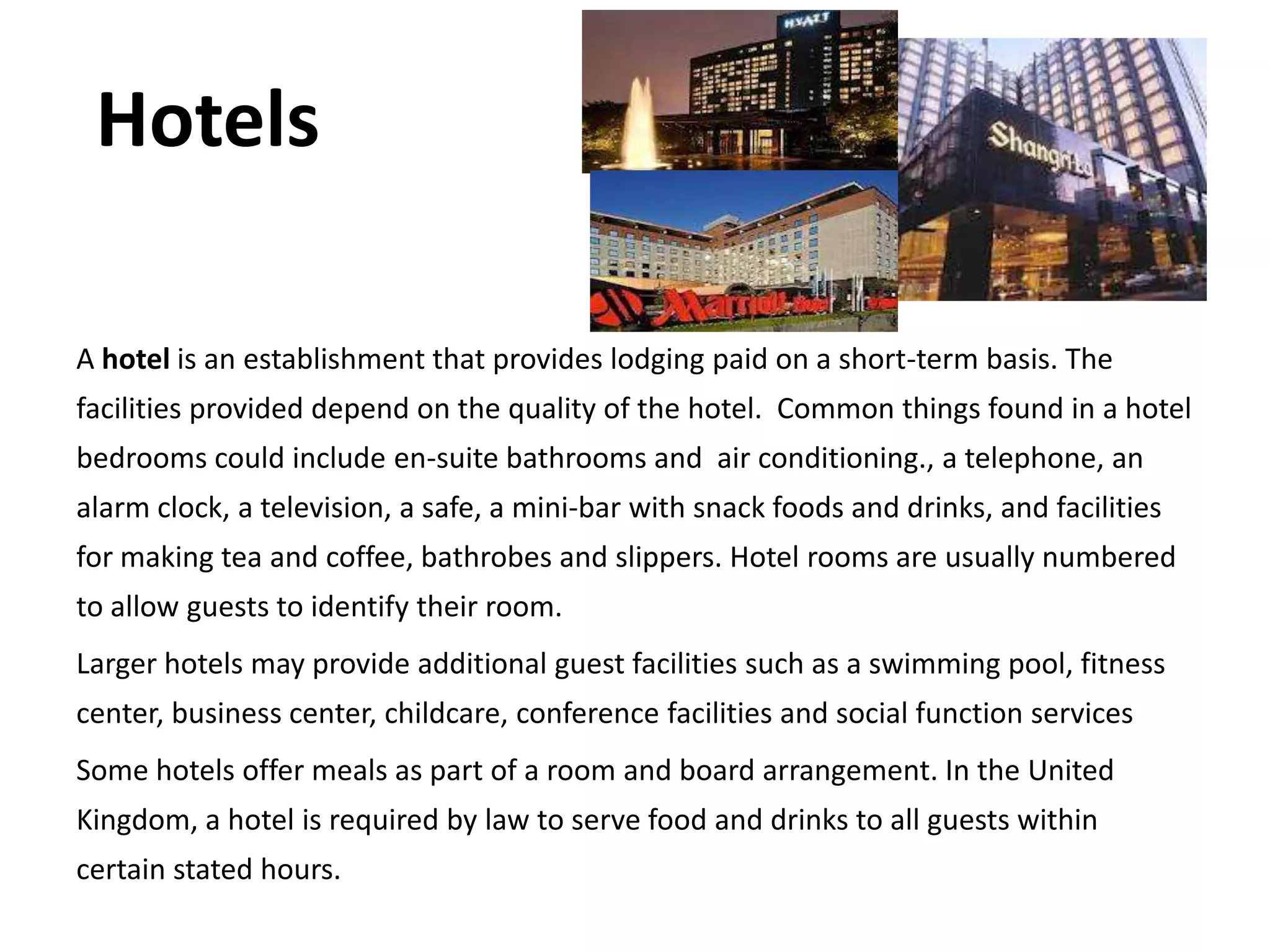
Hotels

A hotel is an establishment that provides lodging paid on a short-term basis. The
facilities provided depend on the quality of the hotel. Common things found in a hotel
bedrooms could include en-suite bathrooms and air conditioning., a telephone, an
alarm clock, a television, a safe, a mini-bar with snack foods and drinks, and facilities
for making tea and coffee, bathrobes and slippers. Hotel rooms are usually numbered
to allow guests to identify their room.
Larger hotels may provide additional guest facilities such as a swimming pool, fitness
center, business center, childcare, conference facilities and social function services
Some hotels offer meals as part of a room and board arrangement. In the United
Kingdom, a hotel is required by law to serve food and drinks to all guests within
certain stated hours.
Types of catering establishments

Types of catering establishments

  • 1.
    Define the term‘Catering’ A catering establishment is defined as one that provides food and or drink (beverage). This is known as a product-and-service provider. Lots of different kinds of commercial (for money) businesses operate in the catering industry, but there are also non-commercial businesses in the industry.
  • 2.
    Types of Establishments- Catering (Hospitality will be looked at in more detail later in the course) There are 3 main categories into which a type of establishment can fall. 1. Residential establishments 2. Non-residential establishments 3. Non-commercial residential establishments How many can you think of? - Complete your brainstorm
  • 3.
    Residential Non- Residential Types of Catering Establishments Non-Commercial Residential Contract Caterers - Caterers who provide food & drink for a function where catering facilites are not already provided. They prepare the food for functions such as weddings, banquets, garden parties & parties in private houses. They may prepare & cook the food in advance & deliver it to the venue, or they may cook it on site. They may also provide staff to serve the food if required. Contract caterers are used by a wide range of organisations as it relieves them of the pressures involved in catering for such events.
  • 4.
    Lists of typesof Catering Establishments Residential Non -Residential Non-Commercial residential Establishments • Hotels • Restaurants • Guest Houses • Cafes • Hospitals • Holiday Parks • Fast-food outlets • Residential homes • Farmhouses • Public houses • Prisons • Public Houses • Wine bars • Armed Services • Bed and Breakfasts • Delicatessen & Salad Bars • Take-away outlets • School meals & transport catering • Burger vans Task - Make sure you have included all of these in your brainstorm. Now add some names of businesses that you know of next to each type of establishment. E.g Fast-food outlets – Mc Donalds.
  • 5.
    Public House & WineBar A pub, formally public house, is a drinking establishment fundamental to the culture of Britain. In many places, especially in villages, a pub can be the focal point of the community. The writings of Samuel Peppys describe the pub as the heart of England. Pubs would sell a range of beers, wines, spirits, and soft drinks. Recently there has been a growth in pubs selling meals and some now call themselves ‘Gastro Pubs’. Many pubs are controlled by breweries (companies who make alcoholic drinks). The owner, tenant or manager (licensee) of a pub is properly known as the "pub landlord". The term has come into use since Victorian times to designate the pub landlord. Known as "locals" to regulars, pubs are typically chosen for their proximity to work, the availability of a particular beer, hosting a darts team, having a pool table, or appealing to friends. Wine bar (also known as a bodega) is similar to a pub but has more of a focus on selling wine, than liquor or beer. A typical feature of many wine bars is a wide selection of wines available by the glass. Wine bars also tend to have a more ‘up-market’ /m modern interior than a pub.
  • 6.
    Bed & Breakfast Abed and breakfast (or B&B) is a small lodging establishment that offers overnight accommodation and breakfast, but usually does not offer other meals. Typically, bed and breakfasts are private homes with fewer than 10 bedrooms available for commercial use. The owners will live at the B&B and generally run it themselves, sometimes employing a cook and a cleaner.
  • 7.
    Farmhouse Farmhouse is ageneral term for the main house of a farm. It is a type of building or house which serves a residential purpose in a rural or agricultural setting. Most often, the surrounding environment will be a farm. Farmhouses may provide similar accommodations to a B&B and a Guesthouse
  • 8.
    Holiday Park • AHoliday Park / camp , is a type of holiday accommodation that encourages holiday-makers to stay within the site boundary and provides entertainment for them between meals. They are sometimes known as Resort or Holiday village.
  • 9.
    Guest House A guesthouse is a kind of lodging. In some parts of the world a guest house is similar to a hostel, bed and breakfast or whereas in other parts of the world, guest houses are a type of inexpensive hotel-like lodging. In still others, it is a private home which has been converted for the exclusive use of guest accommodation. The owner usually lives in an entirely separate area within the property and the guest house may serve as a form of lodging business. • . Among the features which distinguish a guest house from a hotel, bed and breakfast, or inn is the lack of a full-time staff. • Bed and breakfasts are usually family-owned, with the family living on the premises. Hotels maintain a staff presence 24 hours a day and 7 days a week, whereas a guest house has a more limited staff presence. Because of limited staff presence, check in at a guest house is often by appointment. An Inn also usually has a restaurant attached.
  • 10.
    Hotels A hotel isan establishment that provides lodging paid on a short-term basis. The facilities provided depend on the quality of the hotel. Common things found in a hotel bedrooms could include en-suite bathrooms and air conditioning., a telephone, an alarm clock, a television, a safe, a mini-bar with snack foods and drinks, and facilities for making tea and coffee, bathrobes and slippers. Hotel rooms are usually numbered to allow guests to identify their room. Larger hotels may provide additional guest facilities such as a swimming pool, fitness center, business center, childcare, conference facilities and social function services Some hotels offer meals as part of a room and board arrangement. In the United Kingdom, a hotel is required by law to serve food and drinks to all guests within certain stated hours.