DIACYLGLYCEROL
SIGNALING PATHWAY
PREPARED BY YONAS TESHOME
DEPARTMENT OF MEDICAL PHYSIOLOGY
4/28/2016
6/21/2016
byYonasTeshome
1
Outline
 Objectives
 Introduction
 Dawn stream effectors of DAG
 PKC induced cellular processes
 The DGK, RasGRP, PKD, Chimaerins, and Munc 13
 Summary
 Reference
6/21/2016by Yonas Teshome
2
Objectives
At the end of this session you will be able to:
 Define diacylglycerol
 Describe the signaling pathways of diacyleglycerol
 List the down stream effectors of DAG and
 List some of the cellular processes takes place by DAG through PKC
6/21/2016by Yonas Teshome
3
Introduction
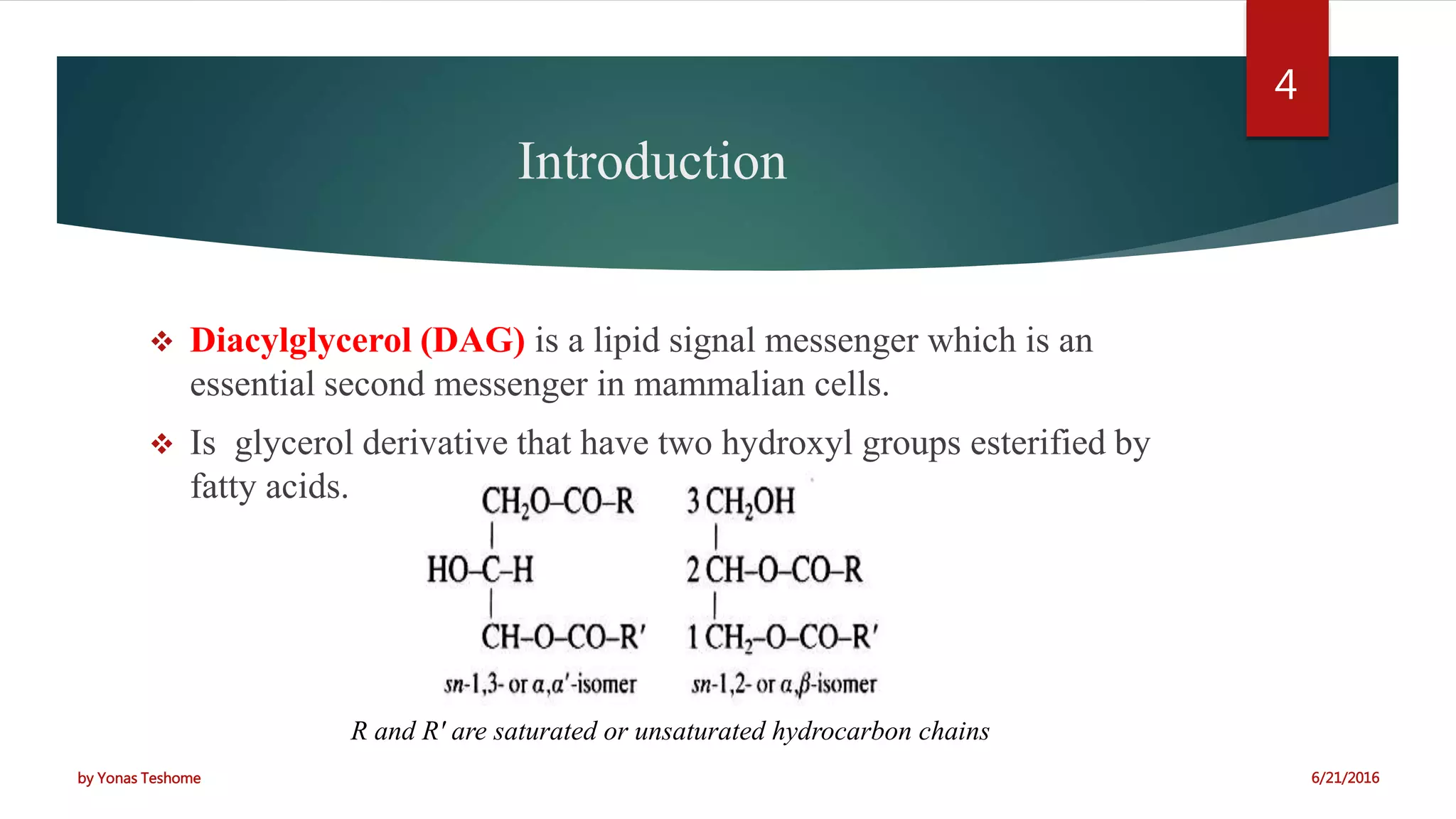
 Diacylglycerol (DAG) is a lipid signal messenger which is an
essential second messenger in mammalian cells.
 Is glycerol derivative that have two hydroxyl groups esterified by
fatty acids.
6/21/2016by Yonas Teshome
4
R and R' are saturated or unsaturated hydrocarbon chains
Cont...
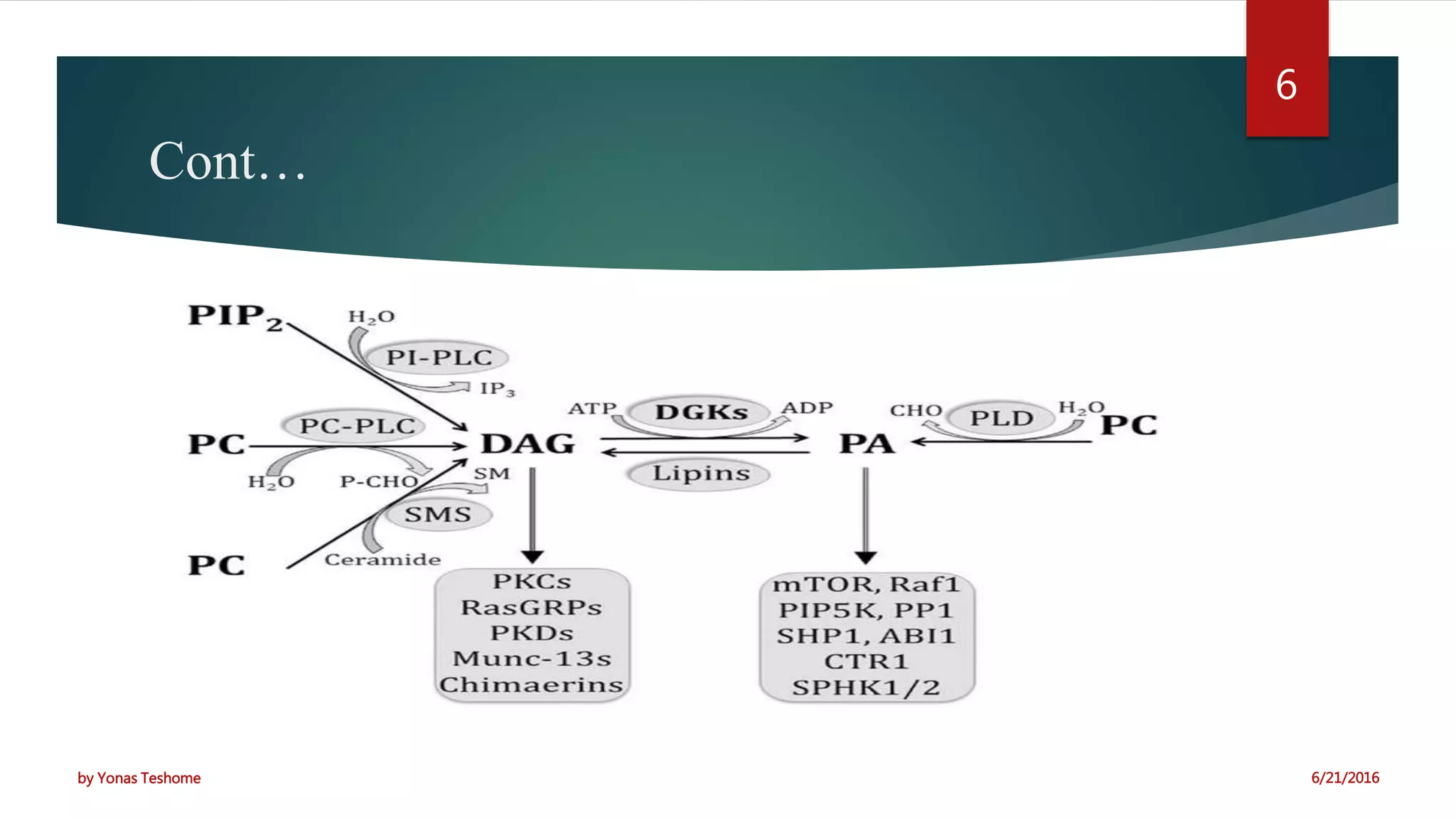
 Key enzymes in most of the signaling processes that generate DAG are the
phosphatidylinositol 4,5-bisphosphate- specific phospholipase C isozymes.
 Hydrolysis of Phosphatidyl inositol 4,5 bisphosphate (PIP2) by PLC causes the
formation of DAG and inositol 1,4,5-trisphosphate (IP3).
 In compared to IP3, DAG is very nonpolar molecule therefore it remain in the
membrane while IP3 is released into cytosol.
 In addition, DAGs are produced from phosphatidylcholine (PC) by two
subsequent reactions involving two mammalian PC-specific phospholipase D
isozymes (PCPLDs) and phosphatidic acid phosphohydrolase.
6/21/2016by Yonas Teshome
5
Cont…
6/21/2016by Yonas Teshome
6
Cont…
 The most prominent downstream effector of diacylglycerol and the functionally
analogous phorbol esters belong to the protein kinase C family, but at least five
alternative types are known:
 Protein kinase D,
 RasGRPs,
 Chimaerins, and
 Munc13s.
 These can functions independently of protein kinase C isozymes, and regulates
processes as diverse as gene transcription, lipid signaling, cytoskeletal dynamics,
intracellular membrane trafficking, or neurotransmitter release.
6/21/2016by Yonas Teshome
7
Signaling pathway through PKC
 Protein kinase C is a family of protein kinase enzymes that are involved in
controlling the function of other proteins through phosphorylation.
 They are divided into three subfamilies, based on their second messenger
requirements:
 Conventional (c)PKCs contain the isoforms α, βI, βII, and γ. These require
Ca2+, DAG, and a phospholipid such as phosphatidylserine for activation.
 Novel (n)PKCs include the δ, ε, η, and θ isoforms, and require DAG, but do
not require Ca2+ for activation.
 Atypical (a)PKCs includes ζ and λ isoforms.
6/21/2016by Yonas Teshome
8
Cont…
6/21/2016by Yonas Teshome
9
PKC signaling induced cellular processes
 PKC is involved in regulation of diverse cellular processes including
proliferation, differentiation, neural development, synaptic transmission, axonal
regeneration, smooth muscle contraction, gene expression, etc.
Example: Cell proliferation by PKC signaling
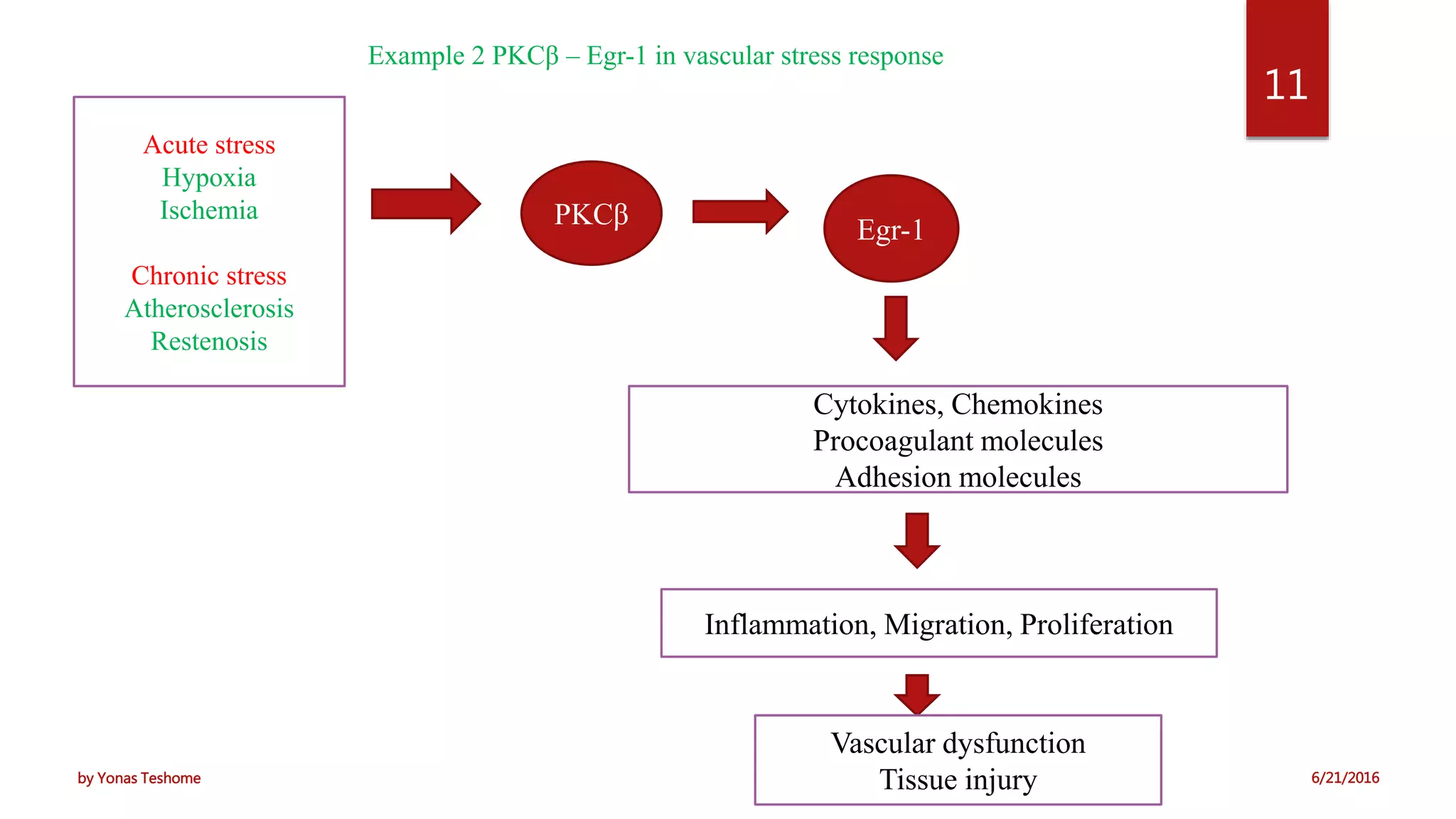
 Activation of PKC induces phosphorylation of transcription factor serum
response factor (SRF).
 SRF regulates immediate early genes (IEGs) such as Egr-1 (early growth
response gene 1) that control cell proliferation.
 Immediate early genes with proteins such as c-jun, c-fos, myc which are
transcription factors and activate target gene resulting in cell proliferation.
6/21/2016by Yonas Teshome
10
Acute stress
Hypoxia
Ischemia
Chronic stress
Atherosclerosis
Restenosis
PKCβ
Egr-1
Cytokines, Chemokines
Procoagulant molecules
Adhesion molecules
Inflammation, Migration, Proliferation
Vascular dysfunction
Tissue injury
Example 2 PKCβ – Egr-1 in vascular stress response
6/21/2016by Yonas Teshome
11
cont…
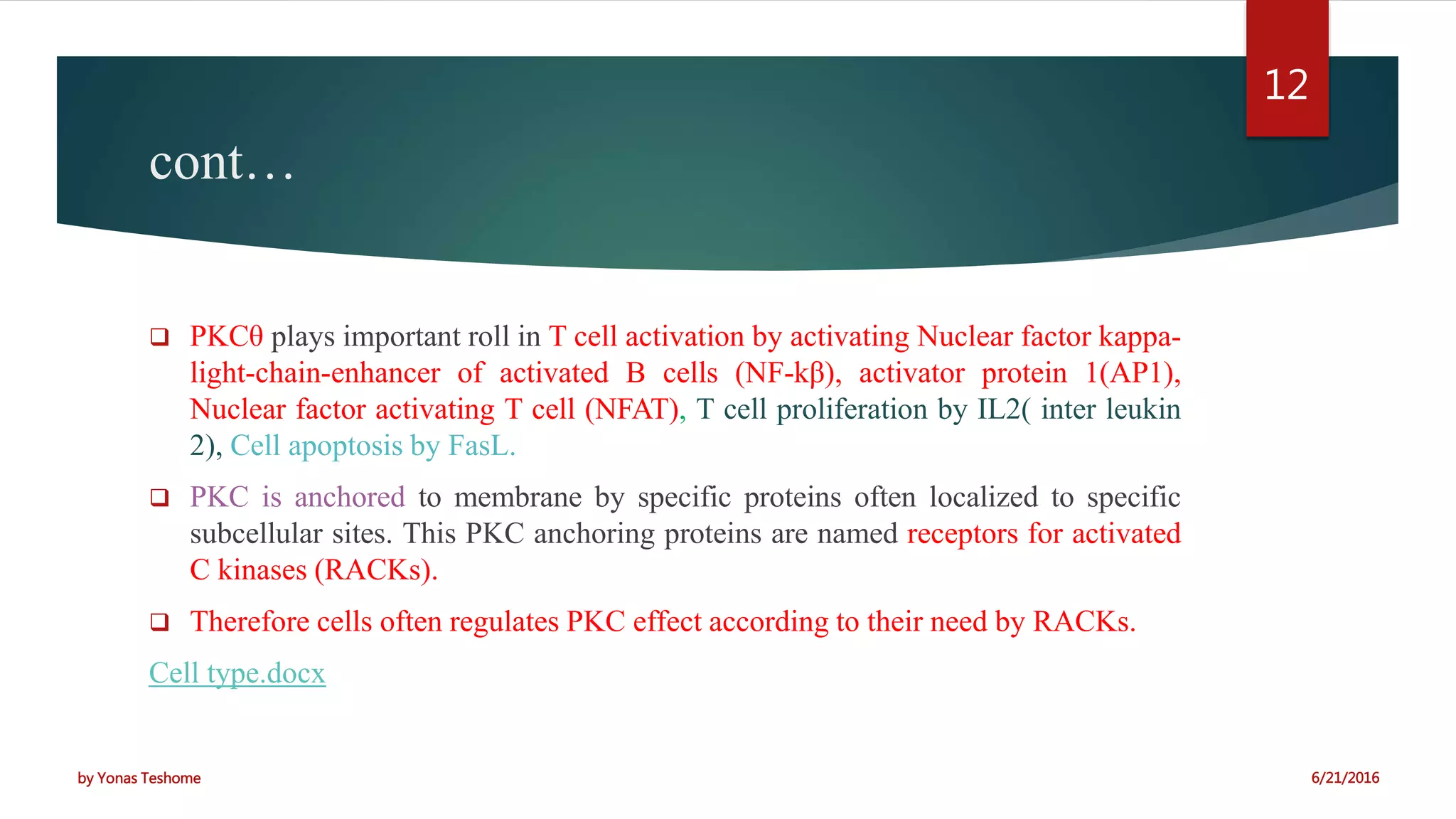
 PKCθ plays important roll in T cell activation by activating Nuclear factor kappa-
light-chain-enhancer of activated B cells (NF-kβ), activator protein 1(AP1),
Nuclear factor activating T cell (NFAT), T cell proliferation by IL2( inter leukin
2), Cell apoptosis by FasL.
 PKC is anchored to membrane by specific proteins often localized to specific
subcellular sites. This PKC anchoring proteins are named receptors for activated
C kinases (RACKs).
 Therefore cells often regulates PKC effect according to their need by RACKs.
Cell type.docx
6/21/2016by Yonas Teshome
12
Other down stream effectors of DAG
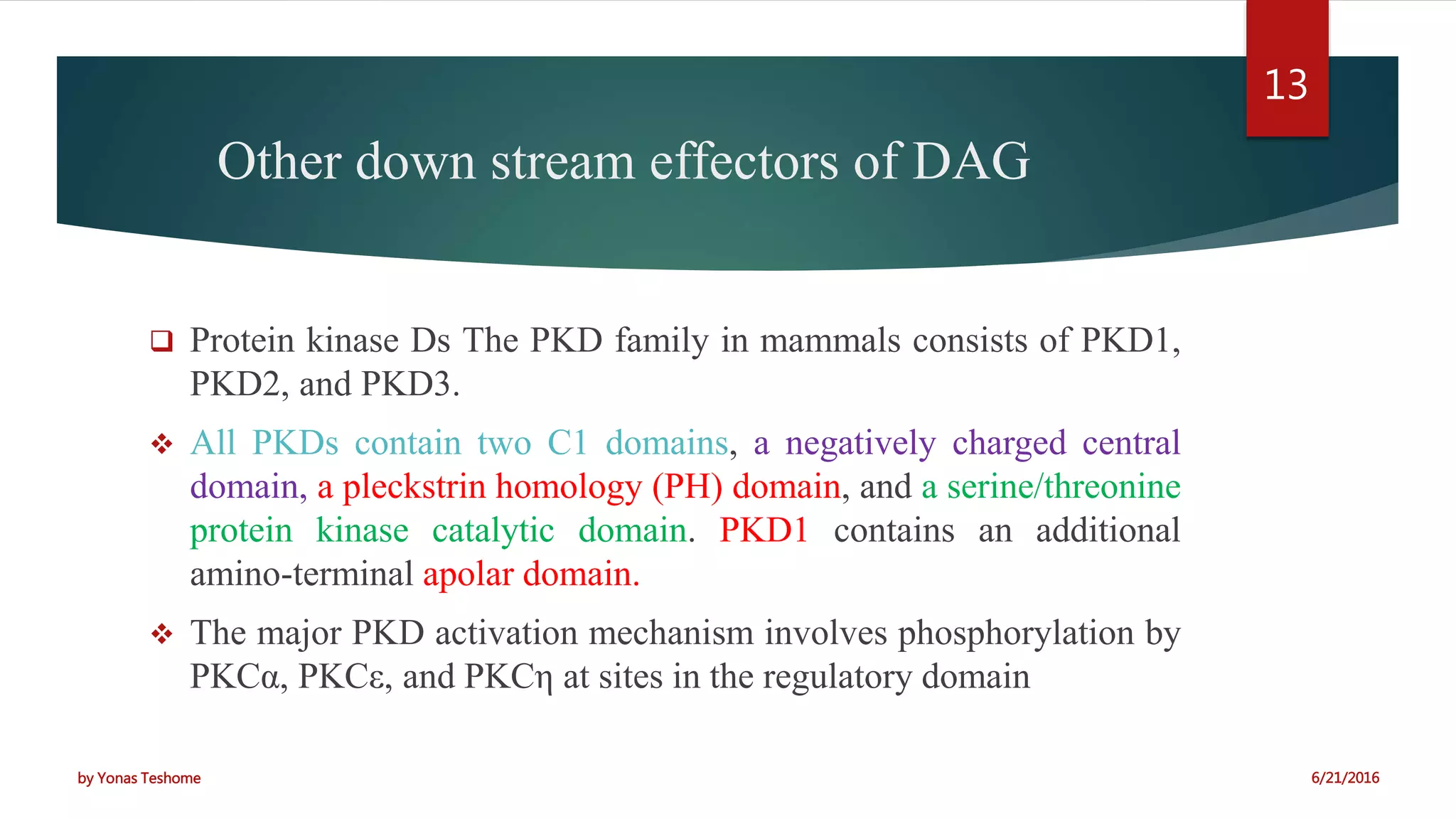
 Protein kinase Ds The PKD family in mammals consists of PKD1,
PKD2, and PKD3.
 All PKDs contain two C1 domains, a negatively charged central
domain, a pleckstrin homology (PH) domain, and a serine/threonine
protein kinase catalytic domain. PKD1 contains an additional
amino-terminal apolar domain.
 The major PKD activation mechanism involves phosphorylation by
PKCα, PKCε, and PKCη at sites in the regulatory domain
6/21/2016by Yonas Teshome
13
Cont….
6/21/2016by Yonas Teshome
14
Cont…
6/21/2016by Yonas Teshome
15
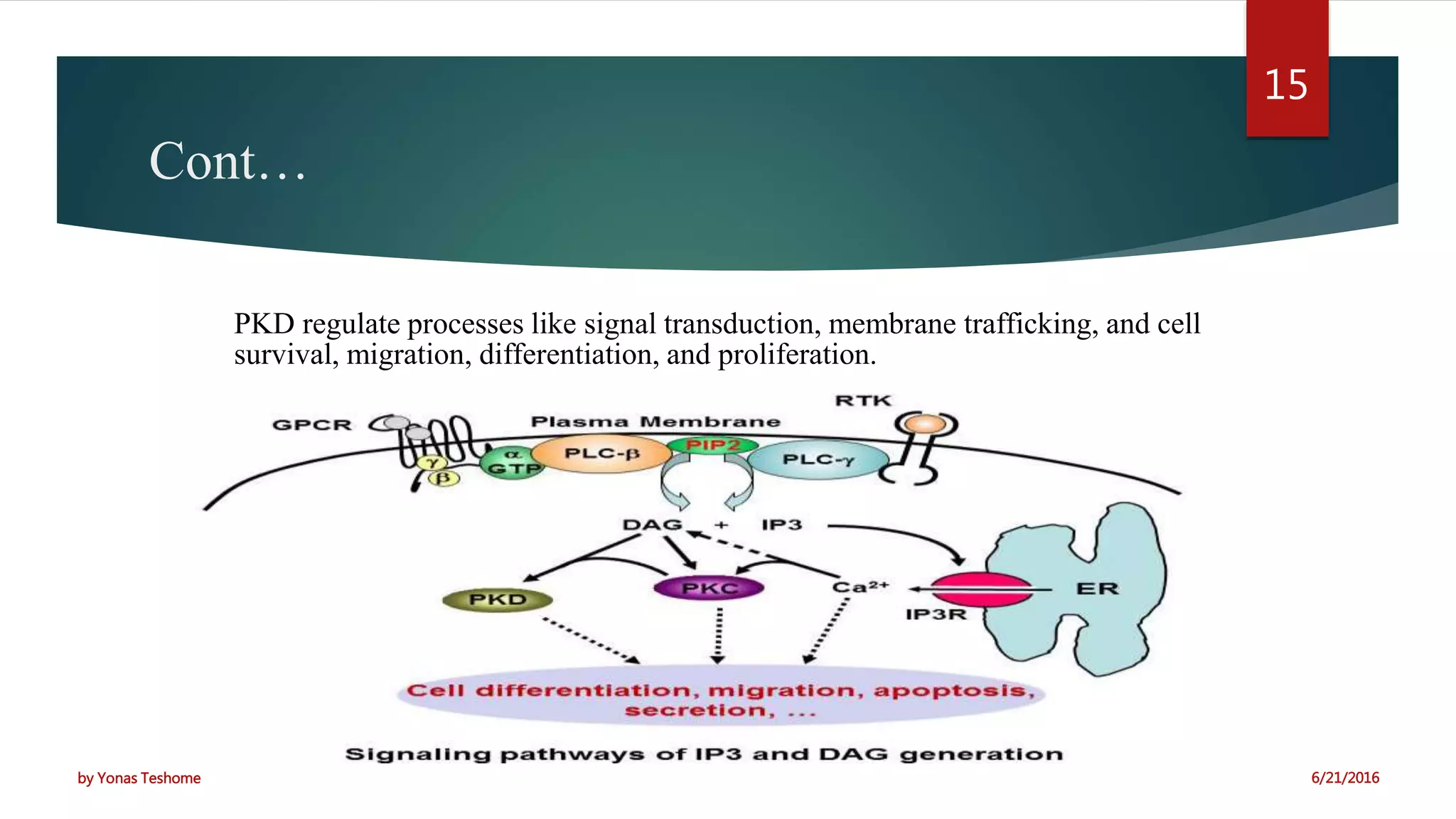
PKD regulate processes like signal transduction, membrane trafficking, and cell
survival, migration, differentiation, and proliferation.
Cont…
 Through their RasGEF domains, most RasGRPs(Ras guanyl
nucleotide-releasing protein) promote GDP/GTP exchange and
activation of Ras and related small GTPases, which leads to the
stimulation of the Raf-MEK-ERK cascade and to the regulation of
other signaling pathways.
 Through activation of the Raf-MEK-ERK pathway, RasGRPs have
been implicated in cell differentiation, cell proliferation, cell
transformation, T-cell receptor signaling, T cell differentiation, B-
cell receptor signaling, and neuronal differentiation.
6/21/2016by Yonas Teshome
16
Cont…
 Chimaerins the first high affinity non-PKC DAG/PE receptors
discovered, By inactivating Rac, necessarily interfere with all
downstream effects of Rac (e.g. formation of lamellipodia and
membrane ruffles, and loss of stress fibers).
 Generally, chimaerins are implicated in diverse cellular processes
such as cell adhesion, cytoskeletal dynamics, lamellipodia/
filopodia formation, phagocytosis, and cell proliferation.
6/21/2016by Yonas Teshome
17
Cont…
 Munc13s act by unfolding and activating the soluble N-ethyl
maleimide sensitive factor attachment protein receptor (SNARE)
protein Syntaxin and thereby promoting SNARE complex
formation and secretory vesicle priming.
 Munc13s rather than PKCs are the only functionally relevant DAG
sensitive presynaptic regulators of transmitter release. Similarly,
insulin secretion from pancreatic b cells is increased by Munc13
action in experiment.
6/21/2016by Yonas Teshome
18
Regulation of DAG
 DAG kinases phosphorylate DAG to form phosphatidic acid.
 DAG kinases have a major role in intracellular signaling in which
they terminate the DAG signal generated by PLCs and form
phosphatidic acid, which itself is a signaling molecule.
 DAG kinases are thought to be active only in spatially restricted
compartments following physiological DAG generation.
 One such subcellular compartment is the cytoskeleton where DAG
kinases might regulate cytoskeletal dynamics by producing
phosphatidic acid, which would affect actin capping proteins and
actin polymerization. 6/21/2016by Yonas Teshome
19
 In addition, DAGkinase dependent regulation of DAG and
phosphatidic acid levels affect GTPase activating proteins for Rho
family members and certain DAG kinases interact directly with
Rho GTPase.
 DAG kinases(α,β,γ) are also constitutively localized in or recruited
to nuclear compartments where they are thought to regulate a
strictly compartmentalized DAG signaling pathway that controls
cell proliferation.
6/21/2016by Yonas Teshome
20
Summary
 DAG is an essential second messenger in mammalian cells.
 DAG is formed by hydrolysis of PIP2 by an enzyme called PLC.
 Intracellular targets of DAG are: Protein kinase C, Protein kinase D, RasGRPs,
Chimaerins, and Munc13s.
 As a second messenger DAG signals diverse cellular processes including
proliferation, differentiation, neural development, synaptic transmission, axonal
regeneration, smooth muscle contraction, gene expression, etc.
 DAG kinases have a major role in intracellular signaling in which they terminate
the DAG signal generated by PLCs with receptors for activated C kinases
(RACKs).
6/21/2016by Yonas Teshome
21
References
 N. Brose, A. Betz and H. Wegmeyer, Divergent and convergent signaling by the
diacylglycerol second messenger pathway in mammals
 Yukiko K. Kaneko* and T. Ishikawa, Diacylglycerol Signaling Pathway in
Pancreatic β-Cells: An Essential Role of Diacylglycerol Kinase in the Regulation
of Insulin Secretion, Shizuoka 422–8526, Japan. Received January 20, 2015
 https://en.wikipedia.org/wiki/Protein_kinase_C
6/21/2016by Yonas Teshome
22
THE END!
THANK YOU
6/21/2016by Yonas Teshome
23

Diacylglycerol signaling pathway

  • 1.
    DIACYLGLYCEROL SIGNALING PATHWAY PREPARED BYYONAS TESHOME DEPARTMENT OF MEDICAL PHYSIOLOGY 4/28/2016 6/21/2016 byYonasTeshome 1
  • 2.
    Outline  Objectives  Introduction Dawn stream effectors of DAG  PKC induced cellular processes  The DGK, RasGRP, PKD, Chimaerins, and Munc 13  Summary  Reference 6/21/2016by Yonas Teshome 2
  • 3.
    Objectives At the endof this session you will be able to:  Define diacylglycerol  Describe the signaling pathways of diacyleglycerol  List the down stream effectors of DAG and  List some of the cellular processes takes place by DAG through PKC 6/21/2016by Yonas Teshome 3
  • 4.
    Introduction  Diacylglycerol (DAG)is a lipid signal messenger which is an essential second messenger in mammalian cells.  Is glycerol derivative that have two hydroxyl groups esterified by fatty acids. 6/21/2016by Yonas Teshome 4 R and R' are saturated or unsaturated hydrocarbon chains
  • 5.
    Cont...  Key enzymesin most of the signaling processes that generate DAG are the phosphatidylinositol 4,5-bisphosphate- specific phospholipase C isozymes.  Hydrolysis of Phosphatidyl inositol 4,5 bisphosphate (PIP2) by PLC causes the formation of DAG and inositol 1,4,5-trisphosphate (IP3).  In compared to IP3, DAG is very nonpolar molecule therefore it remain in the membrane while IP3 is released into cytosol.  In addition, DAGs are produced from phosphatidylcholine (PC) by two subsequent reactions involving two mammalian PC-specific phospholipase D isozymes (PCPLDs) and phosphatidic acid phosphohydrolase. 6/21/2016by Yonas Teshome 5
  • 6.
  • 7.
    Cont…  The mostprominent downstream effector of diacylglycerol and the functionally analogous phorbol esters belong to the protein kinase C family, but at least five alternative types are known:  Protein kinase D,  RasGRPs,  Chimaerins, and  Munc13s.  These can functions independently of protein kinase C isozymes, and regulates processes as diverse as gene transcription, lipid signaling, cytoskeletal dynamics, intracellular membrane trafficking, or neurotransmitter release. 6/21/2016by Yonas Teshome 7
  • 8.
    Signaling pathway throughPKC  Protein kinase C is a family of protein kinase enzymes that are involved in controlling the function of other proteins through phosphorylation.  They are divided into three subfamilies, based on their second messenger requirements:  Conventional (c)PKCs contain the isoforms α, βI, βII, and γ. These require Ca2+, DAG, and a phospholipid such as phosphatidylserine for activation.  Novel (n)PKCs include the δ, ε, η, and θ isoforms, and require DAG, but do not require Ca2+ for activation.  Atypical (a)PKCs includes ζ and λ isoforms. 6/21/2016by Yonas Teshome 8
  • 9.
  • 10.
    PKC signaling inducedcellular processes  PKC is involved in regulation of diverse cellular processes including proliferation, differentiation, neural development, synaptic transmission, axonal regeneration, smooth muscle contraction, gene expression, etc. Example: Cell proliferation by PKC signaling  Activation of PKC induces phosphorylation of transcription factor serum response factor (SRF).  SRF regulates immediate early genes (IEGs) such as Egr-1 (early growth response gene 1) that control cell proliferation.  Immediate early genes with proteins such as c-jun, c-fos, myc which are transcription factors and activate target gene resulting in cell proliferation. 6/21/2016by Yonas Teshome 10
  • 11.
    Acute stress Hypoxia Ischemia Chronic stress Atherosclerosis Restenosis PKCβ Egr-1 Cytokines,Chemokines Procoagulant molecules Adhesion molecules Inflammation, Migration, Proliferation Vascular dysfunction Tissue injury Example 2 PKCβ – Egr-1 in vascular stress response 6/21/2016by Yonas Teshome 11
  • 12.
    cont…  PKCθ playsimportant roll in T cell activation by activating Nuclear factor kappa- light-chain-enhancer of activated B cells (NF-kβ), activator protein 1(AP1), Nuclear factor activating T cell (NFAT), T cell proliferation by IL2( inter leukin 2), Cell apoptosis by FasL.  PKC is anchored to membrane by specific proteins often localized to specific subcellular sites. This PKC anchoring proteins are named receptors for activated C kinases (RACKs).  Therefore cells often regulates PKC effect according to their need by RACKs. Cell type.docx 6/21/2016by Yonas Teshome 12
  • 13.
    Other down streameffectors of DAG  Protein kinase Ds The PKD family in mammals consists of PKD1, PKD2, and PKD3.  All PKDs contain two C1 domains, a negatively charged central domain, a pleckstrin homology (PH) domain, and a serine/threonine protein kinase catalytic domain. PKD1 contains an additional amino-terminal apolar domain.  The major PKD activation mechanism involves phosphorylation by PKCα, PKCε, and PKCη at sites in the regulatory domain 6/21/2016by Yonas Teshome 13
  • 14.
  • 15.
    Cont… 6/21/2016by Yonas Teshome 15 PKDregulate processes like signal transduction, membrane trafficking, and cell survival, migration, differentiation, and proliferation.
  • 16.
    Cont…  Through theirRasGEF domains, most RasGRPs(Ras guanyl nucleotide-releasing protein) promote GDP/GTP exchange and activation of Ras and related small GTPases, which leads to the stimulation of the Raf-MEK-ERK cascade and to the regulation of other signaling pathways.  Through activation of the Raf-MEK-ERK pathway, RasGRPs have been implicated in cell differentiation, cell proliferation, cell transformation, T-cell receptor signaling, T cell differentiation, B- cell receptor signaling, and neuronal differentiation. 6/21/2016by Yonas Teshome 16
  • 17.
    Cont…  Chimaerins thefirst high affinity non-PKC DAG/PE receptors discovered, By inactivating Rac, necessarily interfere with all downstream effects of Rac (e.g. formation of lamellipodia and membrane ruffles, and loss of stress fibers).  Generally, chimaerins are implicated in diverse cellular processes such as cell adhesion, cytoskeletal dynamics, lamellipodia/ filopodia formation, phagocytosis, and cell proliferation. 6/21/2016by Yonas Teshome 17
  • 18.
    Cont…  Munc13s actby unfolding and activating the soluble N-ethyl maleimide sensitive factor attachment protein receptor (SNARE) protein Syntaxin and thereby promoting SNARE complex formation and secretory vesicle priming.  Munc13s rather than PKCs are the only functionally relevant DAG sensitive presynaptic regulators of transmitter release. Similarly, insulin secretion from pancreatic b cells is increased by Munc13 action in experiment. 6/21/2016by Yonas Teshome 18
  • 19.
    Regulation of DAG DAG kinases phosphorylate DAG to form phosphatidic acid.  DAG kinases have a major role in intracellular signaling in which they terminate the DAG signal generated by PLCs and form phosphatidic acid, which itself is a signaling molecule.  DAG kinases are thought to be active only in spatially restricted compartments following physiological DAG generation.  One such subcellular compartment is the cytoskeleton where DAG kinases might regulate cytoskeletal dynamics by producing phosphatidic acid, which would affect actin capping proteins and actin polymerization. 6/21/2016by Yonas Teshome 19
  • 20.
     In addition,DAGkinase dependent regulation of DAG and phosphatidic acid levels affect GTPase activating proteins for Rho family members and certain DAG kinases interact directly with Rho GTPase.  DAG kinases(α,β,γ) are also constitutively localized in or recruited to nuclear compartments where they are thought to regulate a strictly compartmentalized DAG signaling pathway that controls cell proliferation. 6/21/2016by Yonas Teshome 20
  • 21.
    Summary  DAG isan essential second messenger in mammalian cells.  DAG is formed by hydrolysis of PIP2 by an enzyme called PLC.  Intracellular targets of DAG are: Protein kinase C, Protein kinase D, RasGRPs, Chimaerins, and Munc13s.  As a second messenger DAG signals diverse cellular processes including proliferation, differentiation, neural development, synaptic transmission, axonal regeneration, smooth muscle contraction, gene expression, etc.  DAG kinases have a major role in intracellular signaling in which they terminate the DAG signal generated by PLCs with receptors for activated C kinases (RACKs). 6/21/2016by Yonas Teshome 21
  • 22.
    References  N. Brose,A. Betz and H. Wegmeyer, Divergent and convergent signaling by the diacylglycerol second messenger pathway in mammals  Yukiko K. Kaneko* and T. Ishikawa, Diacylglycerol Signaling Pathway in Pancreatic β-Cells: An Essential Role of Diacylglycerol Kinase in the Regulation of Insulin Secretion, Shizuoka 422–8526, Japan. Received January 20, 2015  https://en.wikipedia.org/wiki/Protein_kinase_C 6/21/2016by Yonas Teshome 22
  • 23.