GSM BASED HOME
AUTOMATION
B.TECH ELECTRONICS & INSTRUMENTATION ENGINEERING
BY
MAINAK KRISHNA SINHA
SAIKAT BISWAS
SAGNIK BANERJEE
RAJIB LOCHAN DAS
1
Overview
 Acknowledgement
 Motivation
 Components
 Pictures of Components
 Structure
 Diagrams
 Working Principle
 Why we need it?
 Advantages & Disadvantages
 Applications & Future scopes
 Conclusion
2
ACKNOWLEDGMENT 3
We would like to express our sincere gratitude to our mentor, Mrs. Bansari Deb Majumder (Asst.
Prof, Narula Institute of Technology), for her valuable guidance which helped us a lot in due
course of the project work.
Also, we would like to thank Mr. Dibyendu Sur (H.O.D, E.I.E dept., Narula Institute of Technolgy)
Miss. Arijita Das (Asst. professor, Narula Institute of Technology) and Miss Susmita Das (Asst.
Prof, Narula Institute of Technology), who extended all the facilities of the department for the
project work.
MOTIVATION
Mobile phone is a revolutionary invention of the century. It was primarily designed for making
andreceiving calls & text messages, but it has become the whole world after the Smart phone
comesinto the picture.
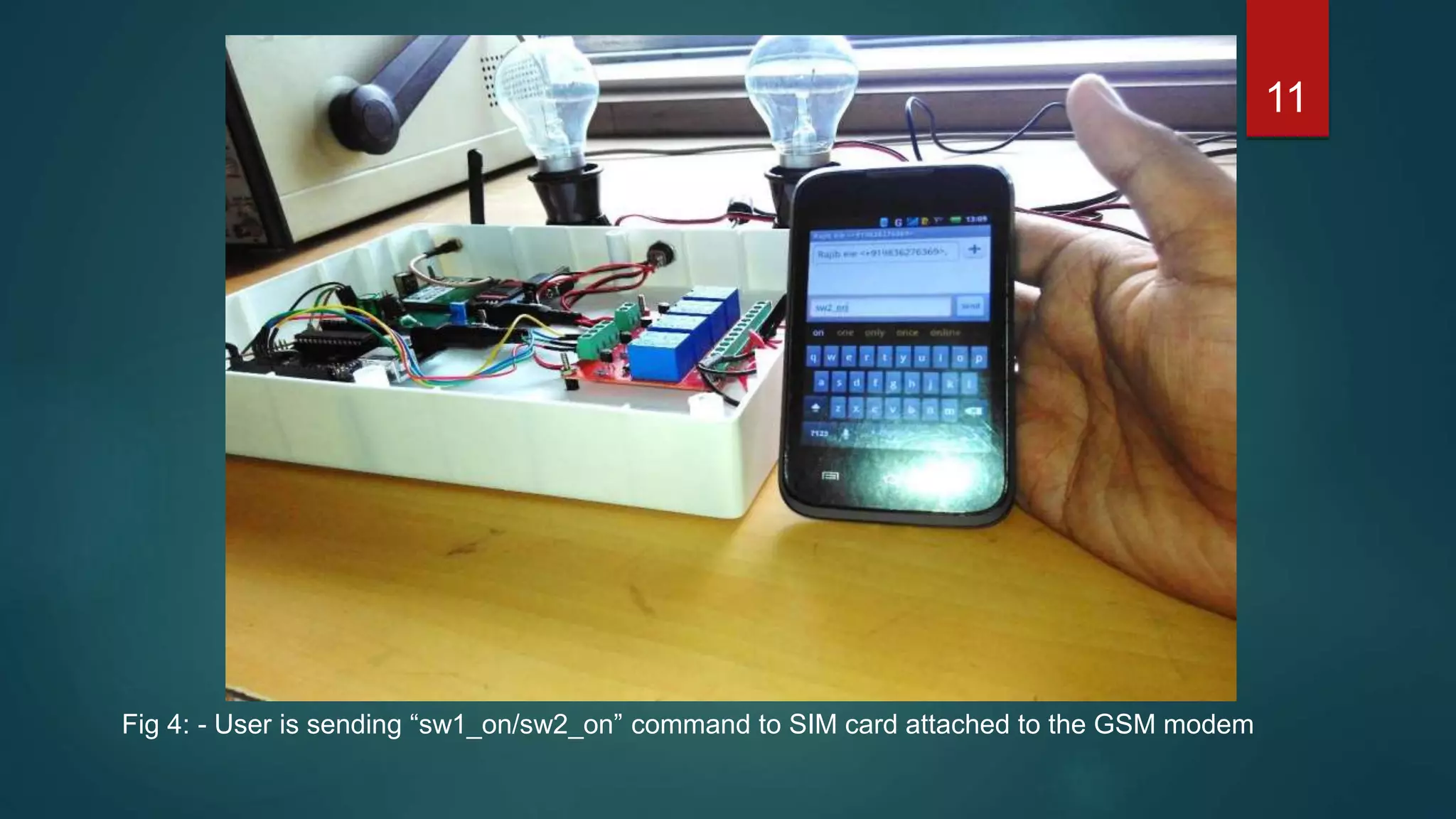
In this project, no Smart phone is needed, just the old GSM phone will work to switch ON and
OFFany home electronic appliances, from anywhere. This easy to use control of appliances
will not only make our daily life easy but it will also reduce the unnecessary consumption of
electricity.
4
COMPONENTS
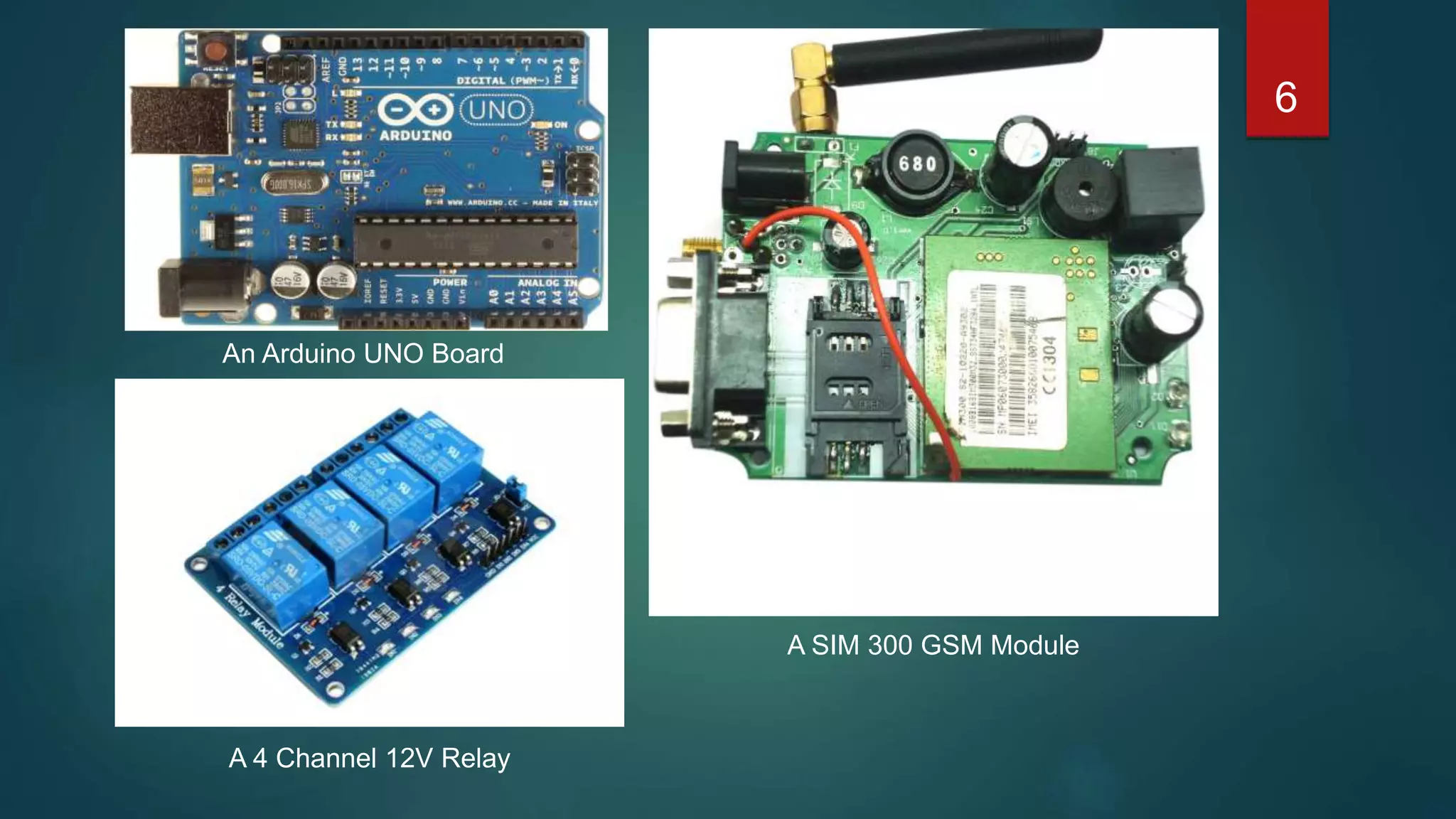
 Arduino UNO board
 SIM 300 GSM Module
 A 4 Channel Relay
 Power Supply
 2 Bulb Holder
 2 Bulbs
5
6
An Arduino UNO Board
A 4 Channel 12V Relay
A SIM 300 GSM Module
STRUCTURE
The structure of the ‘GSM Based Home Automation’ we made is shown in these steps,
 The GSM module receives and acknowledges the message containing keyword sent by
the user.
 Arduino Uno compares the keywords in the message with the desired keyword.
 If the received keyword matches the desired keyword then the Arduino acknowledges it
and send HIGH signal to the relay.
 If the received keyword doesn’t match with the desired keyword then the whole
operation stops there.
7
8
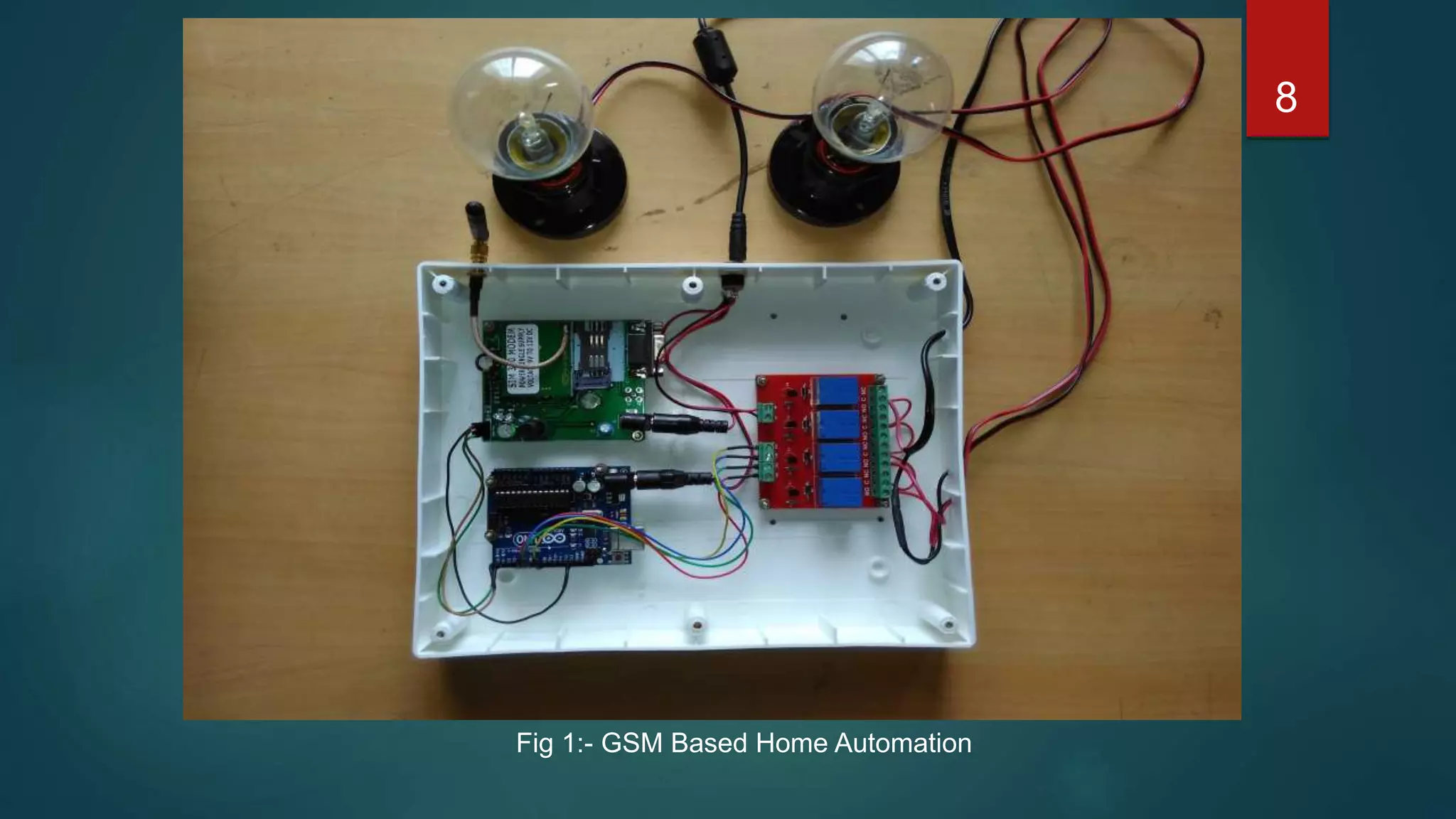
Fig 1:- GSM Based Home Automation
DIAGRAMS
9
Fig 2: - Block diagram of the system
10
Fig 3: - Circuit diagram of the system
11
Fig 4: - User is sending “sw1_on/sw2_on” command to SIM card attached to the GSM modem
12
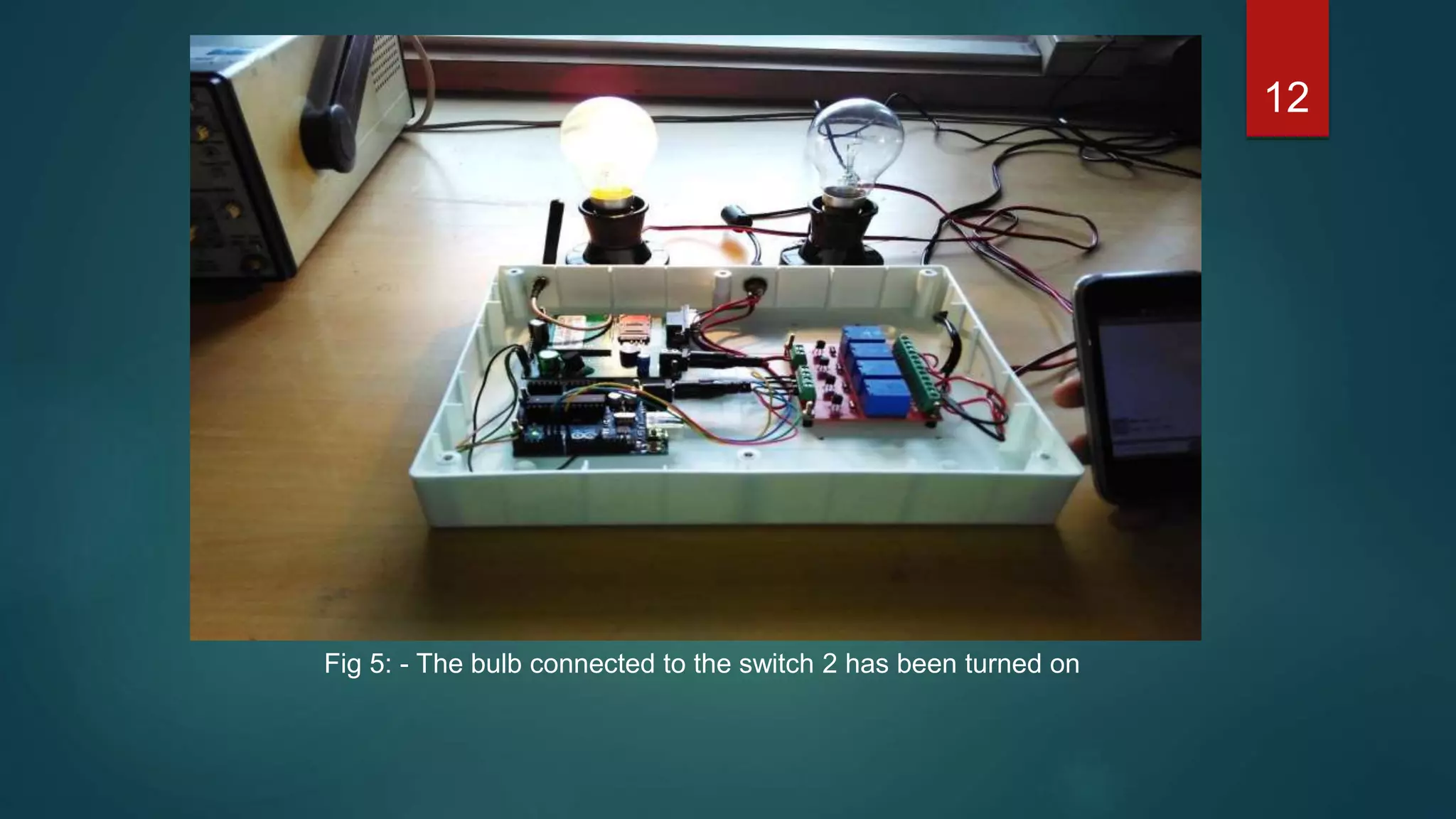
Fig 5: - The bulb connected to the switch 2 has been turned on
13
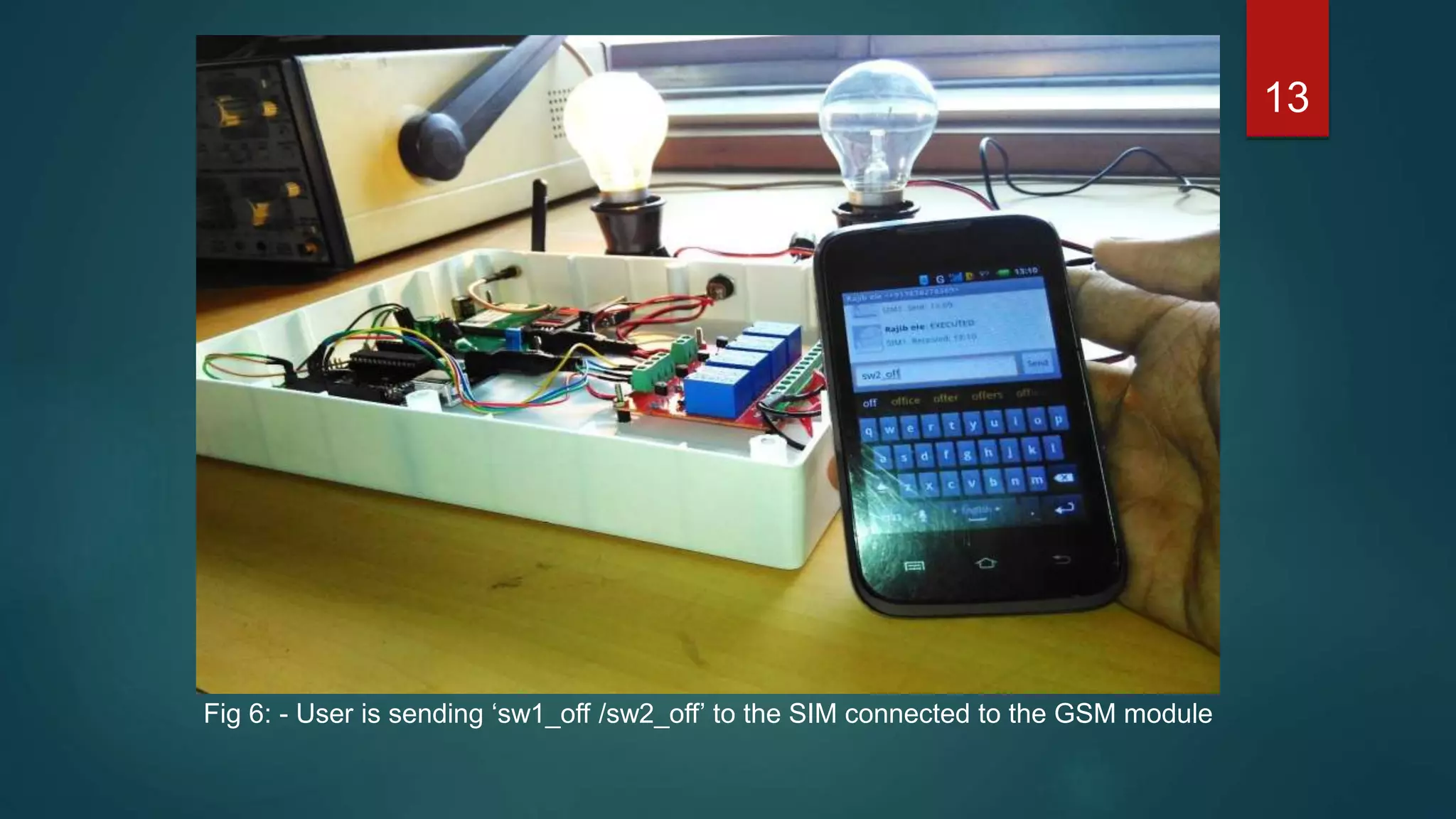
Fig 6: - User is sending ‘sw1_off /sw2_off’ to the SIM connected to the GSM module
14
Fig 7: - The bulb has been turned off
WHY WE NEED IT???
 The project “GSM BASED HOME CONTROL” is intended to automate the certain
functions of home appliances. The main scope of this project is that we can control our
home from anywhere in the world where GSM network is available.
 With the recent expansion of communication networks, smart home applications can be
further enhanced with new dimension of capabilities that were not available before.
 The device is much helpful in controlling home. It reduces the wastage of valuable time
and our daily life become easier and flexible.
15
ADVANTAGES & DISADVANTAGES 16
ADVANTAGES: -
• Devices can be controlled from long distances.
• Economical design
• Can be easily implemented in homes
• Can be used by everyone with just the knowledge of text SMS
• Format of the SMS is simple to understand and write
DISADVANTAGES: -
• The system is network dependent. Hence, network congestion can reduce the reliability of the system.
• If user make any mistake while typing the message format, the message will not be acknowledged by
Arduino hence the system will not work.
APPLICATIONS: - 17
The project can be put to use in the following field,
1. Home automation, which was the seed for developing the idea of project.
2. Remote device control.
• This will help to eliminate need of human personnel attending the device till it has to be switched off/on.
Based on experience of approximate time to switch on/off, He/she can control the device, saving time.
• It will also help to control device while attending to other work.
• User can control device in case of forgetting to do so while leaving for some other place.
3. Energy conservation.
4. Irrigation systems.
FUTURE SCOPES
The project “GSM BASED HOME CONTROL” is intended to automate the certain functions of
home appliances. Smart home technologies have been around for about 30 years, mostly
relying on some proprietary technologies and applications. With the recent expansion of
communication networks, smart home applications can be further enhanced with new
dimension of capabilities that were not available before. In particular, wireless access
technologies will soon enable exotic and economically feasible applications.
The device is much helpful in controlling home. It reduces the wastage of valuable time and
our daily life become easier and flexible.
18
CONCLUSIONS
The main purpose of the project is to provide a smart and efficient way to control our home
appliances with the help of modern communication technology. With the combination of
Arduino and GSM this project is not only a modern approach to next generation home but
also a very friendly and easy to use system. This project will give our daily life a new
dimension at the same time it will help us to save energy.
19
20
To know more about our project scan the QR code
THANK YOU
21

Gsm based home automation

  • 1.
    GSM BASED HOME AUTOMATION B.TECHELECTRONICS & INSTRUMENTATION ENGINEERING BY MAINAK KRISHNA SINHA SAIKAT BISWAS SAGNIK BANERJEE RAJIB LOCHAN DAS 1
  • 2.
    Overview  Acknowledgement  Motivation Components  Pictures of Components  Structure  Diagrams  Working Principle  Why we need it?  Advantages & Disadvantages  Applications & Future scopes  Conclusion 2
  • 3.
    ACKNOWLEDGMENT 3 We wouldlike to express our sincere gratitude to our mentor, Mrs. Bansari Deb Majumder (Asst. Prof, Narula Institute of Technology), for her valuable guidance which helped us a lot in due course of the project work. Also, we would like to thank Mr. Dibyendu Sur (H.O.D, E.I.E dept., Narula Institute of Technolgy) Miss. Arijita Das (Asst. professor, Narula Institute of Technology) and Miss Susmita Das (Asst. Prof, Narula Institute of Technology), who extended all the facilities of the department for the project work.
  • 4.
    MOTIVATION Mobile phone isa revolutionary invention of the century. It was primarily designed for making andreceiving calls & text messages, but it has become the whole world after the Smart phone comesinto the picture. In this project, no Smart phone is needed, just the old GSM phone will work to switch ON and OFFany home electronic appliances, from anywhere. This easy to use control of appliances will not only make our daily life easy but it will also reduce the unnecessary consumption of electricity. 4
  • 5.
    COMPONENTS  Arduino UNOboard  SIM 300 GSM Module  A 4 Channel Relay  Power Supply  2 Bulb Holder  2 Bulbs 5
  • 6.
    6 An Arduino UNOBoard A 4 Channel 12V Relay A SIM 300 GSM Module
  • 7.
    STRUCTURE The structure ofthe ‘GSM Based Home Automation’ we made is shown in these steps,  The GSM module receives and acknowledges the message containing keyword sent by the user.  Arduino Uno compares the keywords in the message with the desired keyword.  If the received keyword matches the desired keyword then the Arduino acknowledges it and send HIGH signal to the relay.  If the received keyword doesn’t match with the desired keyword then the whole operation stops there. 7
  • 8.
    8 Fig 1:- GSMBased Home Automation
  • 9.
    DIAGRAMS 9 Fig 2: -Block diagram of the system
  • 10.
    10 Fig 3: -Circuit diagram of the system
  • 11.
    11 Fig 4: -User is sending “sw1_on/sw2_on” command to SIM card attached to the GSM modem
  • 12.
    12 Fig 5: -The bulb connected to the switch 2 has been turned on
  • 13.
    13 Fig 6: -User is sending ‘sw1_off /sw2_off’ to the SIM connected to the GSM module
  • 14.
    14 Fig 7: -The bulb has been turned off
  • 15.
    WHY WE NEEDIT???  The project “GSM BASED HOME CONTROL” is intended to automate the certain functions of home appliances. The main scope of this project is that we can control our home from anywhere in the world where GSM network is available.  With the recent expansion of communication networks, smart home applications can be further enhanced with new dimension of capabilities that were not available before.  The device is much helpful in controlling home. It reduces the wastage of valuable time and our daily life become easier and flexible. 15
  • 16.
    ADVANTAGES & DISADVANTAGES16 ADVANTAGES: - • Devices can be controlled from long distances. • Economical design • Can be easily implemented in homes • Can be used by everyone with just the knowledge of text SMS • Format of the SMS is simple to understand and write DISADVANTAGES: - • The system is network dependent. Hence, network congestion can reduce the reliability of the system. • If user make any mistake while typing the message format, the message will not be acknowledged by Arduino hence the system will not work.
  • 17.
    APPLICATIONS: - 17 Theproject can be put to use in the following field, 1. Home automation, which was the seed for developing the idea of project. 2. Remote device control. • This will help to eliminate need of human personnel attending the device till it has to be switched off/on. Based on experience of approximate time to switch on/off, He/she can control the device, saving time. • It will also help to control device while attending to other work. • User can control device in case of forgetting to do so while leaving for some other place. 3. Energy conservation. 4. Irrigation systems.
  • 18.
    FUTURE SCOPES The project“GSM BASED HOME CONTROL” is intended to automate the certain functions of home appliances. Smart home technologies have been around for about 30 years, mostly relying on some proprietary technologies and applications. With the recent expansion of communication networks, smart home applications can be further enhanced with new dimension of capabilities that were not available before. In particular, wireless access technologies will soon enable exotic and economically feasible applications. The device is much helpful in controlling home. It reduces the wastage of valuable time and our daily life become easier and flexible. 18
  • 19.
    CONCLUSIONS The main purposeof the project is to provide a smart and efficient way to control our home appliances with the help of modern communication technology. With the combination of Arduino and GSM this project is not only a modern approach to next generation home but also a very friendly and easy to use system. This project will give our daily life a new dimension at the same time it will help us to save energy. 19
  • 20.
    20 To know moreabout our project scan the QR code
  • 21.