Introduction to Physical
             Geography
                 Spring 2013
Contacting Me

 Office Hours (For any type of question):
   Online, Mondays 5-6 pm Eastern

 Email (for private concerns about grades or emergencies):
   akelly@gmail.com

 Blackboard Questions Forum (for general questions about
   assignments & tests.


I will generally answer emails and Blackboard Questions forum questions
    within 24 hours, 8am-5pm Monday – Friday, except holidays.
    Students emailing me on Saturday or Sunday can expect a response
    by 5 pm Monday.
Course Textbook

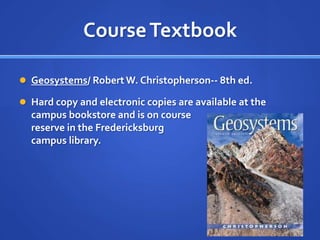
 Geosystems/ Robert W. Christopherson-- 8th ed.

 Hard copy and electronic copies are available at the
  campus bookstore and is on course
  reserve in the Fredericksburg
  campus library.
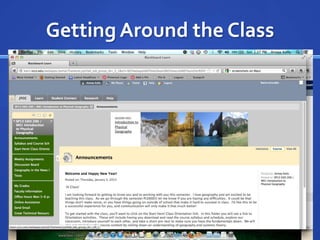
Getting Around the Class
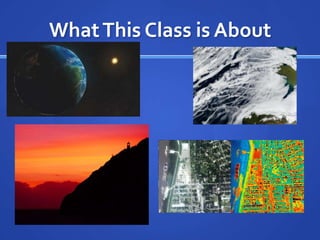
What This Class is About
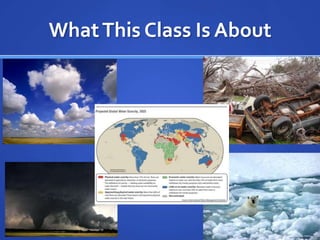
What This Class Is About
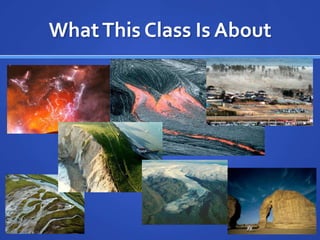
What This Class is About
Learning Outcomes
General
   Utilize a systems theory approach to explore the functions of
    the atmosphere, hydrosphere, lithosphere, and biosphere
   Identify and explain the functions and components of maps
    and other geographic tools and technologies
   Identify how human activities modify the environment
    within the systems explored

Atmosphere
   Explain the earth-sun geometry, the seasons, and
    atmospheric structure
   Interpret the earth’s radiation balance and global
    temperature and circulation patterns
Learning Outcomes
Hydrosphere
   Explain the basic fundamentals of energy transfer in the atmosphere
   Explain the hydrologic cycle, and identify the state of the world’s
    current water supply
   Define global climates and weather systems

Lithosphere
   Understand the composition of the Earth’s interior and be able to
    discuss the theory of plate tectonics
   Differentiate between physical and chemical weathering and their
    effects on the Earth’s surface and identify the landforms made by
    running water, wind, and ice

Biosphere
   Demonstrate basic knowledge in soil properties and distribution
   Identify ecosystem components, including carbon, oxygen, and
     nitrogen cycles
Grading Policy

 Orientation Activities – 5%

 Reading Assignments (14) – 30%

 Discussion Boards (10) – 10%

 Geography in the News Blog Post & Comments – 15%

 Exams (2) - 40%
Grading Policy

 Reading questions
   Based on textbook, lecture, and additional resources if
    available
   Done on Blackboard, and are multiple choice, true/false, and
    essay

 Discussion Questions
   Based on a series of questions or a bit of online research
   Individual posts plus two peer responses (individual posts
    due Saturday, and peer responses due Mondays).
Grading Policy

 Geography In the News Project
   A blog post that covers a current news story and relates it to
    the content for the week.


 Midterm and Final
   Must be taken on campus through the testing center.
   The final is not cumulative.
   Review materials are available in each Weekly Folder.
Tips for Success

 Print and read through the syllabus and mark off
  assignments/tests on a calendar or in a planner.
 Make sure you check your Germanna email account daily! This is
  how I will contact you if there are urgent announcements.
 Get the book and keep up with the reading. Tests draw on both
  lecture and the reading.
 Proofread and double-check assignments to make sure they are
  complete, and get them in on time. Make sure any outside
  resources you use are referenced.
 Ask questions if any of the material or directions are unclear!
Academic Honesty

Academic dishonesty is cheating and stealing. Academic
  dishonesty includes, but is not limited to:
   Using material verbatim from a source without giving credit.
   Rewriting material from a source without giving credit.
   Using information from an Internet source without giving credit.
   Submitting the work of another person as your own work.
   Using/copying another student's computer disk.
   Copying from another person's paper/test/homework.
   Allowing someone else to copy/use your work
    (paper, homework, quiz, test).
   Violating VCCS Computer Ethics Guidelines in the pursuit of
    academic studies.
Other Important Info

 Disability Services:
   If you need accommodations, contact Counseling Center, (540-891-3019 at the
     Fredericksburg Area Campus or 540-423-9140 at the Locust Grove Campus).

 Tutoring Services:
   Fredericksburg Area Campus FAC2 Room 214 (540) 891-3017
   Locust Grove Campus Room 208 (540) 423-9148

 Academic Computing Centers:
   The ACC at the Locust Grove Area campus is located in room 204.
   The ACC at the Fredericksburg Area campus is located in FAC2 room 112A.
   The ACC at the Daniel Center for Advanced Technology is located in room 206 .

Course Introduction

  • 1.
    Introduction to Physical Geography Spring 2013
  • 2.
    Contacting Me  OfficeHours (For any type of question):  Online, Mondays 5-6 pm Eastern  Email (for private concerns about grades or emergencies):  akelly@gmail.com  Blackboard Questions Forum (for general questions about assignments & tests. I will generally answer emails and Blackboard Questions forum questions within 24 hours, 8am-5pm Monday – Friday, except holidays. Students emailing me on Saturday or Sunday can expect a response by 5 pm Monday.
  • 3.
    Course Textbook  Geosystems/Robert W. Christopherson-- 8th ed.  Hard copy and electronic copies are available at the campus bookstore and is on course reserve in the Fredericksburg campus library.
  • 4.
  • 5.
  • 6.
  • 7.
  • 8.
  • 9.
    Learning Outcomes General  Utilize a systems theory approach to explore the functions of the atmosphere, hydrosphere, lithosphere, and biosphere  Identify and explain the functions and components of maps and other geographic tools and technologies  Identify how human activities modify the environment within the systems explored Atmosphere  Explain the earth-sun geometry, the seasons, and atmospheric structure  Interpret the earth’s radiation balance and global temperature and circulation patterns
  • 10.
    Learning Outcomes Hydrosphere  Explain the basic fundamentals of energy transfer in the atmosphere  Explain the hydrologic cycle, and identify the state of the world’s current water supply  Define global climates and weather systems Lithosphere  Understand the composition of the Earth’s interior and be able to discuss the theory of plate tectonics  Differentiate between physical and chemical weathering and their effects on the Earth’s surface and identify the landforms made by running water, wind, and ice Biosphere  Demonstrate basic knowledge in soil properties and distribution  Identify ecosystem components, including carbon, oxygen, and nitrogen cycles
  • 11.
    Grading Policy  OrientationActivities – 5%  Reading Assignments (14) – 30%  Discussion Boards (10) – 10%  Geography in the News Blog Post & Comments – 15%  Exams (2) - 40%
  • 12.
    Grading Policy  Readingquestions  Based on textbook, lecture, and additional resources if available  Done on Blackboard, and are multiple choice, true/false, and essay  Discussion Questions  Based on a series of questions or a bit of online research  Individual posts plus two peer responses (individual posts due Saturday, and peer responses due Mondays).
  • 13.
    Grading Policy  GeographyIn the News Project  A blog post that covers a current news story and relates it to the content for the week.  Midterm and Final  Must be taken on campus through the testing center.  The final is not cumulative.  Review materials are available in each Weekly Folder.
  • 14.
    Tips for Success Print and read through the syllabus and mark off assignments/tests on a calendar or in a planner.  Make sure you check your Germanna email account daily! This is how I will contact you if there are urgent announcements.  Get the book and keep up with the reading. Tests draw on both lecture and the reading.  Proofread and double-check assignments to make sure they are complete, and get them in on time. Make sure any outside resources you use are referenced.  Ask questions if any of the material or directions are unclear!
  • 15.
    Academic Honesty Academic dishonestyis cheating and stealing. Academic dishonesty includes, but is not limited to:  Using material verbatim from a source without giving credit.  Rewriting material from a source without giving credit.  Using information from an Internet source without giving credit.  Submitting the work of another person as your own work.  Using/copying another student's computer disk.  Copying from another person's paper/test/homework.  Allowing someone else to copy/use your work (paper, homework, quiz, test).  Violating VCCS Computer Ethics Guidelines in the pursuit of academic studies.
  • 16.
    Other Important Info Disability Services:  If you need accommodations, contact Counseling Center, (540-891-3019 at the Fredericksburg Area Campus or 540-423-9140 at the Locust Grove Campus).  Tutoring Services:  Fredericksburg Area Campus FAC2 Room 214 (540) 891-3017  Locust Grove Campus Room 208 (540) 423-9148  Academic Computing Centers:  The ACC at the Locust Grove Area campus is located in room 204.  The ACC at the Fredericksburg Area campus is located in FAC2 room 112A.  The ACC at the Daniel Center for Advanced Technology is located in room 206 .