Development of Inf. venacava
and Pulmonary vein
Anup Pandey
Dept. of Human Anatomy
B.P. Koirala Institute of Health Sciences
Dharan Nepal
Cardinal veins
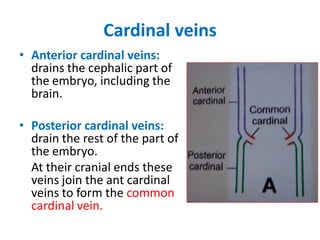
• Anterior cardinal veins:
drains the cephalic part of
the embryo, including the
brain.
• Posterior cardinal veins:
drain the rest of the part of
the embryo.
At their cranial ends these
veins join the ant cardinal
veins to form the common
cardinal vein.
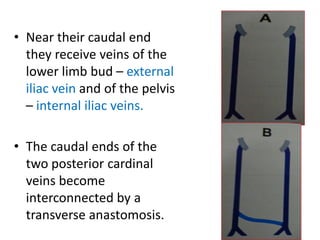
• Near their caudal end
they receive veins of the
lower limb bud – external
iliac vein and of the pelvis
– internal iliac veins.
• The caudal ends of the
two posterior cardinal
veins become
interconnected by a
transverse anastomosis.
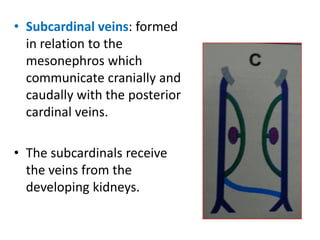
• Subcardinal veins: formed
in relation to the
mesonephros which
communicate cranially and
caudally with the posterior
cardinal veins.
• The subcardinals receive
the veins from the
developing kidneys.
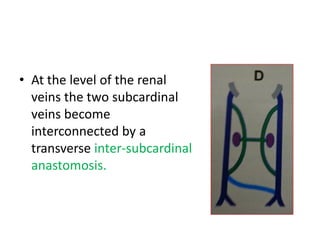
• At the level of the renal
veins the two subcardinal
veins become
interconnected by a
transverse inter-subcardinal
anastomosis.
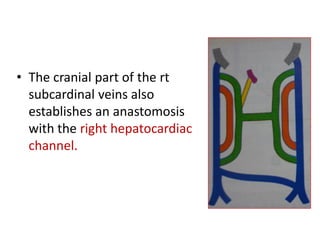
• The cranial part of the rt
subcardinal veins also
establishes an anastomosis
with the right hepatocardiac
channel.
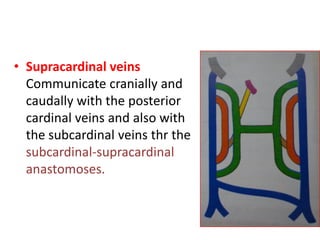
• Supracardinal veins
Communicate cranially and
caudally with the posterior
cardinal veins and also with
the subcardinal veins thr the
subcardinal-supracardinal
anastomoses.
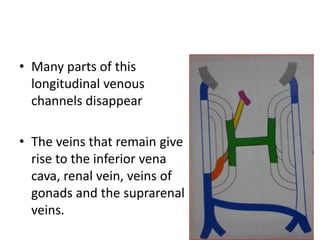
• Many parts of this
longitudinal venous
channels disappear
• The veins that remain give
rise to the inferior vena
cava, renal vein, veins of
gonads and the suprarenal
veins.
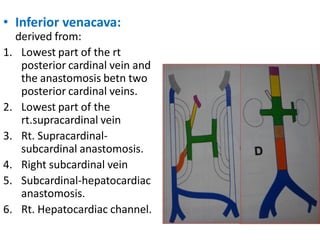
• Inferior venacava:
derived from:
1. Lowest part of the rt
posterior cardinal vein and
the anastomosis betn two
posterior cardinal veins.
2. Lowest part of the
rt.supracardinal vein
3. Rt. Supracardinal-
subcardinal anastomosis.
4. Right subcardinal vein
5. Subcardinal-hepatocardiac
anastomosis.
6. Rt. Hepatocardiac channel.
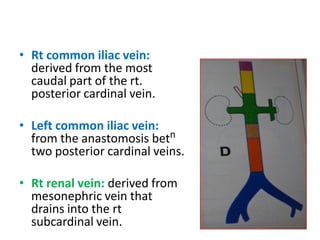
• Rt common iliac vein:
derived from the most
caudal part of the rt.
posterior cardinal vein.
• Left common iliac vein:
from the anastomosis betn
two posterior cardinal veins.
• Rt renal vein: derived from
mesonephric vein that
drains into the rt
subcardinal vein.
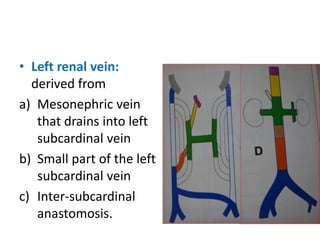
• Left renal vein:
derived from
a) Mesonephric vein
that drains into left
subcardinal vein
b) Small part of the left
subcardinal vein
c) Inter-subcardinal
anastomosis.
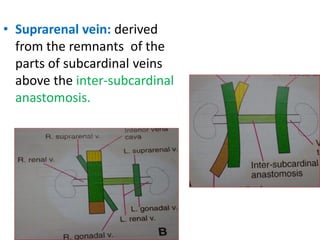
• Suprarenal vein: derived
from the remnants of the
parts of subcardinal veins
above the inter-subcardinal
anastomosis.
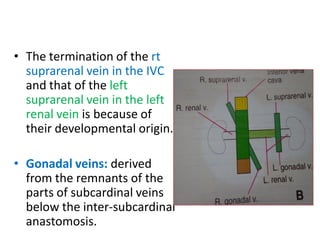
• The termination of the rt
suprarenal vein in the IVC
and that of the left
suprarenal vein in the left
renal vein is because of
their developmental origin.
• Gonadal veins: derived
from the remnants of the
parts of subcardinal veins
below the inter-subcardinal
anastomosis.
Clinical correlates
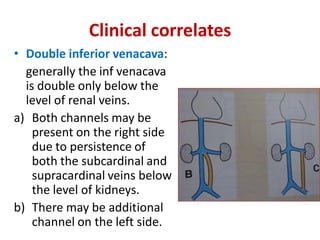
• Double inferior venacava:
generally the inf venacava
is double only below the
level of renal veins.
a) Both channels may be
present on the right side
due to persistence of
both the subcardinal and
supracardinal veins below
the level of kidneys.
b) There may be additional
channel on the left side.
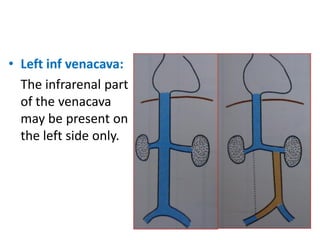
• Left inf venacava:
The infrarenal part
of the venacava
may be present on
the left side only.
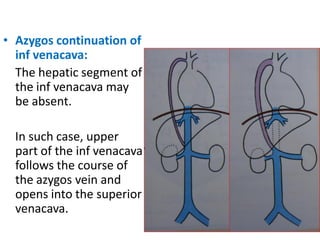
• Azygos continuation of
inf venacava:
The hepatic segment of
the inf venacava may
be absent.
In such case, upper
part of the inf venacava
follows the course of
the azygos vein and
opens into the superior
venacava.
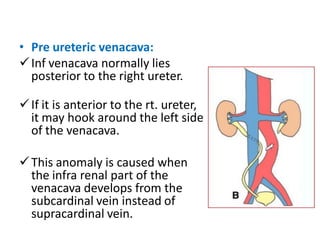
• Pre ureteric venacava:
Inf venacava normally lies
posterior to the right ureter.
If it is anterior to the rt. ureter,
it may hook around the left side
of the venacava.
This anomaly is caused when
the infra renal part of the
venacava develops from the
subcardinal vein instead of
supracardinal vein.
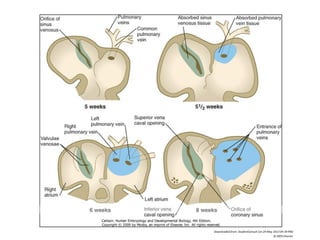
Pulmonary veins
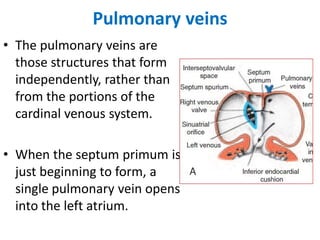
• The pulmonary veins are
those structures that form
independently, rather than
from the portions of the
cardinal venous system.
• When the septum primum is
just beginning to form, a
single pulmonary vein opens
into the left atrium.
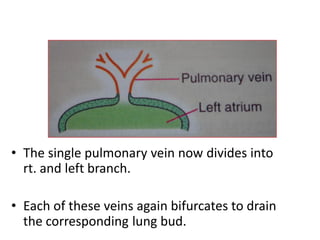
• The single pulmonary vein now divides into
rt. and left branch.
• Each of these veins again bifurcates to drain
the corresponding lung bud.
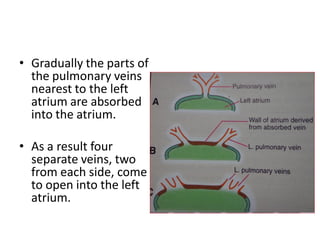
• Gradually the parts of
the pulmonary veins
nearest to the left
atrium are absorbed
into the atrium.
• As a result four
separate veins, two
from each side, come
to open into the left
atrium.
Downloaded from: StudentConsult (on 24 May 2013 04:39 PM)
© 2005 Elsevier
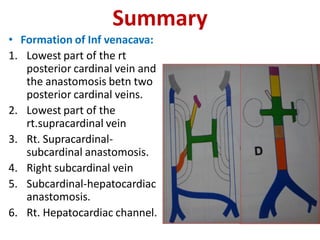
Summary
• Formation of Inf venacava:
1. Lowest part of the rt
posterior cardinal vein and
the anastomosis betn two
posterior cardinal veins.
2. Lowest part of the
rt.supracardinal vein
3. Rt. Supracardinal-
subcardinal anastomosis.
4. Right subcardinal vein
5. Subcardinal-hepatocardiac
anastomosis.
6. Rt. Hepatocardiac channel.
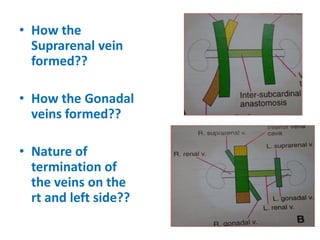
• How the
Suprarenal vein
formed??
• How the Gonadal
veins formed??
• Nature of
termination of
the veins on the
rt and left side??
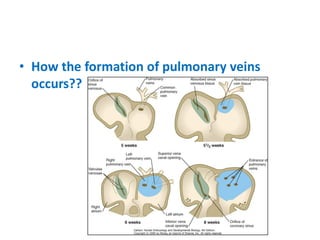
• How the formation of pulmonary veins
occurs??
THANK YOU

Development of inf venacava and pulmonary veins

  • 1.
    Development of Inf.venacava and Pulmonary vein Anup Pandey Dept. of Human Anatomy B.P. Koirala Institute of Health Sciences Dharan Nepal
  • 2.
    Cardinal veins • Anteriorcardinal veins: drains the cephalic part of the embryo, including the brain. • Posterior cardinal veins: drain the rest of the part of the embryo. At their cranial ends these veins join the ant cardinal veins to form the common cardinal vein.
  • 3.
    • Near theircaudal end they receive veins of the lower limb bud – external iliac vein and of the pelvis – internal iliac veins. • The caudal ends of the two posterior cardinal veins become interconnected by a transverse anastomosis.
  • 4.
    • Subcardinal veins:formed in relation to the mesonephros which communicate cranially and caudally with the posterior cardinal veins. • The subcardinals receive the veins from the developing kidneys.
  • 5.
    • At thelevel of the renal veins the two subcardinal veins become interconnected by a transverse inter-subcardinal anastomosis.
  • 6.
    • The cranialpart of the rt subcardinal veins also establishes an anastomosis with the right hepatocardiac channel.
  • 7.
    • Supracardinal veins Communicatecranially and caudally with the posterior cardinal veins and also with the subcardinal veins thr the subcardinal-supracardinal anastomoses.
  • 8.
    • Many partsof this longitudinal venous channels disappear • The veins that remain give rise to the inferior vena cava, renal vein, veins of gonads and the suprarenal veins.
  • 9.
    • Inferior venacava: derivedfrom: 1. Lowest part of the rt posterior cardinal vein and the anastomosis betn two posterior cardinal veins. 2. Lowest part of the rt.supracardinal vein 3. Rt. Supracardinal- subcardinal anastomosis. 4. Right subcardinal vein 5. Subcardinal-hepatocardiac anastomosis. 6. Rt. Hepatocardiac channel.
  • 10.
    • Rt commoniliac vein: derived from the most caudal part of the rt. posterior cardinal vein. • Left common iliac vein: from the anastomosis betn two posterior cardinal veins. • Rt renal vein: derived from mesonephric vein that drains into the rt subcardinal vein.
  • 11.
    • Left renalvein: derived from a) Mesonephric vein that drains into left subcardinal vein b) Small part of the left subcardinal vein c) Inter-subcardinal anastomosis.
  • 12.
    • Suprarenal vein:derived from the remnants of the parts of subcardinal veins above the inter-subcardinal anastomosis.
  • 13.
    • The terminationof the rt suprarenal vein in the IVC and that of the left suprarenal vein in the left renal vein is because of their developmental origin. • Gonadal veins: derived from the remnants of the parts of subcardinal veins below the inter-subcardinal anastomosis.
  • 14.
    Clinical correlates • Doubleinferior venacava: generally the inf venacava is double only below the level of renal veins. a) Both channels may be present on the right side due to persistence of both the subcardinal and supracardinal veins below the level of kidneys. b) There may be additional channel on the left side.
  • 15.
    • Left infvenacava: The infrarenal part of the venacava may be present on the left side only.
  • 16.
    • Azygos continuationof inf venacava: The hepatic segment of the inf venacava may be absent. In such case, upper part of the inf venacava follows the course of the azygos vein and opens into the superior venacava.
  • 17.
    • Pre uretericvenacava: Inf venacava normally lies posterior to the right ureter. If it is anterior to the rt. ureter, it may hook around the left side of the venacava. This anomaly is caused when the infra renal part of the venacava develops from the subcardinal vein instead of supracardinal vein.
  • 18.
    Pulmonary veins • Thepulmonary veins are those structures that form independently, rather than from the portions of the cardinal venous system. • When the septum primum is just beginning to form, a single pulmonary vein opens into the left atrium.
  • 19.
    • The singlepulmonary vein now divides into rt. and left branch. • Each of these veins again bifurcates to drain the corresponding lung bud.
  • 20.
    • Gradually theparts of the pulmonary veins nearest to the left atrium are absorbed into the atrium. • As a result four separate veins, two from each side, come to open into the left atrium.
  • 21.
    Downloaded from: StudentConsult(on 24 May 2013 04:39 PM) © 2005 Elsevier
  • 22.
    Summary • Formation ofInf venacava: 1. Lowest part of the rt posterior cardinal vein and the anastomosis betn two posterior cardinal veins. 2. Lowest part of the rt.supracardinal vein 3. Rt. Supracardinal- subcardinal anastomosis. 4. Right subcardinal vein 5. Subcardinal-hepatocardiac anastomosis. 6. Rt. Hepatocardiac channel.
  • 23.
    • How the Suprarenalvein formed?? • How the Gonadal veins formed?? • Nature of termination of the veins on the rt and left side??
  • 24.
    • How theformation of pulmonary veins occurs??
  • 25.