Detoxification Mechanisms in
Insects
Lekhan Lodhi
Research Scholar
Department of Zoology
DHSGSU
©Lekhan
Detoxification Mechanisms in Insects
• Insects are faced with numerous toxins (xenobiotics) as they go
through life, some produced naturally by plants (sometimes called
allelochemicals) and some produced by humans (insecticides).
• To survive the natural toxins, insects have evolved various
detoxification mechanisms. These same mechanisms also sometimes
allow insects to overcome insecticides, and the level and type of
mechanisms differ greatly. This results in differing toxicity among
different stages, populations, and species of insects.
©Lekhan
• Detoxification can be divided into phase I (primary) and phase II
(secondary) processes. Phase I reactions consist of oxidation,
hydrolysis and reduction. The phase I metabolites are sometimes polar
enough to be excreted, but usually are further converted by phase II
reactions. In phase II reactions, the polar products are conjugated with
a variety of endogenous compounds such as sugars, sulfate, phosphate,
amino acids or glutathione, and subsequently excreted. Phase I
reactions usually are responsible for decreasing biological activity of a
toxicant and therefore the enzymes involved are rate limiting with
respect to toxicity.
©Lekhan
Phase I Reactions
©Lekhan
1. Oxidation
• The oxidative reactions are carried out by a group of enzymes called
microsomal cytochrome P450 monooxygenases [also known as
mixed-function oxidases (MFO) or microsomal oxidases]. These
enzymes, located in the endoplasmic reticulum of eukaryotic cells,
commonly are found in mammals, birds, reptiles, fish, crustaceans,
molluscs, insects, bacteria, yeast and higher plants. Microsomal
monooxygenases are a three-component system comprised of
cytochrome P450, NADPH-cytochrome P450 reductase and a
phospholipid (phosphatidylcholine)
©Lekhan
• The details of catalytic events mediated by cytochrome P450 are not fully understood. The
substrate first binds to oxidized cytochrome P450 (Fe3+); the enzyme-substrate complex
undergoes reduction and then interacts with oxygen. Finally, the hydroxylated substrate and a
molecule of water are released. Electrons from NADPH are transported by NADPH-
cytochrome P450 reductase and provide reducing equivalents to the ferric cytochrome P450-
substrate complex.
• where RH is a substrate. In some cases, the second electron may originate from NADH via
cytochrome b5. Cytochrome b5is involved in fatty acid desaturation and in certain
microsomal monooxygenase activities, including methoxycoumarin O-demethylation,
ethoxycoumarin deethylation, benzo[a]pyrene hydroxylation and cypermethrin hydroxylation
in house flies
• To date, several hundred cytochrome P450 genes have been identified, including the house fly
(CYP6A1, CYP6A3, CYP6A4, CYP6A5, CYP6C1, CYP6D1), the pomace fly (CYP6A2,
CYP4D1, CYP4D2, CYP4E1), the bollworm, Helicoverpa amigera (CYP6B2, CYP4G8,
CYP9A3, CYP6B2), the tobacco budworm, Heliothis virescens (CYP9A1), the black
swallowtail (CYP6B1, CYP6B3)
©Lekhan
2. Epoxidation
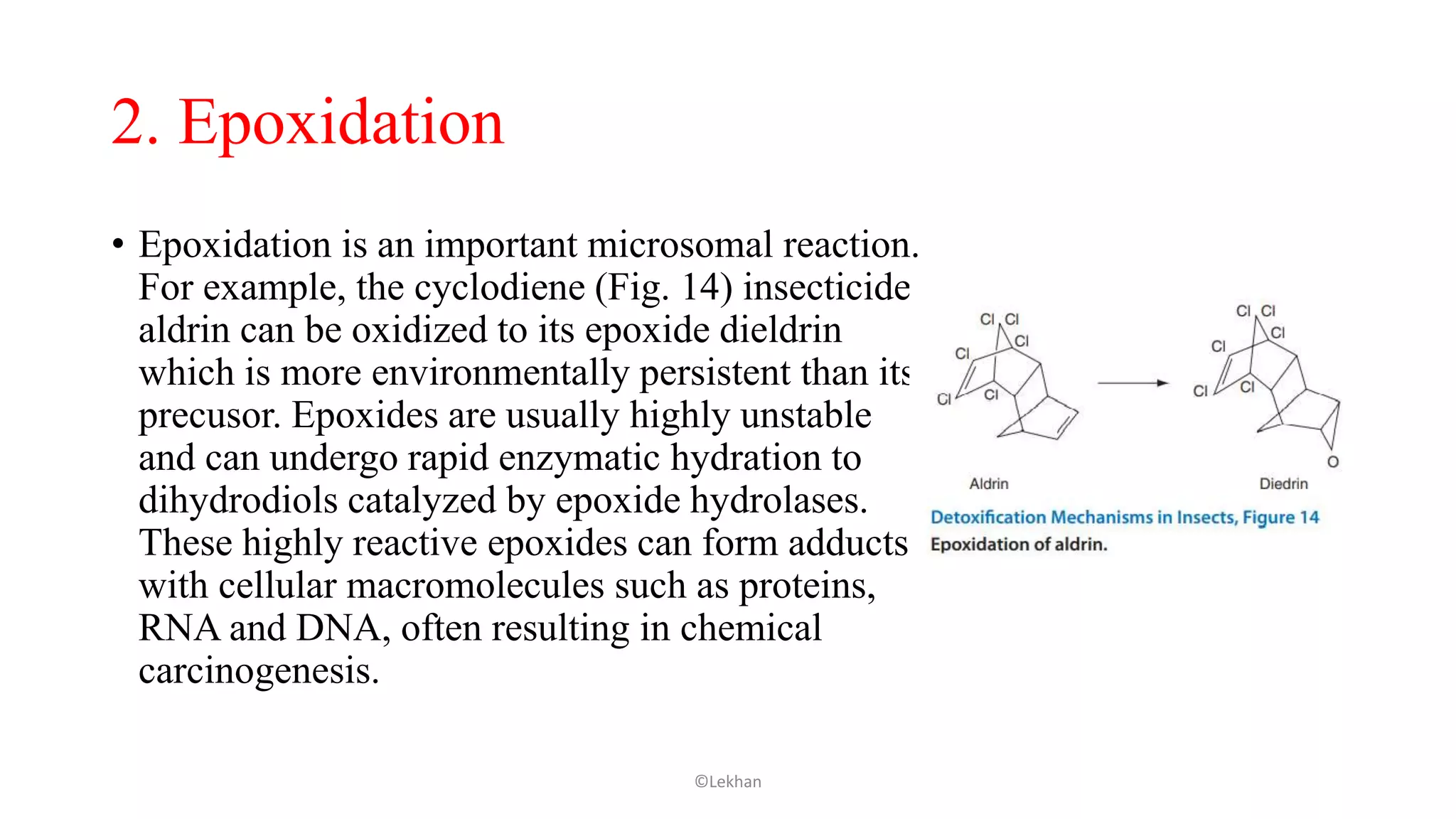
• Epoxidation is an important microsomal reaction.
For example, the cyclodiene (Fig. 14) insecticide
aldrin can be oxidized to its epoxide dieldrin
which is more environmentally persistent than its
precusor. Epoxides are usually highly unstable
and can undergo rapid enzymatic hydration to
dihydrodiols catalyzed by epoxide hydrolases.
These highly reactive epoxides can form adducts
with cellular macromolecules such as proteins,
RNA and DNA, often resulting in chemical
carcinogenesis.
©Lekhan
3. Hydroxylation
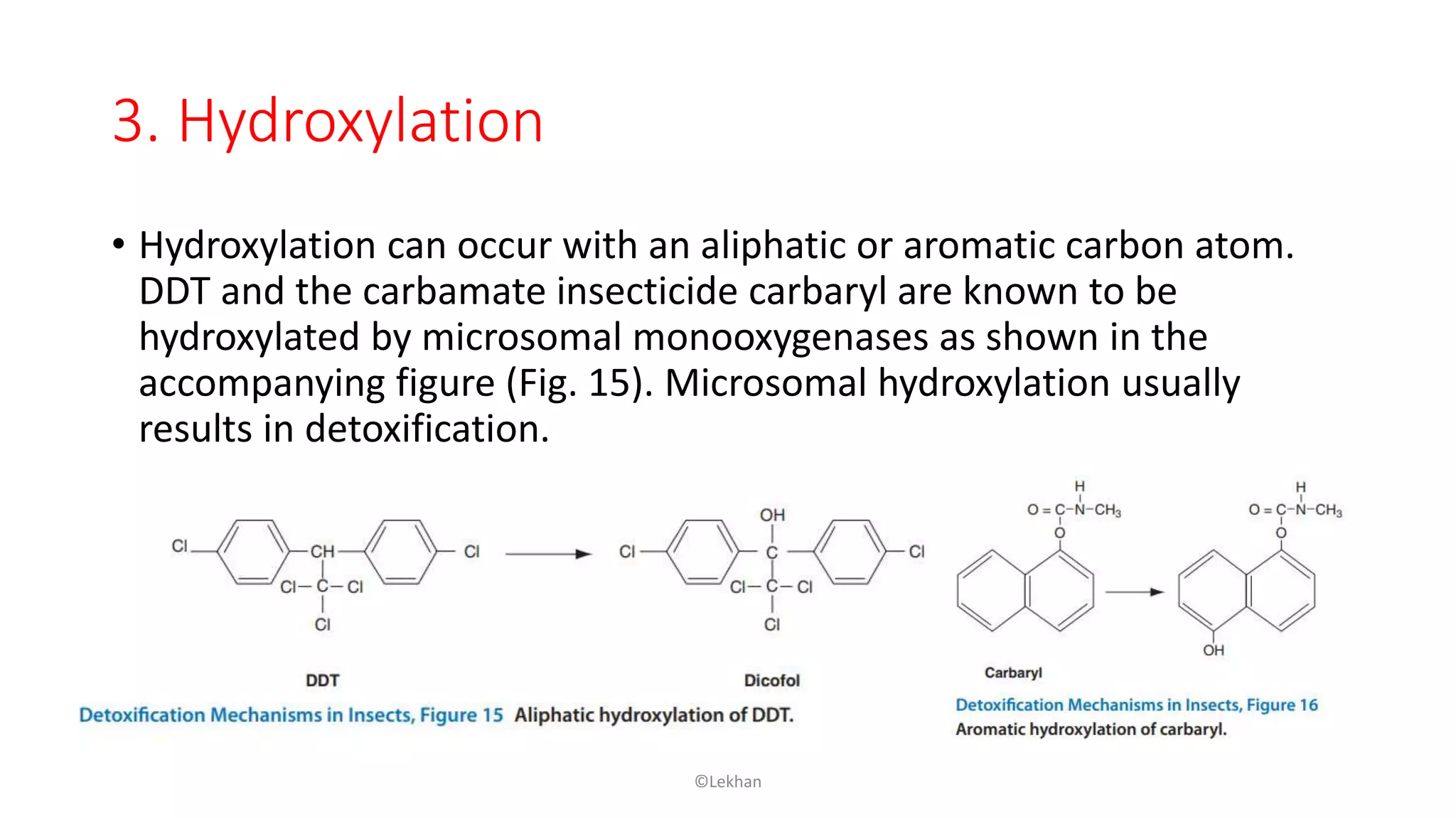
• Hydroxylation can occur with an aliphatic or aromatic carbon atom.
DDT and the carbamate insecticide carbaryl are known to be
hydroxylated by microsomal monooxygenases as shown in the
accompanying figure (Fig. 15). Microsomal hydroxylation usually
results in detoxification.
©Lekhan
4. N-Dealkylation
• N-Dealkylation is a common reaction in the metabolism of xenobiotics
including organophosphorus and carbamate insecticides. The reaction is
believed to proceed by an unstable α-hydroxy intermediate which
spontaneously releases an aldehyde in the case of the primary alkyl group.
For example, the carbamate insecticide (Fig. 17) propoxur is N-
demethylated to 2-isopropoxyphenyl carbamate via 2-isopropoxyphenyl N-
hydroxymethyl carbamate. Microsomal N-dealkylation results in
detoxification.
©Lekhan
5. O-Dealkylation
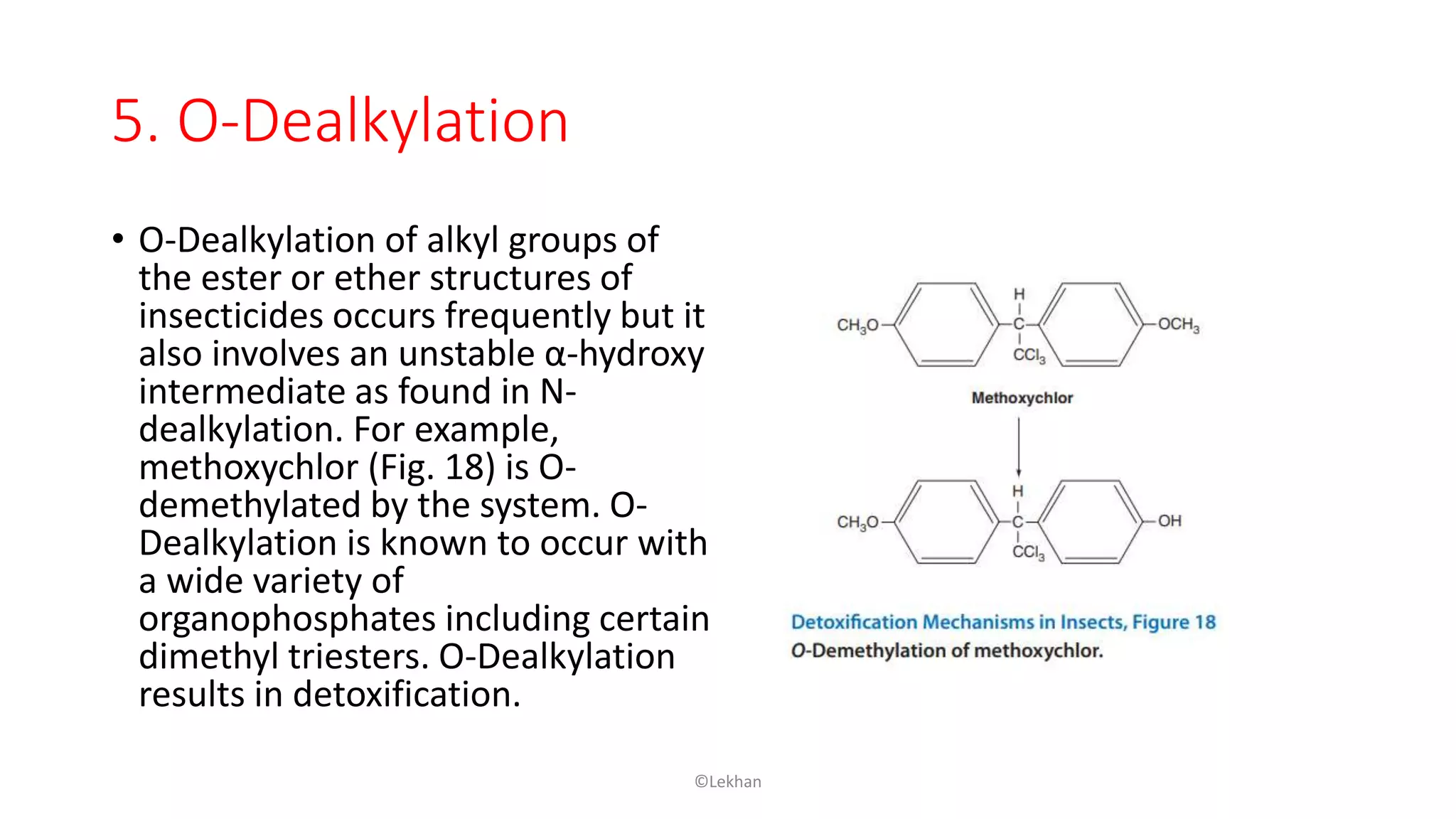
• O-Dealkylation of alkyl groups of
the ester or ether structures of
insecticides occurs frequently but it
also involves an unstable α-hydroxy
intermediate as found in N-
dealkylation. For example,
methoxychlor (Fig. 18) is O-
demethylated by the system. O-
Dealkylation is known to occur with
a wide variety of
organophosphates including certain
dimethyl triesters. O-Dealkylation
results in detoxification.
©Lekhan
6. Desulfuration
• Organophosphorus insecticides with the P = S group are desulfurated
by microsomal monooxygenases of insects to their corresponding P =
O analogues. This reaction results in activation because the product, P
= O, binds more tightly to the acetylcholinesterase and are thus more
potent acetylcholinesterase inhibitors. For example, parathion (Fig.
19) is desulfurated to paraoxon
©Lekhan
7. Sulfoxidation
• Many thioether-containing insecticides such as organophosphorus compounds
and carbamates are oxidized by microsomal monooxygenases of insects to their
corresponding sulfoxides. In general, sulfoxide formation represents an oxidative
activation process leading to an increase in anticholinesterase activity. For
example, phorate (Fig. 20) is oxidized to phorate sulfoxide. In the fall armyworm,
Spodoptera frugiperda, sulfoxidation of phorate requires NADPH and is inhibited
by carbon monoxide and piperonyl butoxide, and induced by cytochrome P450
inducers (e.g., indole 3-carbinol and indole 3-acetonitrile).
©Lekhan
8. Reduction
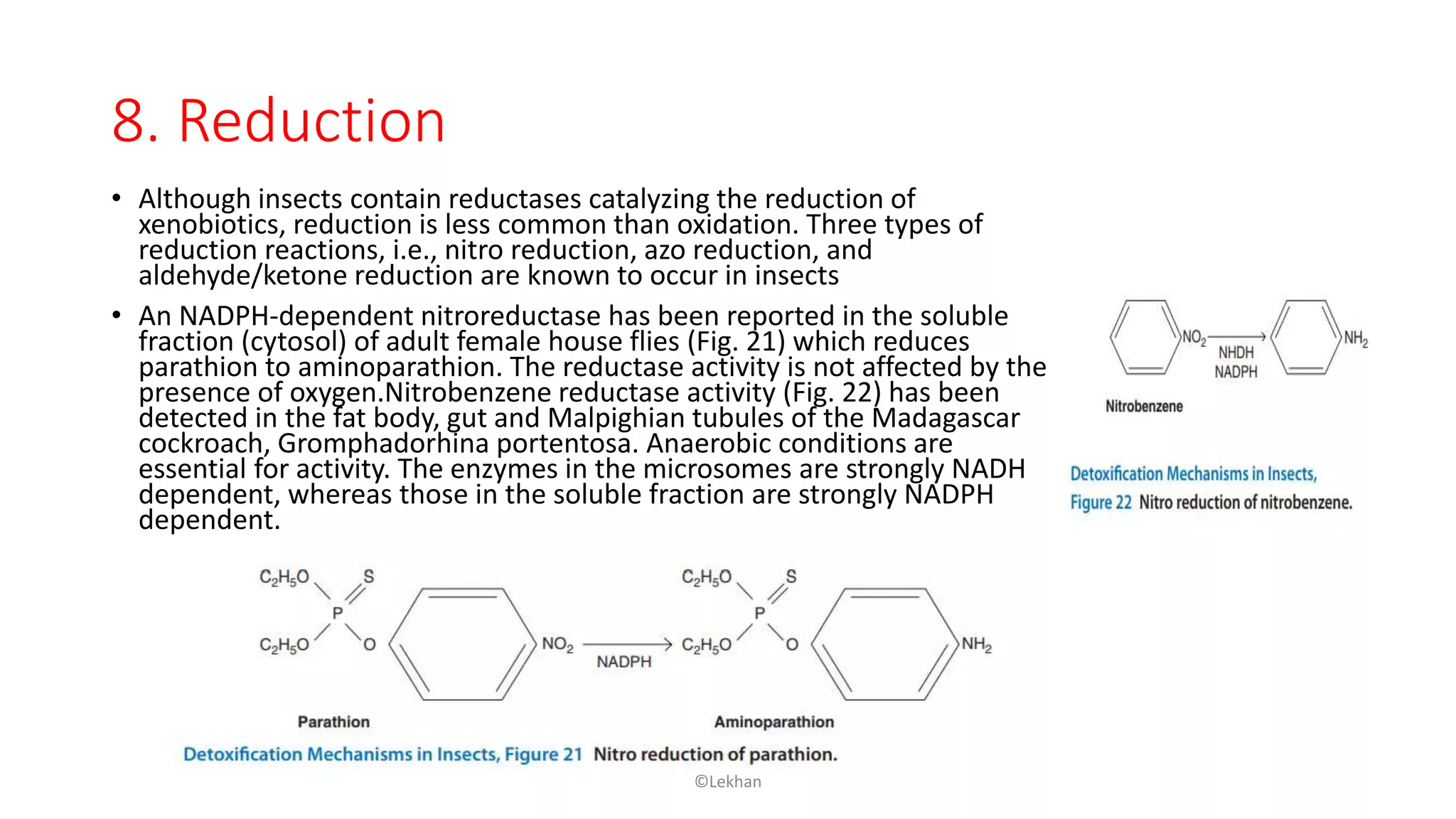
• Although insects contain reductases catalyzing the reduction of
xenobiotics, reduction is less common than oxidation. Three types of
reduction reactions, i.e., nitro reduction, azo reduction, and
aldehyde/ketone reduction are known to occur in insects
• An NADPH-dependent nitroreductase has been reported in the soluble
fraction (cytosol) of adult female house flies (Fig. 21) which reduces
parathion to aminoparathion. The reductase activity is not affected by the
presence of oxygen.Nitrobenzene reductase activity (Fig. 22) has been
detected in the fat body, gut and Malpighian tubules of the Madagascar
cockroach, Gromphadorhina portentosa. Anaerobic conditions are
essential for activity. The enzymes in the microsomes are strongly NADH
dependent, whereas those in the soluble fraction are strongly NADPH
dependent.
©Lekhan
• Aldehyde reductases, which catalyze
the reduction of (Fig. 23) aldehydes and
ketones, are widely distributed in
animal species including insects (e.g., D.
melanogaster and B. discoidalis). These
enzymes catalyze as in the
accompanying reaction. Aldehyde
reductases are cytosolic enzymes
requiring NADPH as cofactor. They
reduce naturally occurring compounds
such as benzaldehyde and daunorubicin
as well as synthetic chemicals.
8. Reduction
©Lekhan
9. Hydrolysis
• Insecticides such as organophosphates, carbamates, pyrethroids and some juvenoids, which contain ester
linkages, are susceptible to hydrolysis. Esterase are hydrolases that split ester compounds by the addition
of water to yield an acid and an alcohol.
• Esterases which metabolize organophosphates can be divided into three groups: A-esterases are not
inhibited by organophosphates but hydrolyze them; B-esterases are susceptible to organophosphate
inhibition; and C-esterases which are uninhibited by organophosphates but do not degrade them
• There are two types of esterases that are important in metabolizing insecticides, namely,
carboxylesterases and phosphatases (also called phosphorotriester hydrolases). Carboxylesterases which
are B-esterases play significant roles in degrading organophosphates, carbamates, pyrethroids and some
juvenoids in insects. The best example (Fig. 24) is malathion hydrolysis, which yields both α- and β-
monoacids and ethanol.
©Lekhan
9. Hydrolysis
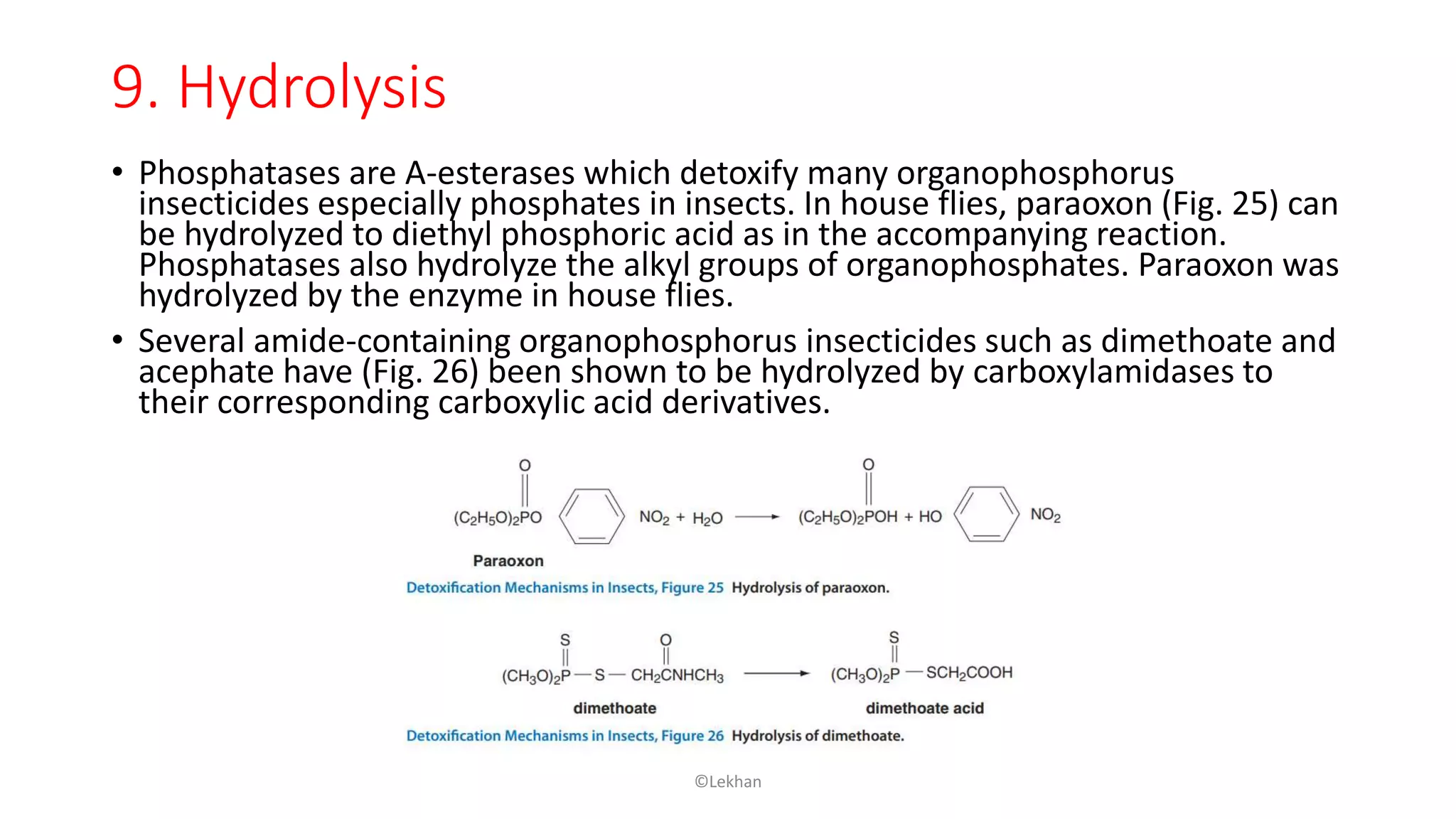
• Phosphatases are A-esterases which detoxify many organophosphorus
insecticides especially phosphates in insects. In house flies, paraoxon (Fig. 25) can
be hydrolyzed to diethyl phosphoric acid as in the accompanying reaction.
Phosphatases also hydrolyze the alkyl groups of organophosphates. Paraoxon was
hydrolyzed by the enzyme in house flies.
• Several amide-containing organophosphorus insecticides such as dimethoate and
acephate have (Fig. 26) been shown to be hydrolyzed by carboxylamidases to
their corresponding carboxylic acid derivatives.
©Lekhan
9. Hydrolysis
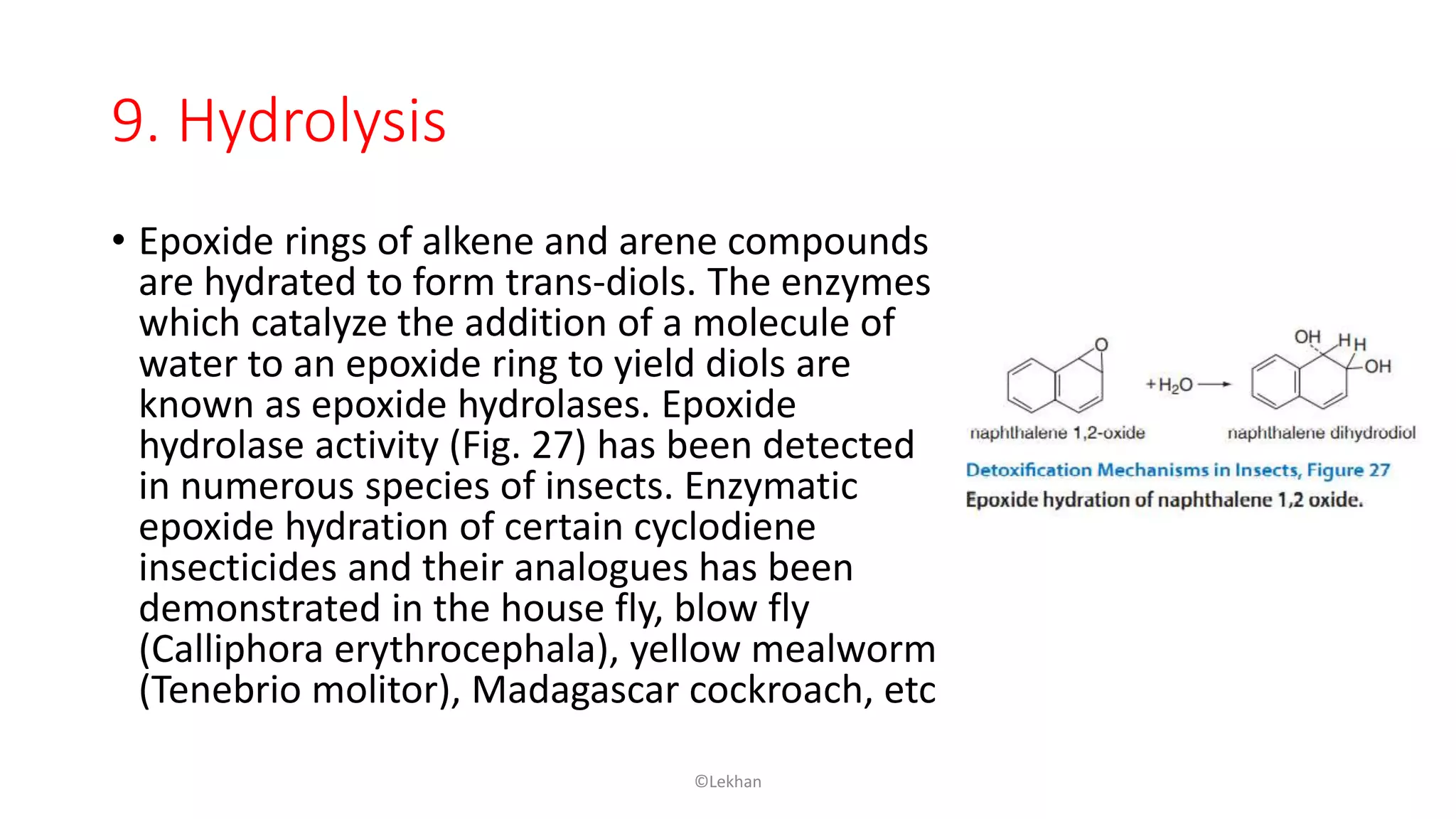
• Epoxide rings of alkene and arene compounds
are hydrated to form trans-diols. The enzymes
which catalyze the addition of a molecule of
water to an epoxide ring to yield diols are
known as epoxide hydrolases. Epoxide
hydrolase activity (Fig. 27) has been detected
in numerous species of insects. Enzymatic
epoxide hydration of certain cyclodiene
insecticides and their analogues has been
demonstrated in the house fly, blow fly
(Calliphora erythrocephala), yellow mealworm
(Tenebrio molitor), Madagascar cockroach, etc
©Lekhan
Phase II Reactions
©Lekhan
Phase II Reactions
• Phase I reactions with xenobiotics result in the addition of functional groups such as hydroxyl,
carboxyl, and epoxide. These phase I products can undergo further conjugation reactions with
endogenous molecules. These conjugations are called phase II reactions. The endogenous
molecules include sugars, amino acids, glutathione, phosphate and sulfate. Conjugation products
usually are more polar, less toxic and more readily excreted than their parent compounds. Thus,
the process, with only a few exceptions, results in detoxification.
• Three types of conjugation reactions occur in insects. Type I requires an activated conjugating
agent which then combines with the substrate to form the conjugated product. Type II involves
the activation of the substrate to form an activated donor which then combines with an
endogenous molecule to yield a conjugated product. In type III, conjugation can proceed directly
between the substrate and conjugating agent without involving activation. Thus, types I and II
require formation of high energy intermediates before conjugation reactions proceed.
• The chemical groups required for type I are OH, NH2, COOH and SH (glucose conjugation, sulfate
conjugation and phosphate conjugation); for type II, COOH (amino acid conjugation); and for type
III, halogens, alkenes, NO2, epoxides, ethers and esters (glutathione conjugation).
©Lekhan
1. Glucose conjugation
• Glucose conjugation is found
commonly in insects and plants
but rarely in mammals. Glucoside
formation is accomplished by a
reaction between an activated
intermediate, uridine
diphosphate glucose (UDPG), and
the xenobiotic, with the enzyme
glucosyl transferase as catalyst
(Fig. 28). In insects, O-glucosides
have been identified from some
insecticide metabolism studies,
including carbaryl, propoxur,
carbofuran, DDT and allethrin.
©Lekhan
2. Sulfate conjugation
• Sulfate conjugation requires the prior activation of inorganic sulfate by
adenosine triphosphate to an active intermediate, 3'-phosphoadenosine-
5'-phosphosulfate (PAPS), from which the sulfate group is transferred to a
substrate (ROH). The final step is catalyzed by an enzyme called
sulfotransferase. The three-step reaction (Fig. 29) sequence is illustrated in
the accompanying reaction
©Lekhan
3. Phosphate Conjugation
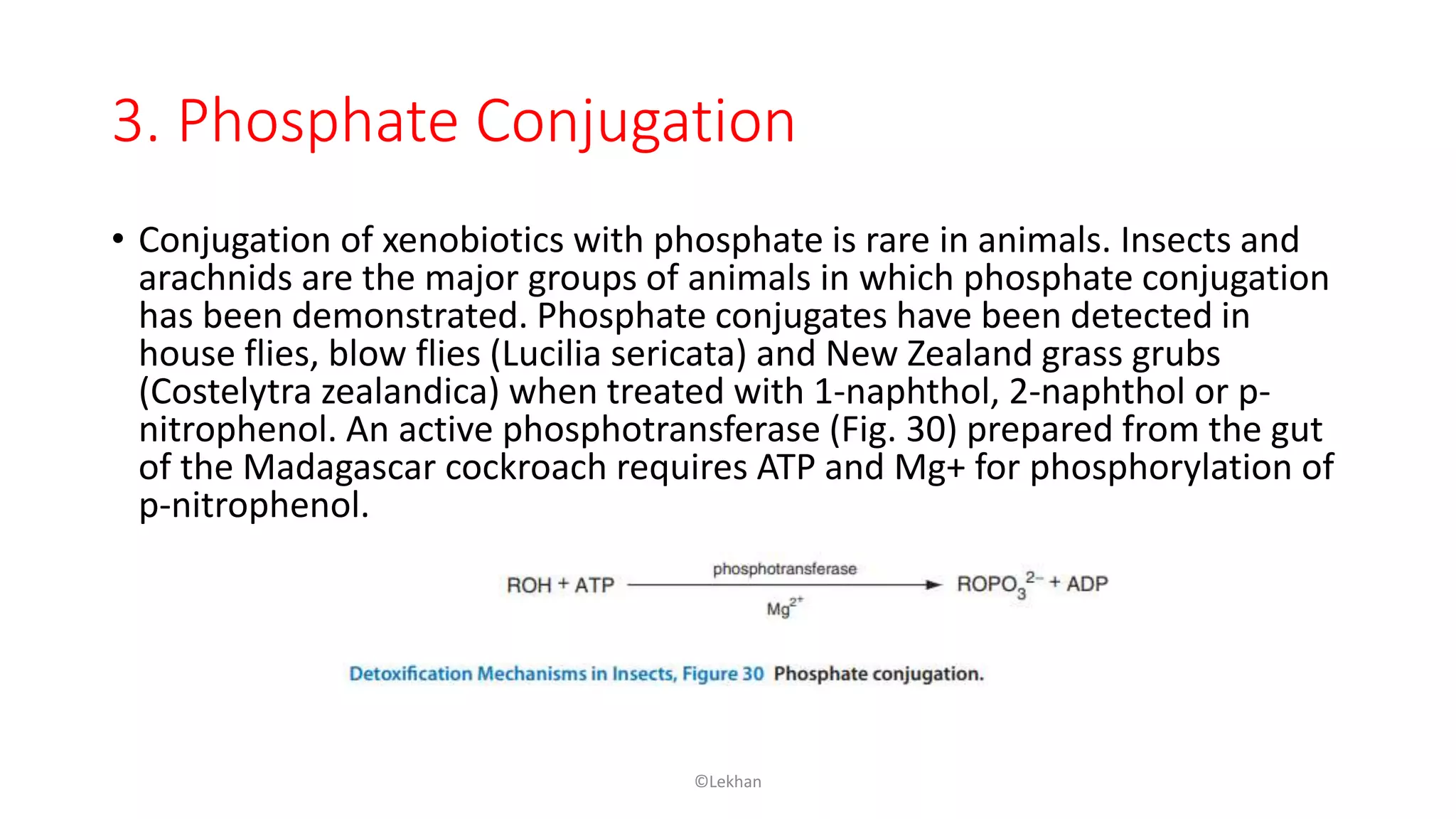
• Conjugation of xenobiotics with phosphate is rare in animals. Insects and
arachnids are the major groups of animals in which phosphate conjugation
has been demonstrated. Phosphate conjugates have been detected in
house flies, blow flies (Lucilia sericata) and New Zealand grass grubs
(Costelytra zealandica) when treated with 1-naphthol, 2-naphthol or p-
nitrophenol. An active phosphotransferase (Fig. 30) prepared from the gut
of the Madagascar cockroach requires ATP and Mg+ for phosphorylation of
p-nitrophenol.
©Lekhan
4. Amino acid Conjugation
• Aromatic acids often are conjugated with amino acids in animals,
glycine being the most frequently used amino acid. Conjugation of
aromatic acids with glycine has been demonstrated in several species
of insects. Glycine conjugation occurs in two steps. The first involves
the activation of the substrate (RCOOH) by an enzyme system
requiring ATP and coenzyme A and the second the condensation of
the activated substrate with glycine
©Lekhan
Glutathione Conjugation
• Glutathione conjugation is performed by a group of multifunctional
enzymees known as glutathione S-transferases.
• Glutathione S-transferases are important in the metabolism of
organophosphorus insecticides resulting in detoxification. For
example, methyl parathion (Fig. 31) is dealkylated by glutathione S-
transferase to form desmethyl parathion and methyl glutathione. On
the other hand, parathion (Fig. 32) can be dearylated by glutathione
S-transferase to produce diethyl phosphorothioic acid and S-(p-
nitrophenyl) glutathione. Interestingly, a glutathione S-transferase
isozyme isolated from the house fly exhibits DDT-dehydrochlorinase
activit
©Lekhan
©Lekhan
Induction of Detoxification Enzyme
• Detoxification enzymes possess a capacity for rapid increase in activity in response to chemical
stress, a phenomenon called enzyme induction. In insects, microsomal monooxygenases can be
induced by a variety of organic chemicals in insects including insecticides such as DDT,
cyclodienes; insect hormones and growth regulators such as 20-hydroxyecdysone and juvenile
hormone; organic solvents such as pentamethylbenzene; drugs such as phenobarbital and 3-
methylcholanthrene, butylated hydroxytoluene and triphenyl phosphate; and allelochemicals
such as terpenoids, indoles, flavonoids and furanocoumarins.
• On the other hand, glutathione S-transferases are induced by various xenobiotics including
insecticides such as DDT and dieldrin; barbiturates such as phenobarbital; and allelochemicals
such as xanthotoxin, and indole 3-acetonitrile. Interestingly, many methylenedioxyphenyl
compounds commonly used as insecticide synergists are inducers of DDT dehydrochlorinase in
house flies.
©Lekhan
Metabolism of Allelochemicals by
Detoxification Enzymes
• Many allelochemicals are known to be metabolized by detoxification enzymes in
insects. It has been shown that the botanical insecticides, nicotine, pyrethrins and
rotenone, are metabolized by microsomal monooxygenases in insects. Nicotine is
hydroxylated (Fig. 33) at the C-2 position to produce 2-hydroxynicotine followed
by alcohol dehydrogenation to yield cotinine in tobacco feeding insects. Pyrethrin
I is hydroxylated at the trans-methyl group and the side chain in house flies. As
for rotenone, it is oxidatively metabolized to rotenolone I and II, 6',7'-dihydro-
6',7'-dihydroxyrotenone and 8'-hydroxyrotenone in house flies.
• A variety of monoterpenes (Fig. 34) are oxidatively metabolized by bark beetles.
α-Pinene is hydroxylated to trans-verbenol (a pheromone) in Dendroctonus
terbranus and Dendroctonus frontalis, myrcene to ipsdienol in Ips spp. and
camphene to 6-hydroxycamphene in Dendroctonusand Ips spp. α-Pinene also is
oxidized to α-pinene epoxide by microsomal monooxygenases in bark beetles.
Pulegone is oxidized to 9-hydroxypulegone and 10-hydroxypulegone by
microsomal monooxygenase from southern armyworm larvae
©Lekhan
©Lekhan

Detoxification mechanisms in Insects

  • 1.
    Detoxification Mechanisms in Insects LekhanLodhi Research Scholar Department of Zoology DHSGSU ©Lekhan
  • 2.
    Detoxification Mechanisms inInsects • Insects are faced with numerous toxins (xenobiotics) as they go through life, some produced naturally by plants (sometimes called allelochemicals) and some produced by humans (insecticides). • To survive the natural toxins, insects have evolved various detoxification mechanisms. These same mechanisms also sometimes allow insects to overcome insecticides, and the level and type of mechanisms differ greatly. This results in differing toxicity among different stages, populations, and species of insects. ©Lekhan
  • 3.
    • Detoxification canbe divided into phase I (primary) and phase II (secondary) processes. Phase I reactions consist of oxidation, hydrolysis and reduction. The phase I metabolites are sometimes polar enough to be excreted, but usually are further converted by phase II reactions. In phase II reactions, the polar products are conjugated with a variety of endogenous compounds such as sugars, sulfate, phosphate, amino acids or glutathione, and subsequently excreted. Phase I reactions usually are responsible for decreasing biological activity of a toxicant and therefore the enzymes involved are rate limiting with respect to toxicity. ©Lekhan
  • 4.
  • 5.
    1. Oxidation • Theoxidative reactions are carried out by a group of enzymes called microsomal cytochrome P450 monooxygenases [also known as mixed-function oxidases (MFO) or microsomal oxidases]. These enzymes, located in the endoplasmic reticulum of eukaryotic cells, commonly are found in mammals, birds, reptiles, fish, crustaceans, molluscs, insects, bacteria, yeast and higher plants. Microsomal monooxygenases are a three-component system comprised of cytochrome P450, NADPH-cytochrome P450 reductase and a phospholipid (phosphatidylcholine) ©Lekhan
  • 6.
    • The detailsof catalytic events mediated by cytochrome P450 are not fully understood. The substrate first binds to oxidized cytochrome P450 (Fe3+); the enzyme-substrate complex undergoes reduction and then interacts with oxygen. Finally, the hydroxylated substrate and a molecule of water are released. Electrons from NADPH are transported by NADPH- cytochrome P450 reductase and provide reducing equivalents to the ferric cytochrome P450- substrate complex. • where RH is a substrate. In some cases, the second electron may originate from NADH via cytochrome b5. Cytochrome b5is involved in fatty acid desaturation and in certain microsomal monooxygenase activities, including methoxycoumarin O-demethylation, ethoxycoumarin deethylation, benzo[a]pyrene hydroxylation and cypermethrin hydroxylation in house flies • To date, several hundred cytochrome P450 genes have been identified, including the house fly (CYP6A1, CYP6A3, CYP6A4, CYP6A5, CYP6C1, CYP6D1), the pomace fly (CYP6A2, CYP4D1, CYP4D2, CYP4E1), the bollworm, Helicoverpa amigera (CYP6B2, CYP4G8, CYP9A3, CYP6B2), the tobacco budworm, Heliothis virescens (CYP9A1), the black swallowtail (CYP6B1, CYP6B3) ©Lekhan
  • 7.
    2. Epoxidation • Epoxidationis an important microsomal reaction. For example, the cyclodiene (Fig. 14) insecticide aldrin can be oxidized to its epoxide dieldrin which is more environmentally persistent than its precusor. Epoxides are usually highly unstable and can undergo rapid enzymatic hydration to dihydrodiols catalyzed by epoxide hydrolases. These highly reactive epoxides can form adducts with cellular macromolecules such as proteins, RNA and DNA, often resulting in chemical carcinogenesis. ©Lekhan
  • 8.
    3. Hydroxylation • Hydroxylationcan occur with an aliphatic or aromatic carbon atom. DDT and the carbamate insecticide carbaryl are known to be hydroxylated by microsomal monooxygenases as shown in the accompanying figure (Fig. 15). Microsomal hydroxylation usually results in detoxification. ©Lekhan
  • 9.
    4. N-Dealkylation • N-Dealkylationis a common reaction in the metabolism of xenobiotics including organophosphorus and carbamate insecticides. The reaction is believed to proceed by an unstable α-hydroxy intermediate which spontaneously releases an aldehyde in the case of the primary alkyl group. For example, the carbamate insecticide (Fig. 17) propoxur is N- demethylated to 2-isopropoxyphenyl carbamate via 2-isopropoxyphenyl N- hydroxymethyl carbamate. Microsomal N-dealkylation results in detoxification. ©Lekhan
  • 10.
    5. O-Dealkylation • O-Dealkylationof alkyl groups of the ester or ether structures of insecticides occurs frequently but it also involves an unstable α-hydroxy intermediate as found in N- dealkylation. For example, methoxychlor (Fig. 18) is O- demethylated by the system. O- Dealkylation is known to occur with a wide variety of organophosphates including certain dimethyl triesters. O-Dealkylation results in detoxification. ©Lekhan
  • 11.
    6. Desulfuration • Organophosphorusinsecticides with the P = S group are desulfurated by microsomal monooxygenases of insects to their corresponding P = O analogues. This reaction results in activation because the product, P = O, binds more tightly to the acetylcholinesterase and are thus more potent acetylcholinesterase inhibitors. For example, parathion (Fig. 19) is desulfurated to paraoxon ©Lekhan
  • 12.
    7. Sulfoxidation • Manythioether-containing insecticides such as organophosphorus compounds and carbamates are oxidized by microsomal monooxygenases of insects to their corresponding sulfoxides. In general, sulfoxide formation represents an oxidative activation process leading to an increase in anticholinesterase activity. For example, phorate (Fig. 20) is oxidized to phorate sulfoxide. In the fall armyworm, Spodoptera frugiperda, sulfoxidation of phorate requires NADPH and is inhibited by carbon monoxide and piperonyl butoxide, and induced by cytochrome P450 inducers (e.g., indole 3-carbinol and indole 3-acetonitrile). ©Lekhan
  • 13.
    8. Reduction • Althoughinsects contain reductases catalyzing the reduction of xenobiotics, reduction is less common than oxidation. Three types of reduction reactions, i.e., nitro reduction, azo reduction, and aldehyde/ketone reduction are known to occur in insects • An NADPH-dependent nitroreductase has been reported in the soluble fraction (cytosol) of adult female house flies (Fig. 21) which reduces parathion to aminoparathion. The reductase activity is not affected by the presence of oxygen.Nitrobenzene reductase activity (Fig. 22) has been detected in the fat body, gut and Malpighian tubules of the Madagascar cockroach, Gromphadorhina portentosa. Anaerobic conditions are essential for activity. The enzymes in the microsomes are strongly NADH dependent, whereas those in the soluble fraction are strongly NADPH dependent. ©Lekhan
  • 14.
    • Aldehyde reductases,which catalyze the reduction of (Fig. 23) aldehydes and ketones, are widely distributed in animal species including insects (e.g., D. melanogaster and B. discoidalis). These enzymes catalyze as in the accompanying reaction. Aldehyde reductases are cytosolic enzymes requiring NADPH as cofactor. They reduce naturally occurring compounds such as benzaldehyde and daunorubicin as well as synthetic chemicals. 8. Reduction ©Lekhan
  • 15.
    9. Hydrolysis • Insecticidessuch as organophosphates, carbamates, pyrethroids and some juvenoids, which contain ester linkages, are susceptible to hydrolysis. Esterase are hydrolases that split ester compounds by the addition of water to yield an acid and an alcohol. • Esterases which metabolize organophosphates can be divided into three groups: A-esterases are not inhibited by organophosphates but hydrolyze them; B-esterases are susceptible to organophosphate inhibition; and C-esterases which are uninhibited by organophosphates but do not degrade them • There are two types of esterases that are important in metabolizing insecticides, namely, carboxylesterases and phosphatases (also called phosphorotriester hydrolases). Carboxylesterases which are B-esterases play significant roles in degrading organophosphates, carbamates, pyrethroids and some juvenoids in insects. The best example (Fig. 24) is malathion hydrolysis, which yields both α- and β- monoacids and ethanol. ©Lekhan
  • 16.
    9. Hydrolysis • Phosphatasesare A-esterases which detoxify many organophosphorus insecticides especially phosphates in insects. In house flies, paraoxon (Fig. 25) can be hydrolyzed to diethyl phosphoric acid as in the accompanying reaction. Phosphatases also hydrolyze the alkyl groups of organophosphates. Paraoxon was hydrolyzed by the enzyme in house flies. • Several amide-containing organophosphorus insecticides such as dimethoate and acephate have (Fig. 26) been shown to be hydrolyzed by carboxylamidases to their corresponding carboxylic acid derivatives. ©Lekhan
  • 17.
    9. Hydrolysis • Epoxiderings of alkene and arene compounds are hydrated to form trans-diols. The enzymes which catalyze the addition of a molecule of water to an epoxide ring to yield diols are known as epoxide hydrolases. Epoxide hydrolase activity (Fig. 27) has been detected in numerous species of insects. Enzymatic epoxide hydration of certain cyclodiene insecticides and their analogues has been demonstrated in the house fly, blow fly (Calliphora erythrocephala), yellow mealworm (Tenebrio molitor), Madagascar cockroach, etc ©Lekhan
  • 18.
  • 19.
    Phase II Reactions •Phase I reactions with xenobiotics result in the addition of functional groups such as hydroxyl, carboxyl, and epoxide. These phase I products can undergo further conjugation reactions with endogenous molecules. These conjugations are called phase II reactions. The endogenous molecules include sugars, amino acids, glutathione, phosphate and sulfate. Conjugation products usually are more polar, less toxic and more readily excreted than their parent compounds. Thus, the process, with only a few exceptions, results in detoxification. • Three types of conjugation reactions occur in insects. Type I requires an activated conjugating agent which then combines with the substrate to form the conjugated product. Type II involves the activation of the substrate to form an activated donor which then combines with an endogenous molecule to yield a conjugated product. In type III, conjugation can proceed directly between the substrate and conjugating agent without involving activation. Thus, types I and II require formation of high energy intermediates before conjugation reactions proceed. • The chemical groups required for type I are OH, NH2, COOH and SH (glucose conjugation, sulfate conjugation and phosphate conjugation); for type II, COOH (amino acid conjugation); and for type III, halogens, alkenes, NO2, epoxides, ethers and esters (glutathione conjugation). ©Lekhan
  • 20.
    1. Glucose conjugation •Glucose conjugation is found commonly in insects and plants but rarely in mammals. Glucoside formation is accomplished by a reaction between an activated intermediate, uridine diphosphate glucose (UDPG), and the xenobiotic, with the enzyme glucosyl transferase as catalyst (Fig. 28). In insects, O-glucosides have been identified from some insecticide metabolism studies, including carbaryl, propoxur, carbofuran, DDT and allethrin. ©Lekhan
  • 21.
    2. Sulfate conjugation •Sulfate conjugation requires the prior activation of inorganic sulfate by adenosine triphosphate to an active intermediate, 3'-phosphoadenosine- 5'-phosphosulfate (PAPS), from which the sulfate group is transferred to a substrate (ROH). The final step is catalyzed by an enzyme called sulfotransferase. The three-step reaction (Fig. 29) sequence is illustrated in the accompanying reaction ©Lekhan
  • 22.
    3. Phosphate Conjugation •Conjugation of xenobiotics with phosphate is rare in animals. Insects and arachnids are the major groups of animals in which phosphate conjugation has been demonstrated. Phosphate conjugates have been detected in house flies, blow flies (Lucilia sericata) and New Zealand grass grubs (Costelytra zealandica) when treated with 1-naphthol, 2-naphthol or p- nitrophenol. An active phosphotransferase (Fig. 30) prepared from the gut of the Madagascar cockroach requires ATP and Mg+ for phosphorylation of p-nitrophenol. ©Lekhan
  • 23.
    4. Amino acidConjugation • Aromatic acids often are conjugated with amino acids in animals, glycine being the most frequently used amino acid. Conjugation of aromatic acids with glycine has been demonstrated in several species of insects. Glycine conjugation occurs in two steps. The first involves the activation of the substrate (RCOOH) by an enzyme system requiring ATP and coenzyme A and the second the condensation of the activated substrate with glycine ©Lekhan
  • 24.
    Glutathione Conjugation • Glutathioneconjugation is performed by a group of multifunctional enzymees known as glutathione S-transferases. • Glutathione S-transferases are important in the metabolism of organophosphorus insecticides resulting in detoxification. For example, methyl parathion (Fig. 31) is dealkylated by glutathione S- transferase to form desmethyl parathion and methyl glutathione. On the other hand, parathion (Fig. 32) can be dearylated by glutathione S-transferase to produce diethyl phosphorothioic acid and S-(p- nitrophenyl) glutathione. Interestingly, a glutathione S-transferase isozyme isolated from the house fly exhibits DDT-dehydrochlorinase activit ©Lekhan
  • 25.
  • 26.
    Induction of DetoxificationEnzyme • Detoxification enzymes possess a capacity for rapid increase in activity in response to chemical stress, a phenomenon called enzyme induction. In insects, microsomal monooxygenases can be induced by a variety of organic chemicals in insects including insecticides such as DDT, cyclodienes; insect hormones and growth regulators such as 20-hydroxyecdysone and juvenile hormone; organic solvents such as pentamethylbenzene; drugs such as phenobarbital and 3- methylcholanthrene, butylated hydroxytoluene and triphenyl phosphate; and allelochemicals such as terpenoids, indoles, flavonoids and furanocoumarins. • On the other hand, glutathione S-transferases are induced by various xenobiotics including insecticides such as DDT and dieldrin; barbiturates such as phenobarbital; and allelochemicals such as xanthotoxin, and indole 3-acetonitrile. Interestingly, many methylenedioxyphenyl compounds commonly used as insecticide synergists are inducers of DDT dehydrochlorinase in house flies. ©Lekhan
  • 27.
    Metabolism of Allelochemicalsby Detoxification Enzymes • Many allelochemicals are known to be metabolized by detoxification enzymes in insects. It has been shown that the botanical insecticides, nicotine, pyrethrins and rotenone, are metabolized by microsomal monooxygenases in insects. Nicotine is hydroxylated (Fig. 33) at the C-2 position to produce 2-hydroxynicotine followed by alcohol dehydrogenation to yield cotinine in tobacco feeding insects. Pyrethrin I is hydroxylated at the trans-methyl group and the side chain in house flies. As for rotenone, it is oxidatively metabolized to rotenolone I and II, 6',7'-dihydro- 6',7'-dihydroxyrotenone and 8'-hydroxyrotenone in house flies. • A variety of monoterpenes (Fig. 34) are oxidatively metabolized by bark beetles. α-Pinene is hydroxylated to trans-verbenol (a pheromone) in Dendroctonus terbranus and Dendroctonus frontalis, myrcene to ipsdienol in Ips spp. and camphene to 6-hydroxycamphene in Dendroctonusand Ips spp. α-Pinene also is oxidized to α-pinene epoxide by microsomal monooxygenases in bark beetles. Pulegone is oxidized to 9-hydroxypulegone and 10-hydroxypulegone by microsomal monooxygenase from southern armyworm larvae ©Lekhan
  • 28.