Organophosphate Insecticides
Dr. KumariAnjana
Assistant Professor
Deptt. of Veterinary Pharmacology & Toxicology
Bihar Veterinary College, Bihar Animal Sciences University, Patna
2.
Content of thechapter
• Introduction
• Uses
• Comparison to organochlorine compounds
• History
• Classification
• Differences from direct acting OP compounds
indirect acting OP compounds
• Mechanism of action
• Clinical signs
• Diagnosis
• Treatment
3.
Introduction
OP compound areesters of phosphoric, phosphonic,
phosphorothioic or related acids which have ability to
inhibit cholinesterase enzyme.
4.
• As insecticides,organophosphates are one of the major groups in
use in present time:
• Insecticides,
• Acaricides,
• Soil nematodes,
• Fungicides,
• Herbicides,
• Defoliants,
• Rodenticides,
• Insecticide synergists,
• Insect repellents,
• chemosterilants and
• Warfare agents.
USES
5.
Compared to Organochlorins
OPsare:
• Much less environmentally persistent,
• Much more biodegradable,
• Less subject to biomagnifications,
• Usually unstable in presence of sunlight.
• However, compared to organochlorins, they are much more
acutely toxic to non-target species and several cases of poisoning
frequently occur in man, domestic animals and wild life.
• Although most OPI are not very persistent in environment and
dissipate in 2-4 weeks, some OPs, such as chlorpyriphos, are
sufficiently persistent to be used for control of termites.
6.
• 1st
OPI -tetraethyl pyrophosphate (TEPP).
• Developed in Germany during Second World War as a
substitute for nicotine.
• This was followed by tabun and sarin.
• These compounds were highly toxic to mammals and
were rapidly hydrolysed by moisture.
• This led to the discovery by Schrader in 1944 of more
stable compound parathion and its oxygen analogue
paraoxone.
History
7.
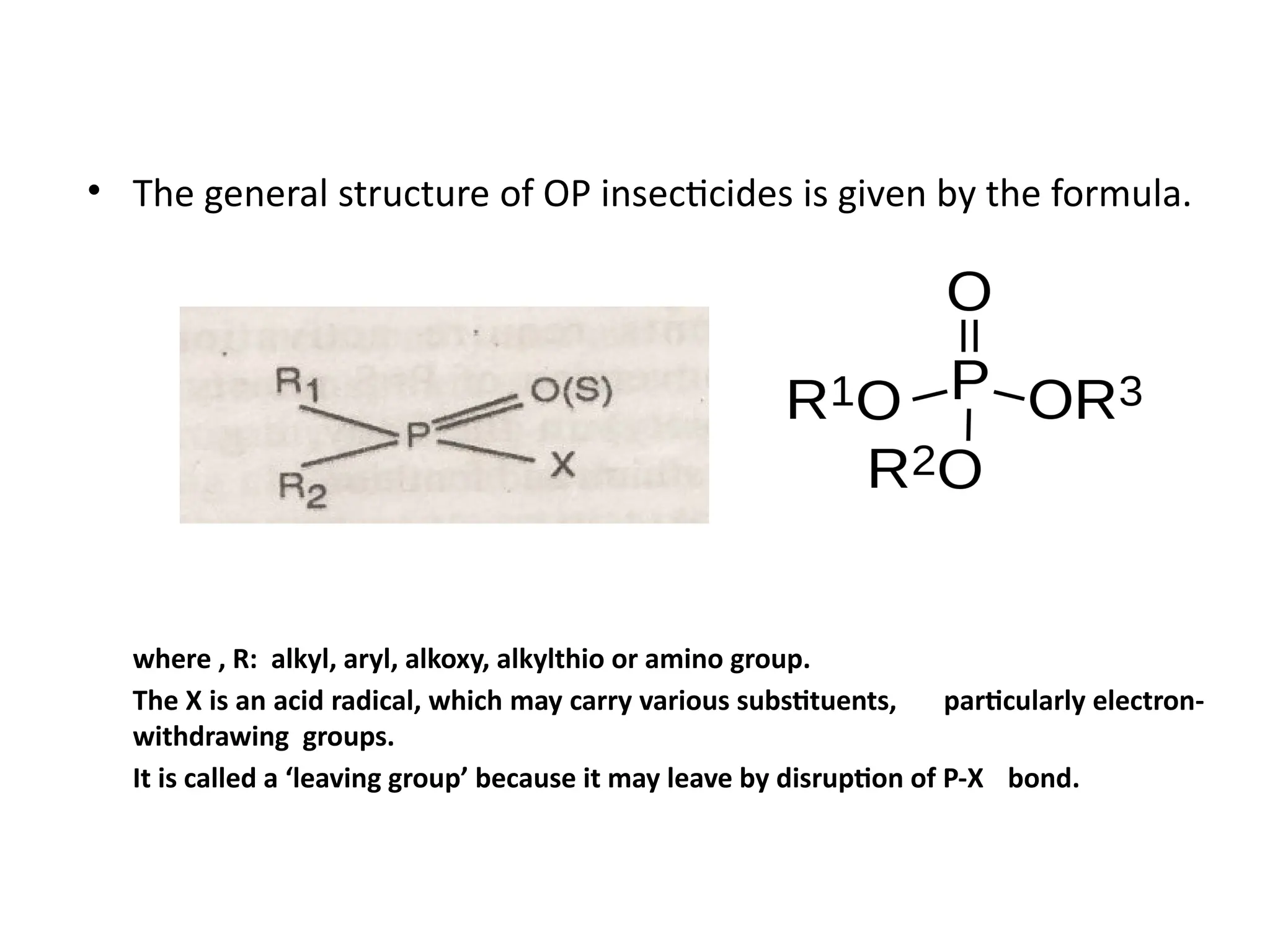
• The generalstructure of OP insecticides is given by the formula.
where , R: alkyl, aryl, alkoxy, alkylthio or amino group.
The X is an acid radical, which may carry various substituents, particularly electron-
withdrawing groups.
It is called a ‘leaving group’ because it may leave by disruption of P-X bond.
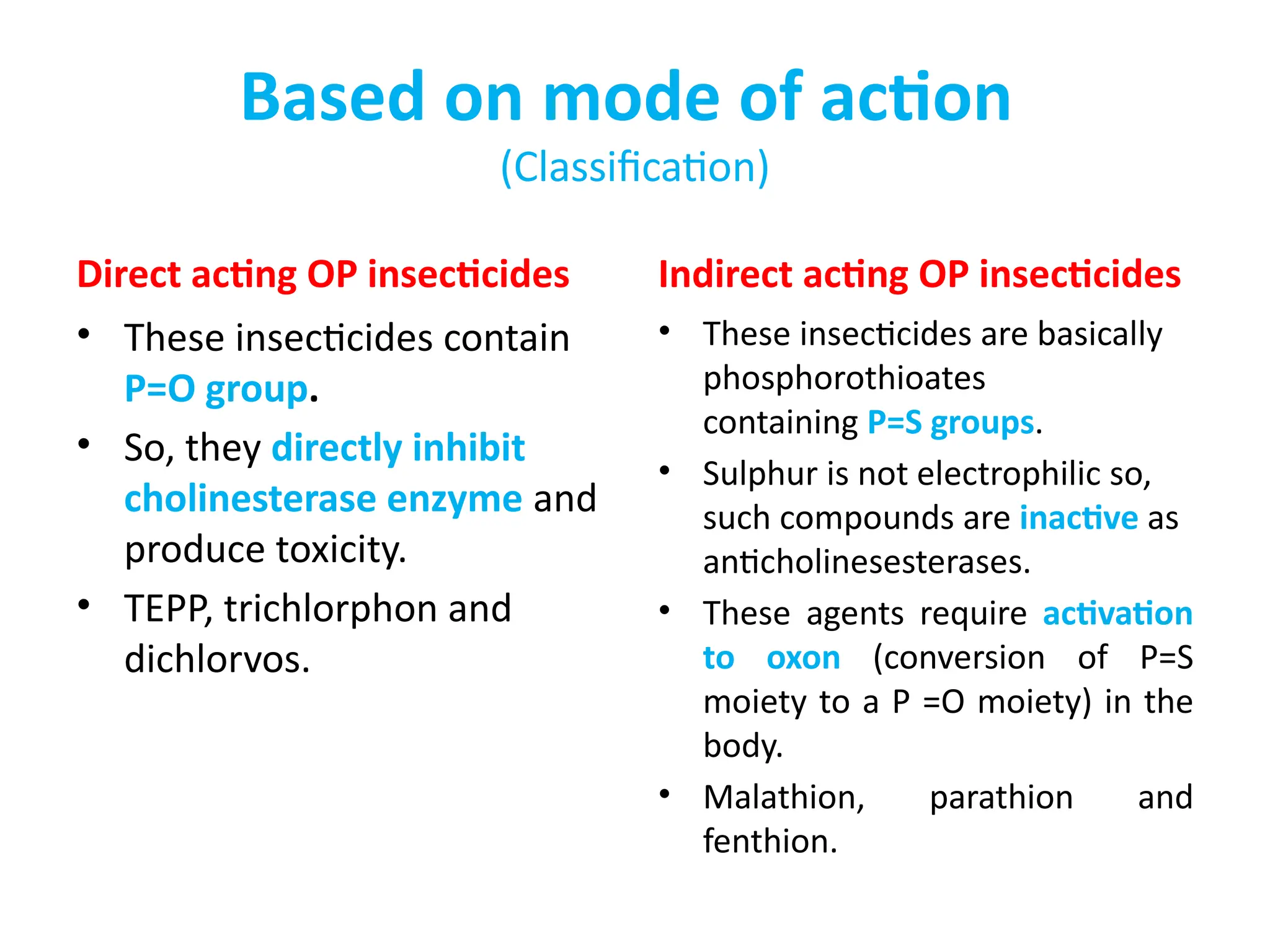
Based on modeof action
(Classification)
Direct acting OP insecticides
• These insecticides contain
P=O group.
• So, they directly inhibit
cholinesterase enzyme and
produce toxicity.
• TEPP, trichlorphon and
dichlorvos.
Indirect acting OP insecticides
• These insecticides are basically
phosphorothioates
containing P=S groups.
• Sulphur is not electrophilic so,
such compounds are inactive as
anticholinesesterases.
• These agents require activation
to oxon (conversion of P=S
moiety to a P =O moiety) in the
body.
• Malathion, parathion and
fenthion.
10.
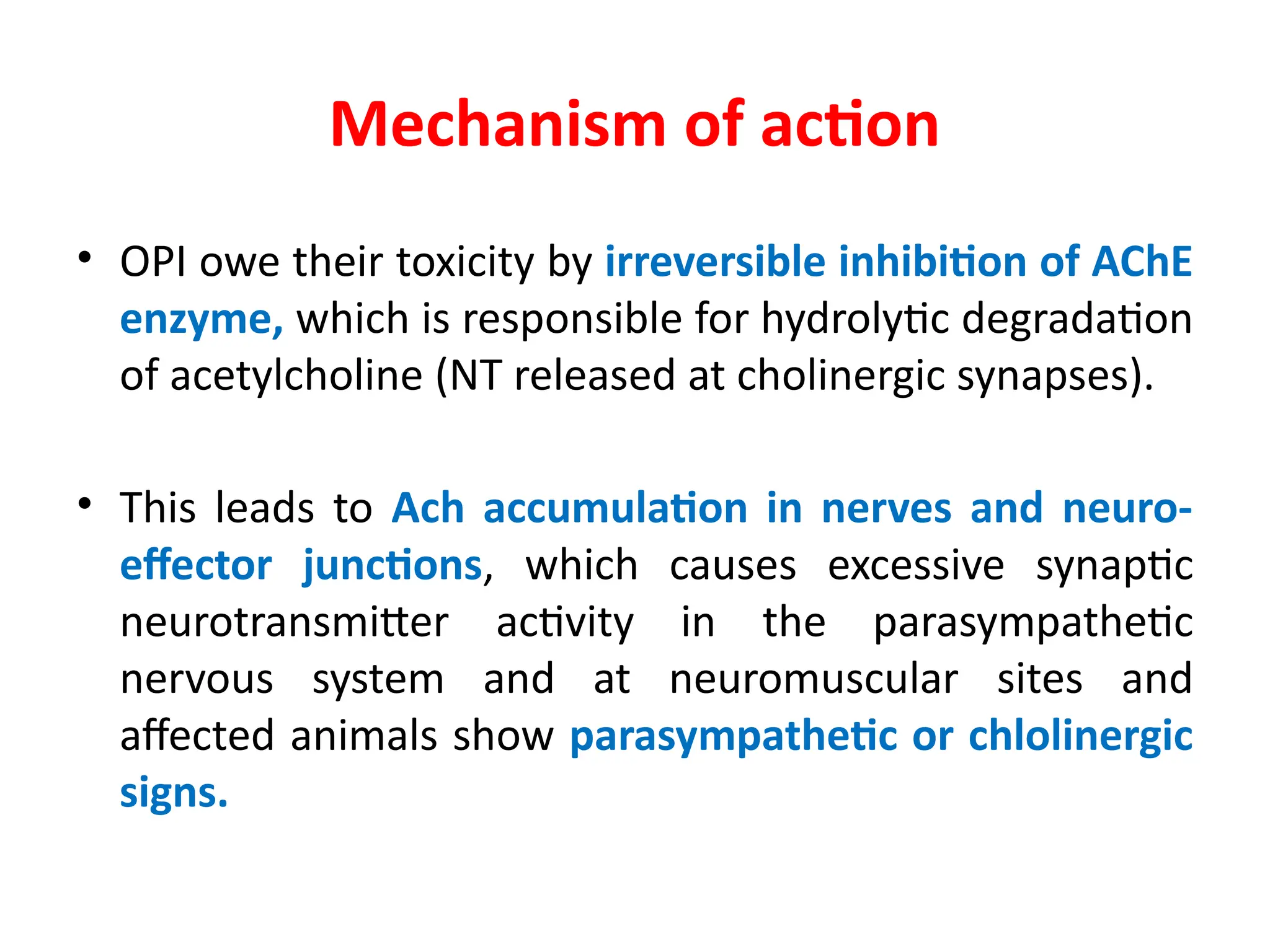
Mechanism of action
•OPI owe their toxicity by irreversible inhibition of AChE
enzyme, which is responsible for hydrolytic degradation
of acetylcholine (NT released at cholinergic synapses).
• This leads to Ach accumulation in nerves and neuro-
effector junctions, which causes excessive synaptic
neurotransmitter activity in the parasympathetic
nervous system and at neuromuscular sites and
affected animals show parasympathetic or chlolinergic
signs.
11.
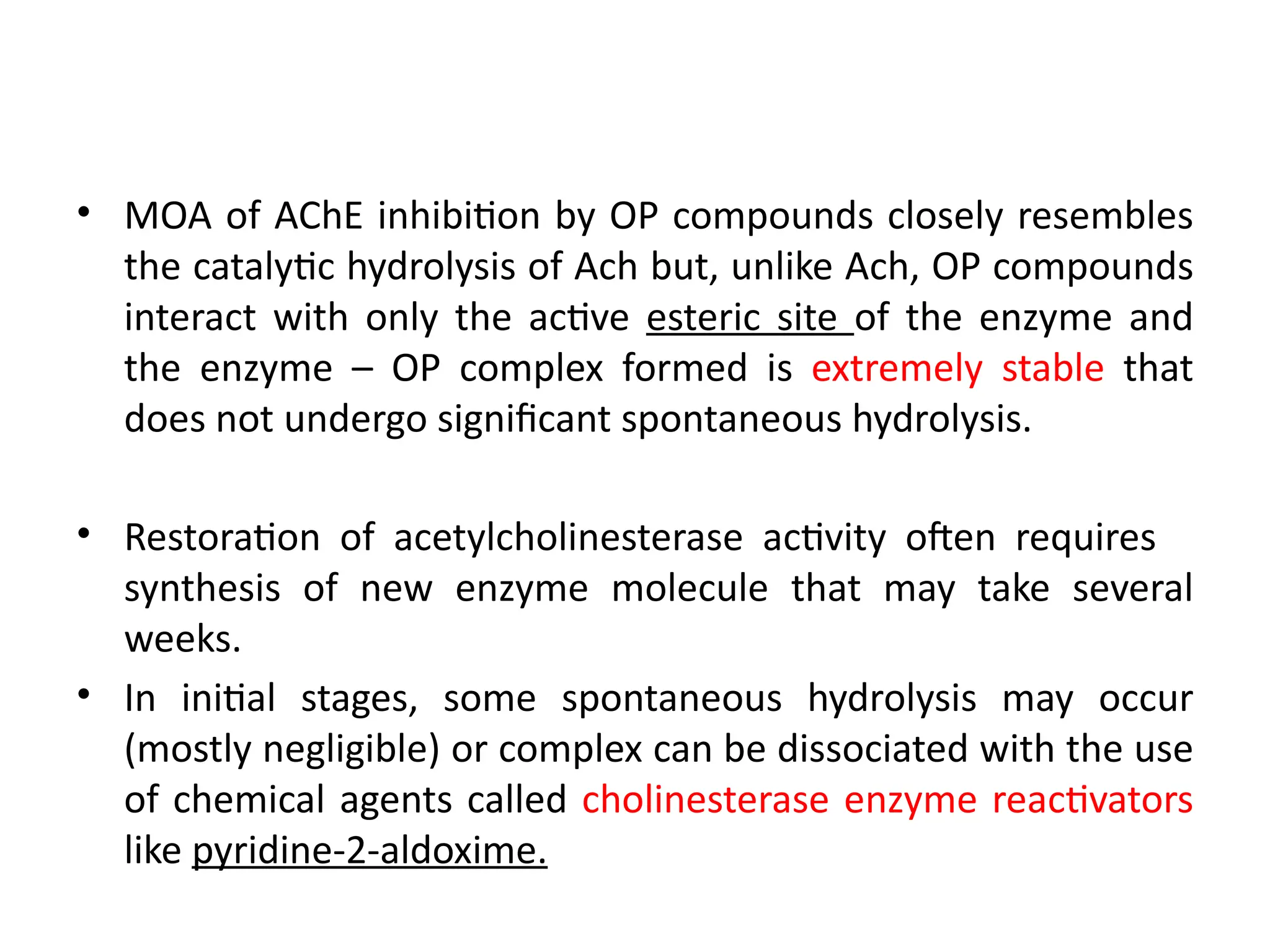
• MOA ofAChE inhibition by OP compounds closely resembles
the catalytic hydrolysis of Ach but, unlike Ach, OP compounds
interact with only the active esteric site of the enzyme and
the enzyme – OP complex formed is extremely stable that
does not undergo significant spontaneous hydrolysis.
• Restoration of acetylcholinesterase activity often requires
synthesis of new enzyme molecule that may take several
weeks.
• In initial stages, some spontaneous hydrolysis may occur
(mostly negligible) or complex can be dissociated with the use
of chemical agents called cholinesterase enzyme reactivators
like pyridine-2-aldoxime.
• However oncecovalent modification of enzyme occurs
and the phosphorylated enzyme looses one of its alkyl
group (called aging), it is impossible for chemical
reactivators to break the bond between the inhibitor
and the enzyme.
• Aging is very rapid for nerve gases.
soman (aging half life 2 minutes),
less for DFP (approx. 4 hrs)
and more (up to 36 hrs) for many other OPI.
14.
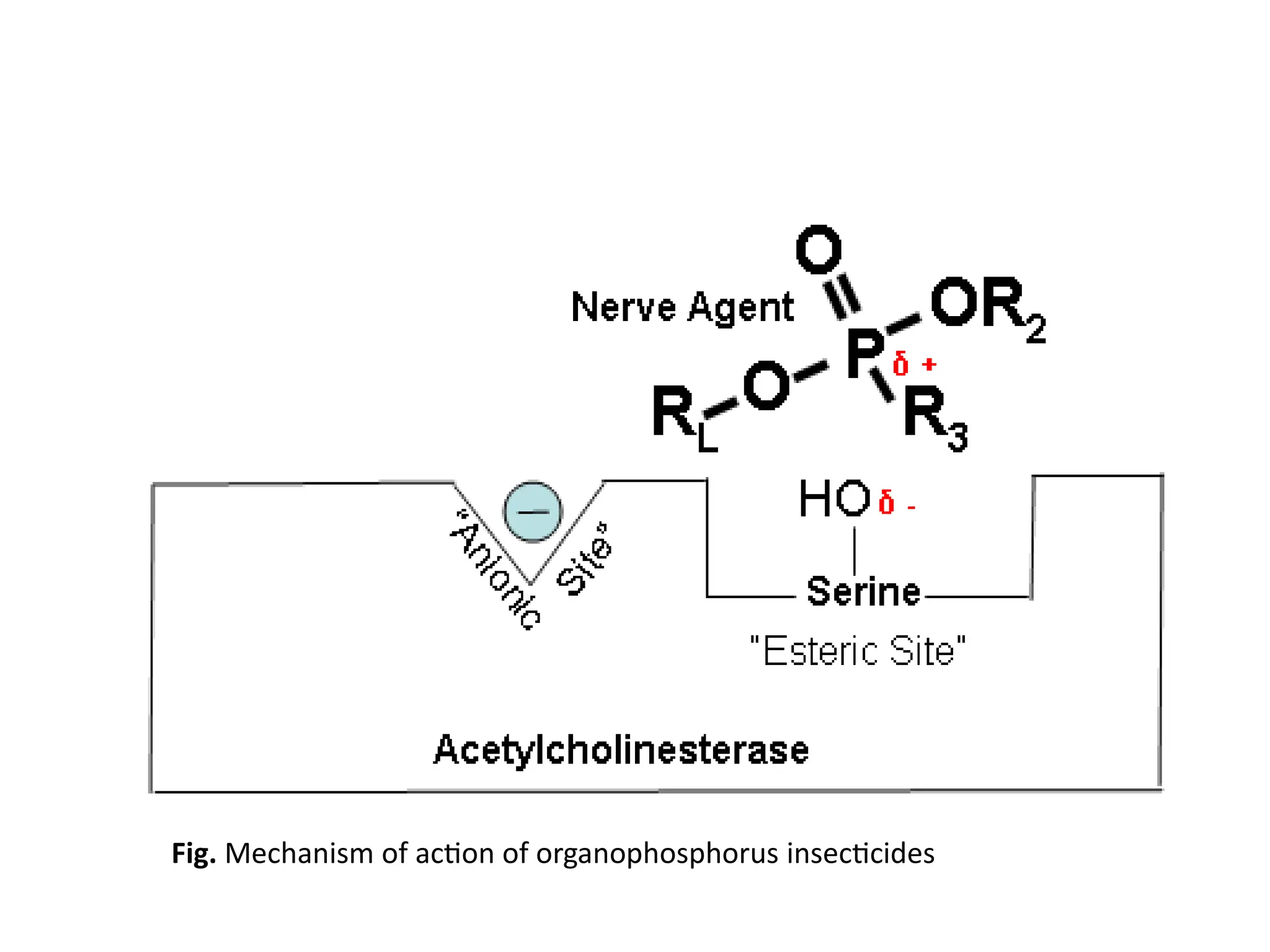
• Phosphorylation ofAChE enzyme occurs when
organophosphate occupies esteratic site of the
enzyme.
• Spontaneous hydrolysis resulting in
regenerated enzyme may occur poorly.
• When aging occurs (loss of esterified moiety
‘R’), recovery of cholinesterase does not occur
due to formation of irreversible stable bonds.
• This needs synthesis of new enzymes.
15.
• In additionto acetylcholinesterase enzyme (also called
true cholinesterase), OPI inhibit plasma cholinesterase
(also called pseudocholinesterase or butyryl
cholinesterase), a non specific enzyme, and some
other esterases with serine residue at active sites
called as neurotoxic esterase.
• Inhibitions of these non-specific enzymes may
interfere with metabolism of a wide variety of esters
that occur in plasma, nervous tissue and some other
systems in the body.
16.
Some OPI like
tri-orthocresyl phosphate (TOCP),
diisopropyl phosphorofluoridate (DFP),
EPN (Ethyl nitrophenyl phosphonothioate), leptophos,
mipafox .
produce
• These compounds are weak ChE inhibitors but strongly
inihibit neurotoxic esterase (NtE) in brain and spinal
cord causing axonal swelling, breakdown and
demyelination of spinal and peripheral neurons.
17.
• The signsof delayed neurotoxicity include muscle
weakness, ataxia, flaccid paralysis of limbs.
• Poultry birds are the most sensitive spp.
• This delayed toxic axonopathy is called organophosphorus
induced delayed neuropathy (OPIDN) or dying back
axonopathy (so called because it starts at periphery and
then goes upward into spinal cord and up into
spinocerebellar, vestibulospinal and other tracts).
• Larger diameter fibres appear to be more affected then
small diameter fibres.
18.
Clinical sign
• Muscarinicsigns:
Profuse salivation (watery
drooling), bronchial secretions and
constriction, diarrhoea, frequent
urination and miosis.
19.
• Nicotinic signs:Muscular tremors,
convulsions, paralysis of respiratory
muscles and dyspnoea.
• CNS signs: Restlessness, ataxia, depression of
respiratory and vasomotor centres,
paralysis, coma and death due to
respiration failure followed by
cardiovascular failure.
20.
Diagnosis
• History,
• circumstantialevidence,
• Clinical signs,
• Estimation of blood ChE activity (25% or more
decrease in OPI and carbamate toxicity)
• Identification of the insecticide in feed, water,
ruminal content or tissues.
21.
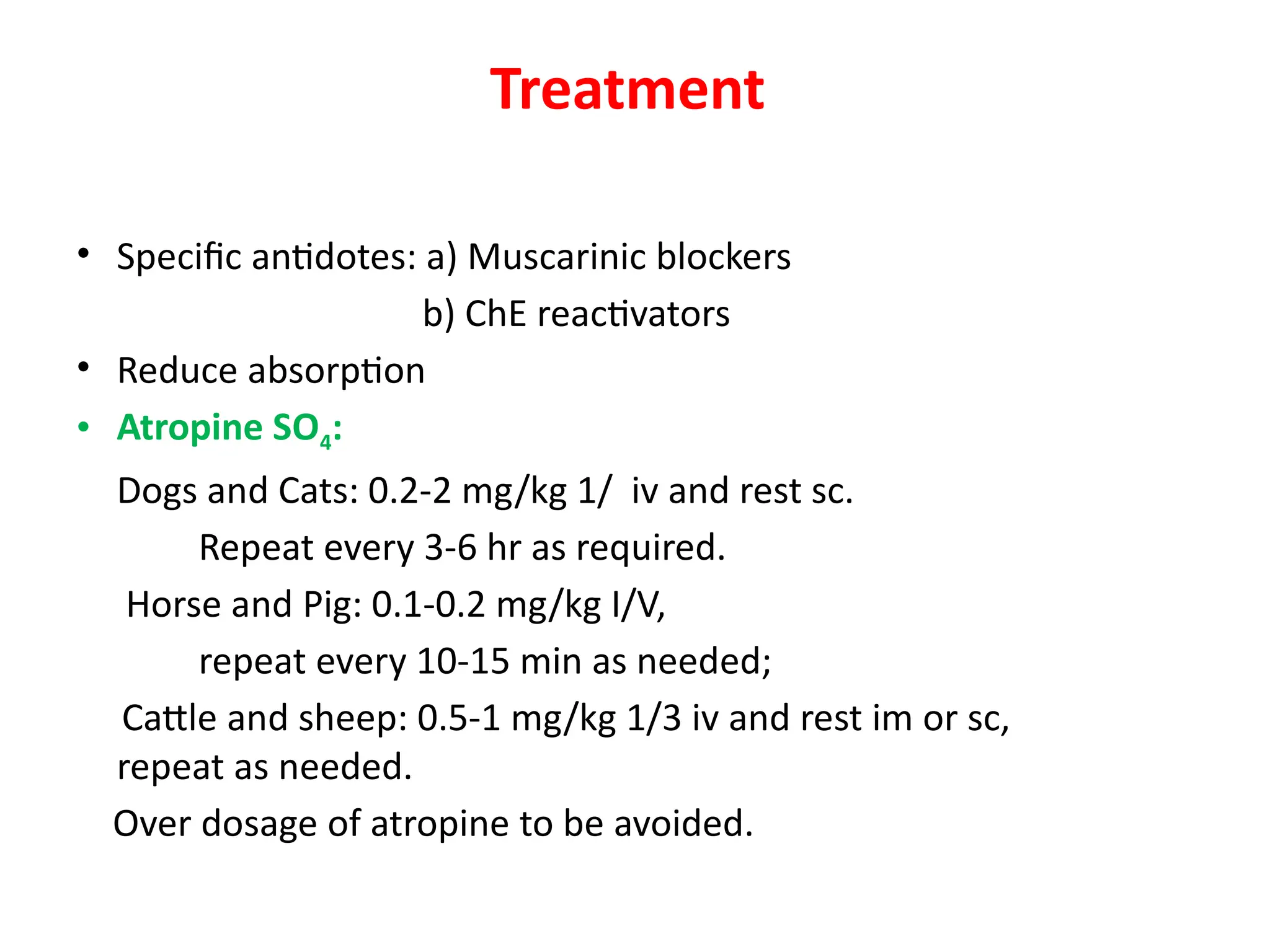
Treatment
• Specific antidotes:a) Muscarinic blockers
b) ChE reactivators
• Reduce absorption
• Atropine SO4:
Dogs and Cats: 0.2-2 mg/kg 1/ iv and rest sc.
Repeat every 3-6 hr as required.
Horse and Pig: 0.1-0.2 mg/kg I/V,
repeat every 10-15 min as needed;
Cattle and sheep: 0.5-1 mg/kg 1/3 iv and rest im or sc,
repeat as needed.
Over dosage of atropine to be avoided.
22.
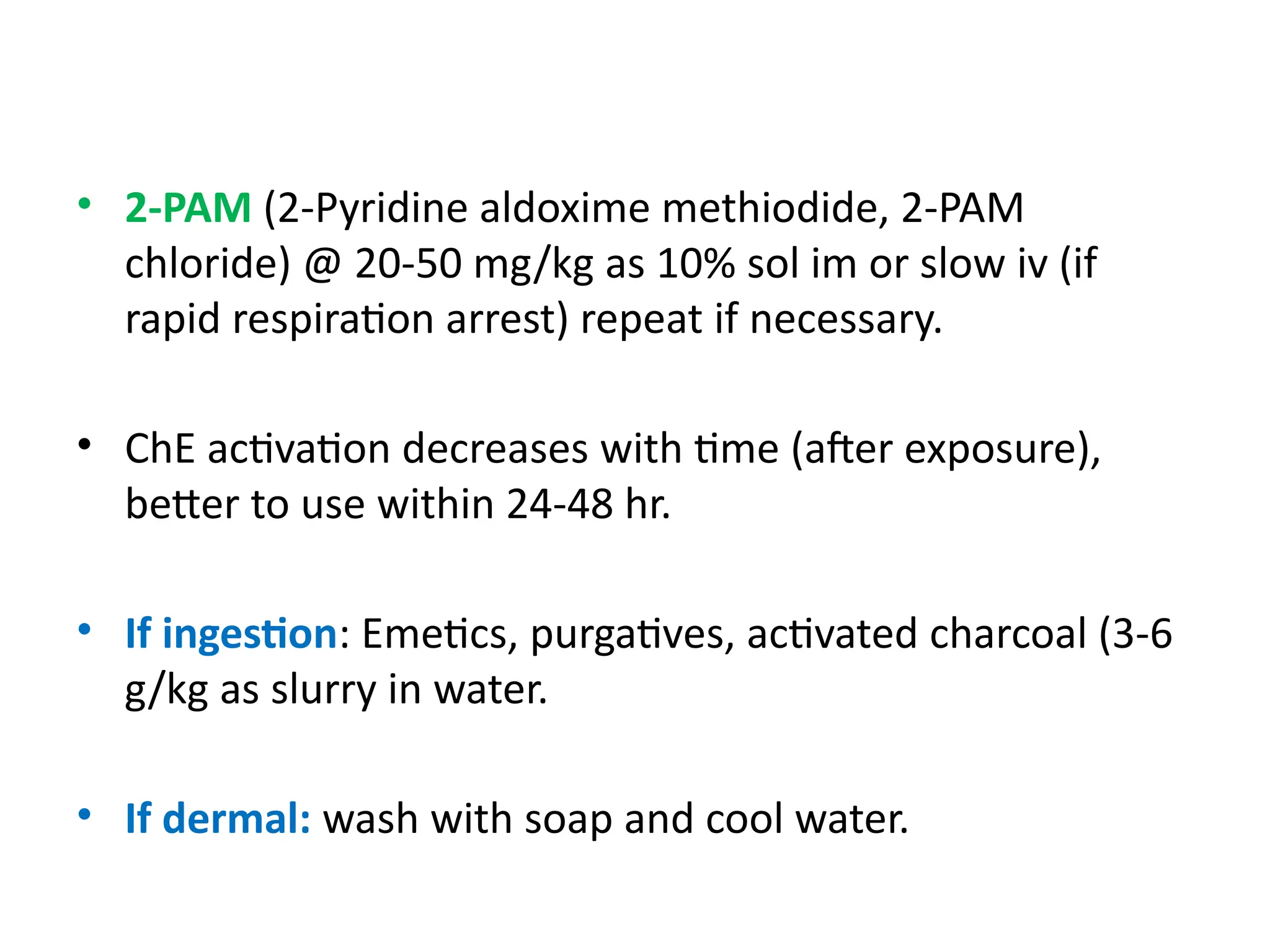
• 2-PAM (2-Pyridinealdoxime methiodide, 2-PAM
chloride) @ 20-50 mg/kg as 10% sol im or slow iv (if
rapid respiration arrest) repeat if necessary.
• ChE activation decreases with time (after exposure),
better to use within 24-48 hr.
• If ingestion: Emetics, purgatives, activated charcoal (3-6
g/kg as slurry in water.
• If dermal: wash with soap and cool water.