Submitted To : Dr. Meena Thakur
Dr. Ajay Sharma
Submitted By : Harmanjot Singh
Ph.D. Entomology 1st year
H-2021-04-D
 Chitin is one of the most important biopolymers in
nature. It is mainly produced by fungi, arthropods and
nematodes.
 In insects, it functions as scaffold material, supporting
the cuticles of the epidermis and trachea as well as the
peritrophic matrices lining the gut epithelium.
 Insect growth and morphogenesis are strictly dependent
on the capability to remodel chitin-containing
structures.
 For this purpose, insects repeatedly produce chitin
synthases and chitinolytic enzymes in different tissues.
 Chitin constitutes 30-40% of insect cuticle (Kramer et al.,
1995).
 It is a nitrogenous polysaccharide made up of chains of
N-acetyl glucosamine and glucosamine units (6:1 ratio)
linked by 1-4 beta linkages to form a chain held by
hydrogen bonds.
 Chitin is found in the exo- and endocuticle or in the
newly secreted, unsclerotized procuticle but not in the
epicuticle, the outermost part of the integument
(Andersen, 1979).
 Chitin stretch ability is 13 mm. Alpha-chitin is most
stable component present in arthropods.
 Chitin is soluble in Sodium hypochlorite and
concentrated mineral axcids but insoluble in water, alkali,
dilute acids and organic solvents.
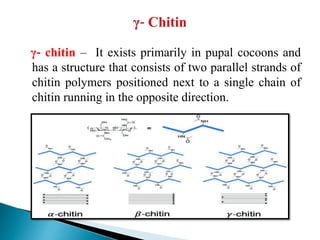
 Insects employ three different types of chitin that
differ in the relative orientations of the adjacent chitin
polymer chains:
1. α‐Chitin.
2. β‐ Chitin.
3. γ‐ Chitin.
 The most abundant form found in the insect cuticle is
α‐chitin composed of polymeric chains of N‐
acetylglucosamine arranged in an antiparallel
orientation.
 This arrangement allows for the formation of
microfibrils consisting of closely packed crystalline
arrays of individual chitin chains that utilize
extensive hydrogen bonding between the amine and
carbonyl groups to help provide mechanical strength.
 β‐ Chitin is found in the insect gut, along with
α‐chitin, as a component of the peritrophic
membrane.
 The adjacent chitin polymers in β‐chitin are parallel,
as opposed to the antiparallel orientation of α‐chitin.
 This results in the adjacent chitin chains forming
fewer hydrogen bond linkages and allows the
structure to be less rigid and more hydrated.
γ‐ chitin – It exists primarily in pupal cocoons and
has a structure that consists of two parallel strands of
chitin polymers positioned next to a single chain of
chitin running in the opposite direction.
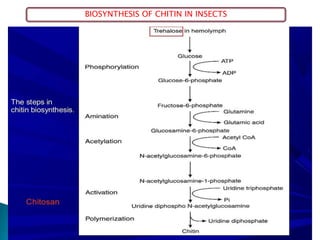
 In insects, the biosynthetic pathway for chitin starts with the
disaccharide trehalose, this is synthesized in the fat body and is
the most predominant sugar found in insects.
 Trehalose is cleaved into two glucose molecules that are
phosphorylated, isomerized, and acetylated, affording the
precursor UDP‐N‐ acetylglucosamine.
 Chitin synthase (CHS) is the final enzyme of the pathway that
utilizes the activated sugar UDP‐N‐acetylglucosamine,
polymerizing it to form chitin.
 CHS is a protein belonging to the family of
β‐glycosyltransferases and is considered to be the key enzyme
involved in chitin synthesis.
 The enzyme has been shown to require divalent cations such as
Mg2+, Mn2+, or Ca2+ for activity.
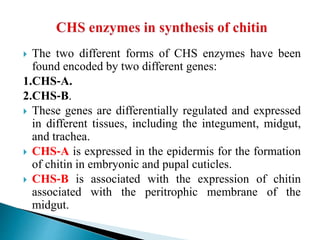
 The two different forms of CHS enzymes have been
found encoded by two different genes:
1.CHS‐A.
2.CHS‐B.
 These genes are differentially regulated and expressed
in different tissues, including the integument, midgut,
and trachea.
 CHS‐A is expressed in the epidermis for the formation
of chitin in embryonic and pupal cuticles.
 CHS‐B is associated with the expression of chitin
associated with the peritrophic membrane of the
midgut.
BIOSYNTHESIS OF CHITIN IN INSECTS
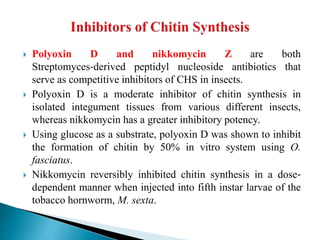
 Polyoxin D and nikkomycin Z are both
Streptomyces‐derived peptidyl nucleoside antibiotics that
serve as competitive inhibitors of CHS in insects.
 Polyoxin D is a moderate inhibitor of chitin synthesis in
isolated integument tissues from various different insects,
whereas nikkomycin has a greater inhibitory potency.
 Using glucose as a substrate, polyoxin D was shown to inhibit
the formation of chitin by 50% in vitro system using O.
fasciatus.
 Nikkomycin reversibly inhibited chitin synthesis in a dose‐
dependent manner when injected into fifth instar larvae of the
tobacco hornworm, M. sexta.
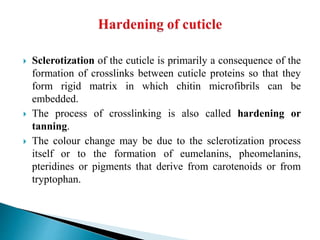
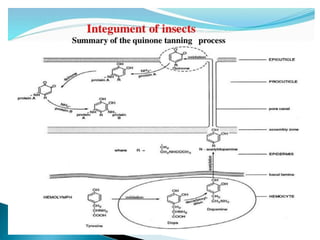
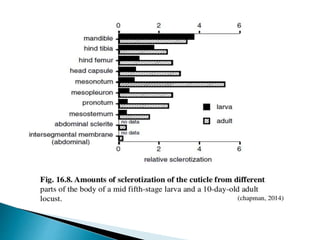
 Sclerotization of the cuticle is primarily a consequence of the
formation of crosslinks between cuticle proteins so that they
form rigid matrix in which chitin microfibrils can be
embedded.
 The process of crosslinking is also called hardening or
tanning.
 The colour change may be due to the sclerotization process
itself or to the formation of eumelanins, pheomelanins,
pteridines or pigments that derive from carotenoids or from
tryptophan.
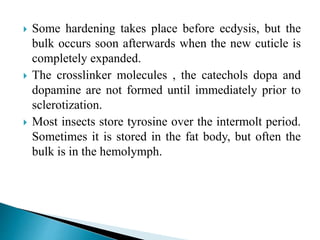
 Some hardening takes place before ecdysis, but the
bulk occurs soon afterwards when the new cuticle is
completely expanded.
 The crosslinker molecules , the catechols dopa and
dopamine are not formed until immediately prior to
sclerotization.
 Most insects store tyrosine over the intermolt period.
Sometimes it is stored in the fat body, but often the
bulk is in the hemolymph.
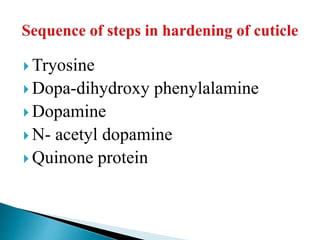
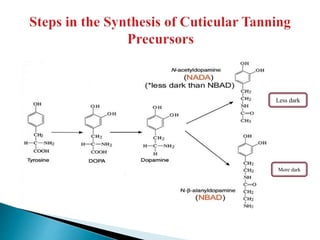
 Tryosine
 Dopa-dihydroxy phenylalamine
 Dopamine
 N- acetyl dopamine
 Quinone protein
Less dark
More dark
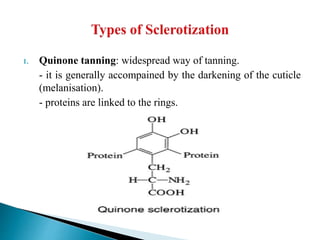
1. Quinone tanning: widespread way of tanning.
- it is generally accompained by the darkening of the cuticle
(melanisation).
- proteins are linked to the rings.
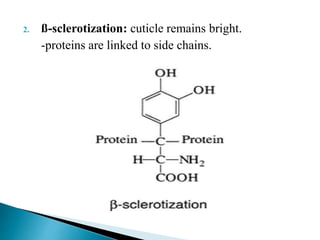
2. ß-sclerotization: cuticle remains bright.
-proteins are linked to side chains.
 At least two hormones are involved in the regulation
of sclerotization:
1. Ecdysteroids: induce the epidermal cells to
synthesize the Dopa decarboxylase (synthesize
Nada).
2. Bursicon: induced by declining ecdysteroid titers,
increase the permeability of epidermal cells to
tryosine and to haemolymph catecholamines.
Biosynthesis of Chitin

Biosynthesis of Chitin

  • 1.
    Submitted To :Dr. Meena Thakur Dr. Ajay Sharma Submitted By : Harmanjot Singh Ph.D. Entomology 1st year H-2021-04-D
  • 2.
     Chitin isone of the most important biopolymers in nature. It is mainly produced by fungi, arthropods and nematodes.  In insects, it functions as scaffold material, supporting the cuticles of the epidermis and trachea as well as the peritrophic matrices lining the gut epithelium.  Insect growth and morphogenesis are strictly dependent on the capability to remodel chitin-containing structures.  For this purpose, insects repeatedly produce chitin synthases and chitinolytic enzymes in different tissues.
  • 3.
     Chitin constitutes30-40% of insect cuticle (Kramer et al., 1995).  It is a nitrogenous polysaccharide made up of chains of N-acetyl glucosamine and glucosamine units (6:1 ratio) linked by 1-4 beta linkages to form a chain held by hydrogen bonds.  Chitin is found in the exo- and endocuticle or in the newly secreted, unsclerotized procuticle but not in the epicuticle, the outermost part of the integument (Andersen, 1979).  Chitin stretch ability is 13 mm. Alpha-chitin is most stable component present in arthropods.  Chitin is soluble in Sodium hypochlorite and concentrated mineral axcids but insoluble in water, alkali, dilute acids and organic solvents.
  • 4.
     Insects employthree different types of chitin that differ in the relative orientations of the adjacent chitin polymer chains: 1. α‐Chitin. 2. β‐ Chitin. 3. γ‐ Chitin.
  • 5.
     The mostabundant form found in the insect cuticle is α‐chitin composed of polymeric chains of N‐ acetylglucosamine arranged in an antiparallel orientation.  This arrangement allows for the formation of microfibrils consisting of closely packed crystalline arrays of individual chitin chains that utilize extensive hydrogen bonding between the amine and carbonyl groups to help provide mechanical strength.
  • 6.
     β‐ Chitinis found in the insect gut, along with α‐chitin, as a component of the peritrophic membrane.  The adjacent chitin polymers in β‐chitin are parallel, as opposed to the antiparallel orientation of α‐chitin.  This results in the adjacent chitin chains forming fewer hydrogen bond linkages and allows the structure to be less rigid and more hydrated.
  • 7.
    γ‐ chitin –It exists primarily in pupal cocoons and has a structure that consists of two parallel strands of chitin polymers positioned next to a single chain of chitin running in the opposite direction.
  • 8.
     In insects,the biosynthetic pathway for chitin starts with the disaccharide trehalose, this is synthesized in the fat body and is the most predominant sugar found in insects.  Trehalose is cleaved into two glucose molecules that are phosphorylated, isomerized, and acetylated, affording the precursor UDP‐N‐ acetylglucosamine.  Chitin synthase (CHS) is the final enzyme of the pathway that utilizes the activated sugar UDP‐N‐acetylglucosamine, polymerizing it to form chitin.  CHS is a protein belonging to the family of β‐glycosyltransferases and is considered to be the key enzyme involved in chitin synthesis.  The enzyme has been shown to require divalent cations such as Mg2+, Mn2+, or Ca2+ for activity.
  • 9.
     The twodifferent forms of CHS enzymes have been found encoded by two different genes: 1.CHS‐A. 2.CHS‐B.  These genes are differentially regulated and expressed in different tissues, including the integument, midgut, and trachea.  CHS‐A is expressed in the epidermis for the formation of chitin in embryonic and pupal cuticles.  CHS‐B is associated with the expression of chitin associated with the peritrophic membrane of the midgut.
  • 10.
  • 11.
     Polyoxin Dand nikkomycin Z are both Streptomyces‐derived peptidyl nucleoside antibiotics that serve as competitive inhibitors of CHS in insects.  Polyoxin D is a moderate inhibitor of chitin synthesis in isolated integument tissues from various different insects, whereas nikkomycin has a greater inhibitory potency.  Using glucose as a substrate, polyoxin D was shown to inhibit the formation of chitin by 50% in vitro system using O. fasciatus.  Nikkomycin reversibly inhibited chitin synthesis in a dose‐ dependent manner when injected into fifth instar larvae of the tobacco hornworm, M. sexta.
  • 12.
     Sclerotization ofthe cuticle is primarily a consequence of the formation of crosslinks between cuticle proteins so that they form rigid matrix in which chitin microfibrils can be embedded.  The process of crosslinking is also called hardening or tanning.  The colour change may be due to the sclerotization process itself or to the formation of eumelanins, pheomelanins, pteridines or pigments that derive from carotenoids or from tryptophan.
  • 13.
     Some hardeningtakes place before ecdysis, but the bulk occurs soon afterwards when the new cuticle is completely expanded.  The crosslinker molecules , the catechols dopa and dopamine are not formed until immediately prior to sclerotization.  Most insects store tyrosine over the intermolt period. Sometimes it is stored in the fat body, but often the bulk is in the hemolymph.
  • 14.
     Tryosine  Dopa-dihydroxyphenylalamine  Dopamine  N- acetyl dopamine  Quinone protein
  • 15.
  • 17.
    1. Quinone tanning:widespread way of tanning. - it is generally accompained by the darkening of the cuticle (melanisation). - proteins are linked to the rings.
  • 18.
    2. ß-sclerotization: cuticleremains bright. -proteins are linked to side chains.
  • 19.
     At leasttwo hormones are involved in the regulation of sclerotization: 1. Ecdysteroids: induce the epidermal cells to synthesize the Dopa decarboxylase (synthesize Nada). 2. Bursicon: induced by declining ecdysteroid titers, increase the permeability of epidermal cells to tryosine and to haemolymph catecholamines.