Derivative activity at troubled banks
by
Joe Peek and Eric S. Rosengren
Prashant Ranjan
4113004004
Introduction
• Derivatives are essential element of financial activity,
enabling intermediaries to hedge market risks.
• They also entail risk to bank and banking system.
• Derivatives products are difficult to monitor and few
individual traders generate substantial losses. As
example: barings, daiwa, and sumitomo.
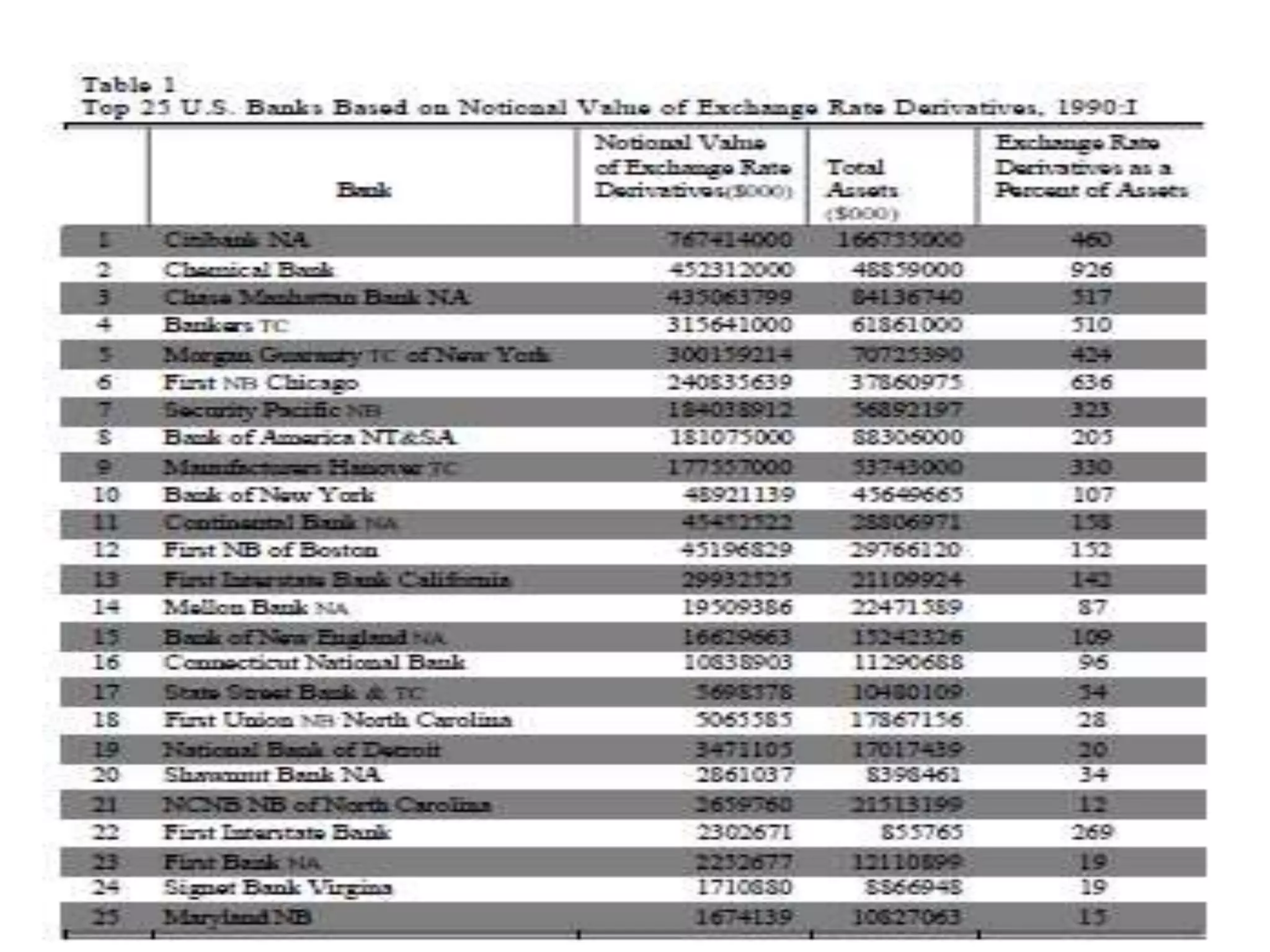
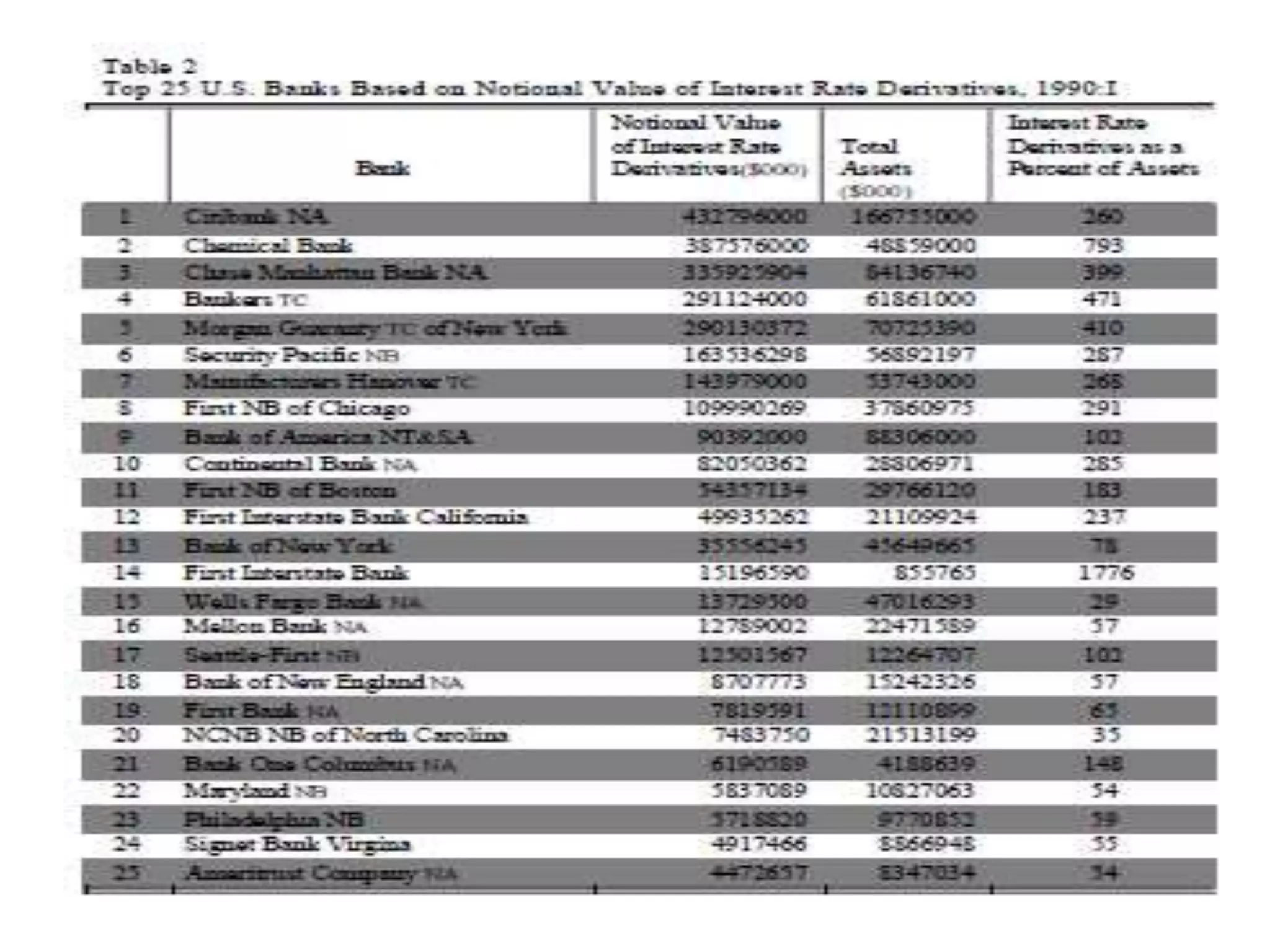
• A significant percentage of large banks engaged in
derivatives activity in the first half of this decade
have received a formal regulatory action.
Introduction
• There is no any evidence that derivatives activity has
been a factor in formal regulatory intervention or
even in downgrades of supervisory rating of banks.
• Derivatives activity is hardly mentioned in formal
regulator action, while lending activity, loan
monitoring, and reserves from problem loans.
• Banks call report data are not sufficiently detailed to
reveal the extent to which bank derivatives activity
affects the overall risk of the bank portfolios.
Content
• This paper discuss about derivative activity and
supervisory oversight.
• This paper also discuss about derivatives activity at
troubled institutions.
Methodology
• Bank's financial health and the nature and degree of
risks in both on-balance sheet and its off-balance
sheet should be important factor in supervisory
decisions to change the bank’s rating.
• They use the logistic model to determine in
derivatives activity contribute to triggering a CAMEL
downgrade or the imposition of a formal action
• Ii,t=b0+B1+X1i,t+B2X2i,t+Vi,t
Conclusion
• The set of large banks activity in derivatives market
includes a relatively high percentage of troubled
institution.
• troubled banks have the motive to place second bets
and that derivatives provides the means, it is
important that such banks not be given the
opportunity to do so.
• Derivatives positions can be altered quickly to reduce
risk exposure.
• No evidence that derivatives activity is a significant
factor in CAMEL downgrades or in regulatory
decisions to impose a formal action.
• Derivative activity is critical at many banks for the
effective hedging of risks.
• It is important that bank regulators limit the moral
hazard to use derivatives for speculation.
• Derivatives activity should have a more prominent
role in formal regulatory action at troubled banks.

Derivative activity at troubled banks

  • 1.
    Derivative activity attroubled banks by Joe Peek and Eric S. Rosengren Prashant Ranjan 4113004004
  • 2.
    Introduction • Derivatives areessential element of financial activity, enabling intermediaries to hedge market risks. • They also entail risk to bank and banking system. • Derivatives products are difficult to monitor and few individual traders generate substantial losses. As example: barings, daiwa, and sumitomo. • A significant percentage of large banks engaged in derivatives activity in the first half of this decade have received a formal regulatory action.
  • 3.
    Introduction • There isno any evidence that derivatives activity has been a factor in formal regulatory intervention or even in downgrades of supervisory rating of banks. • Derivatives activity is hardly mentioned in formal regulator action, while lending activity, loan monitoring, and reserves from problem loans. • Banks call report data are not sufficiently detailed to reveal the extent to which bank derivatives activity affects the overall risk of the bank portfolios.
  • 4.
    Content • This paperdiscuss about derivative activity and supervisory oversight. • This paper also discuss about derivatives activity at troubled institutions.
  • 7.
    Methodology • Bank's financialhealth and the nature and degree of risks in both on-balance sheet and its off-balance sheet should be important factor in supervisory decisions to change the bank’s rating. • They use the logistic model to determine in derivatives activity contribute to triggering a CAMEL downgrade or the imposition of a formal action • Ii,t=b0+B1+X1i,t+B2X2i,t+Vi,t
  • 8.
    Conclusion • The setof large banks activity in derivatives market includes a relatively high percentage of troubled institution. • troubled banks have the motive to place second bets and that derivatives provides the means, it is important that such banks not be given the opportunity to do so. • Derivatives positions can be altered quickly to reduce risk exposure.
  • 9.
    • No evidencethat derivatives activity is a significant factor in CAMEL downgrades or in regulatory decisions to impose a formal action. • Derivative activity is critical at many banks for the effective hedging of risks. • It is important that bank regulators limit the moral hazard to use derivatives for speculation. • Derivatives activity should have a more prominent role in formal regulatory action at troubled banks.