Presented By- 
Yasha Singh 
4113007007 
1
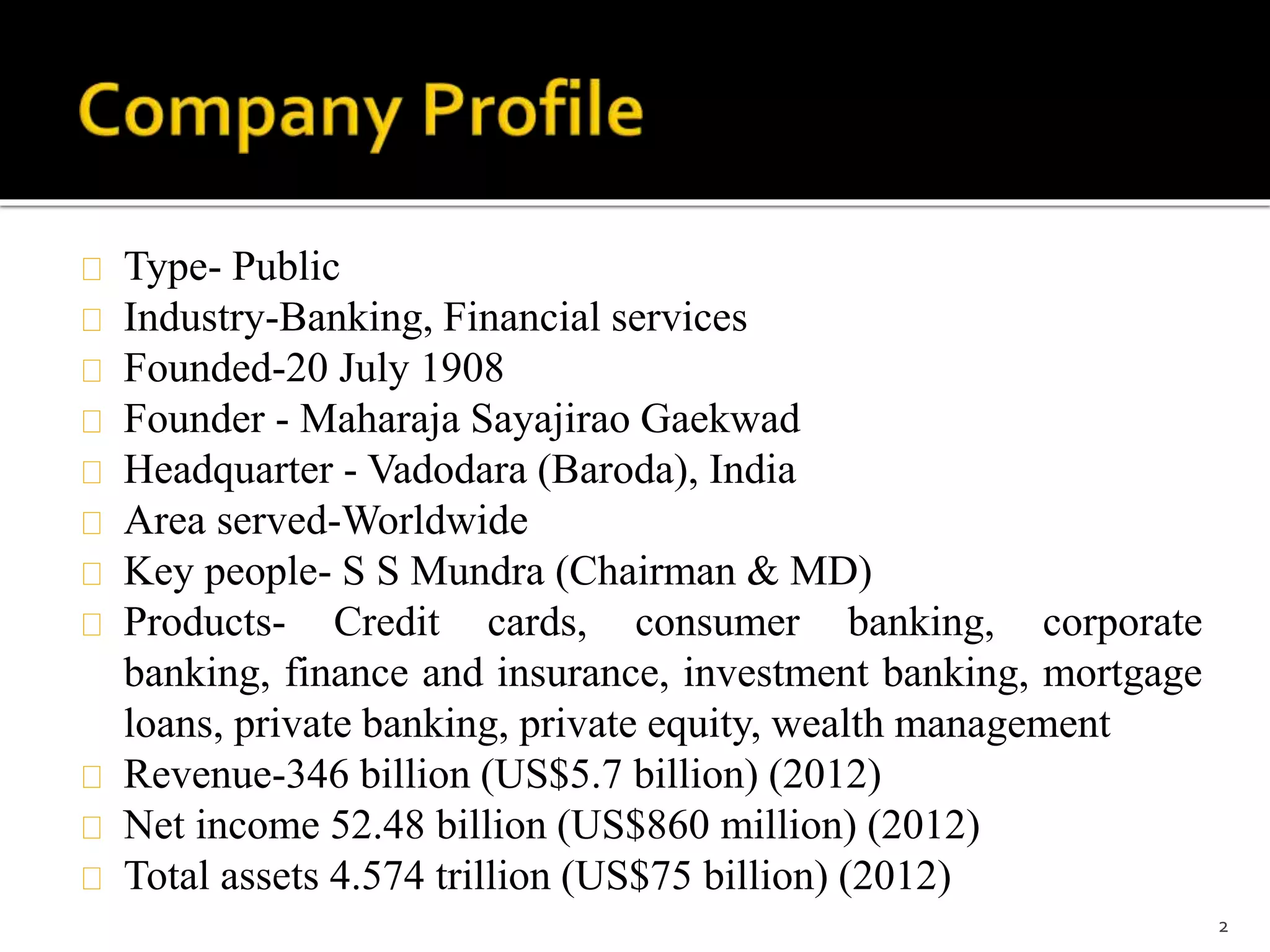
Type- Public 
Industry-Banking, Financial services 
Founded-20 July 1908 
Founder - Maharaja Sayajirao Gaekwad 
Headquarter - Vadodara (Baroda), India 
Area served-Worldwide 
Key people- S S Mundra (Chairman & MD) 
Products- Credit cards, consumer banking, corporate 
banking, finance and insurance, investment banking, mortgage 
loans, private banking, private equity, wealth management 
Revenue-346 billion (US$5.7 billion) (2012) 
Net income 52.48 billion (US$860 million) (2012) 
Total assets 4.574 trillion (US$75 billion) (2012) 
2
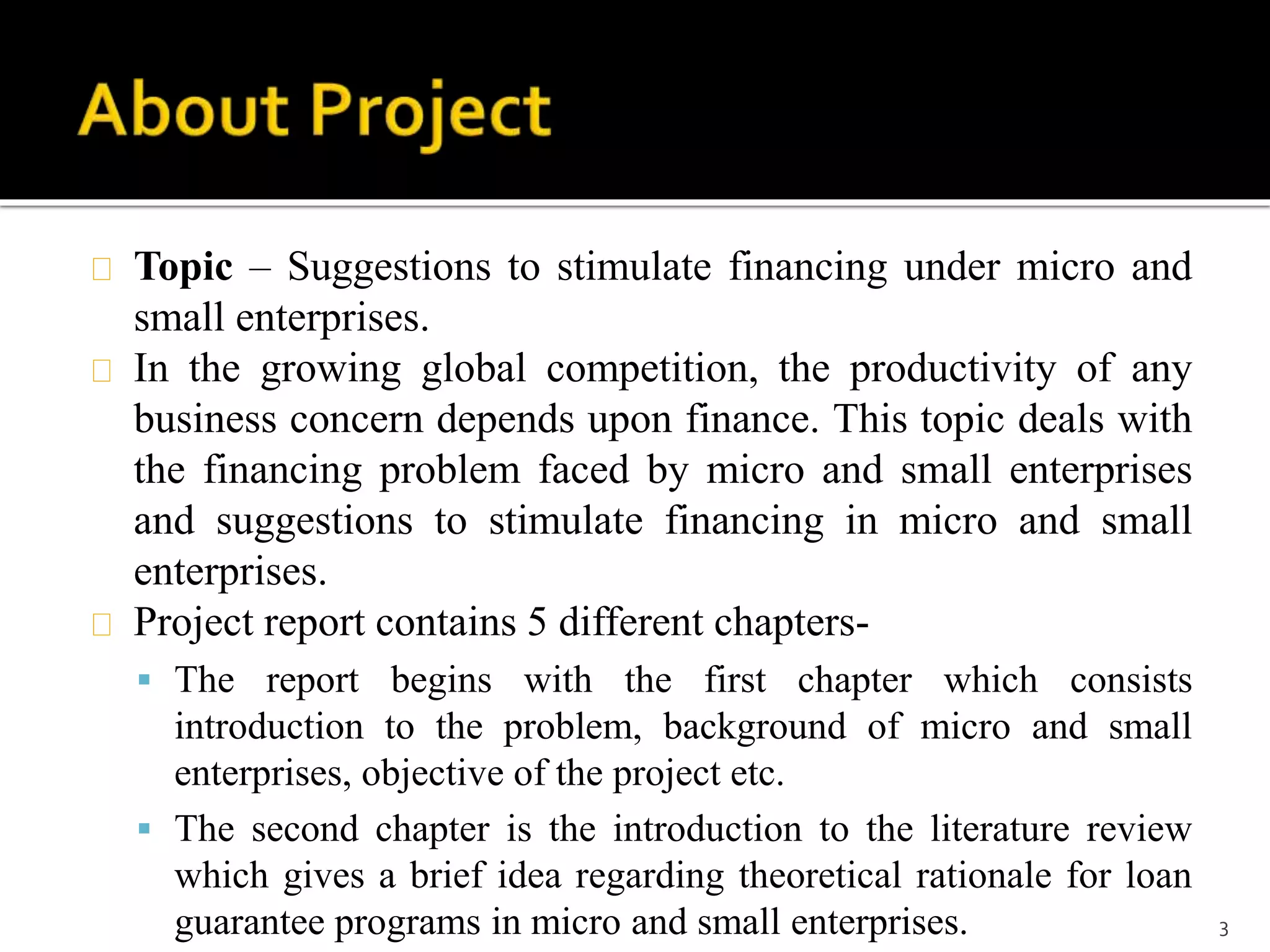
Topic – Suggestions to stimulate financing under micro and 
small enterprises. 
In the growing global competition, the productivity of any 
business concern depends upon finance. This topic deals with 
the financing problem faced by micro and small enterprises 
and suggestions to stimulate financing in micro and small 
enterprises. 
Project report contains 5 different chapters- 
 The report begins with the first chapter which consists 
introduction to the problem, background of micro and small 
enterprises, objective of the project etc. 
 The second chapter is the introduction to the literature review 
which gives a brief idea regarding theoretical rationale for loan 
guarantee programs in micro and small enterprises. 3
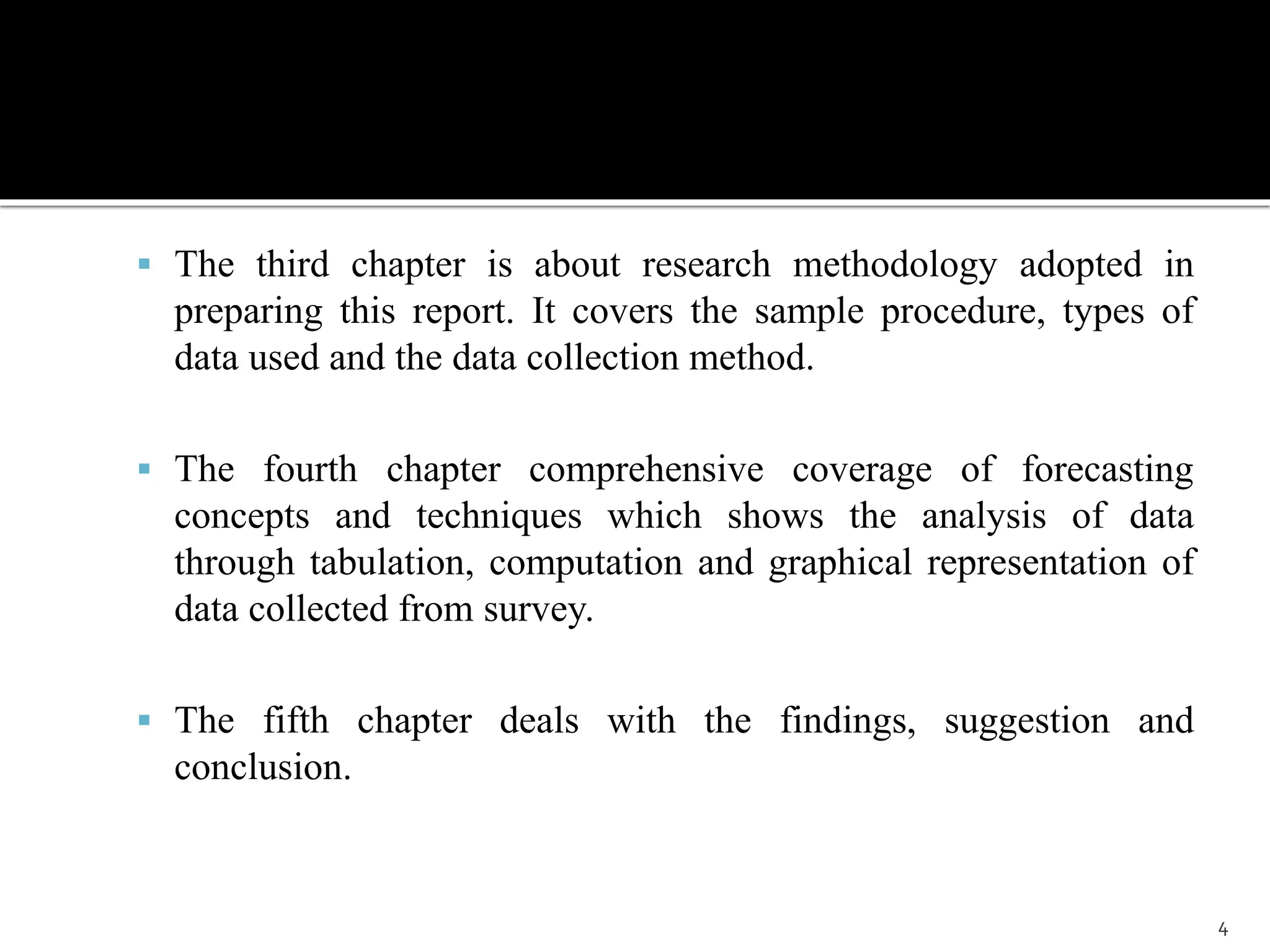
 The third chapter is about research methodology adopted in 
preparing this report. It covers the sample procedure, types of 
data used and the data collection method. 
 The fourth chapter comprehensive coverage of forecasting 
concepts and techniques which shows the analysis of data 
through tabulation, computation and graphical representation of 
data collected from survey. 
 The fifth chapter deals with the findings, suggestion and 
conclusion. 
4
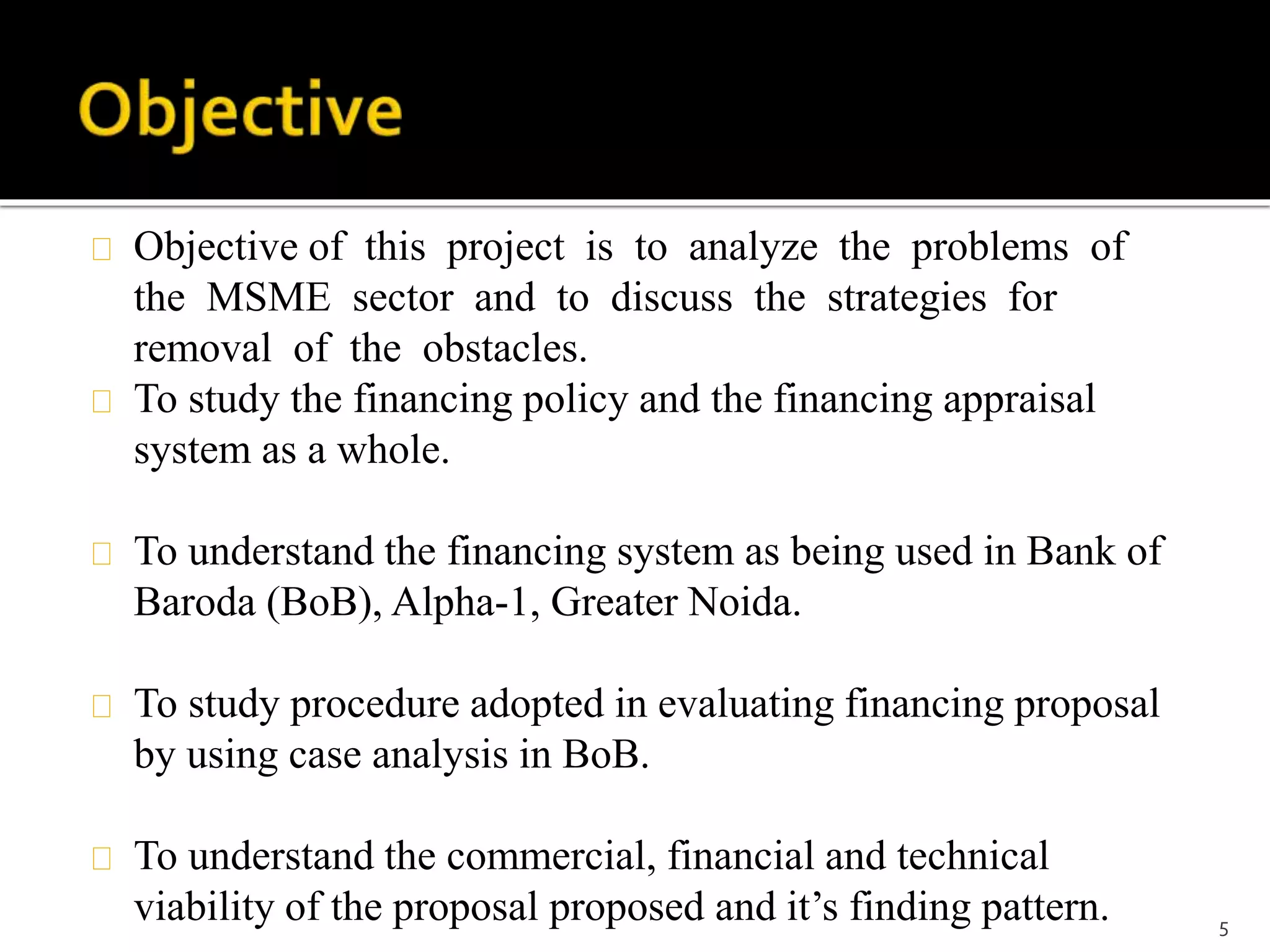
Objective of this project is to analyze the problems of 
the MSME sector and to discuss the strategies for 
removal of the obstacles. 
To study the financing policy and the financing appraisal 
system as a whole. 
To understand the financing system as being used in Bank of 
Baroda (BoB), Alpha-1, Greater Noida. 
To study procedure adopted in evaluating financing proposal 
by using case analysis in BoB. 
To understand the commercial, financial and technical 
viability of the proposal proposed and it’s finding pattern. 5
There are mainly two sources of data. 
 PRIMARY DATA: 
▪ Data provided by bank. 
 SECONDARY DATA: 
▪ Bank reports 
▪ Banks loan circulars on micro and small enterprises 
▪ Bank and ministry of MSE website 
▪ Books and Journals 
6
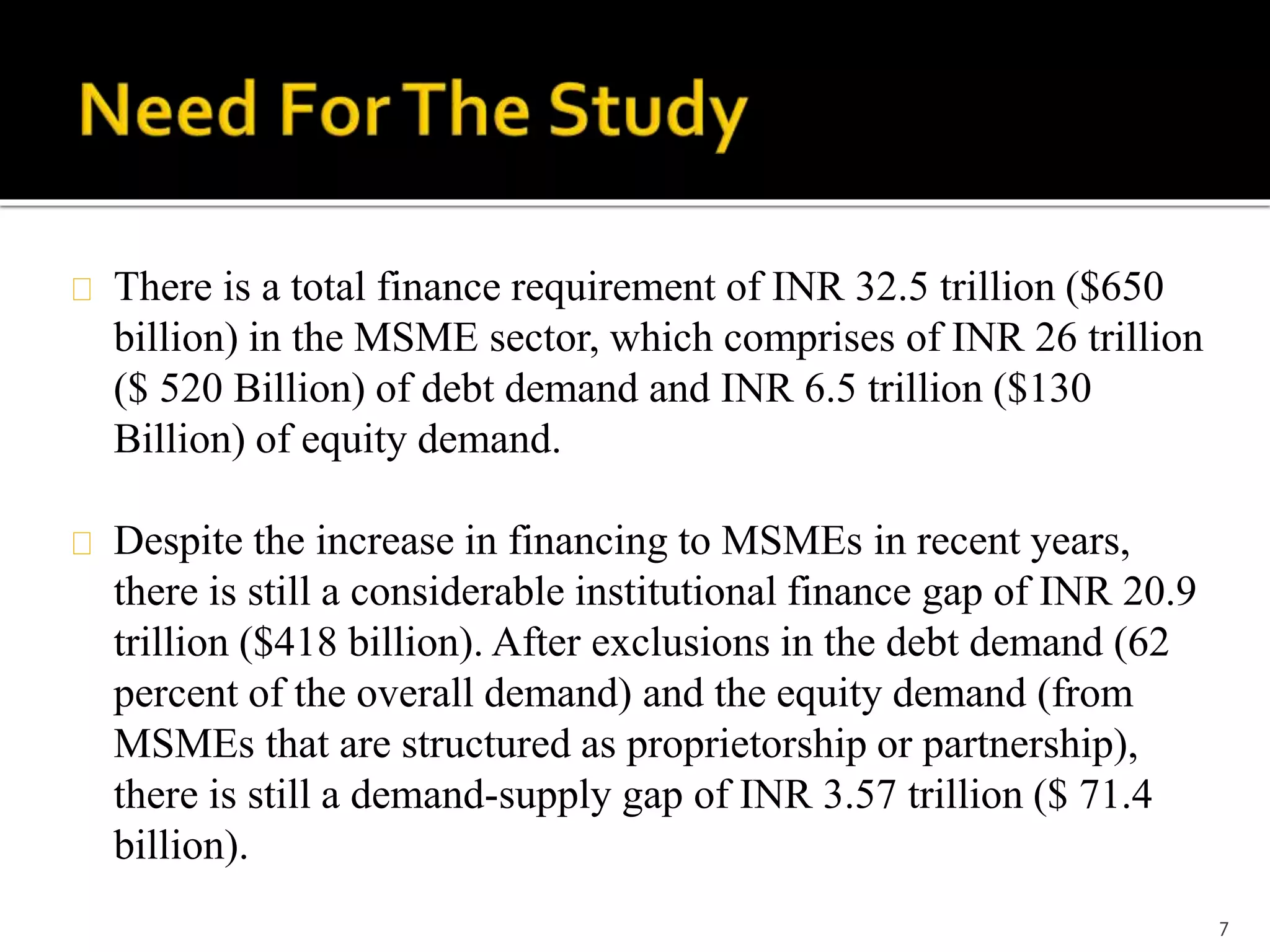
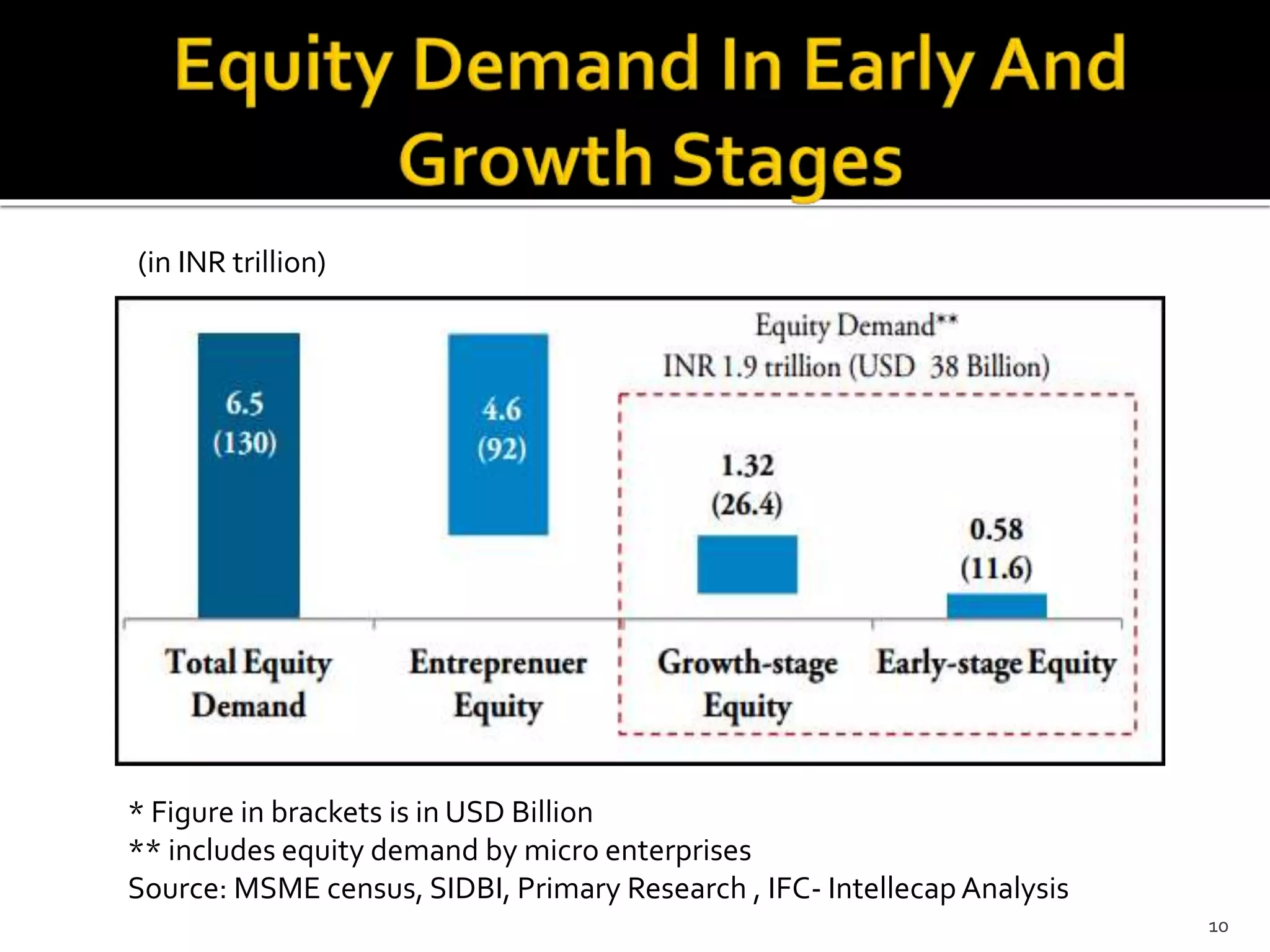
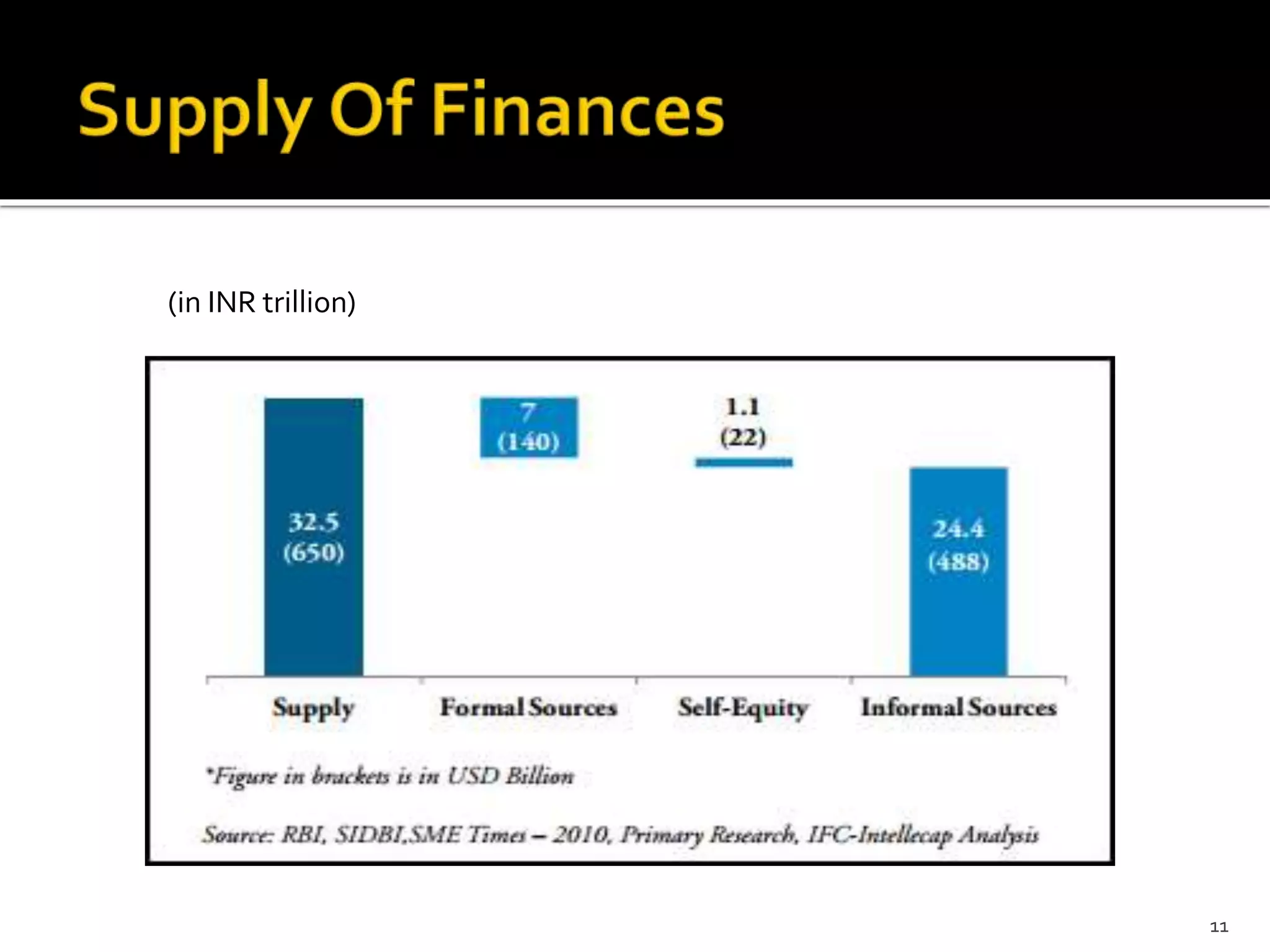
There is a total finance requirement of INR 32.5 trillion ($650 
billion) in the MSME sector, which comprises of INR 26 trillion 
($ 520 Billion) of debt demand and INR 6.5 trillion ($130 
Billion) of equity demand. 
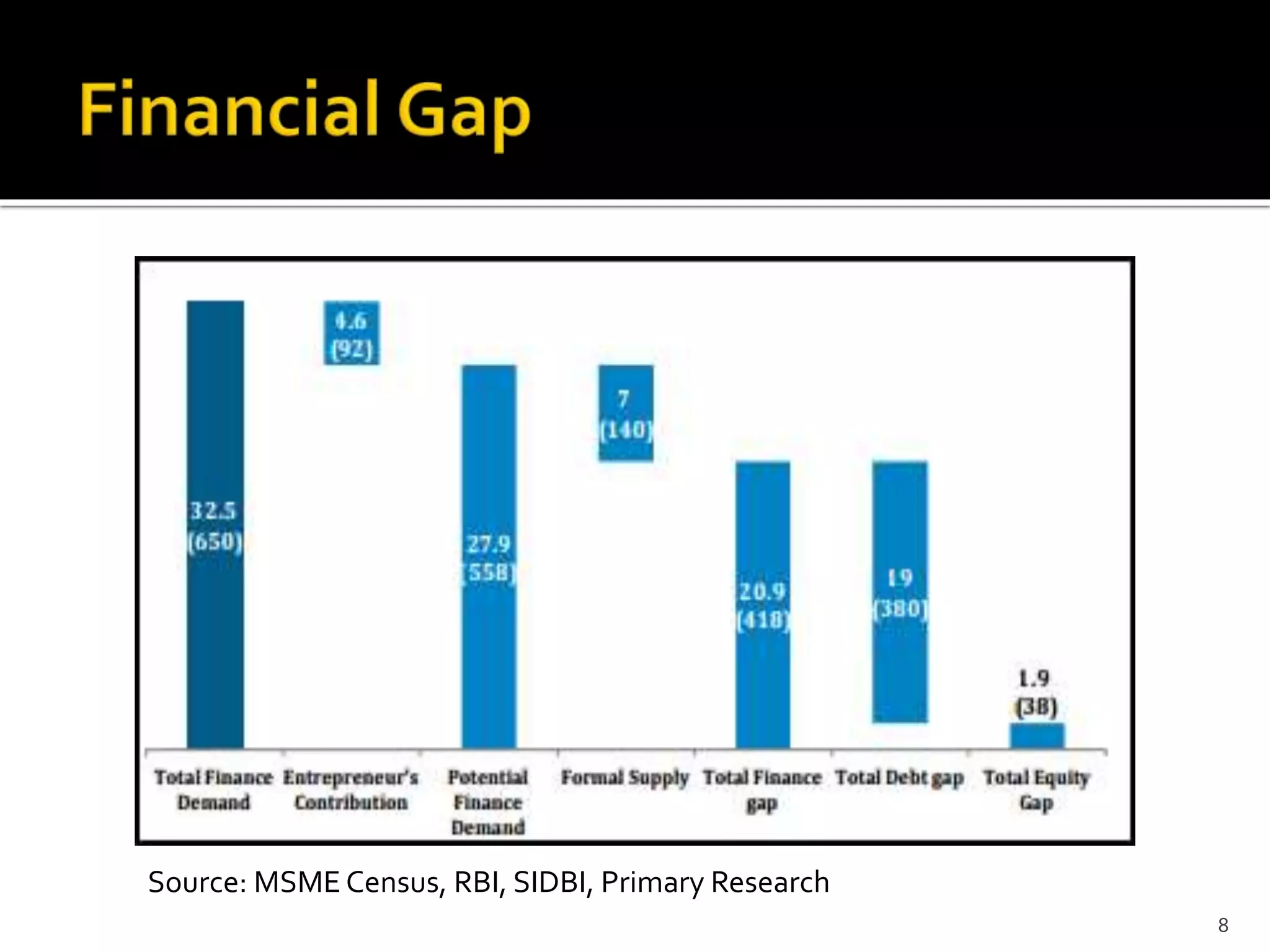
Despite the increase in financing to MSMEs in recent years, 
there is still a considerable institutional finance gap of INR 20.9 
trillion ($418 billion). After exclusions in the debt demand (62 
percent of the overall demand) and the equity demand (from 
MSMEs that are structured as proprietorship or partnership), 
there is still a demand-supply gap of INR 3.57 trillion ($ 71.4 
billion). 
7
8 
Source: MSME Census, RBI, SIDBI, Primary Research 
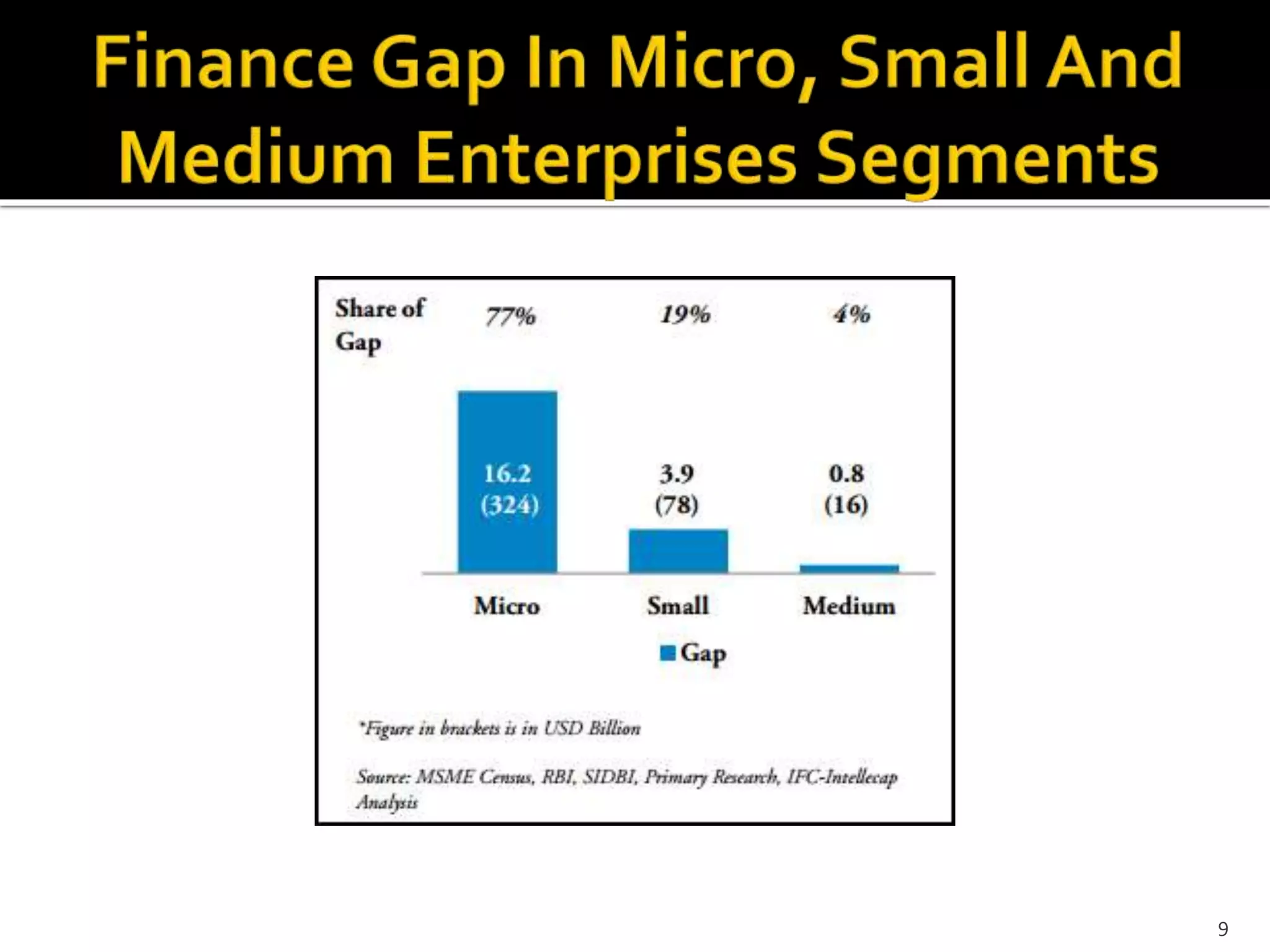
Source: MSME Census, RBI, SIDBI, Primary Research
9
10 
(in INR trillion) 
* Figure in brackets is in USD Billion 
** includes equity demand by micro enterprises 
Source: MSME census, SIDBI, Primary Research , IFC- Intellecap Analysis
11 
(in INR trillion)
12
13 
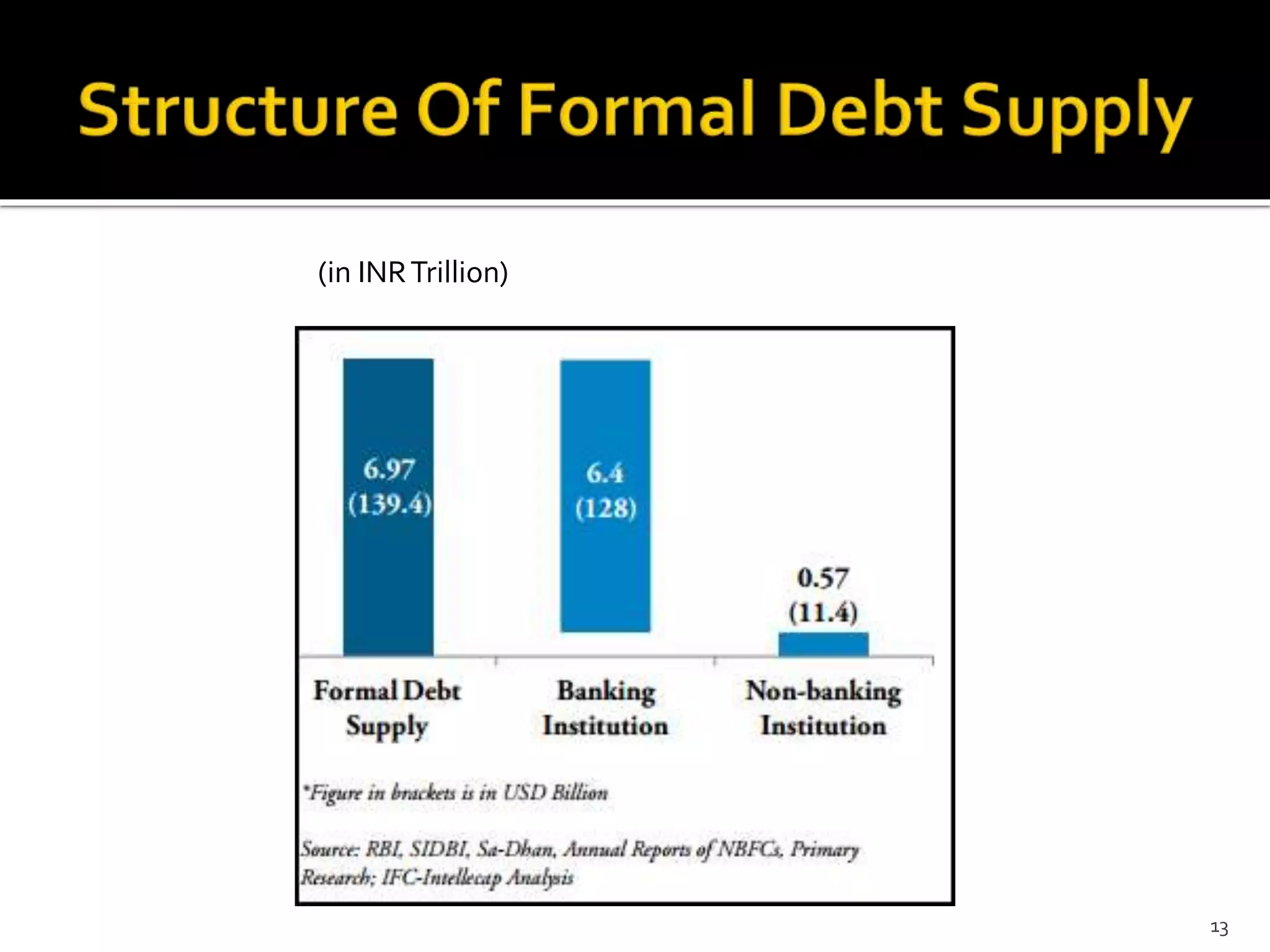
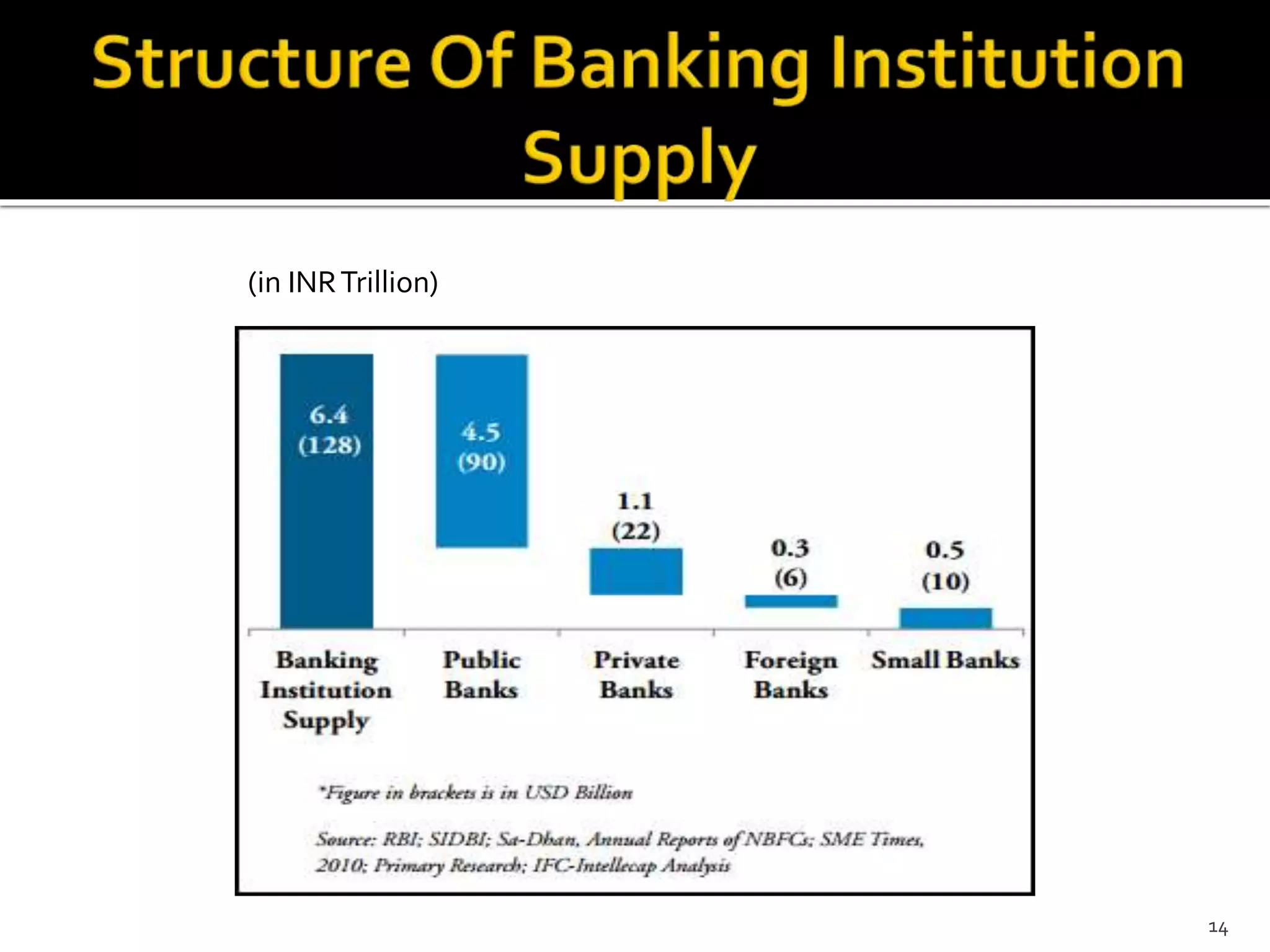
(in INR Trillion)
14 
(in INR Trillion)
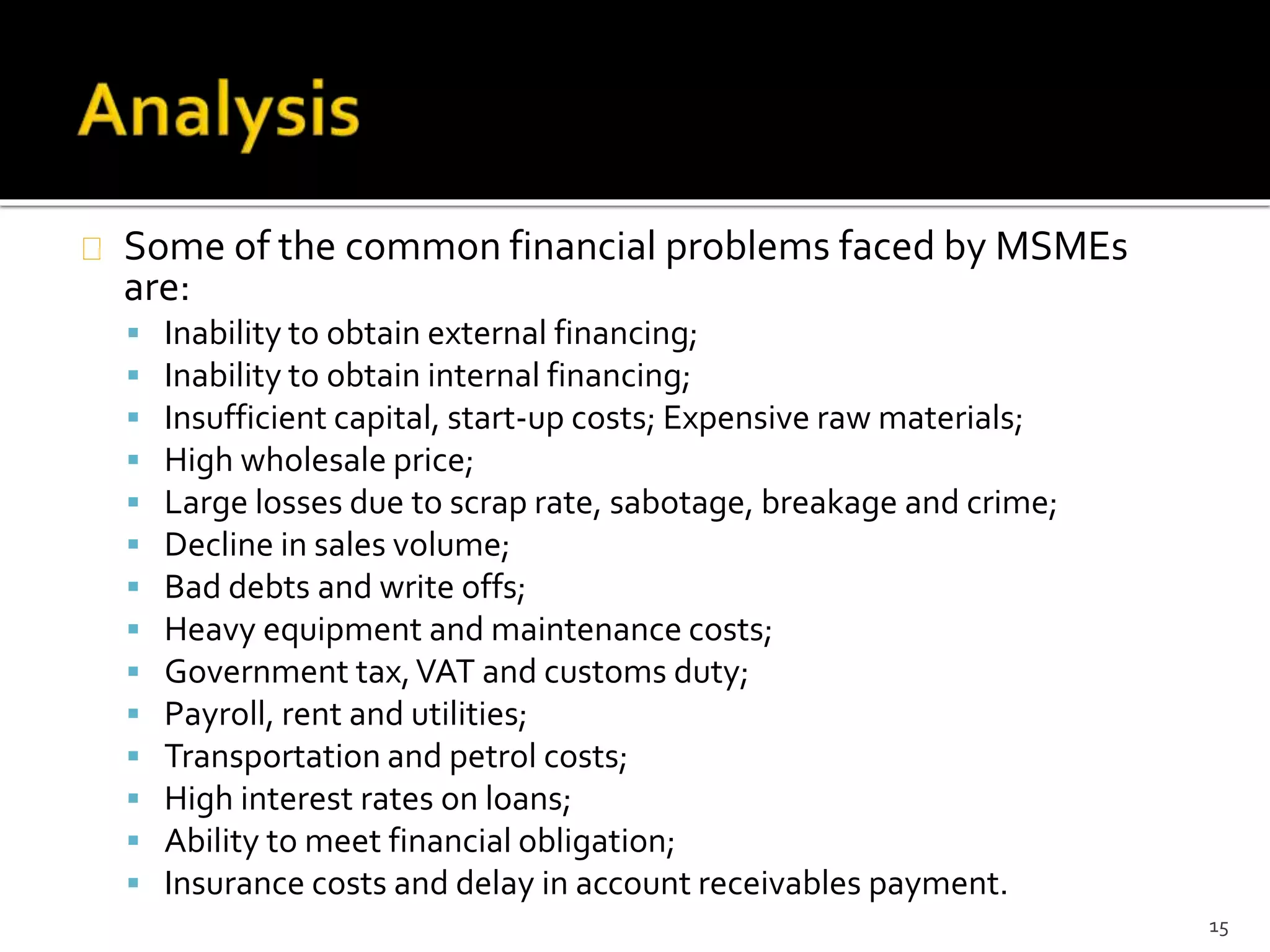
Some of the common financial problems faced by MSMEs 
are: 
 Inability to obtain external financing; 
 Inability to obtain internal financing; 
 Insufficient capital, start-up costs; Expensive raw materials; 
 High wholesale price; 
 Large losses due to scrap rate, sabotage, breakage and crime; 
 Decline in sales volume; 
 Bad debts and write offs; 
 Heavy equipment and maintenance costs; 
 Government tax, VAT and customs duty; 
 Payroll, rent and utilities; 
 Transportation and petrol costs; 
 High interest rates on loans; 
 Ability to meet financial obligation; 
 Insurance costs and delay in account receivables payment. 
15
Minimum government regulation and tax. 
Better access to finance. 
Private equity funding. 
16
17

Suggestions to stimulate financing under micro and small

  • 1.
    Presented By- YashaSingh 4113007007 1
  • 2.
    Type- Public Industry-Banking,Financial services Founded-20 July 1908 Founder - Maharaja Sayajirao Gaekwad Headquarter - Vadodara (Baroda), India Area served-Worldwide Key people- S S Mundra (Chairman & MD) Products- Credit cards, consumer banking, corporate banking, finance and insurance, investment banking, mortgage loans, private banking, private equity, wealth management Revenue-346 billion (US$5.7 billion) (2012) Net income 52.48 billion (US$860 million) (2012) Total assets 4.574 trillion (US$75 billion) (2012) 2
  • 3.
    Topic – Suggestionsto stimulate financing under micro and small enterprises. In the growing global competition, the productivity of any business concern depends upon finance. This topic deals with the financing problem faced by micro and small enterprises and suggestions to stimulate financing in micro and small enterprises. Project report contains 5 different chapters-  The report begins with the first chapter which consists introduction to the problem, background of micro and small enterprises, objective of the project etc.  The second chapter is the introduction to the literature review which gives a brief idea regarding theoretical rationale for loan guarantee programs in micro and small enterprises. 3
  • 4.
     The thirdchapter is about research methodology adopted in preparing this report. It covers the sample procedure, types of data used and the data collection method.  The fourth chapter comprehensive coverage of forecasting concepts and techniques which shows the analysis of data through tabulation, computation and graphical representation of data collected from survey.  The fifth chapter deals with the findings, suggestion and conclusion. 4
  • 5.
    Objective of thisproject is to analyze the problems of the MSME sector and to discuss the strategies for removal of the obstacles. To study the financing policy and the financing appraisal system as a whole. To understand the financing system as being used in Bank of Baroda (BoB), Alpha-1, Greater Noida. To study procedure adopted in evaluating financing proposal by using case analysis in BoB. To understand the commercial, financial and technical viability of the proposal proposed and it’s finding pattern. 5
  • 6.
    There are mainlytwo sources of data.  PRIMARY DATA: ▪ Data provided by bank.  SECONDARY DATA: ▪ Bank reports ▪ Banks loan circulars on micro and small enterprises ▪ Bank and ministry of MSE website ▪ Books and Journals 6
  • 7.
    There is atotal finance requirement of INR 32.5 trillion ($650 billion) in the MSME sector, which comprises of INR 26 trillion ($ 520 Billion) of debt demand and INR 6.5 trillion ($130 Billion) of equity demand. Despite the increase in financing to MSMEs in recent years, there is still a considerable institutional finance gap of INR 20.9 trillion ($418 billion). After exclusions in the debt demand (62 percent of the overall demand) and the equity demand (from MSMEs that are structured as proprietorship or partnership), there is still a demand-supply gap of INR 3.57 trillion ($ 71.4 billion). 7
  • 8.
    8 Source: MSMECensus, RBI, SIDBI, Primary Research Source: MSME Census, RBI, SIDBI, Primary Research
  • 9.
  • 10.
    10 (in INRtrillion) * Figure in brackets is in USD Billion ** includes equity demand by micro enterprises Source: MSME census, SIDBI, Primary Research , IFC- Intellecap Analysis
  • 11.
    11 (in INRtrillion)
  • 12.
  • 13.
    13 (in INRTrillion)
  • 14.
    14 (in INRTrillion)
  • 15.
    Some of thecommon financial problems faced by MSMEs are:  Inability to obtain external financing;  Inability to obtain internal financing;  Insufficient capital, start-up costs; Expensive raw materials;  High wholesale price;  Large losses due to scrap rate, sabotage, breakage and crime;  Decline in sales volume;  Bad debts and write offs;  Heavy equipment and maintenance costs;  Government tax, VAT and customs duty;  Payroll, rent and utilities;  Transportation and petrol costs;  High interest rates on loans;  Ability to meet financial obligation;  Insurance costs and delay in account receivables payment. 15
  • 16.
    Minimum government regulationand tax. Better access to finance. Private equity funding. 16
  • 17.